Den Dau Festival: The Famous Sacred Place of Worship for Holy Mother Lieu Hanh in Ninh Binh

Northern

Ninh Binh

Sovaba.travel

Updated at: 24/09/2026

1. The origin and history of Dau Temple associated with Mother Goddess Lieu Hanh

Den Dau Temple is associated with the legend of Holy Mother Lieu Hanh, also known as Princess Lieu Hanh – a deity originating from the Mother Goddess worship belief of the Vietnamese people, honoring the role of women and mothers. According to legend, the Holy Mother was Que Nuong, the daughter of the Jade Emperor, who descended to earth three times to help the people. During her third descent, she transformed into an innkeeper selling porridge at Quan Chao (near Den Dau Temple), teaching people how to cultivate mulberries, raise silkworms, and weave silk for a prosperous life. She also miraculously manifested to assist King Quang Trung in defeating the Qing army in the year of Ky Dau (1789), liberating Thang Long. Landmarks such as Quan Chao, Den Dau, and Dong Giao have entered folk poetry: "Quan Chao - Den Dau - Dong Giao are famous landmarks, close to the Vietnamese people for generations."
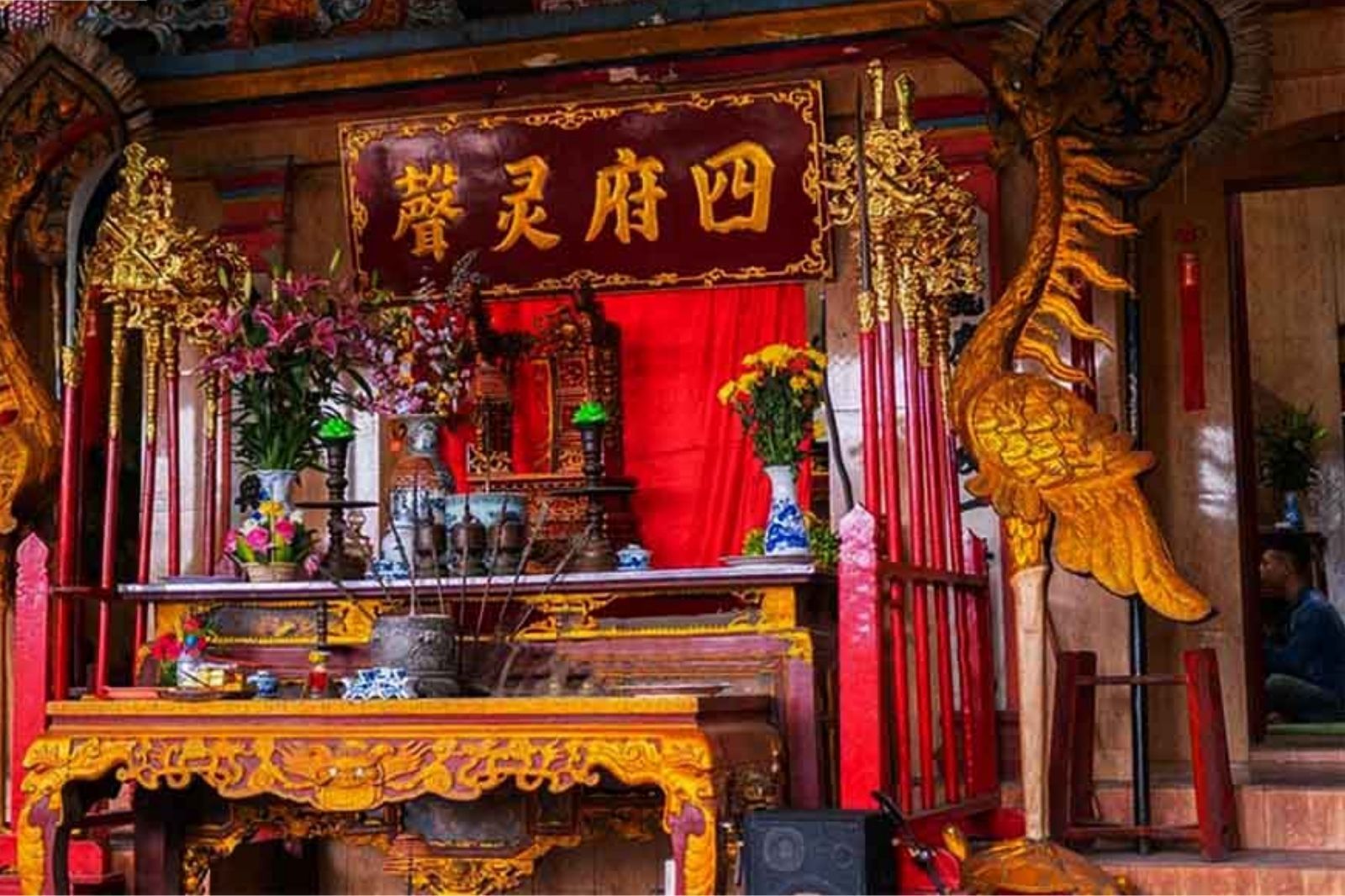
Den Dau Temple associated with the legend of Holy Mother Lieu Hanh
Photo: Den Dau Temple associated with the legend of Holy Mother Lieu Hanh 

The history of Den Dau Temple is linked to many important events: In 1592, Lord Trinh Tung rested here while leading troops to attack Dong Kinh. In 1788, King Quang Trung gathered 100,000 troops in Tam Diep and established a temporary palace near the temple. In 1952, the 3rd Congress of the Yen Son Commune Party Cell took place here to fight against French colonialists. In addition to the Holy Mother, the temple also worships Saint Tran Hung Dao as well as various prince and princess deities. The temple architecture consists of three sanctuaries: the Third Sanctuary with red-lacquered and gold-gilded ironwood pillars, the Second Sanctuary worshipping the Assembly of Four Palaces, and the First Sanctuary featuring the statues of the Three Palaces Holy Mothers (Heavenly Mother, Mountain and Forest Mother, Water Mother). These elements create historical depth, turning Den Dau Temple into an important Mother Goddess worship site, closely connected with other temples such as Song Temple (Thanh Hoa) or Phu Day (Nam Dinh).
2. When does the Dau Temple Festival take place?

The festival is held annually from the 15th day of the first lunar month – a time associated with the mulberry planting ritual and the commemoration of Quang Trung's victory, lasting until the end of the 3rd day of the third lunar month, the death anniversary of Mother Lieu Hanh. Although the official opening ceremony takes place on the full moon of the first lunar month, the festive atmosphere begins to buzz from the beginning of the month with an increasing number of tourists and pilgrims flocking in. Over time, some traditional rituals such as statue processions or character formation ("Mau Nghi thien ha", "Thien ha thai binh"…) are no longer maintained regularly. Instead, the festival currently focuses on characteristic rituals such as Hau Bong (mediumship), honoring incense burners, Trinh Dong (initiating mediums), and Te Nu Quan (female ritual ceremonies), contributing to preserving folk belief values. In local cultural life, the festival is also passed down through folk verses, reflecting people's faith and reverence for Mother Goddess worship.

"No matter where anyone goes 

Return for the Lantern Festival at Den Dau Temple 

No matter how busy one is with a hundred tasks 

Return to Den Dau Temple for the Lantern Festival". 

The festival lasts for nearly two months, creating an opportunity for everyone to participate without overcrowding, especially on weekends or full moon days.

3. What is special about the main rituals of the Dau Temple Festival?

Rituals at Den Dau Temple Festival carry the strong identity of Mother Goddess worship, combining solemn ceremonies and prayers. Notably, before entering Den Dau Temple, visitors must stop by Quan Chao Temple (about 1 km away) to "report their names before the parents' gate" – a unique ritual showing respect for origins. At Den Dau Temple, it begins with prayers in front of the large incense burner outside the entrance to ask the governing deities to witness and bless ancestors.

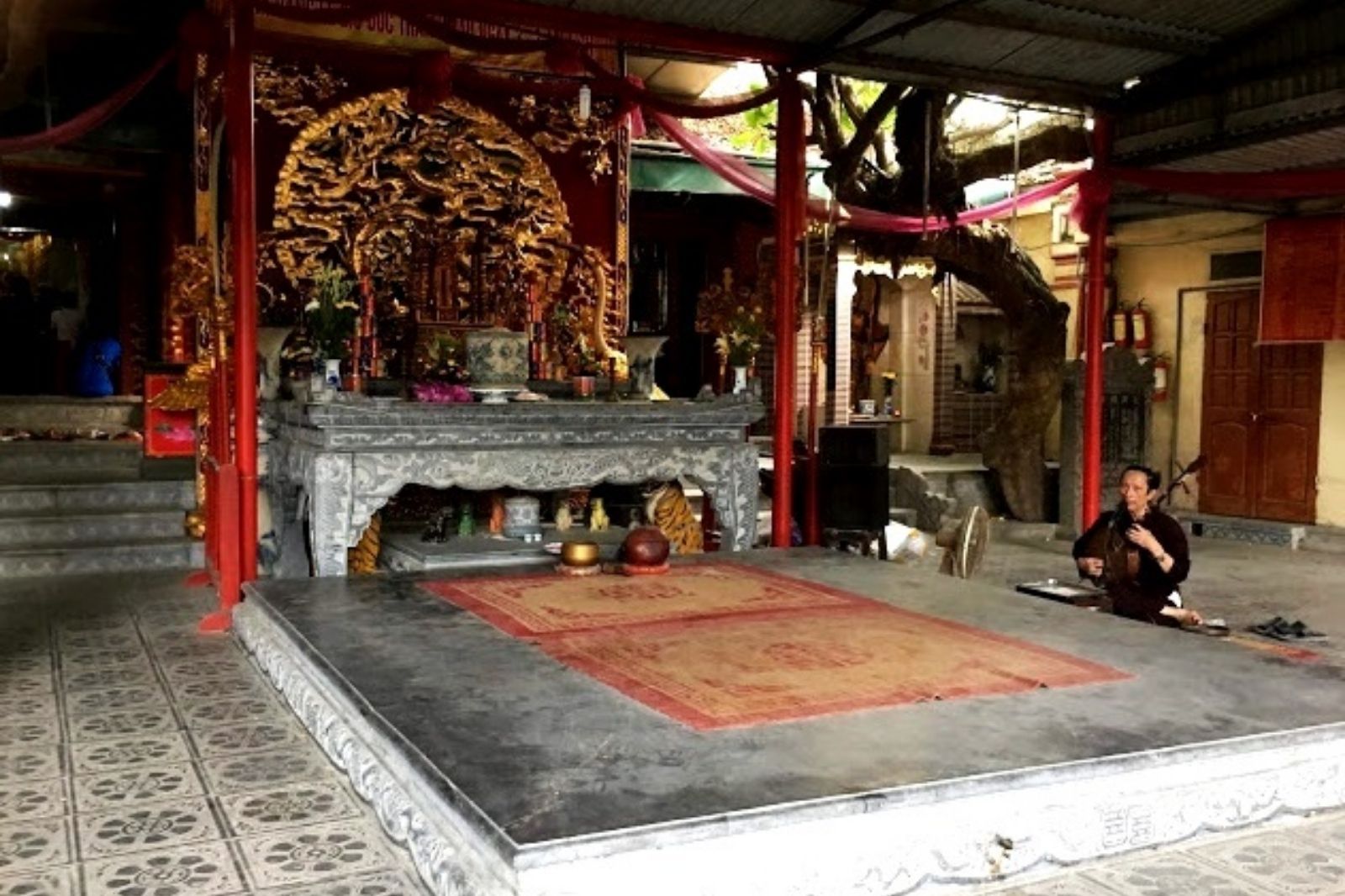
Natural blue stone offering table at the temple
Photo: Natural blue stone offering table at the temple 

The offering tray usually includes fresh fruits, betel and areca nuts, incense sticks, joss paper, a bottle of wine, sticky rice, meat, written prayer sheets, and colorful artistic sugar/rice cakes (usually red representing good luck). Visitors place the offering tray at the middle sanctuary, light incense, read prayer texts, wait for one round of incense to burn down, and then take down the offerings. Fruits and sweets are brought home as blessed gifts, while prayer papers and joss money are burned in the temple's furnace. Other special rituals include Hau Dong (spirit mediumship dance), honoring incense burners, and Trinh Dong to pray for blessings and peace. In the past, there was a custom of processing the Holy Mother statue from Quan Chao Temple to Den Dau Temple, forming Chinese characters like "Mau Nghi Thien Ha", "Thien Ha Thai Binh", "Ly Nhan Vi My", and female officer rituals, but some have been lost and are currently being restored. These rituals are not only sacred but also educate about gratitude toward ancestors and national history.

4. The festive activities of the Dau Temple Festival

The festive part of Den Dau Temple Festival features a joyful, vibrant atmosphere, combining folk culture and entertainment. Although some ancient activities like statue processions or character formation have faded, the festival still attracts visitors with artistic spirit medium performances, lion-monk-dragon dance performances, Chau Van singing, and folk games such as tug-of-war, cockfighting, or human chess. Visitors can participate in craft booths and enjoy local cuisine such as mountain goat meat and Ninh Binh crispy rice. The area surrounding the temple organizes historical photo exhibitions, helping participants learn more about the Holy Mother and the relic site. Nearby, you can combine a visit to Thung Nang, Tam Coc – Bich Dong, or Tam Diep Pineapple Hill to enrich your trip. The festive part not only provides entertainment but also spreads cultural values, attracting families and groups of friends alike.

5. Important notes when attending the Dau Temple Festival

To attend the Den Dau Temple Festival solemnly, safely, and in line with its cultural and spiritual significance, visitors should keep in mind the following important points:

  • Dress code for temple visits:
    • Prefer long pants, long-sleeved shirts, or skirts below the knee
    • Choose modest colors, avoiding offensive attire to suit the sacred space
  • Behavior in the festival area:
    • Maintain order, limit loud talking, and avoid pushing during ceremonies
    • Do not arbitrarily take or touch offerings to "get luck", as this is considered disrespectful
  • General sanitation maintenance:
    • Do not litter
    • Comply with regulations of the relic management board
  • Preparing offerings:
    • Offerings should be simple, emphasizing sincerity
    • You can buy offerings at stalls near the temple if unprepared
  • Protecting personal belongings:
    • Avoid carrying large amounts of cash or valuable jewelry
    • Be careful with personal items when moving through crowded areas
  • Transportation information:
    • Den Dau Temple is located on National Highway 1A, about 110 km from Hanoi (around 2 hours by highway car)
    • Parking fee: motorbikes 5,000 – 10,000 VND, cars around 30,000 VND
    • Bus Hanoi – Tam Diep: 70,000 – 100,000 VND/one-way
  • In case direct attendance is not convenient:
    • Offerings can be sent via services for the temple keeper to pray on your behalf, suitable during epidemic seasons or peak times
  • Suggested itinerary combination:
    • Combine visiting Quan Chao Temple and nearby spiritual destinations to complete your journey

Thorough preparation and proper behavior not only make your trip smoother but also contribute to preserving the cultural values and sanctity of Den Dau Temple Festival.

People attending Den Dau Temple Festival
Photo: People attending Den Dau Temple Festival 

As a festival associated with the belief of worshipping Holy Mother Lieu Hanh, Den Dau Temple Festival not only carries the significance of praying for peace and good fortune but also reflects the spiritual cultural depth of the Ninh Binh community. Through traditional rituals and folk activities, the festival contributes to preserving spiritual values handed down through generations. In the context of Ninh Binh's growing tourism, Den Dau Temple Festival is a suitable destination for those who want to learn about local culture and experience a community-oriented spiritual space. Participating in the festival with a respectful and proper attitude is also a way for each visitor to contribute to preserving and promoting the values of a traditional festival still maintained in contemporary life.

Loading......

Featured destinations