Discover Dong Dinh Museum – A "Green & Artistic" Destination Amidst Son Tra Forest

Central

Da Nang

Dong Dinh Museum

Sovaba.travel

Updated at: 24/09/2026

1. Where is Dong Dinh Museum?

The museum is located in the upper area of Bai But (But Stream), on Hoang Sa Street, Tho Quang Ward, Son Tra District, Da Nang City. This location is on the left side of the road when traveling up to Linh Ung Pagoda, just a few hundred meters from the pagoda, making it very convenient to combine visits. From the city center, it takes visitors only about 20–25 minutes by motorbike or car along the Hoang Sa coastal road. With an area of about 10,000 m², the museum is surrounded by the Son Tra primeval forest, one of the few areas in Vietnam where the natural forest directly meets the sea, creating a space that is both wild and relaxing.

Detailed travel guide:

  • From Dragon Bridge or Thuan Phuoc Bridge - follow the Vo Nguyen Giap - Hoang Sa route.
  • Continue up the Son Tra slope, pay attention to sharp turns and maintain a safe speed.
  • Look out for directional signs or ask locals near Linh Ung Pagoda to find the exact entrance to the museum.

With a favorable location and extraordinary natural scenery, Dong Dinh Museum is not only easy to access but also offers an inspiring journey of discovery in the heart of Son Tra.
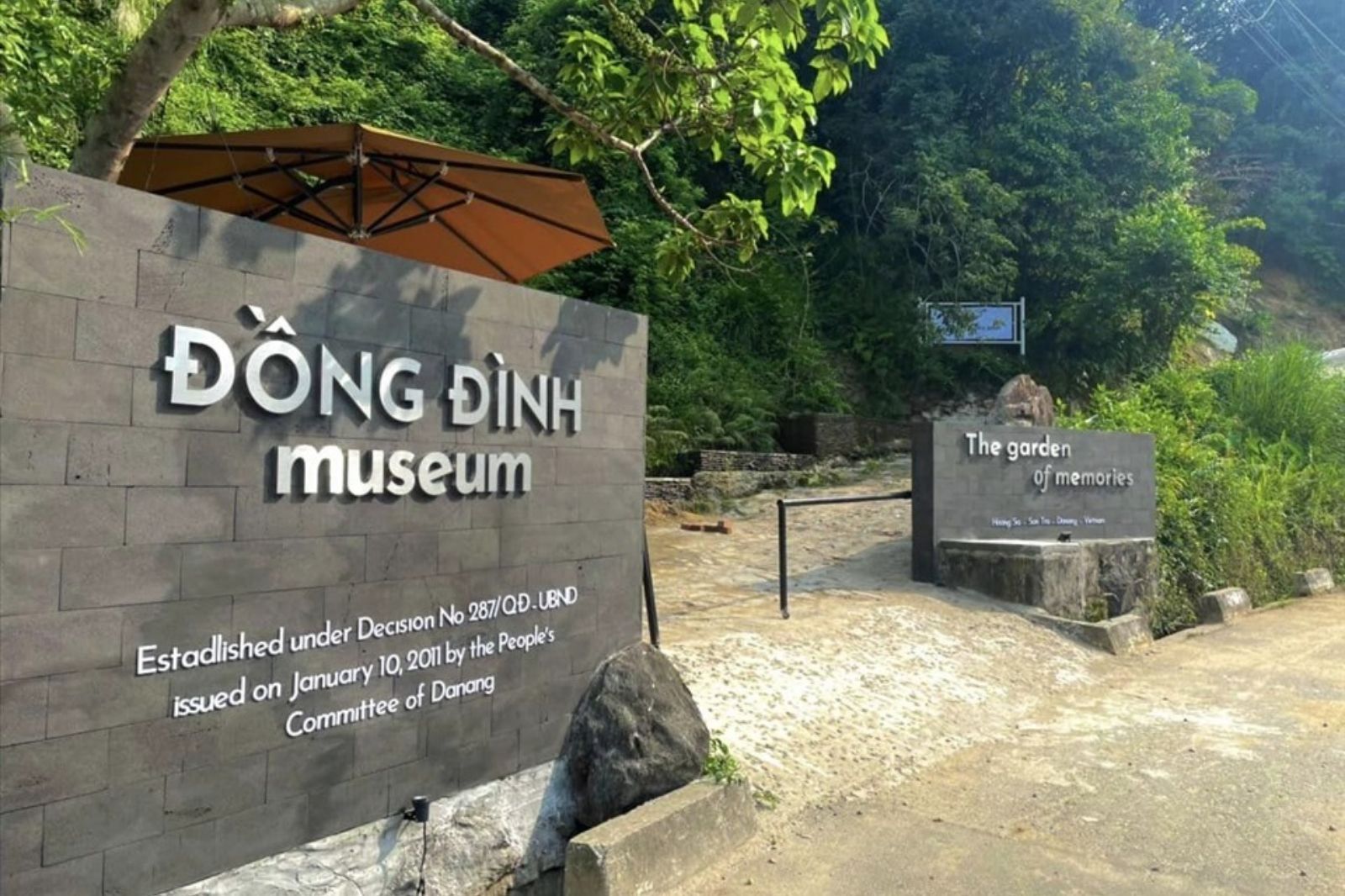
Dong Dinh Museum on Son Tra Peninsula
Photo: Dong Dinh Museum on Son Tra Peninsula 

2. The history of Dong Dinh Museum

Dong Dinh Museum officially opened on January 10, 2011 (some sources record it starting operations at the end of January 2011). It is a project with strong personal imprints of Meritorious Artist Doan Huy Giao – a passionate poet and director who spent many years attached to the Central Highlands region.

The idea of building the museum was cherished by him for over 40 years, originating from collecting artifacts during documentary filmmaking trips in villages and high plateau regions. The name “Dong Dinh” was inspired by a native plant species common in Son Tra – a plant of the palm family whose wide canopy provides shade and whose fruit is used in folk medicine. More than just an exhibition space, the museum is likened to a “garden of memories”, where fading cultural values of coastal fishing villages, ethnic minority communities, and ancient heritage are preserved and recreated. Notably, this is one of the few private museums permitted to be built within the Son Tra National Forest – a testament to efforts in preserving heritage amid pristine natural space.

Fishing village memory area
Photo: Fishing village memory area 

3. Unique traditional 'ruong' house architecture at Dong Dinh Museum

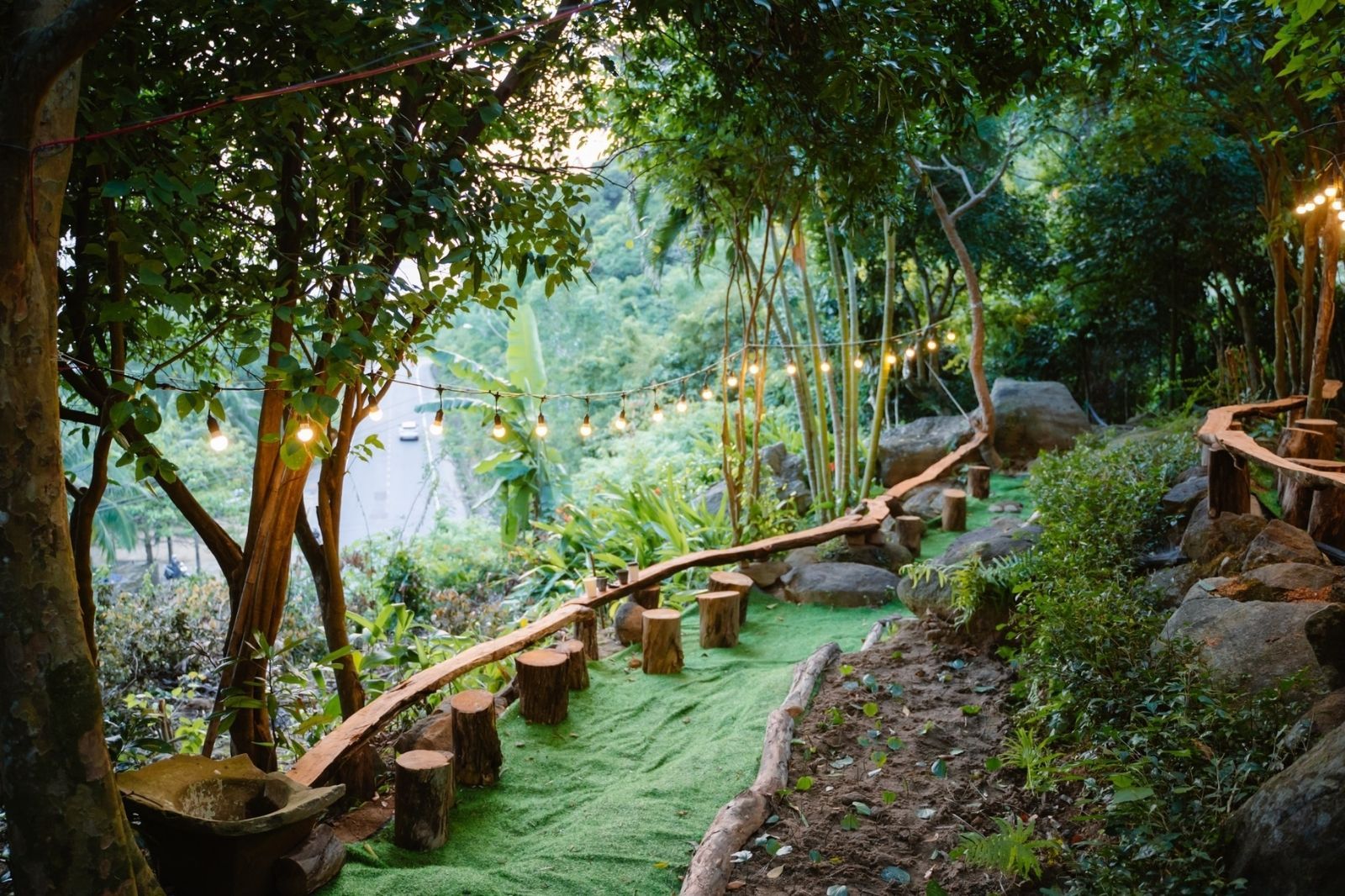
The key point creating a distinct mark for Dong Dinh Museum is its “green” architectural philosophy, designed in harmony with the terrain and natural ecosystem of the Son Tra Peninsula. The entire exhibition space is arranged in an arc shape, leaning against natural hillsides with its back to the mountains and face to the sea, ensuring no disruption to the primeval forest landscape.

The building is a subtle combination of the midland garden house style of Quang Nam – featuring betel palm trees, jackfruit trees, fruit orchards, and typical Central Highlands garden space, while preserving native flora. Exhibition areas are separated by cool green garden spaces, creating a feeling of relaxation and guiding emotions with every step of exploration.

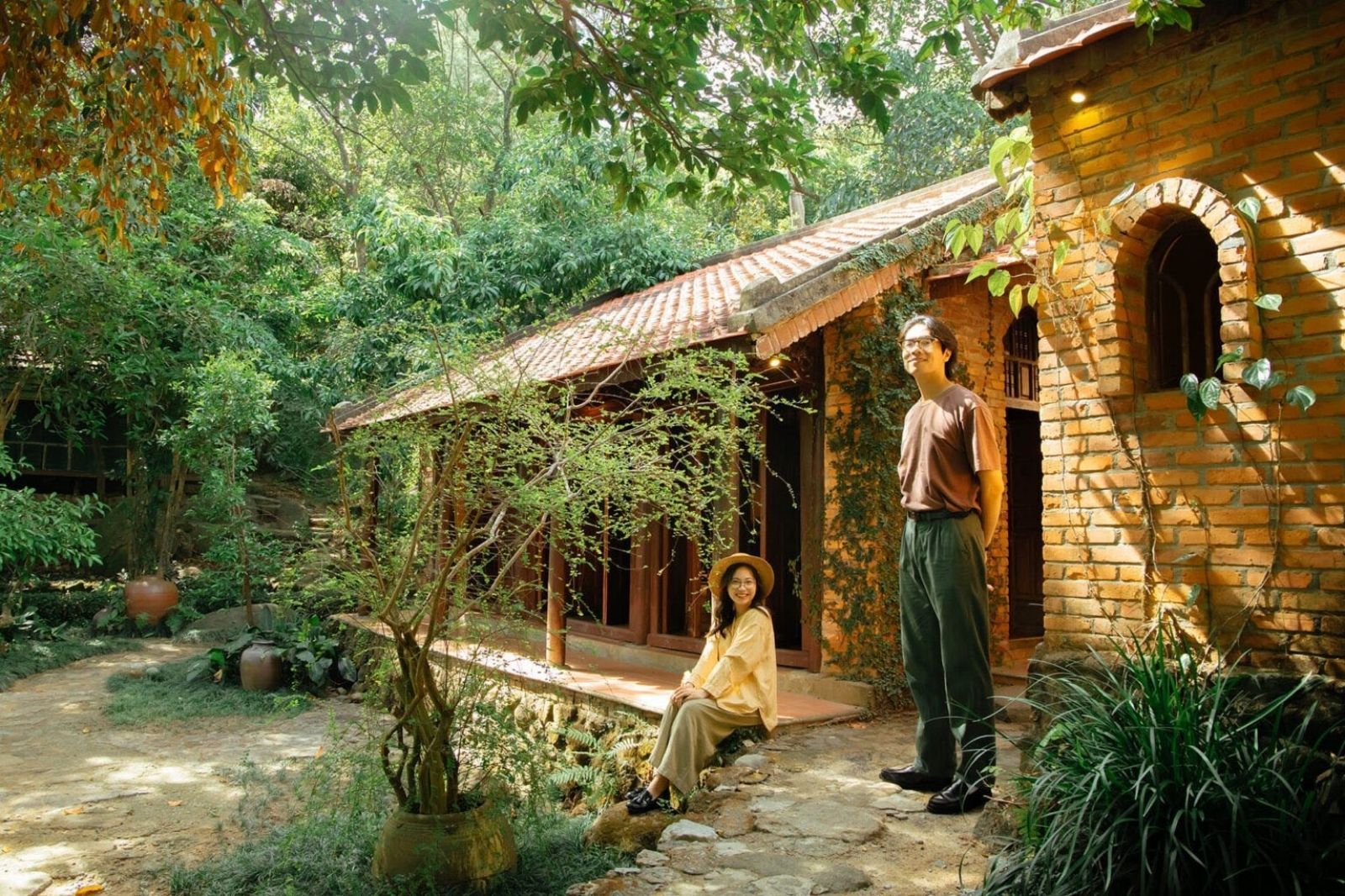
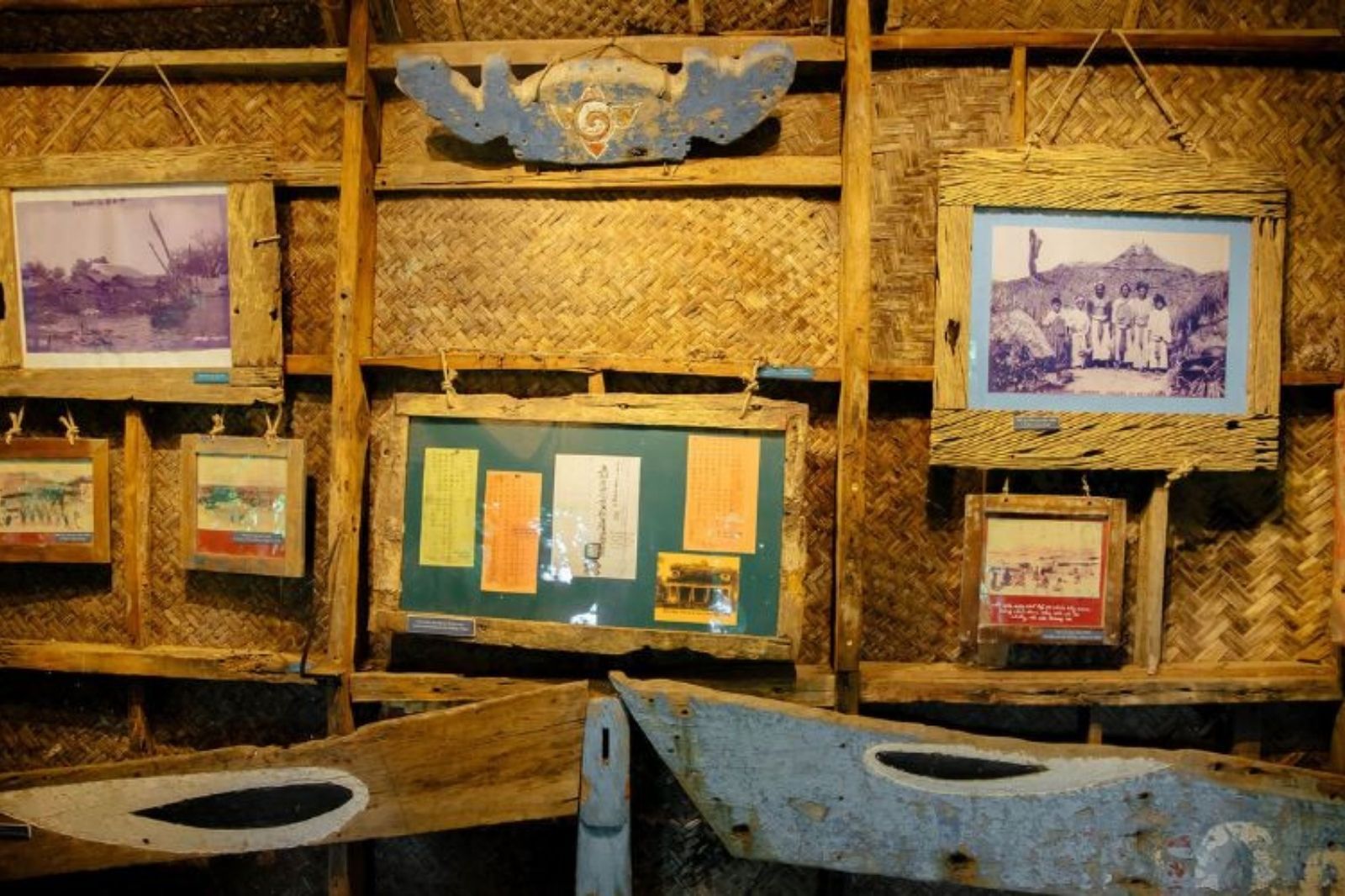
One of the most impressive highlights is the “fishing village memory house”, constructed from recycled materials such as wooden boat pieces, bamboo basket boats, and coracles, faithfully recreating the daily living space of ancient coastal residents. Additionally, two ancient wooden houses in the style of Kim Bong Carpentry Village (Hoi An) are used to display antiquities, contributing to the cultural depth of the complex. The blend between traditional and modern elements, between architecture and nature, creates a space rich in rustic yet refined “forest life” essence. This is why many visitors consider this place one of the representative “green & artistic” destinations in Da Nang.

Visitors should visit the museum in the morning
Photo: Visitors should visit the museum in the morning 

4. Art and artifact exhibition space at Dong Dinh Museum

One of the most attractive features of Dong Dinh Museum is its diverse exhibition system, where each area tells its own story about culture, history, and people.

  • Antiquity House (two wooden houses): A space housing hundreds of ceramic artifacts dating from 100 to 2,500 years ago, representing various cultures such as Sa Huynh, Oc Eo, Champa, and Vietnamese feudal dynasties (Ly, Tran, Le, Nguyen), alongside Chinese ceramics across the Han, Tang, Song, Ming, and Qing dynasties. Highlights include willow-leaf-shaped earrings, Sa Huynh stone bracelets, and Champa artifacts from Tra Kieu.
  • Ethnology House: Recreates the daily lives of ethnic minorities in the Central Region – Central Highlands through a rich collection of artifacts such as musical instruments (Chapi, Goong string instruments), labor tools (machetes, back baskets, crossbows), and spiritual items. The space is imbued with “forest life” characteristics, harmoniously combining with contemporary installation art.
  • Fishing Village Memory House: Recreates authentic living spaces of Nam Tho fishing village (Da Nang) in the early 20th century (1908–1910) with fishing gear, fish sauce jars, fishing nets, bamboo boats... evoking memories of coastal fishing villages like Nam O, Thanh Khe, Nai Hien.
  • Fine Arts Exhibition Area: Introduces contemporary works of art by painters Dinh Y Nhi and Dang Viet Trieu. The works combine painting, sculpture, and artistic masks, creating a modern space that still blends delicately with the ancient natural landscape.

Besides, the museum also possesses a quiet tea space where visitors can stop, enjoy tea, and contemplate the beauty of the intersection between art and nature.

5. Exciting experiences when visiting Dong Dinh Museum

Dong Dinh Museum is not only a place to keep antiquities, but it also offers many unique cultural and relaxing experiences amidst the Son Tra forest space. Visitors coming here can both explore art and enjoy the peaceful atmosphere of nature.

  • Enjoy tea in an artistic space: Quiet tea corners like Thach Quy Tea House or Ngu Lam Tea Pavilion offer the experience of enjoying Shan Tuyet tea and traditional Vietnamese teas amidst serene forest and ocean views.
  • “Green & artistic” check-in: Visitors can take photos at many impressive spots such as ancient wooden houses, stilt houses, boulder formations, stone eyes, or ancient banyan trees, creating highly artistic photos amidst nature.
  • Learn about local culture: Through the displayed artifacts and stories, visitors have the opportunity to explore the lives of coastal fishermen and Central Highlands communities without traveling far.
  • Relax amidst nature: Stroll through the lush green garden, listen to the sound of flowing streams, and detach from the noisy pace of the city – an experience very suitable for families, groups of friends, or students.
  • Participate in art events: The museum occasionally hosts cultural exchanges and performances of traditional musical instruments such as the zither (dan tranh), providing an intimate and profound artistic space.

Thanks to the combination of culture, art, and nature, a visit to Dong Dinh Museum is not only a journey of discovery but also an opportunity for visitors to rediscover tranquility and creative inspiration.

Check-in at Dong Dinh Museum
Photo: Check-in at Dong Dinh Museum 

Dong Dinh Museum is not only a destination for those who love history, art, and culture, but also an ideal choice for eco-tourism and experiential tours in Da Nang. With its green space amidst Son Tra forest, harmonious architecture, and valuable antique collections, this place offers a distinct journey combining sightseeing, cultural learning, and relaxing amidst nature. Dong Dinh Museum Tour can be combined into the Son Tra Peninsula sightseeing itinerary, along with famous destinations like Linh Ung Pagoda, the thousand-year-old banyan tree, and Ban Co Peak (Chess Board Peak). This is the perfect stopover for visitors wishing to take a break from urban life, rediscovering peace and traditional cultural values in the heart of Da Nang.

Loading......

Featured destinations