|

Back Home

Kim Bong Carpentry Village: A 500-Year-Old Woodworking Art Heritage in Hoi An

Central

Da Nang

Hoi An

Sovaba.travel

Updated at: 28/08/2026

1. Where is Kim Bong Carpentry Village?

Kim Bong Carpentry Village was formed and developed thanks to its location close to the important waterway trade routes of the Hoi An area.

  • Location: Trung Ha Village, Cam Kim Commune, Hoi An City, former Quang Nam Province (now Da Nang City)
  • Position: Located on the right bank of the Thu Bon River, about 1–2 km from Hoi An Ancient Town across Cam Kim Bridge
  • Distance: About 30 km from Da Nang, easy to travel by motorbike or car

This craft village is not only a place of production but also a cultural symbol, located near famous heritage sites such as Hoi An Ancient Town – a UNESCO World Cultural Heritage site.
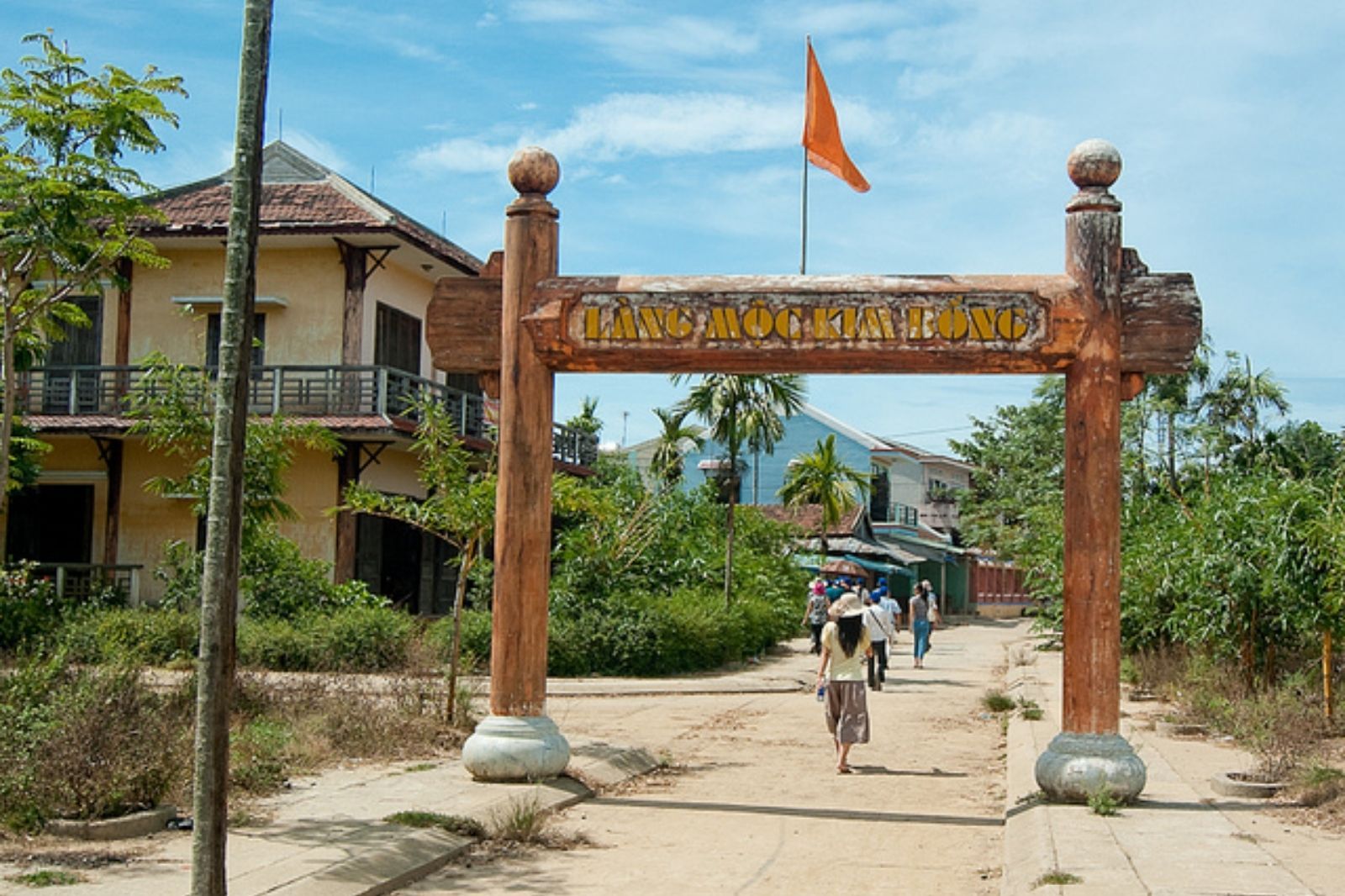
Entrance gate of Kim Bong Carpentry Village
Photo: Entrance gate of Kim Bong Carpentry Village 

2. The 500-year history and development of Kim Bong Carpentry Village

Kim Bong Carpentry Village was established in the 15th-16th centuries, when skilled carpenters from northern provinces (such as Thanh Hoa, Nghe An) migrated to Central Vietnam and settled in Hoi An. Initially, carpentry flourished thanks to the bustling trading port location of Hoi An, where trade took place with China, Japan, and European countries. By the 17th-18th centuries, the village reached its peak with three main branches: construction carpentry (building houses, pagodas), household carpentry (furniture), and shipbuilding carpentry (building vessels).

Over 500 years, the village has gone through many ups and downs, from the golden era contributing to Hoi An's architecture to periods of decline due to war and urbanization. However, since the 1990s, thanks to tourism development and preservation efforts, the craft village has revived. Today, around 200 households still maintain the traditional craft, with master artisans like Huynh Ri – recognized as a People's Artisan – continuing to pass down the skills to the younger generation. The village's history is also associated with festivals such as "Phat Moc" (Ancestral Worship Ceremony) on the 12th day of the first lunar month, expressing respect for ancestors and praying for peace.

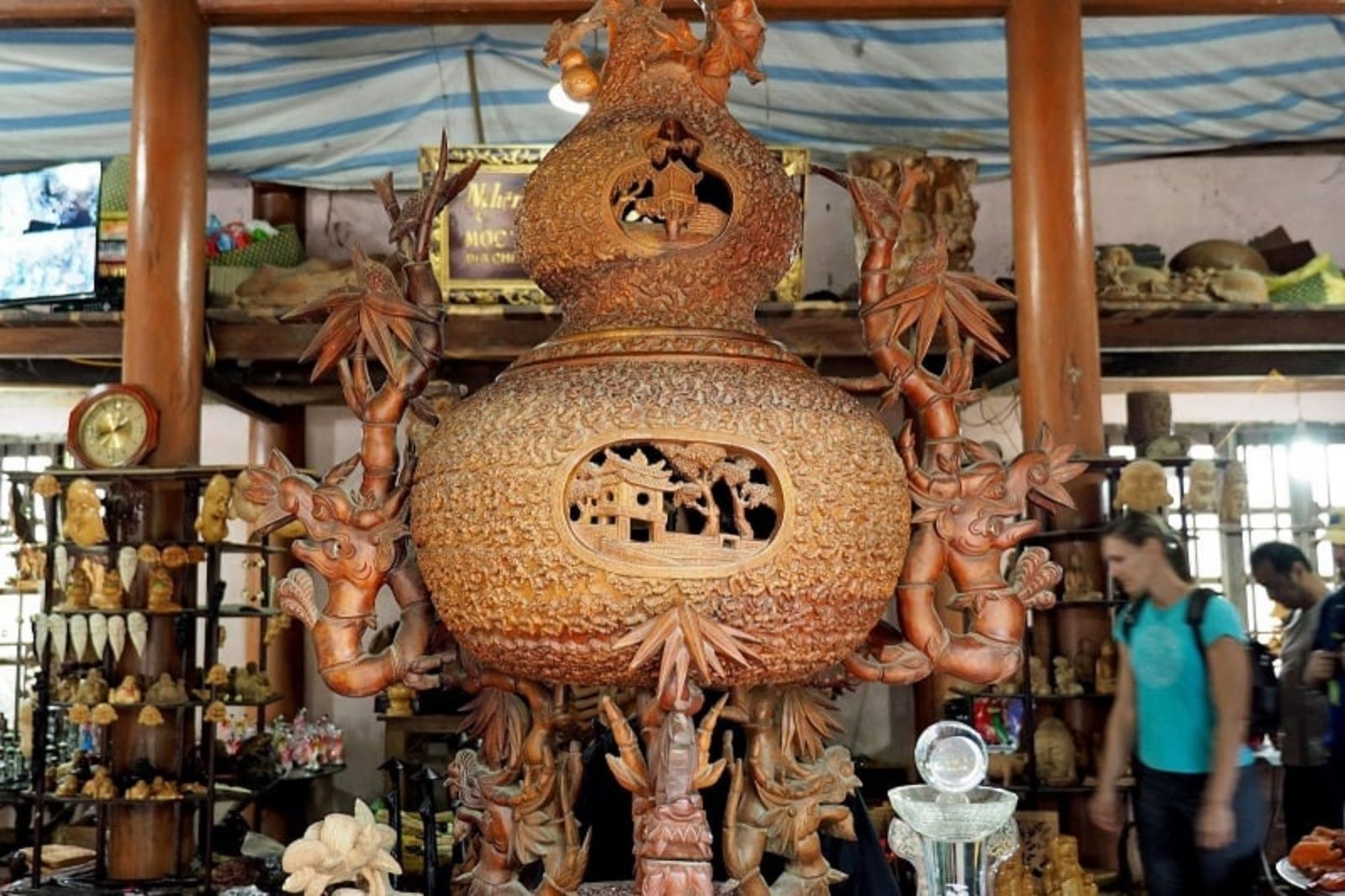
Kim Bong Carpentry Village has a long history
Photo: Kim Bong Carpentry Village has a long history 

3. Traditional wood carving art at Kim Bong Carpentry Village

The art of wood carving at Kim Bong Carpentry Village stands out for its exquisite and meticulous techniques, combining sculpture and painting. Artisans use precious woods such as ironwood, shorea, jackfruit, or mahogany harvested from the primeval forests of Central Vietnam to create vivid motifs like dragons and phoenixes, flowers and foliage, birds, or scenes of daily life. The crafting process includes selecting wood, sketching, rough carving, fine detailing, and finally polishing, all done by hand and requiring decades of experience.

A unique feature is the harmony between "poetry and painting" in each product, where the carved lines are not only visually striking but also carry philosophical and feng shui meanings. Artisan Huynh Ri, with over 50 years of experience, has carved for hundreds of structures, from ancient houses in Hoi An to national monuments. Today, the village also applies modern technology for preservation, such as using supportive machinery while still maintaining the handcrafted soul.

4. Signature wood products of Kim Bong Carpentry Village

Products from Kim Bong Carpentry Village are diverse, catering to everything from daily household needs to large-scale architectural projects. Some typical product lines include:

  • Ancient houses and wooden architecture: Most horizontal lacquered boards, parallel sentences, and wooden pillars in Hoi An's ancient houses were crafted by Kim Bong carpenters.
  • Household furniture: Tables, chairs, altar cabinets, and beds with delicate carved motifs, priced from 5–50 million VND depending on size.
  • Wood statues and decorative items: Buddha statues, sacred animals, 3D wooden paintings, popular as souvenirs, priced from 200,000 VND.
  • Ship models: Replicas of ancient Hoi An trading ships once used for international trade.
  • Modern products: Handicrafts such as tea boxes and wooden trays, combining contemporary elements to suit the tourism market.

All products bear the stamp of Vietnamese culture, featuring high quality and exceptional durability thanks to traditional termite-resistance techniques.

5. Cultural and historical values of Kim Bong Carpentry Village

Kim Bong Carpentry Village is not only a place of production but also a living cultural heritage, contributing to Hoi An's UNESCO recognition in 1999. Its historical value lies in preserving craft traditions across generations, reflecting the cultural interplay between Vietnam, China, and Japan in architecture. Culturally, the village showcases community spirit through festivals such as ancestor worship ceremonies and Phat Moc, where villagers pray for bountiful harvests and smooth business.

It is also a symbol of sustainability, with efforts to "green" heritage by using recycled wood and educating community-based tourism. These values make the village an inspiration for cultural research while contributing to preserving national identity in the context of modernization.

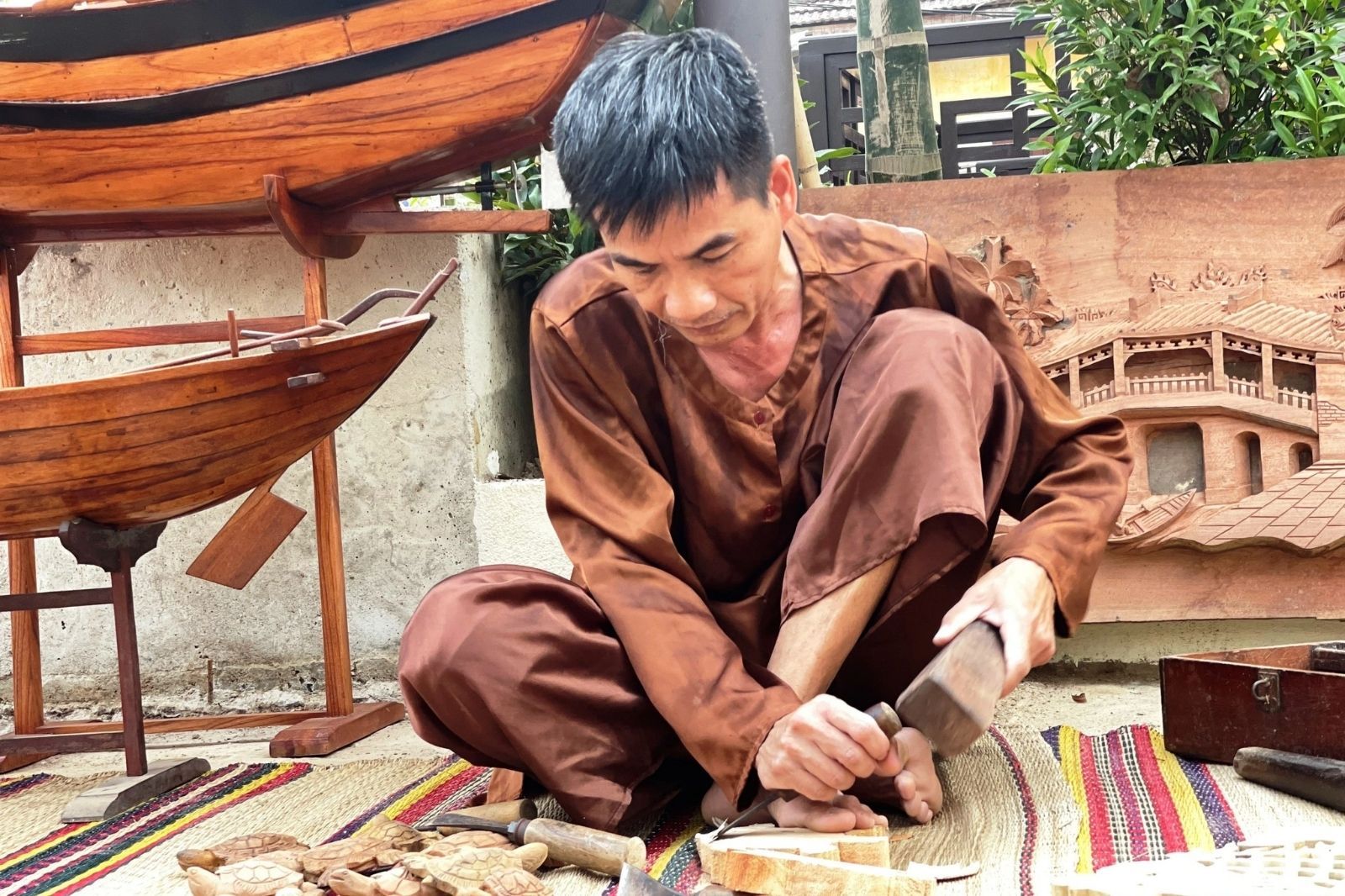
Carpenter artisan in Kim Bong
Photo: Carpenter artisan in Kim Bong 

6. Travel experiences at Kim Bong Carpentry Village for visitors

Visiting Kim Bong Carpentry Village brings authentic and intimate experiences. You can:

  • Watch artisans at work: Visit artisans' workshops to witness the carving process, from sawing wood to finishing products.
  • Try hands-on carpentry: Join souvenir-making workshops such as carving names on wood, priced around 100,000–200,000 VND/person.
  • Shop for products: Purchase authentic handmade crafts to support the local economy.
  • Explore the countryside: Stroll around the village, admire the Thu Bon River, visit the village communal house, and participate in festivals if timing aligns.
  • Combine with a river tour: Take a boat ride from Hoi An, combined with visiting Thanh Ha Pottery Village or Tra Que Vegetable Village.

This experience is suitable for families, groups of friends, or culture-loving travelers, helping you gain a deeper understanding of the soul of Vietnamese carpentry.

7. Guide to visiting Kim Bong Carpentry Village from Hoi An

From the heart of the Ancient Town, visitors can easily reach Kim Bong Carpentry Village in just a few minutes; below is the most detailed and convenient guide for visiting Kim Bong Carpentry Village from Hoi An.

  • By bicycle or motorbike: You can rent a vehicle in Hoi An for about 50,000–100,000 VND/day. From the center, cross Cam Kim Bridge, then follow the rural road to Trung Ha Village. The road is flat, easy to navigate, and offers scenic river views.
  • By boat: Departing from Hoai River pier, you can buy a boat ticket (about 150,000 VND/person) to cross over to Cam Kim. This option is suitable if you wish to experience more of the Thu Bon River scenery.
  • By bus or taxi: Local buses cost around 20,000 VND/trip. If taking a taxi, the cost ranges around 100,000 VND/one way, suitable for groups or families.
  • Ideal time: It is recommended to visit in the morning (7:00 AM–10:00 AM) or late afternoon (3:00 PM–6:00 PM) to avoid harsh sunlight. Entrance to the village is currently free; however, some workshops may charge a visiting fee of around 20,000 VND/person.

Note: Wear polite attire, respect the artisans, and purchase products to support the craft village. If traveling in a group, booking a guided tour is recommended for detailed information.

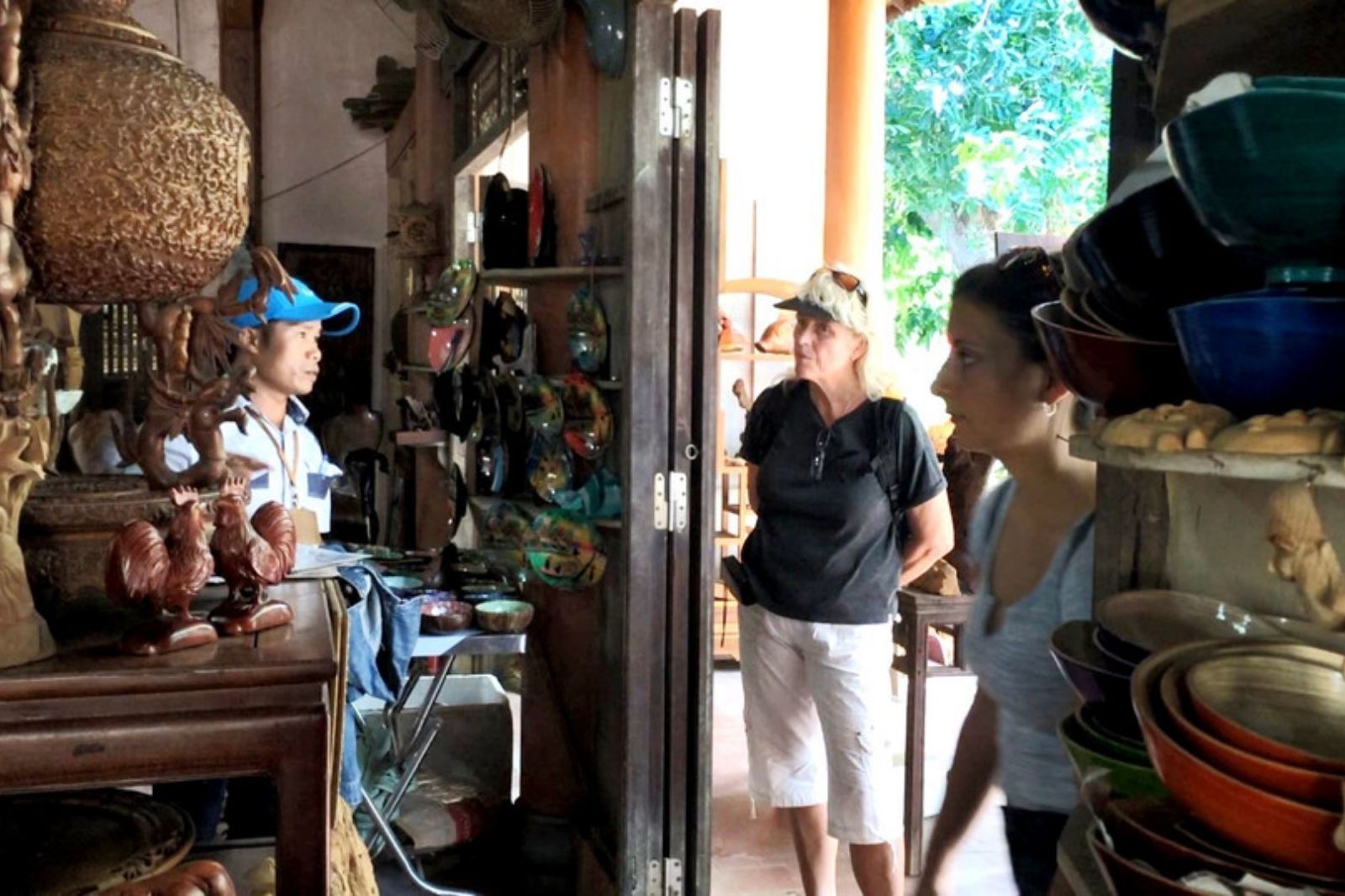
Visiting Kim Bong Carpentry Village
Photo: Visiting Kim Bong Carpentry Village  

Kim Bong Carpentry Village is not only a preserver of a craft over 500 years old, but also a space crystallizing folk knowledge, intricate carving techniques, and the cultural depth of Quang Nam. Through every wood grain and chisel mark, Kim Bong artisans have preserved and passed down values of resilience, creativity, and respect for tradition – elements that form the soul of the craft village. Amid the flow of modernization, Kim Bong Carpentry Village remains present as living proof of the importance of heritage conservation linked with sustainable tourism development. Visiting Kim Bong is not merely a trip to learn about an ancient craft village, but also an opportunity to listen to historical stories, embrace a slower pace of life, and appreciate handcrafted values that are gradually becoming rare.

Loading......

Featured destinations