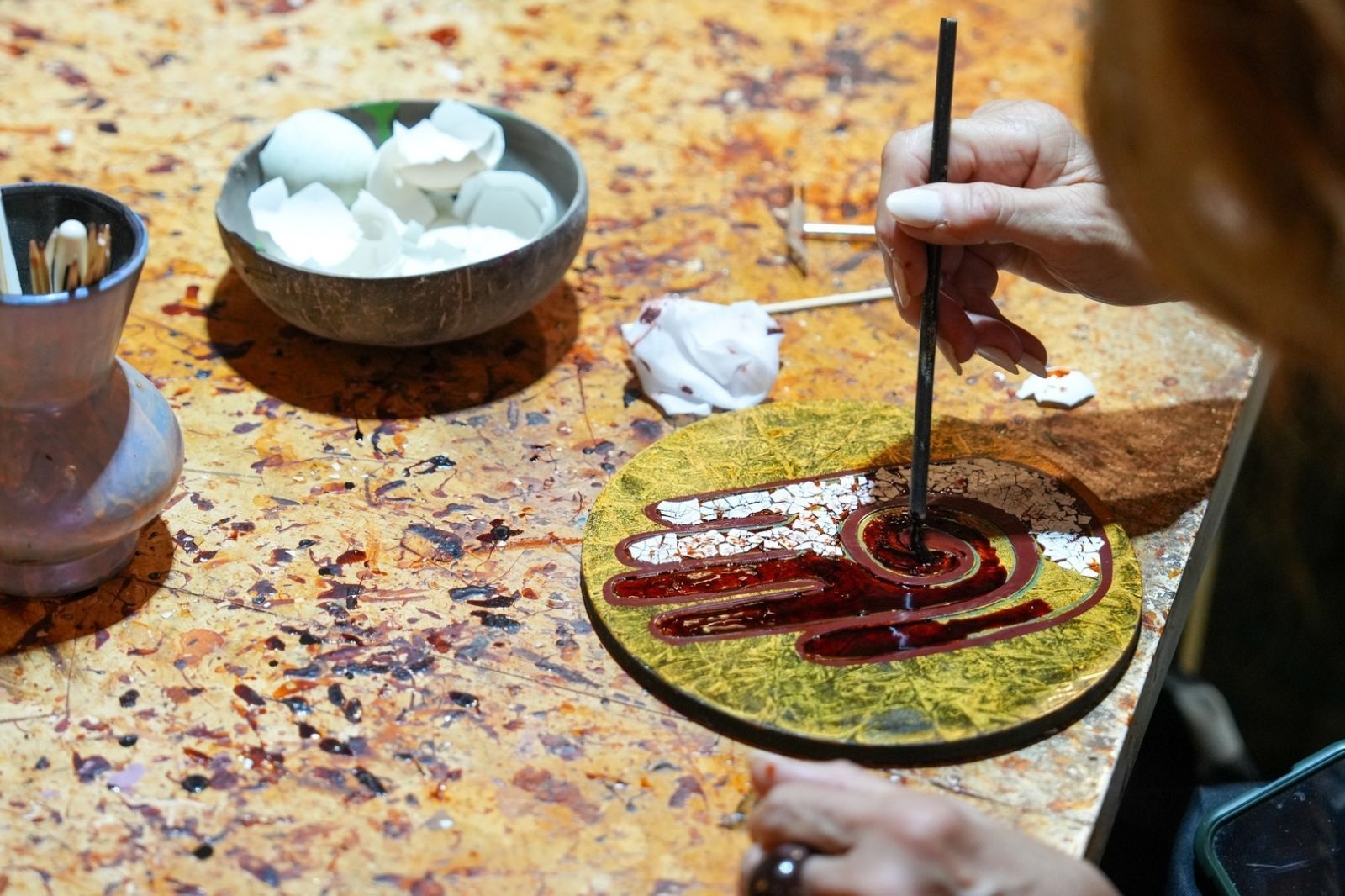
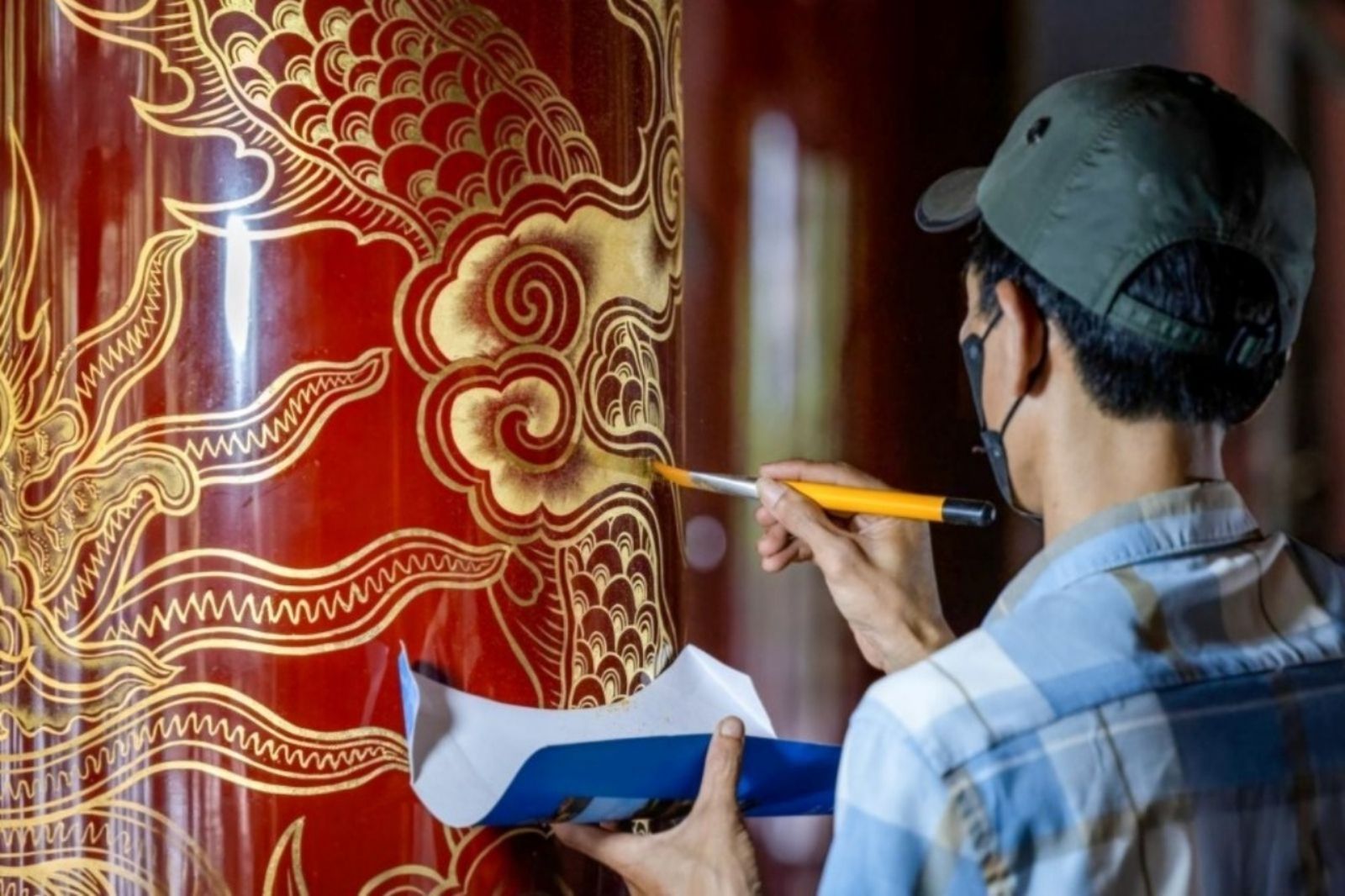
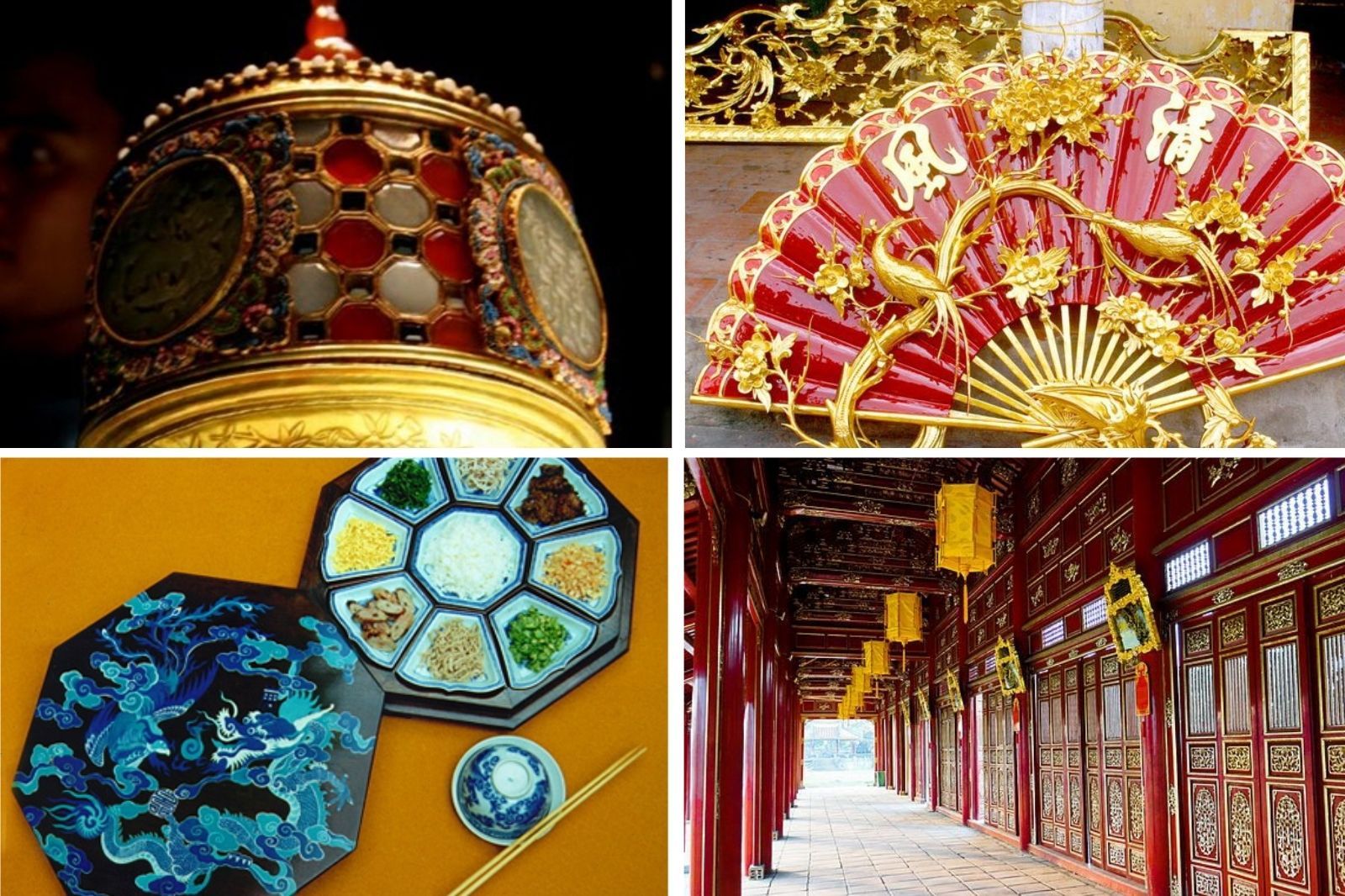
Lacquer craft in Hue originates from ancient craft villages such as Trieu Son, Dia Linh, and especially Tien Non – considered the cradle preserving the quintessence of this art. According to historical records, lacquerware has been present since feudal times and played an important role in decorating palaces, mausoleums, and temples. Notably, during the reign of King Khai Dinh, Tien Non artisans were entrusted with the task of restoring gilded red lacquer at the Hue Imperial City, affirming the village's top reputation and prestige. Through many ups and downs, Tien Non remains a place where the quintessence of lacquer art is passed down from father to son, preserved, and developed across generations.
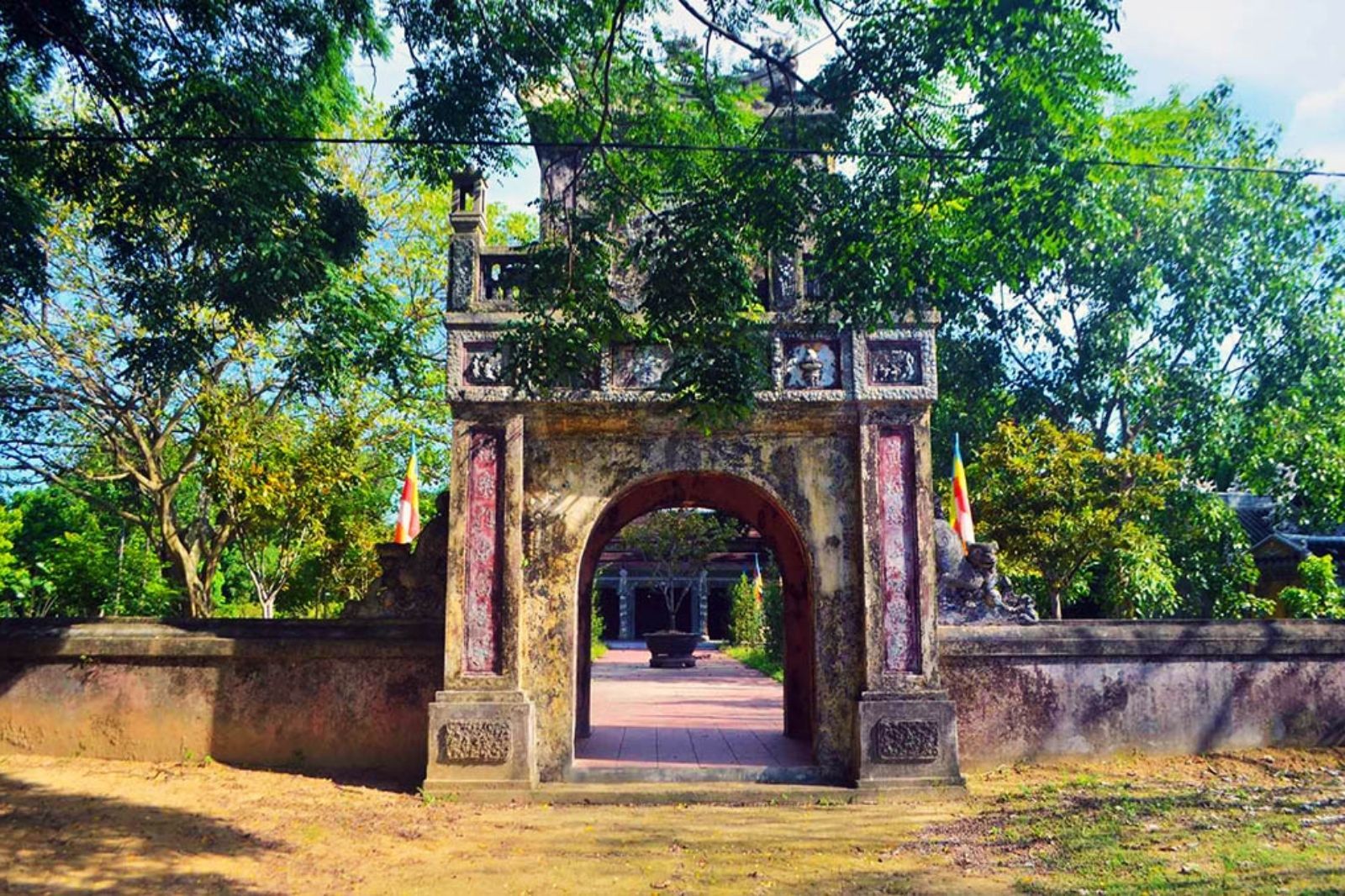
Not stopping at a mere craft, Hue lacquerware has evolved into a unique art form. From folk techniques, lacquerware gradually developed into fine art, contributing to shaping cultural identity and bringing Vietnam's reputation to the world. Hue is one of the most important centers of this art, playing a major role in promoting Vietnamese lacquerware. In particular, in 2016, Vietnam proposed UNESCO to recognize "Lacquer Art" as an intangible cultural heritage. In Tien Non, the craft is not only tied to tradition but also integrates into modern life by utilizing local materials, creating products for tourism and export, and helping spread the beauty of Hue lacquerware to international friends.