Discovering the Architecture of Huyen Khong Son Thuong: A Peaceful Haven Amidst Vast Nature

Central

Thua Thien Hue

Huyen Khong Son Thuong

Sovaba.travel

Updated at: 24/09/2026

1. An overview of Huyen Khong Son Thuong Pagoda

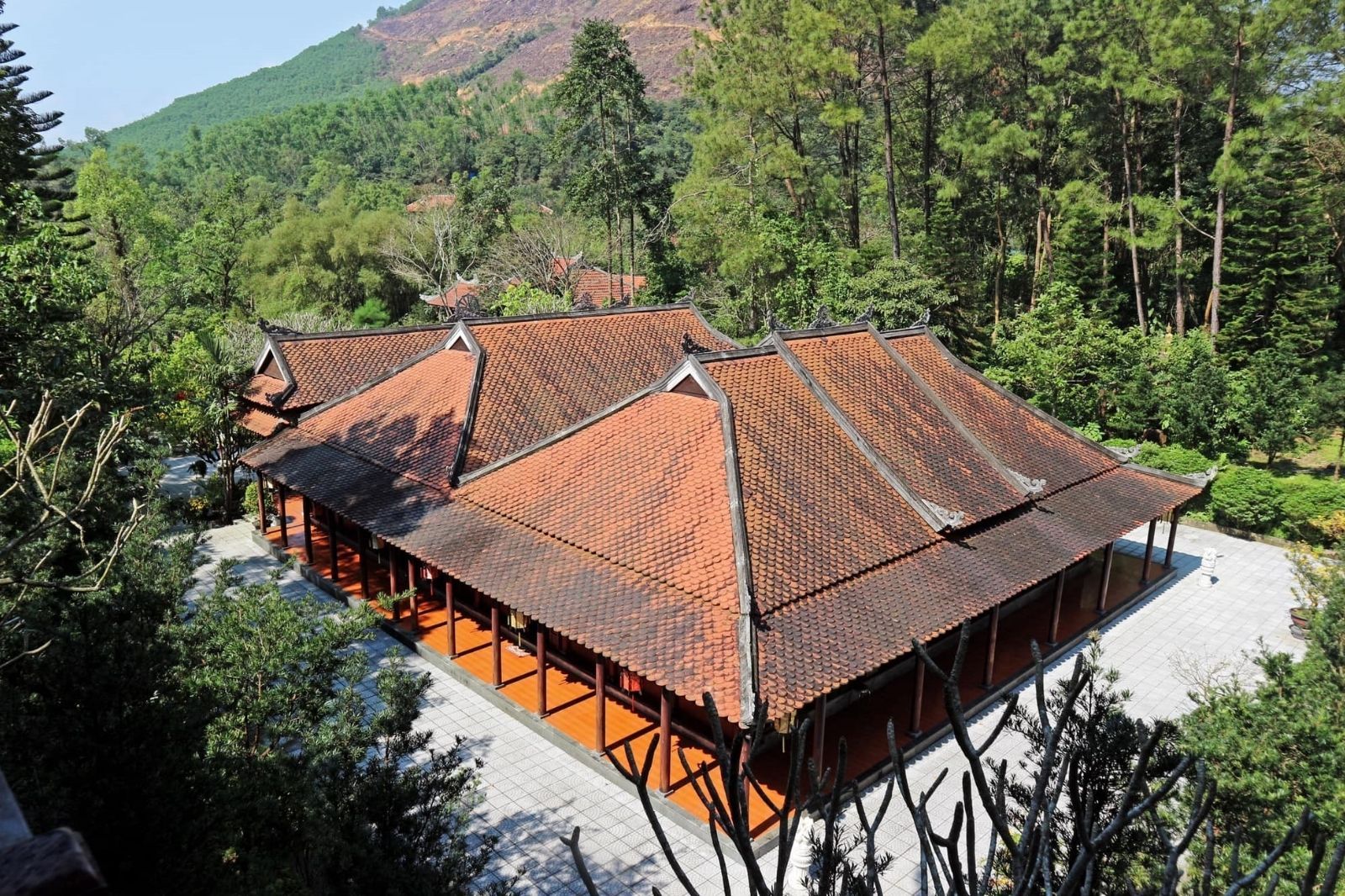
Huyen Khong Son Thuong Pagoda belongs to the Theravada Buddhist sect, founded by Venerable Gioi Duc in 1989 on a land area of over 10,000m². From a barren hill area, the pagoda was built and transformed into a spiritual space in harmony with nature, likened to a "landscape painting" amidst the vast wilderness. Located halfway up the mountain, surrounded by endless pine forests and majestic mountain ranges, it offers a fresh, cool atmosphere year-round.

The pagoda sits on a hill with a peaceful atmosphere
Photo: The pagoda sits on a hill with a peaceful atmosphere  

2. What makes the architecture of Huyen Khong Son Thuong unique?

Unlike many traditional pagodas distinguished by grand triple-arched gates or majestic curved tile roofs, Huyen Khong Son Thuong makes an impression with its rustic, simple beauty in harmony with nature. Situated in the middle of a Zen Forest spanning over 50 hectares, the pagoda is laid out on a campus of about 10,000 m², featuring structures mainly constructed from traditional wood, tiles, and bricks, keeping elaborate decorative details to a minimum to fully preserve its serenity.

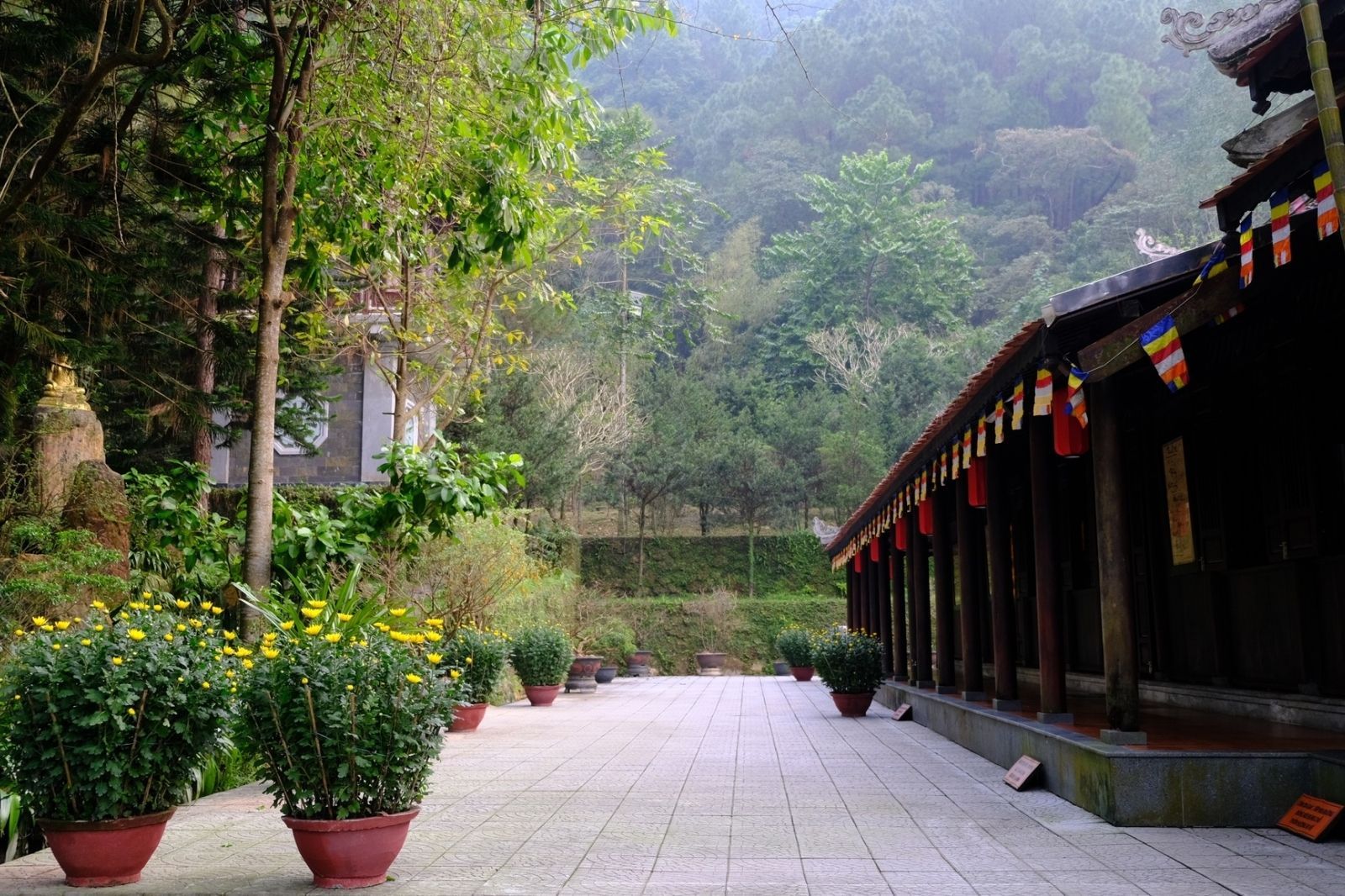
The highlight of Huyen Khong Son Thuong lies in how its architecture blends with the natural landscape. Elements are arranged according to the terrain of hills and valleys, interspersed among pine forests, lakes, stone-paved paths, and lush green gardens. The space is divided into the Outer Compound for visitors to tour and worship, and the Inner Compound serving the monastic learning and living of the monks, creating a balance between spiritual activities and nature.

Instead of displaying grandiosity, the architecture here aims for tranquility, subtlety, and intimacy. Each pagoda roof, wooden bridge, or garden corner is arranged to help people feel peace, true to the Zen meditation spirit of Theravada Buddhism. It is precisely this "nature-conforming" architectural philosophy that creates a unique charm, making Huyen Khong Son Thuong one of the most beautiful and peaceful temple grounds in Hue.
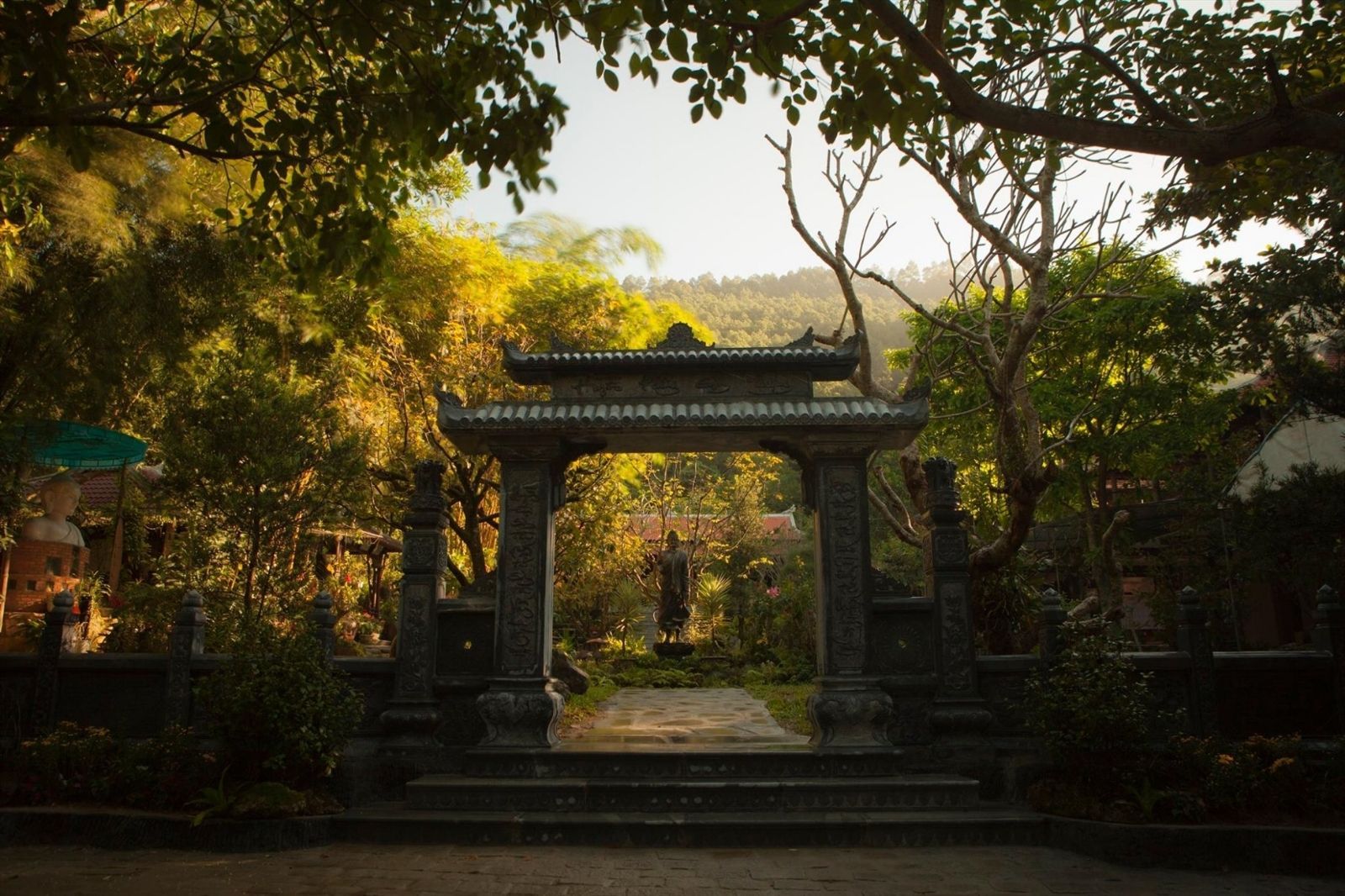
The gate is built of natural stone

Photo: The gate is built of natural stone 
3. The 'harmony with nature' architectural philosophy of Huyen Khong Son Thuong

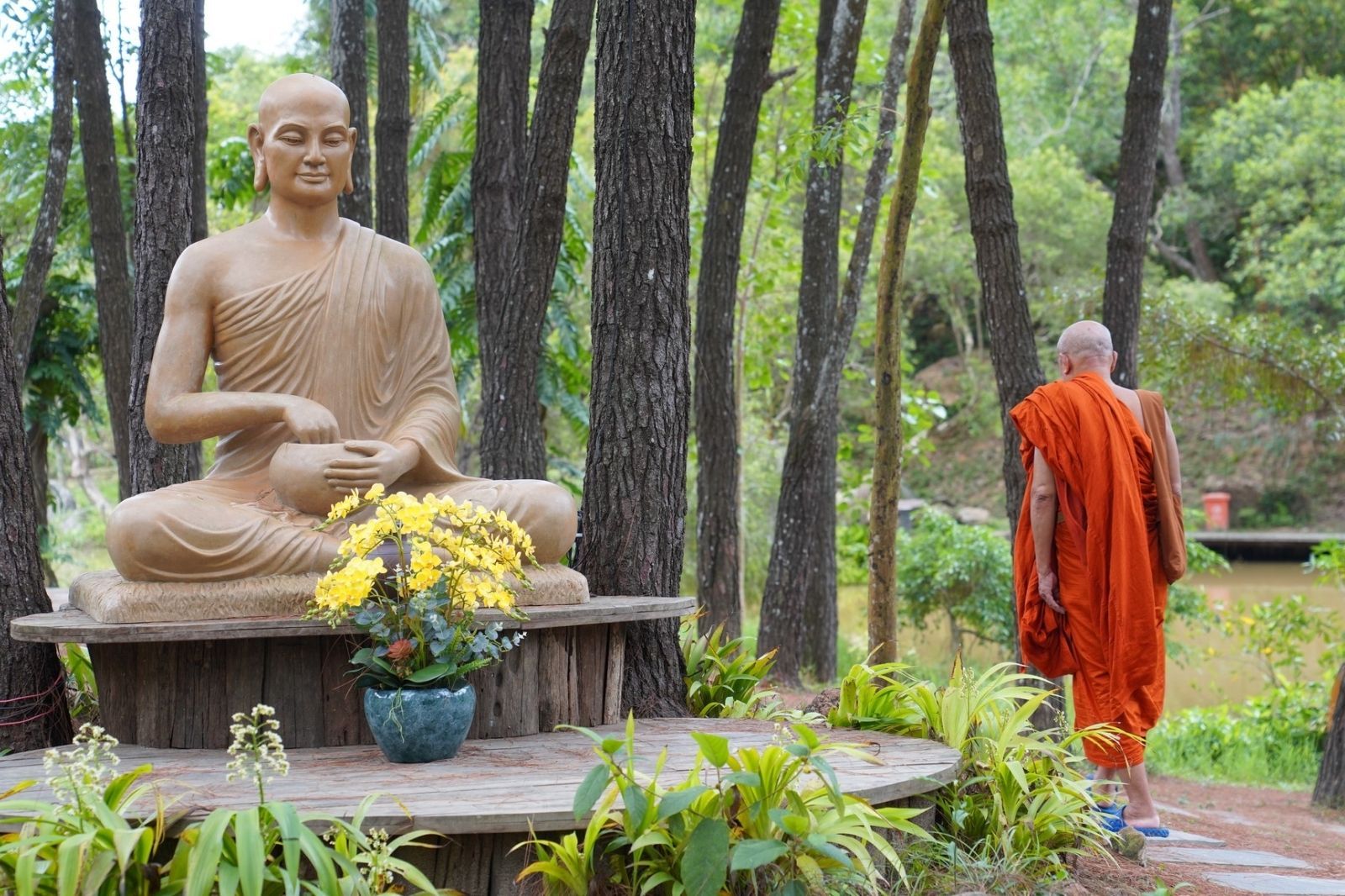
What sets Huyen Khong Son Thuong apart is not only its rustic architecture but also its philosophy of "conforming to nature." Instead of heavily altering the terrain, the pagoda was planned based on the existing landscape, maximizing ecosystem preservation and letting nature become an integral part of the meditation practice space. Under the creation of Most Venerable Gioi Duc, the structures were built with traditional materials such as wood, tiles, and bricks, featuring an open, modest, and welcoming design. Low roofs, pathways winding along the hillsides, wide courtyards, and breezy doorframes allow natural light, birdsong, and the breath of the mountain forest to permeate every corner of the temple, bringing a sense of relaxation and peace.

That philosophy is also expressed through the journey of greening over 50 hectares of forest, combining the planting of pines and native trees, constructing lakes, and creating ecological landscapes to restore the environment. As a result, Huyen Khong Son Thuong is not just an architectural work, but a true "Zen Forest" where humans live in harmony with nature and reconnect with inner stillness.

The pagoda is surrounded by a vast pine forest

Photo: The pagoda is surrounded by a vast pine forest  

4. Discovering the prominent structures within the Huyen Khong Son Thuong grounds

The pagoda's architectural complex consists of many charming small structures, each serving a distinct function yet unified in a rustic, ancient Vietnamese style.

  • Main Hall: The heart of the pagoda, designed in a modified Hue "nhà rường" (wooden beam house) style. A low, mahogany-colored roof, red terracotta floor tiles, and an unpainted natural wooden frame. The statue of Shakyamuni Buddha is placed in the center, flanked by Sariputta and Moggallana. The open, airy space creates a feeling that the Buddha statue blends into the surrounding universe.

  • Nghinh Luong Pavilion: Open on three sides, using hooked tiles and mixed woods. This is where visitors from afar stop to rest, enjoy tea, and converse under the shade of ancient frangipani trees.

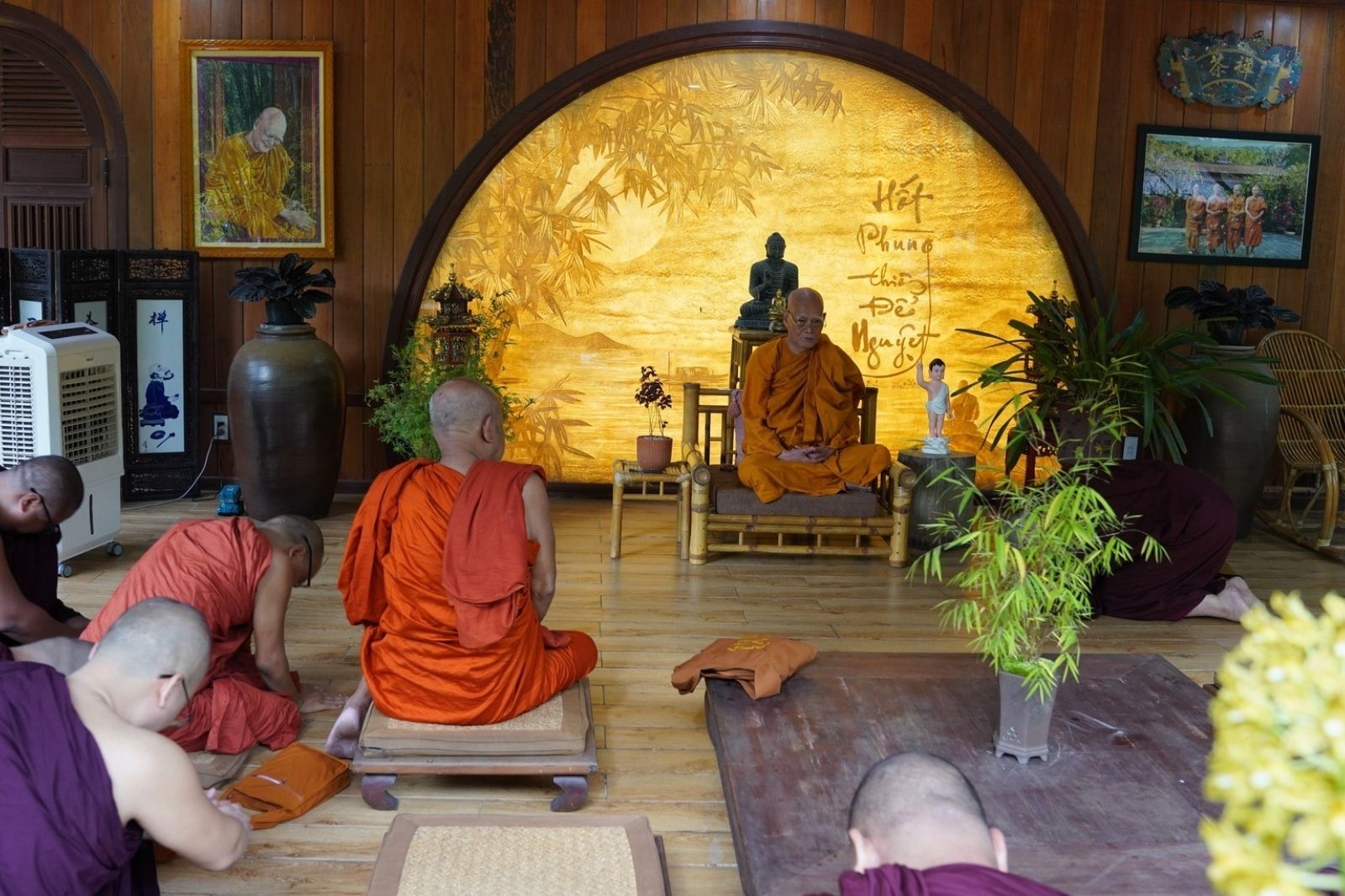
  • Purple Cloud Hermitage: The living quarters, study, and reception area of the abbot. It is also a famous calligraphy space where lovers of literature and poetry gather to discuss and practice calligraphy.

  • Chung Hoa Hall, Tinh Trai Hall, Guest House, Monks' Quarters: Facilities serving the daily life, dining, and rest of the monks, designed simply, cleanly, and in harmony with the garden.

In addition, there are Yen Ha Pavilion, Calligraphy Pavilion (opposite the pine hill), meditation huts, and stone garden landscapes—all retaining the soul of Hue and Vietnam.

Visitors should wear polite attire when visiting the pagoda

Photo: Visitors should wear polite attire when visiting the pagoda 

5. Ham Nguyet Tri Lake and the Zen garden amidst the vast forest

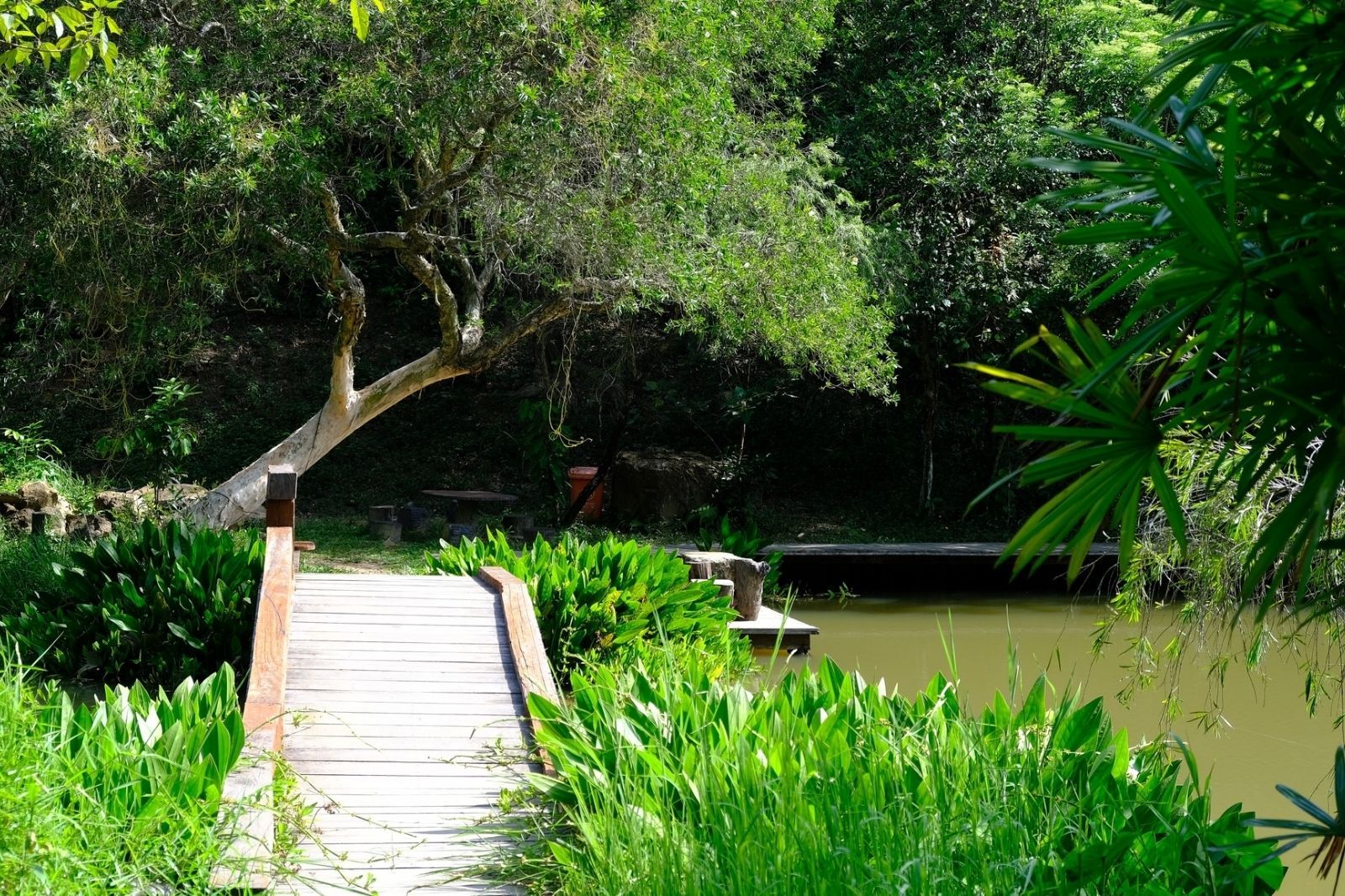
Amidst the serene atmosphere of Huyen Khong Son Thuong, Ham Nguyet Tri Lake (also known as Thuy Nguyet Dam) is a prominent landscape highlight, attracting visitors with its peaceful beauty and rich meaning. The lake is designed in the shape of the letter S, symbolizing the land of Vietnam, featuring clear blue water, swimming fish, and water lilies blooming seasonally, creating a romantic scene characteristic of Hue. Surrounding the lake is a Zen garden harmoniously planned with nature, featuring small wooden bridges, stone-paved paths, orchid gardens, frangipani trees, sago palms, pines, cypresses, and many shady ancient trees. Behind it lies a vast pine forest, offering fresh air and a sense of complete detachment from the noisy life outside.

Not only possessing aesthetic value, Ham Nguyet Tri Lake and the Zen garden are also spaces for everyone to rediscover peace in their soul. The rustling wind through the pine canopy, the chirping birds, and the calm lake surface blend together to create a Zen-filled atmosphere, helping visitors slow down, relax, and fully appreciate the beauty of nature as well as the spirit of Theravada Buddhism.

The outer compound of the pagoda

Photo: The outer compound of the pagoda 

6. Must-visit beautiful spots at Huyen Khong Son Thuong

Not only a serene place for monastic practice, Huyen Khong Son Thuong also boasts many scenery spots with a Zen beauty, highly suitable for strolling, admiring, and capturing peaceful moments. Every space is arranged in harmony with nature, creating photo opportunities rich in Hue's poetic charm.

  • The pagoda gate features a rustic, simple architecture like the gate of a Hue garden house, opening up to the lush green space of the pine forest.

  • The wooden bridge across Ham Nguyet Tri Lake is a check-in spot favored by many visitors, especially in the early morning or late afternoon when sunlight reflects on the water's surface.

  • The Calligraphy Pavilion is highlighted by couplets and calligraphy poems changed periodically, creating a space rich in cultural and Zen study values.

  • The stone and grass garden along with red brick pathways offer a peaceful landscape where visitors can stroll and feel the tranquility amidst nature.

  • Nghinh Luong Pavilion is an ideal spot to admire panoramic views of the lake, pine forest, and enjoy the fresh mountain air.

  • The ancient pine trees, orchid stands, frangipani trees, bamboo groves, and tree-shaded pathways are also poetic photographic corners carrying the distinct signature of Huyen Khong Son Thuong.

No matter where you stand, Huyen Khong Son Thuong brings a sense of relaxation and peace. It is the harmonious combination of architecture, trees, and water that creates a quiet Zen space, helping visitors temporarily set aside the bustling pace of life to immerse themselves in the peaceful beauty of Hue's mountains and forests.

The abbot's study room

Photo: The abbot's study room 

The journey to discover Huyen Khong Son Thuong brings not only impressions of an architectural structure in harmony with nature, but also an unforgettable spiritual experience. Amidst the silent wilderness, the pagoda opens up a peaceful pause where every traveler can find their own serenity.

To fully experience that beauty, you can accompany Sovaba Travel on tours to Huyen Khong Son Thuong. Not only will you admire the Zen refuge hidden in the mountains, but you will also have the opportunity to combine your visit with exploring many other distinctive destinations in Hue, making your trip richer and more meaningful. This will surely be a journey bringing you closer to the nature, culture, and spiritual depth of the Ancient Capital land.

Loading......

Featured destinations