Hien Luong Bridge is located in Hien Luong Village, Vinh Thanh Commune (formerly Hien Thanh), Vinh Linh District, Quang Tri Province. The bridge spans the Ben Hai River – a river approximately 100 km long originating from the Truong Son Mountains, flowing along the 17th parallel, and emptying into the East Sea via Cua Tung.
The Ben Hai River is about 200 meters wide at its broadest point, serving as the natural boundary between Vinh Linh District (North bank) and Gio Linh District (South bank). This area belonged to the Demilitarized Zone (DMZ) under the 1954 Geneva Accords, extending 5 km on each side of the river to prevent direct conflict between both sides. The original Hien Luong Bridge (restored) is approximately 178 meters long and 4 meters wide, featuring a simple design that bears a clear historical mark.
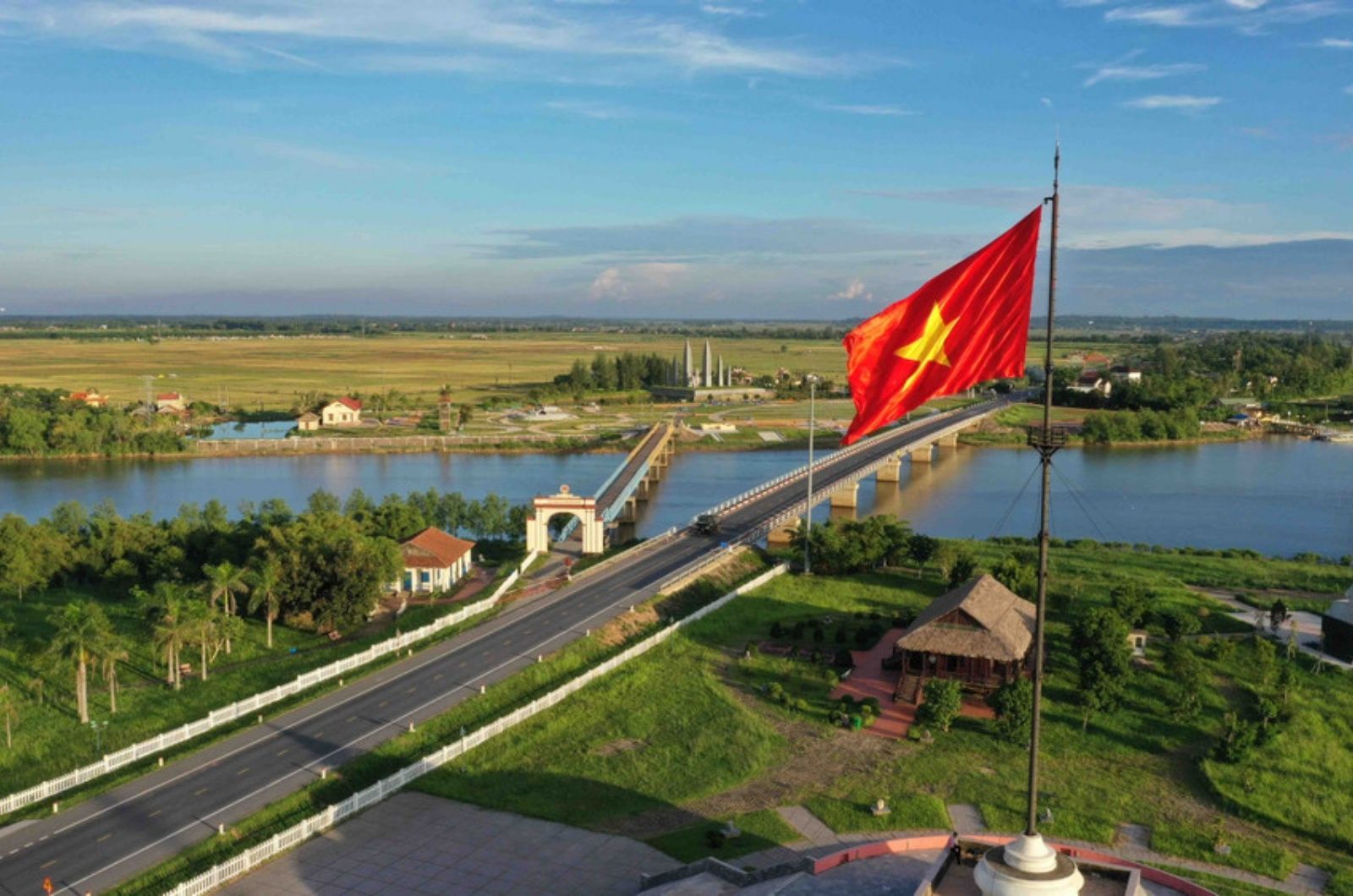
The history of Hien Luong Bridge began in 1928, when the first bridge was built out of wood and iron by local residents to facilitate travel between the two banks of the Ben Hai River. In 1952, the French colonialists rebuilt the bridge using reinforced concrete for military purposes. During combat, local guerrilla forces destroyed the bridge to halt the advance of French troops. Subsequently, the French colonialists rebuilt a new bridge – the version that has become a familiar historical image in the memory of many generations.
After the victory at Dien Bien Phu, the Geneva Accords were signed on July 20, 1954, temporarily dividing Vietnam into two military regrouping zones at the 17th parallel. From then on, the Ben Hai River and Hien Luong Bridge became the temporary military demarcation line between North and South Vietnam. Originally, this division was intended to last for only two years leading to a general election to reunite the country in 1956. However, due to subsequent political developments, particularly the Ngo Dinh Diem administration's refusal to hold general elections, the demarcation line at Hien Luong lasted for 21 years.
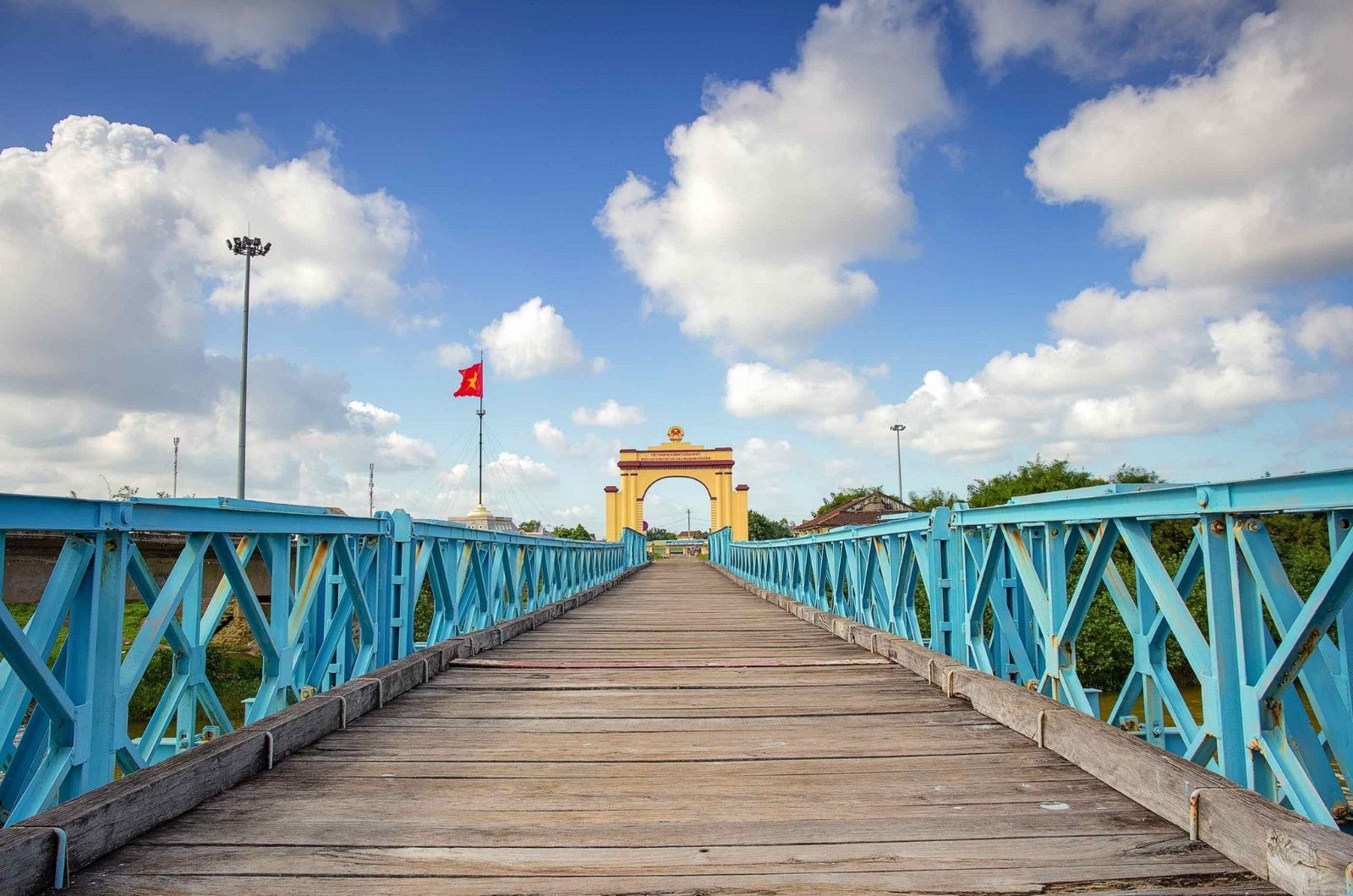
During the period from 1954 to 1975, Hien Luong Bridge became the clearest symbol of the nation's division. The bridge was painted in two different colors: the North side was once painted red before being changed to blue, while the South side was painted yellow. Right in the middle of the bridge was a white painted line just 1 cm wide – a tiny boundary that symbolized the pain of division felt by the entire nation.
Not only a geographical dividing point, this site was also the scene of extraordinary "psychological warfare" such as loudspeaker wars, flag duels, propaganda, and shows of force between the two sides. Though there was no direct gunfire on the bridge deck, Hien Luong Bridge was considered a special front in the multi-year war. In 1967, the bridge was bombed and destroyed by the U.S. Air Force and suffered severe damage in subsequent military campaigns. After national reunification in 1975, Hien Luong Bridge was restored and repainted in a single shade of blue – symbolizing peace, reunion, and the fulfilled aspiration for national reunification.
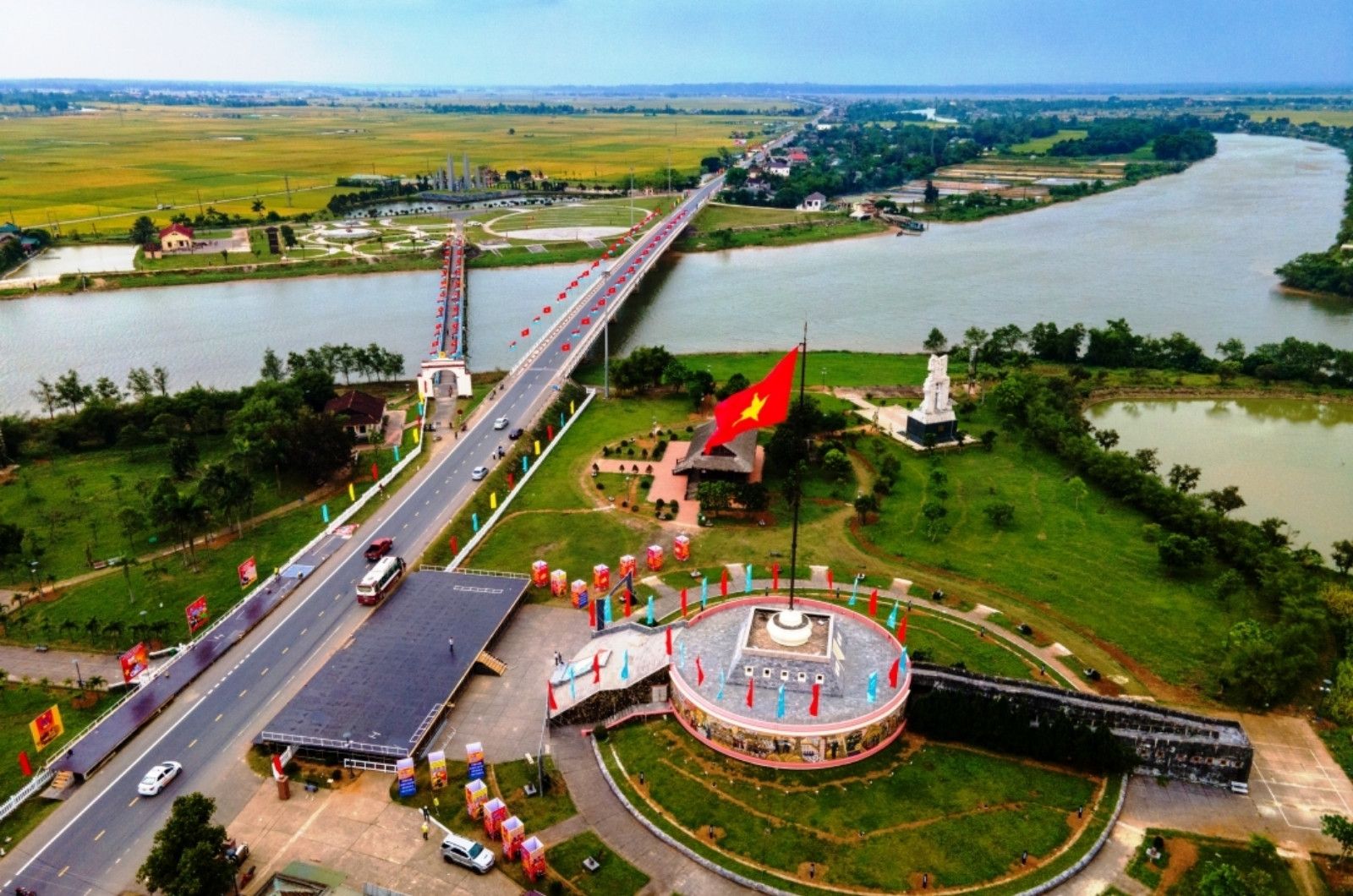
Today, the Hien Luong – Ben Hai River Banks Special National Historical Relic Complex, designated as a Special National Monument in 2013, has become one of Quang Tri's iconic historical destinations, attracting numerous domestic and international visitors keen to learn about the era of division and reunification.
- Restored Hien Luong Bridge (pedestrian only).
- Modern adjacent bridge serving National Route 1A traffic.
- 17th Parallel Flagpole (North bank).
- Joint Commission Building, Demarcation Line Police Station, loudspeaker system.
- Aspiration for National Reunification Monument (South bank).
- Exhibition house and museum featuring historical artifacts.
Visitor Information:
- Opening hours: 7:00 AM – 6:00 PM daily.
- Ticket price: Around 50,000 VND/adult (free on certain occasions like Tet).
- It is recommended to combine with a DMZ tour (Quang Tri) to visit additional monuments such as Quang Tri Ancient Citadel, Khe Sanh, and Vinh Moc Tunnels.
Visitors coming here do not just take check-in photos, but also listen to historical stories from tour guides and reflect on the value of peace and unity.
To avoid missing any heroic historical stories, and to ensure that every step on the heroic land of Quang Tri is filled with meaning and emotion, let Sovaba Travel accompany you. We understand that exploring sites like Hien Luong Bridge – Ben Hai River, Vinh Moc Tunnels, Quang Tri Ancient Citadel... requires in-depth knowledge and thoughtful planning to provide the most complete experience. Sovaba Travel is ready to design in-depth Quang Tri tours that connect destinations seamlessly, featuring dedicated tour guides who will lead you from one symbol to another, helping you thoroughly understand the context, the people, and the sacrifices that built the nation today. Don't let your journey to explore Quang Tri's heritage stop at merely "seeing"; let Sovaba Travel help you "feel" and "understand" it in the deepest way possible.