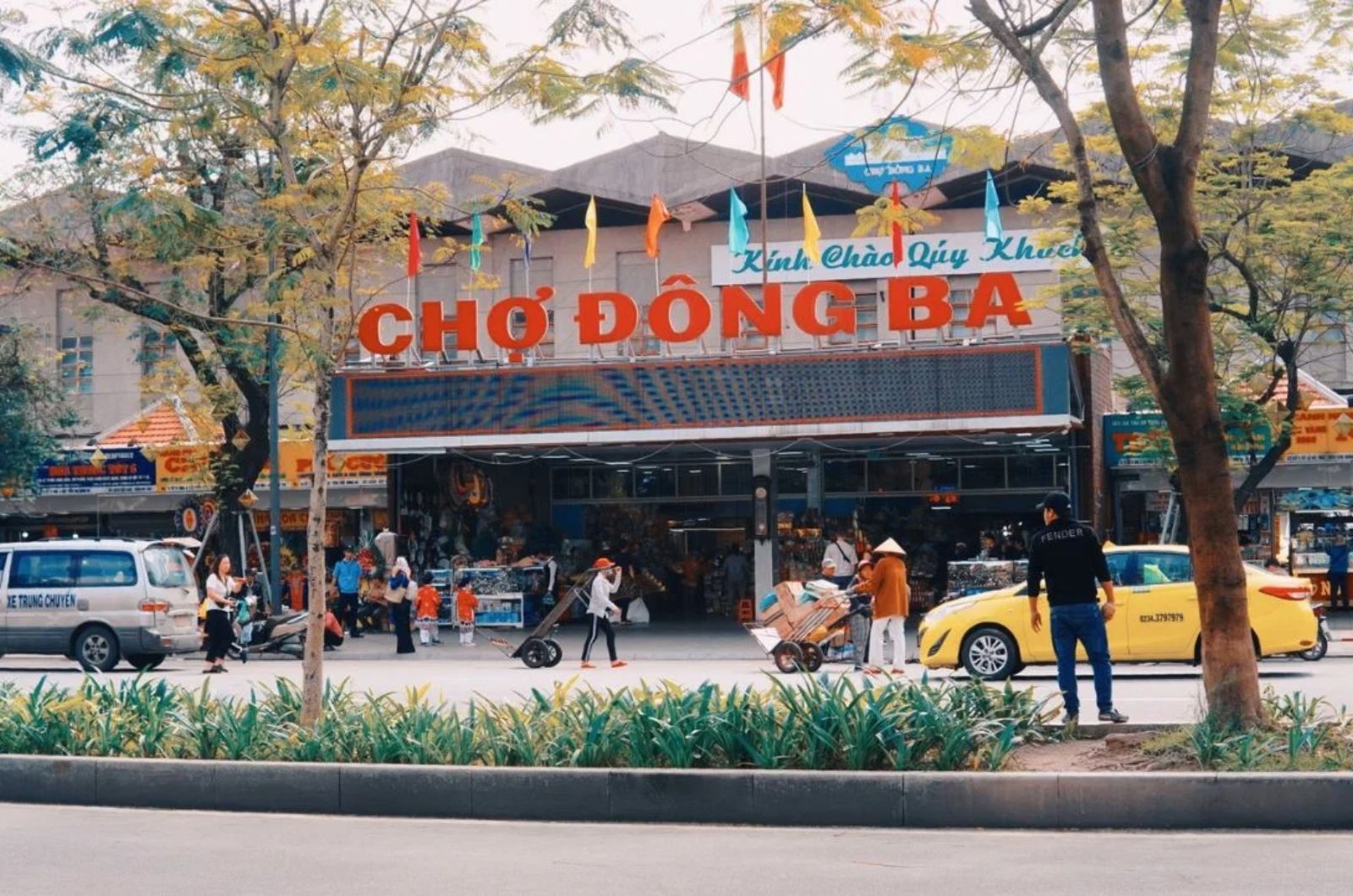
History of Dong Ba Market and the 100+ Year Footprint of the Ancient Capital Market

Central

Thua Thien Hue

Dong Ba Market

Sovaba.travel

Updated at: 24/09/2026

1. Where is Dong Ba Market?

Dong Ba Market is located on Tran Hung Dao Street, on the North bank of the Perfume River, in the central area of Hue City. Spanning an area of over 47,600 m², it is the largest and oldest traditional market in the ancient capital, encompassing business areas, parking lots, and auxiliary structures.

Boasting a prime location right at the foot of Truong Tien Bridge, Dong Ba Market is just a few minutes away from the Hue Imperial Citadel, while conveniently connecting to many famous attractions such as the Perfume River, Thien Mu Pagoda, Nguyen Dinh Chieu Walking Street, and monuments within the Complex of Hue Monuments.

Not only a bustling trading hub, Dong Ba Market also impresses visitors with an atmosphere deeply imbued with the spirit of Hue. One side faces a vibrant central street, while the other overlooks the poetic Perfume River, creating a harmony between modern life and the signature serene beauty of the ancient capital. This is also why Dong Ba Market is always a favorite stop for travelers exploring Hue.

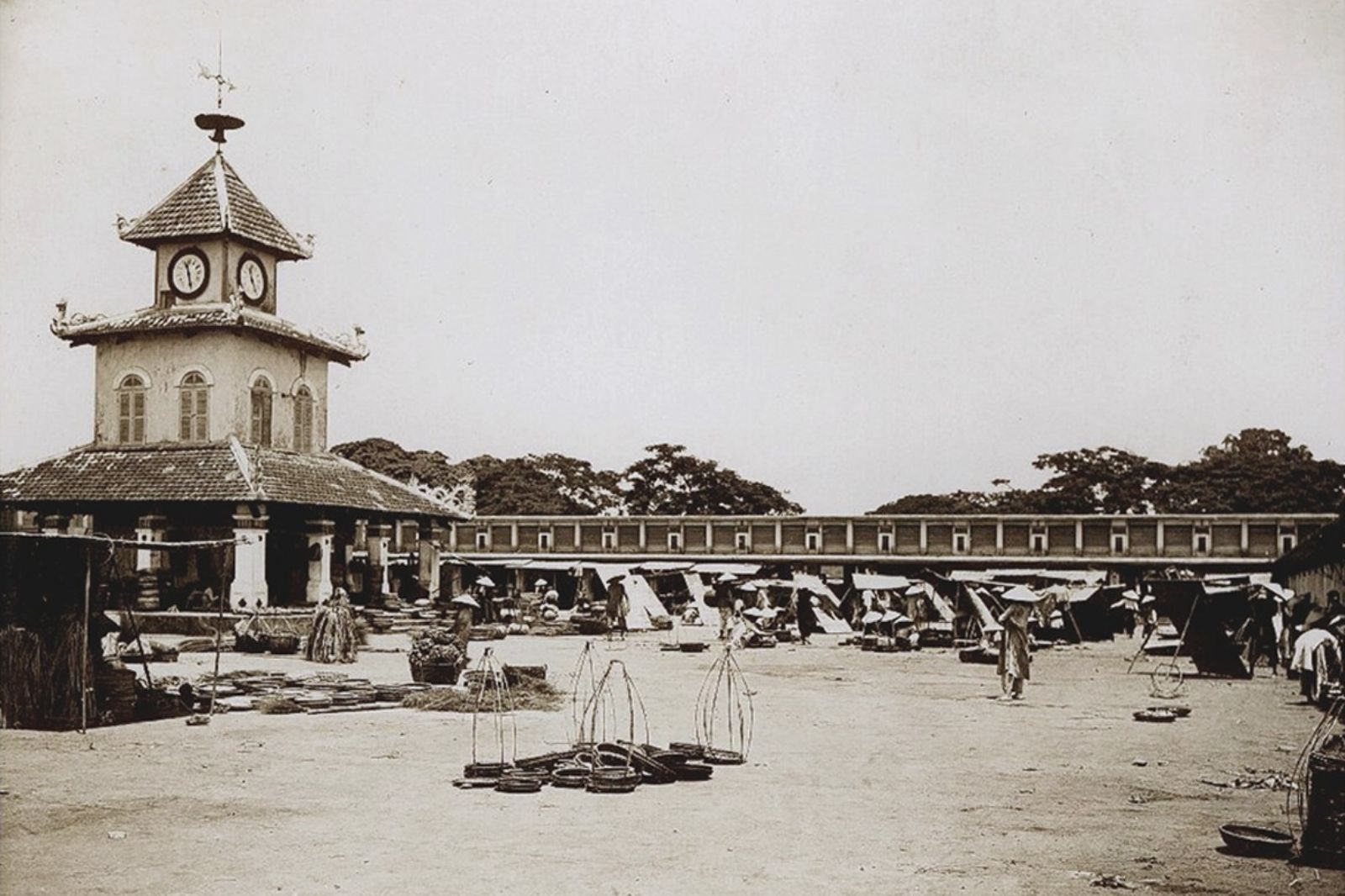
Documentary photos of Dong Ba Market

Photo: Documentary photos of Dong Ba Market  

2. History of Dong Ba Market

The history of Dong Ba Market is closely linked to the development of Phu Xuan Capital under the Nguyen Dynasty. Originally named Quy Gia Thi, the market was located outside the Main East Gate of the Hue Citadel during King Gia Long's reign. In 1885, the market was destroyed during the Fall of Hue. By 1887, under King Dong Khanh, the market was rebuilt and officially named Dong Ba. In 1899, King Thanh Thai relocated the market to its current position by the Perfume River on Tran Hung Dao Street. This event was immortalized in a famous folk verse:

"Dong Ba Market moved to the outer bank,
Truong Tien Bridge rebuilt with concrete."

Through numerous renovations, especially in 1987, Dong Ba Market gradually took on its present-day appearance. From a market serving the imperial citadel, it has become the largest traditional commercial center in Hue and a cultural icon tied to the lives of the ancient capital's residents for over 120 years.

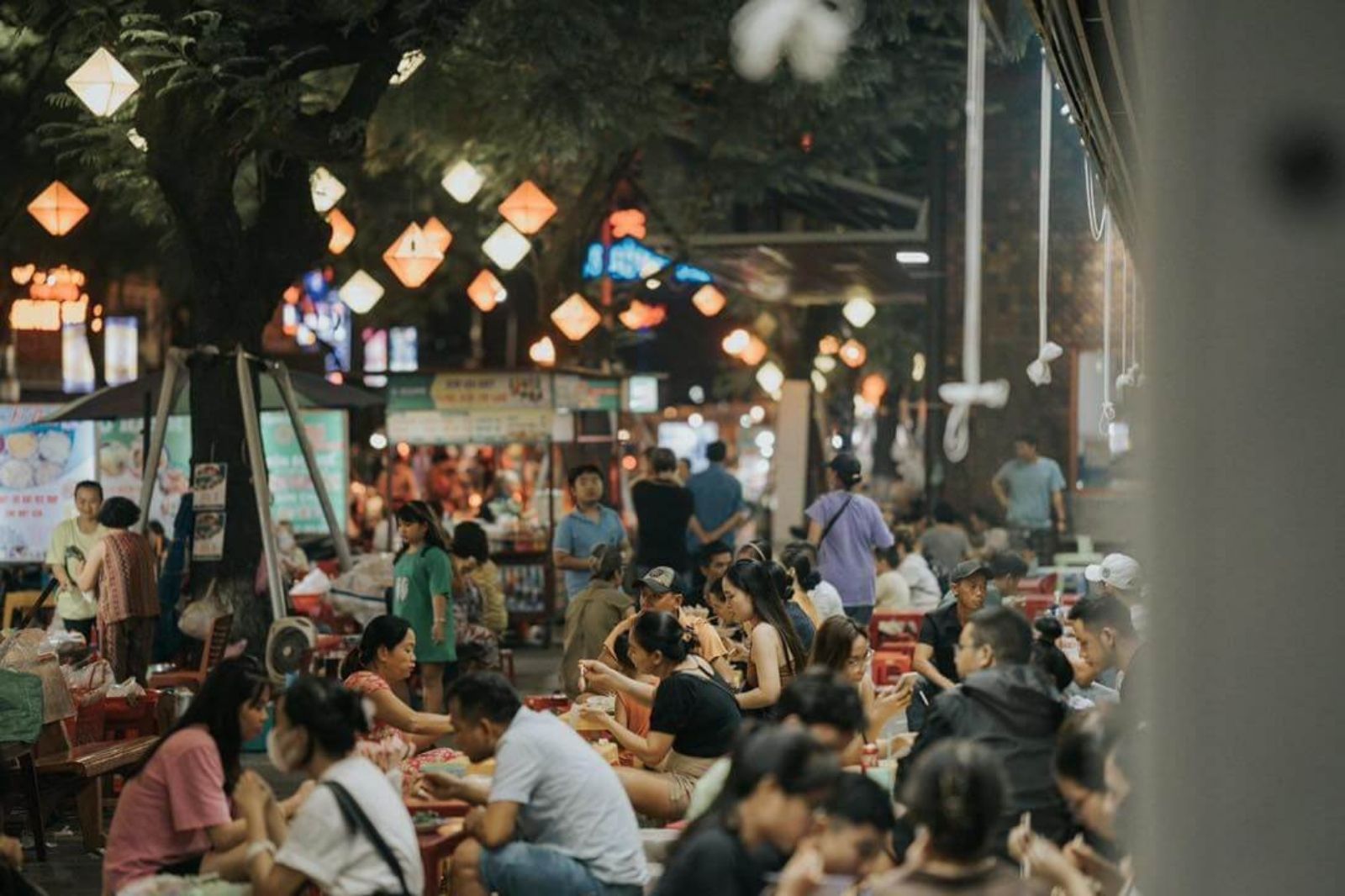
What keeps visitors lingering is perhaps the food court, bringing together the most rustic flavors of Hue: clam rice, beef noodle soup, sizzling pancake (banh khoai), hyacinth bean sweet soup... All carry a simple yet rich flavor, especially when afternoon falls, as street vendors illuminate a market corner with flavors and laughter. Affordable prices and a friendly atmosphere make anyone stopping by feel like they are savoring the very soul of Hue.

Dong Ba Market is famous as a treasure trove of cuisine

Photo: Dong Ba Market is famous as a treasure trove of cuisine 

3. Historical milestones of Dong Ba Market over 120 years

Since its relocation to the current site in 1899, Dong Ba Market has accompanied the development of Hue for over 125 years. Not only the largest trading hub of the ancient capital, it stands as a witness to many historical eras and a cultural icon deeply connected to local lives.

Notable highlights of Dong Ba Market include:

  • A witness to history: Enduring numerous upheavals from the Fall of Hue in 1885 and wartime to the renovation era, Dong Ba Market continues to maintain its role as an essential commercial hub of the city.

  • A traditional commercial center: From supplying goods to the ancient citadel to serving the shopping needs of locals and tourists today, the market currently houses over 2,700 stalls with about 1,800 vendor households.

  • A cultural icon of Hue: The image of Dong Ba Market appears in many folk verses, chants, and famous musical works, becoming part of the memory of generations of Hue residents.

Existing for over a century, Dong Ba Market is not only a bustling place of trade, but also a space preserving the historical, cultural values, and characteristic pace of life of the ancient capital.

Bustling atmosphere of stalls in front of Dong Ba Market in the evening

Photo: Bustling atmosphere of stalls in front of Dong Ba Market in the evening 

4. Distinctive architecture and space of Dong Ba Market

Dong Ba Market features traditional architecture with a central three-story Bell Tower, considered the iconic symbol of the market. Surrounding it is a system of well-organized buildings and kiosks, creating a spacious layout convenient for sightseeing and shopping. Following a major renovation in 1987, the market was expanded with several two-story blocks and thousands of stalls to cater to diverse business needs. Sections are clearly demarcated, ranging from fresh produce, seafood, and dried delicacies to fabrics, clothing, souvenirs, and handicrafts.

Not only prominent in scale, Dong Ba Market also enjoys a prime location by the Perfume River, near Truong Tien Bridge, creating a signature landscape of the ancient capital Hue. Despite upgrades over time, the market still retains the rustic charm of a traditional market with familiar vendors' calls, long-standing stalls, and a vibrant daily shopping atmosphere.

5. What attracts tourists to Dong Ba Market today?

Today, Dong Ba Market is both a shopping center and an appealing cultural and culinary destination. Visitors can find almost everything carrying the soul of Hue:

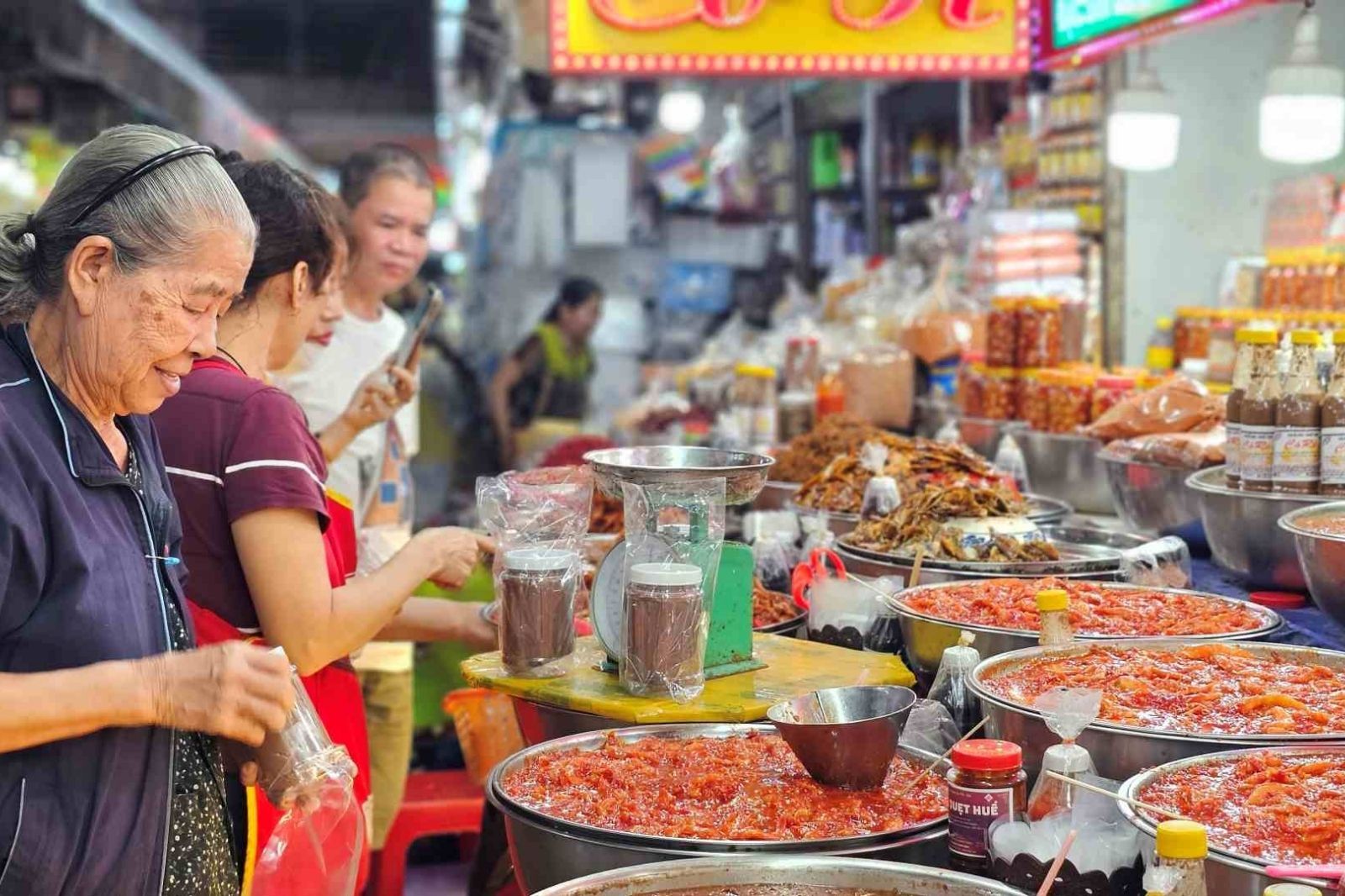
  • Dried specialties and souvenirs: Sesame candy (Me xung), Royal tea, shrimp paste, sour shrimp, dried lotus seeds, traditional facial powder (Phan nu), Phu Cam poetic conical hats, Phuong Duc bronze products, traditional handicrafts…

  • Cuisine: A paradise of authentic Hue dishes – Hue beef noodle soup, clam rice, banh nam, banh loc, banh beo, banh khoai, lotus seed sweet soup, corn sweet soup… Many small stalls inside and around the market serve food at affordable prices with rich flavors.

  • Local life experiences: Observe local trading, listen to vendors' calls, and feel the everyday pace of the ancient capital. Early morning and late afternoon are usually the most vibrant times.

  • Diverse shopping: From budget items to higher-end products, suitable for both locals and travelers.

The market is open from early morning until late afternoon (some food areas stay open later). It is recommended to visit in the morning to experience the market at its most bustling and avoid midday heat. Combining your visit with Truong Tien Bridge and a stroll along the Perfume River will complete your journey.
The market is both a shopping destination and a place to experience daily life

Photo: The market is both a shopping destination and a place to experience daily life

Dong Ba Market is not merely a marketplace, but a keeper of the Imperial land's soul. Amidst modern life, the market still holds onto its nostalgia, sweet Hue accents, rustic street stalls, and famous culinary flavors. This is an ideal stop to truly feel the daily life of the ancient capital's people while discovering unique regional specialties and centuries-old trading culture.

With its deep connection to Hue life, Dong Ba Market has become an indispensable destination in city sightseeing tours. Visitors can combine visiting the market with exploring the Imperial Citadel, Thien Mu Pagoda, Truong Tien Bridge, or join food tour experiences to savor clam rice, beef noodles, banh beo, and Hue sweet soup right in the lively market atmosphere. If you wish to fully immerse in the culture and lifestyle of Hue, choose tours with itineraries visiting Dong Ba Market by Sovaba Travel to shop for souvenirs and "taste" the soul of Hue through each rustic dish.
Loading......

Featured destinations