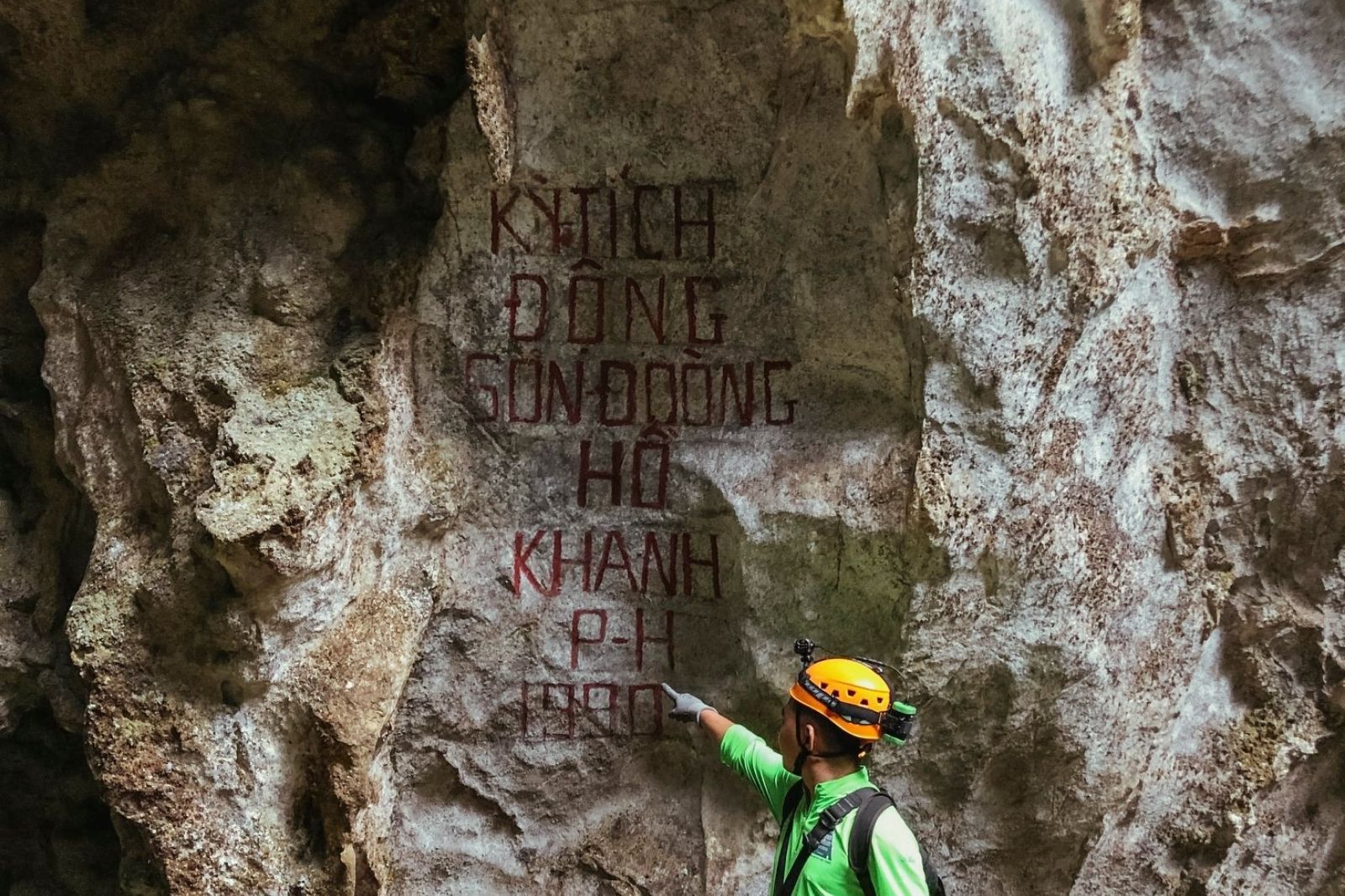
The history of Son Doong began long before humans knew of its existence. Geologists estimate that the cave was formed around 2 to 5 million years ago.
- Initial formation: The cave was created by a powerful underground river flowing through the Ke Bang limestone mountain range. The water's force continuously eroded and dissolved the limestone along a geological fault line. This process occurred silently underground over millions of years, gradually carving out a massive tunnel inside the mountain range.
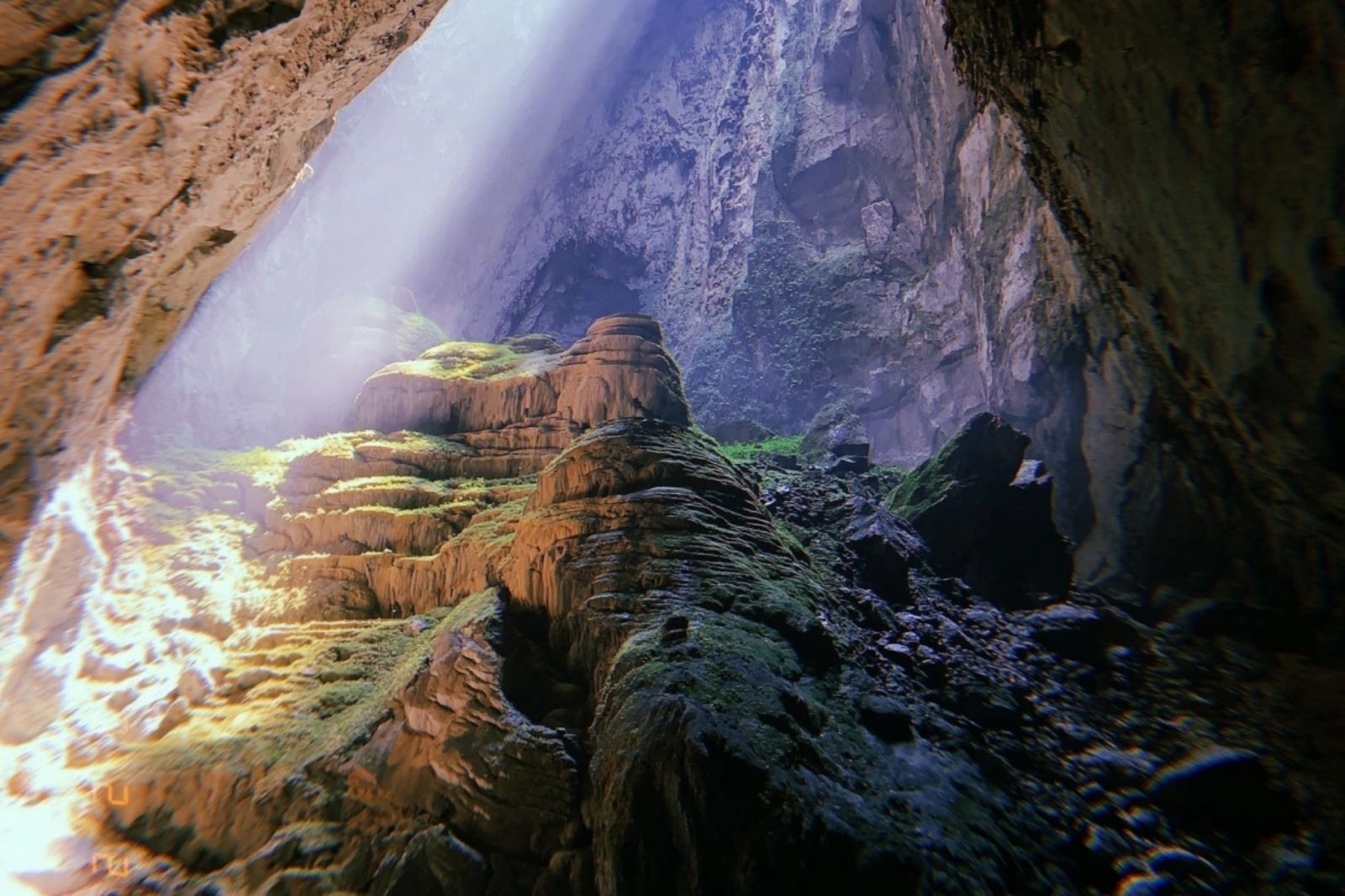
- Collapse and formation of sinkholes ("skylights"): Over time, at sections where the rock was weaker, the cave ceiling collapsed. These massive collapses formed large sinkholes (dolines), often referred to as "skylights". These sinkholes allow sunlight to beam down into the cave, enabling lush vegetation to thrive and forming unique primary jungles with their own distinct ecosystems right inside the cave.
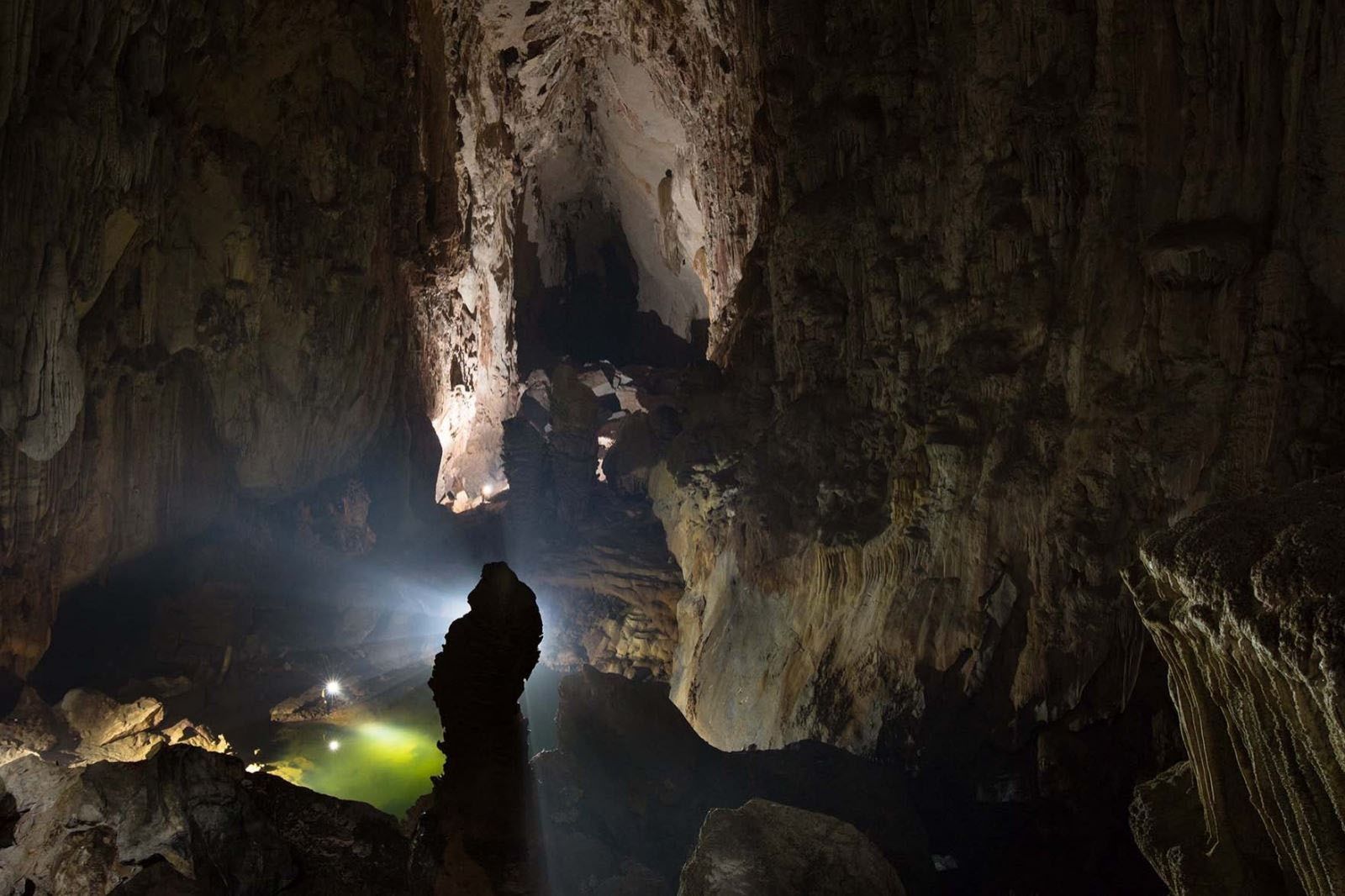
- Creation of stalactites and stalagmites: Parallel to the erosion process, rainwater seeped through the limestone layer, dissolving calcium carbonate and dripping down from the cave ceiling. Over thousands and millions of years, this process created stalactite formations (hanging from the ceiling) and stalagmites (growing from the cave floor) with magnificent shapes and sizes, with some stalagmite columns in Son Doong reaching heights of up to 70–80 meters.
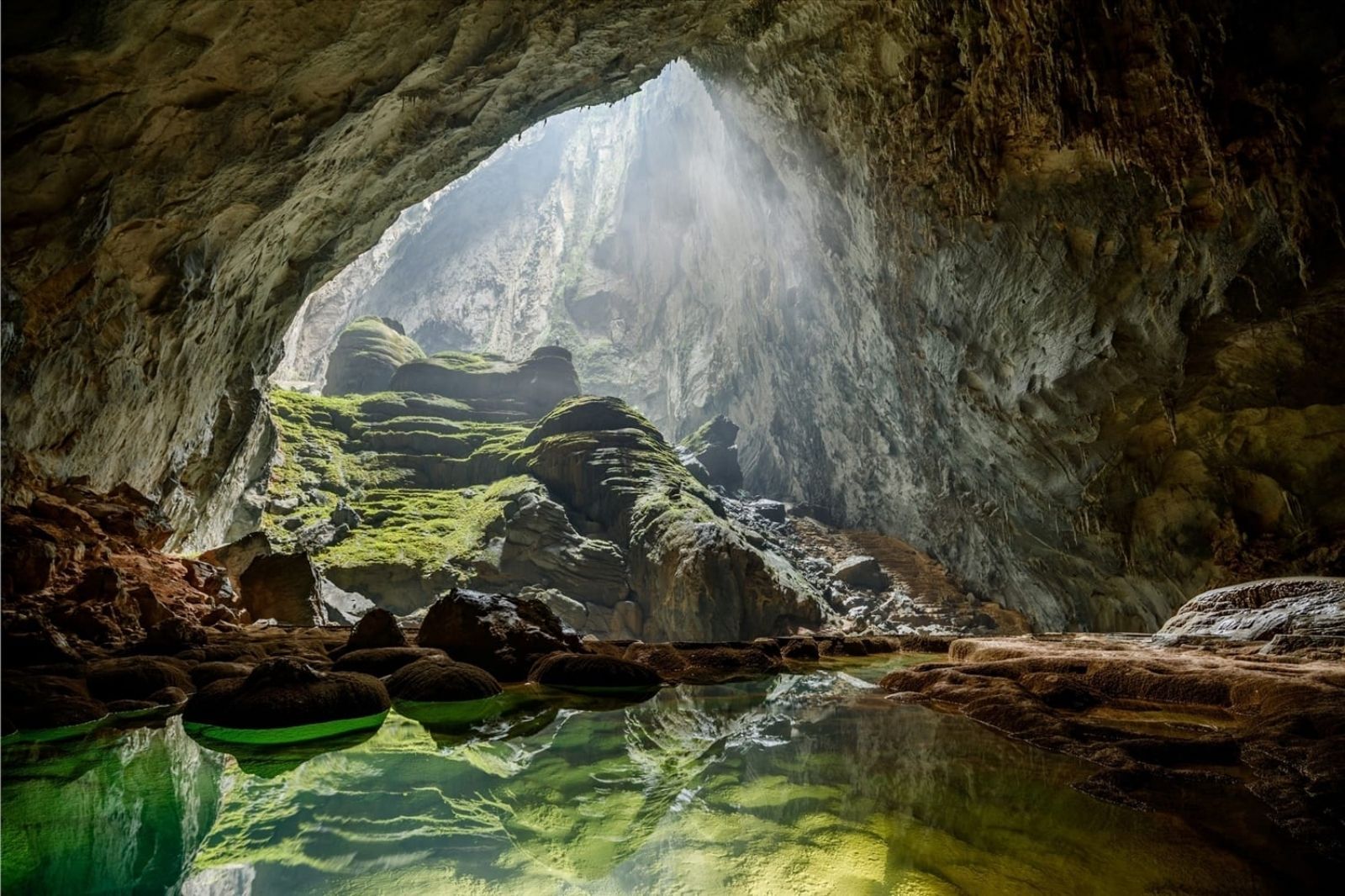
The result of this long and complex geological process is a cave of extraordinary scale, with its largest section spanning over 5 km in length, reaching up to 200 meters in height and 150 meters in width, large enough to house a 40-story skyscraper.