|

Back Home

What is Inside Son Doong Cave? The Wonders Inside the Planet's Largest Cave

Central

Quang Binh

Sovaba.travel

Updated at: 28/08/2026

1. Flora and fauna inside the cave

Son Doong Cave holds mysteries that astonish the world. Not only is it the planet's largest cave, but inside it lies a miniature universe filled with unique natural wonders. Let's unveil the secrets and explore the most special spots that create Son Doong's matchless value:

Thanks to a complete combination of climate, weather, sunlight, and humidity, a self-contained ecosystem has formed right inside the cave, featuring the traits of tropical rainforests. The food chain here is sustained by abiotic components such as rocks, water, soil crusts, and flora; herbivores like squirrels, beetles, crickets, millipedes, bugs, etc.; carnivores such as snakes, bats, and martens; and decomposers like bacteria and fungi.

To date, biological researchers have discovered more than 7 new species inside Son Doong Cave, including several species of fish, woodlice, millipedes, spiders, and scorpions—all sharing common characteristics of being eyeless and having transparent bodies. These creatures have been recognized as new species by German and Vietnamese biologists.

Vegetation and organisms living inside the cave
Photo: Vegetation and organisms living inside the cave 

2. "Hand of Dog" Rock Formation

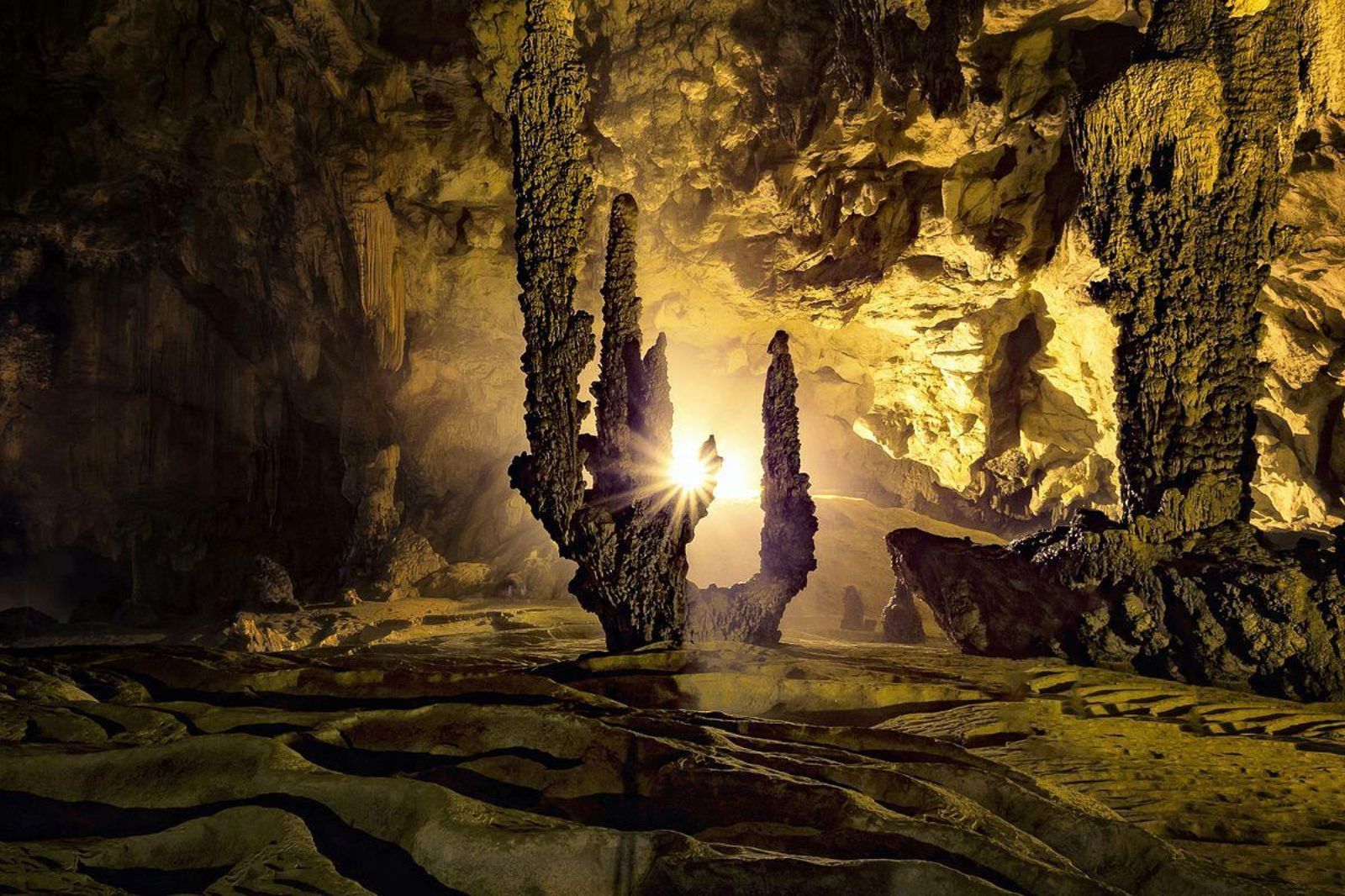
Along the Son Doong expedition route, a unique limestone formation called "Hand of Dog" always draws great attention. This is an impressive testament to the power of natural creation over millions of years, formed by water erosion and mineral deposition. This massive stone structure spans about 20 meters in length and stands nearly 10 meters high, resembling the footprint of a giant creature with smooth curves and undulating surfaces, evoking both mystery and intrigue. Under the natural light streaming down from the sinkhole, the beauty of this rock formation stands out even more dramatically amidst the vast expanse of Son Doong. Visitors often stop here to admire and capture photos of this bizarre natural sculpture. "Hand of Dog" is not only a unique photo spot but also a symbol of geological marvels, enriching the experience inside Son Doong—the world's largest cave that still holds countless wonders waiting to be discovered.

3. Cave pearls

One of the rarest and most spectacular geological landscapes in Son Doong is the area known as the "Cave Pearl Field". Thousands of "cave pearls" gather here—nearly perfect spherical calcite stones ranging in size from a few centimeters to as large as a small ball. They formed extremely slowly over millions of years: water dripping from the cave ceiling, carrying calcium carbonate, wrapped around a nucleus (such as a sand grain), gradually building concentric layers in a process similar to how natural pearls are created. The uniqueness of the "Cave Pearl Field" in Son Doong lies in its unprecedented scale and preservation worldwide. The cave pearls sit side by side, spreading out like a field of gems, creating a surreal and beautiful scene. Light shining down from the sinkhole makes them glisten and reflect, adding to the mystical atmosphere. This area is not only a visual masterpiece but also living proof of the cave's complex geological history. To preserve this wonder, visitors are required to observe strictly from a distance without touching the pearls, respecting millions of years of natural formation.

Photo: Exploring the cave pearls

4. Doline

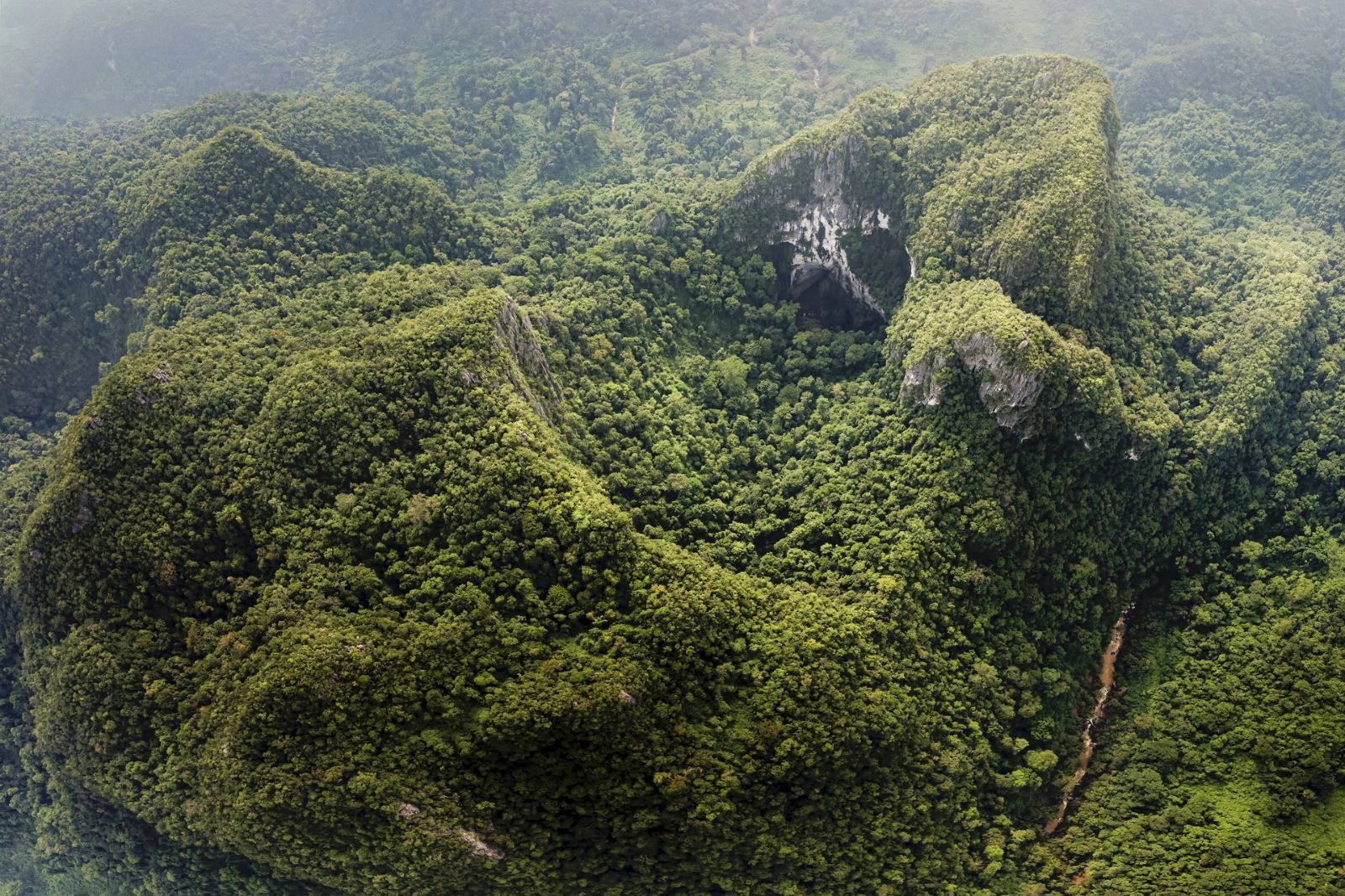
Sinkholes (dolines) are extremely impressive geological features inside Son Doong. They formed when weakened cave ceilings collapsed after millions of years of weathering, opening up massive voids connecting directly to the surface above. These natural skylights play a vital role in bringing sunlight and fresh air deep into the cave's heart. Son Doong features two main sinkholes: Doline 1 (nicknamed "Watch Out for Dinosaurs") and Doline 2 (nicknamed "Garden of Edam"). Beyond their magnificent landscape value, the sinkholes hold immense ecological significance. Sunlight and humidity from these openings allow an entire primary jungle to thrive right underground, complete with ancient trees, climbing vines, and endemic plant species, serving as a haven for wildlife. Their existence creates a unique landscape while helping maintain biodiversity, serving as an important subject for studying geological development.

Tucked beneath the Doline 2 sinkhole, the Garden of Edam is one of the most astonishing sights in Son Doong—a thriving primary jungle growing deep inside the cave. Thanks to sunlight streaming through the sinkhole opening, an independent ecosystem has developed here with dense vegetation, tall trees, and intertwined vines. The name "Garden of Edam" (Garden of Eden) was given by British explorers to describe the wild yet vibrant beauty of this subterranean forest. When sunlight blends with the light mist that often hovers around, the Garden of Edam looks like a mystical fairytale world. This forest is not just a unique landscape but also of immense ecological value, acting as a habitat for many endemic species. The presence of the Garden of Edam is a key factor contributing to the wonder and fame of Son Doong, affirming its status not just as the largest cave, but as an invaluable underground ecosystem.

Panoramic view of the sinkhole from above
Photo: Panoramic view of the sinkhole from above 

5. Watch Out for Dinosaurs Viewpoint

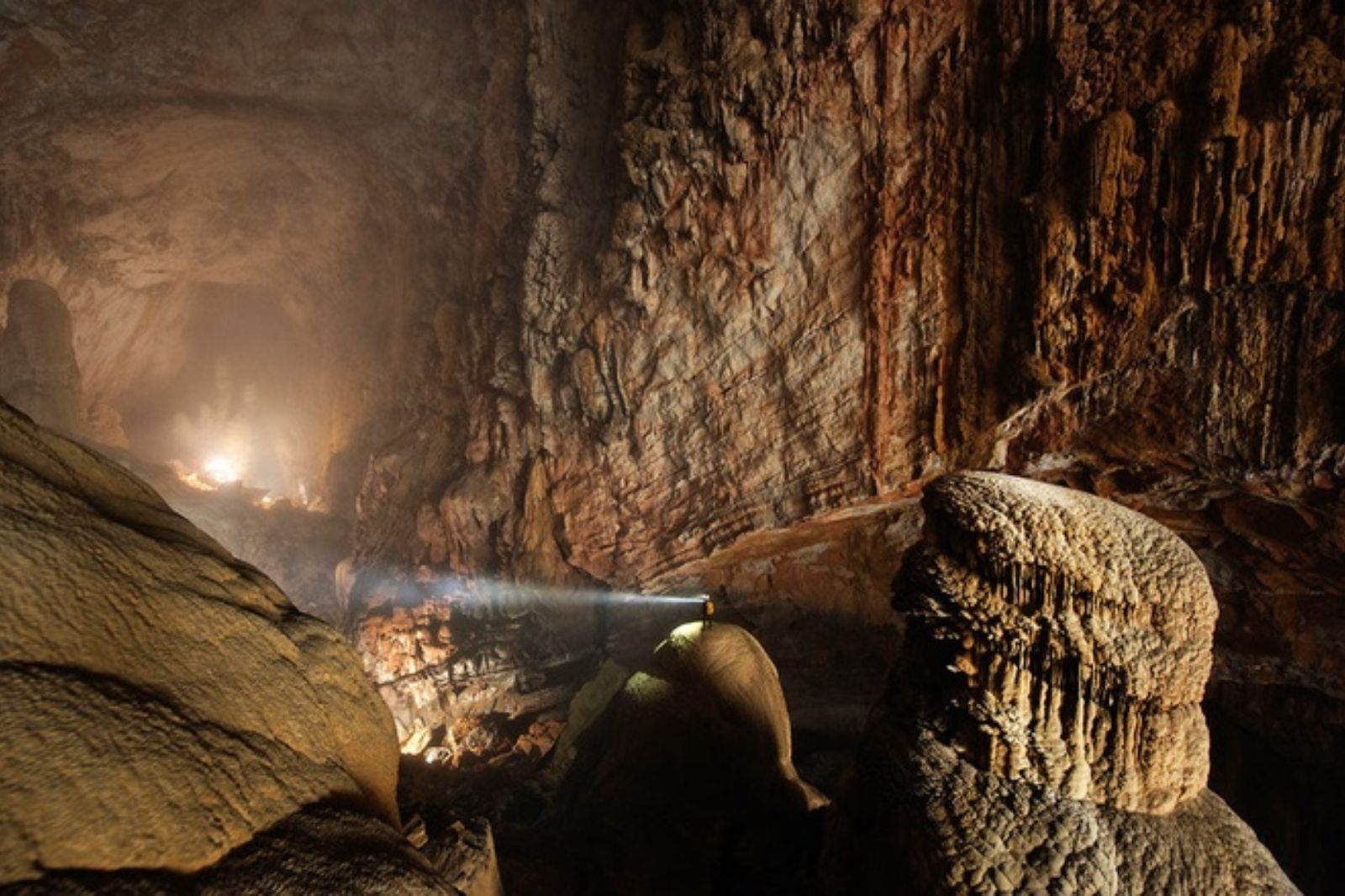
"Watch Out for Dinosaurs" is a strategic viewpoint in Son Doong, offering a sweeping, majestic view of the cave section near Doline 1. From this high vantage point, visitors can feast their eyes on the vastness of the cave passage, featuring massive stalactites, strange rock structures, and the underground river winding below. The name "Watch Out for Dinosaurs" is believed to originate from the shape of a large rock formation here that resembles an ancient creature's footprint. Standing at this viewpoint, one not only feels the immense grandeur of Son Doong but also gets to enjoy fresh air and tranquility—a special moment of connection with nature. It is an ideal stop to capture breathtaking panoramic photos and reflect on the extraordinary beauty of one of Vietnam's top natural wonders.

6. Underground river inside Son Doong Cave

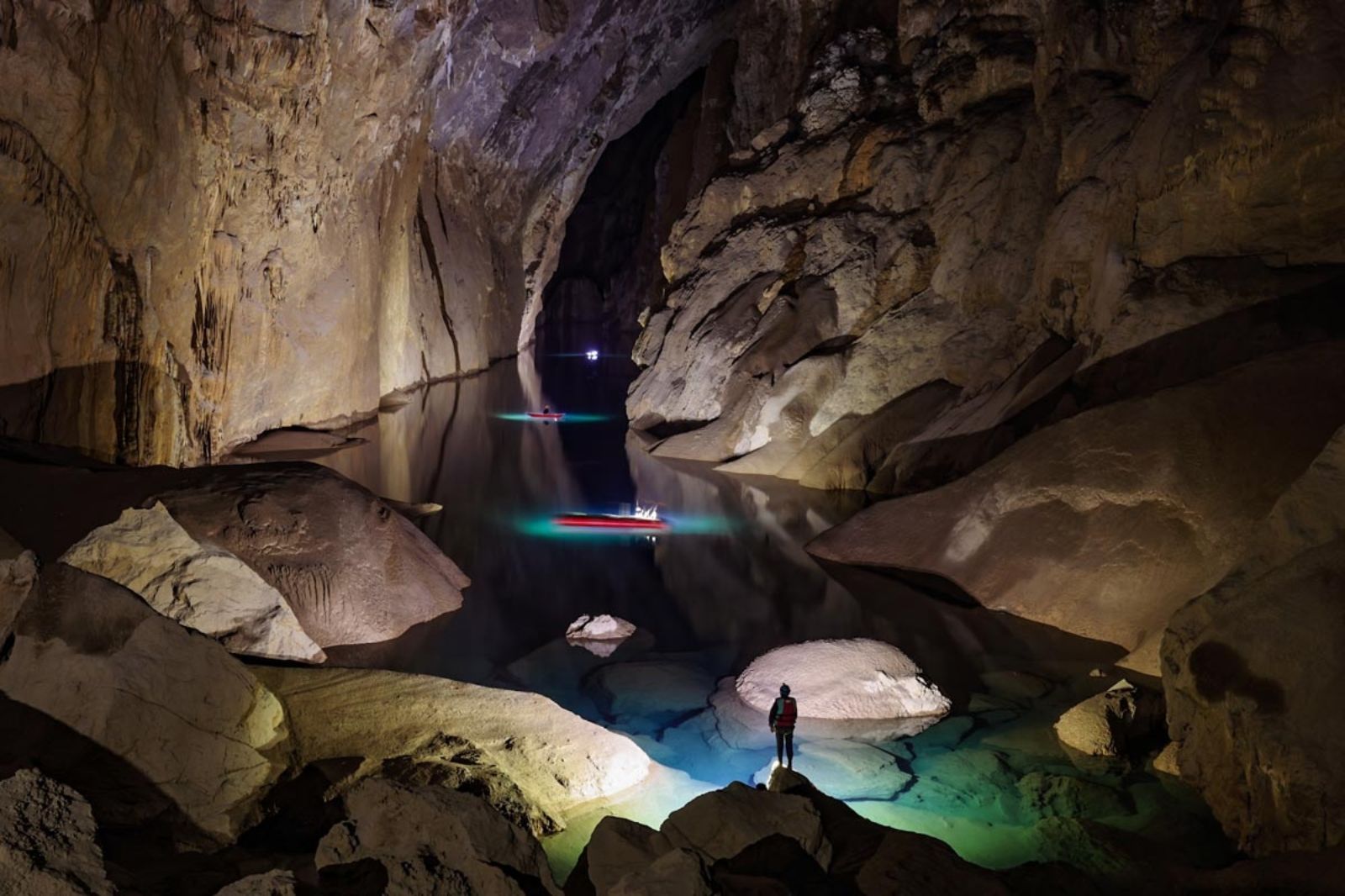
Son Doong Cave possesses a massive underground river system formed by the confluence of two rivers (Rao Thuong River and the river from Khe Ry Cave, with water originating near the Laos border), discovered in 2009. The underground river in Son Doong makes the inner cave environment and ecosystem even more unique and extraordinary. Streams rushing over internal rapids create thick layers of fog inside the cave and floating clouds of water vapor hanging within the cavernous ceiling space.

Underground river inside the cave
Photo: Underground river inside the cave 

7. Campsites inside Son Doong

Campsites set up inside Son Doong offer a one-of-a-kind accommodation experience, serving as an indispensable part of the expedition to explore the world's largest cave. These are not merely places to rest and recharge after hours of trekking, but also opportunities for visitors to fully immerse themselves in the magnificent natural surroundings and feel the serene mystery of the underground world. The campsites are typically positioned on wide, flat ground near water sources and close to the sinkholes. This setup enables campers to gaze at the starry night sky through the massive skylight openings or welcome sparkling sunbeams streaming in during the morning. The feeling of being sheltered by rock walls millions of years old, listening to nature's echoes, and sleeping in the heart of a world wonder is an unforgettable experience.

8. The Great Wall of Vietnam

Near the end of the Son Doong expedition, visitors face the "Great Wall of Vietnam" – an impressive final challenge. This is actually a massive calcite stalagmite wall standing nearly 90 meters high. Formed over millions of years, it acts as a natural barrier sealing off the end of the cave. Conquering the Great Wall of Vietnam requires rope-climbing techniques and specialized gear under the guidance and safety supervision of cave experts. Overcoming this sheer cliff not only leads to the cave exit but also brings a profound sense of achievement and triumph. Standing atop the wall looking back across the immense cave space or toward the light at the cave exit, trekkers can fully appreciate the grandeur of Son Doong and their own perseverance. It stands as a symbol of achievement and the perfect climax to an adventure into the depths of the earth.

The Great Wall of Vietnam
Photo: The Great Wall of Vietnam

The majestic underground world of Son Doong Cave surely hides countless grand mysteries waiting to be explored. However, conquering this wonder requires thorough preparation in both finances and physical fitness. If a trip to Son Doong isn't your choice right now, don't worry! Quang Binh boasts countless other spectacular caves and landscapes across various difficulty levels waiting for you to experience.

Let Sovaba Travel accompany you! We offer a wide range of exciting Quang Binh tours suitable for every need. Don't hesitate to pick up the phone and call our hotline at 0934.733.223 to get dedicated advice from the Sovaba Travel team, helping you choose and book the ideal tour for an unforgettable vacation in the "Kingdom of Caves"!

Loading......

Featured destinations