Hoi An Museum of Folklore: A Precious Heritage in an Ancient House

Central

Da Nang

Hoi An

Sovaba.travel

Updated at: 24/09/2026

1. Where is the Hoi An Museum of Folk Culture located?

For your convenience when visiting and exploring the ancient town, here is some key information regarding the location and how to get to Hoi An Museum of Folklore:

  • Address: The museum is located in the heart of Hoi An Ancient Town, featuring two frontages at 33 Nguyen Thai Hoc and 62 Bach Dang, Minh An Ward, Hoi An City, Quang Nam Province.
  • Surrounding area: The museum is situated next to the Hoai River, just a few minutes' walk from the Covered Bridge (Chua Cau) – the icon of Hoi An – making it very convenient to visit during your walk around the ancient town.
  • Getting here from Da Nang: Visitors can travel by motorbike or car, which takes about 30–40 minutes.
  • Getting around the ancient town: As motor vehicles are restricted in this area, you should walk or rent a bicycle to easily move around while fully experiencing the peaceful atmosphere of Hoi An.

With its convenient and accessible location, Hoi An Museum of Folklore is a great stop to combine learning about local culture into your gentle and fulfilling exploration of the ancient town.
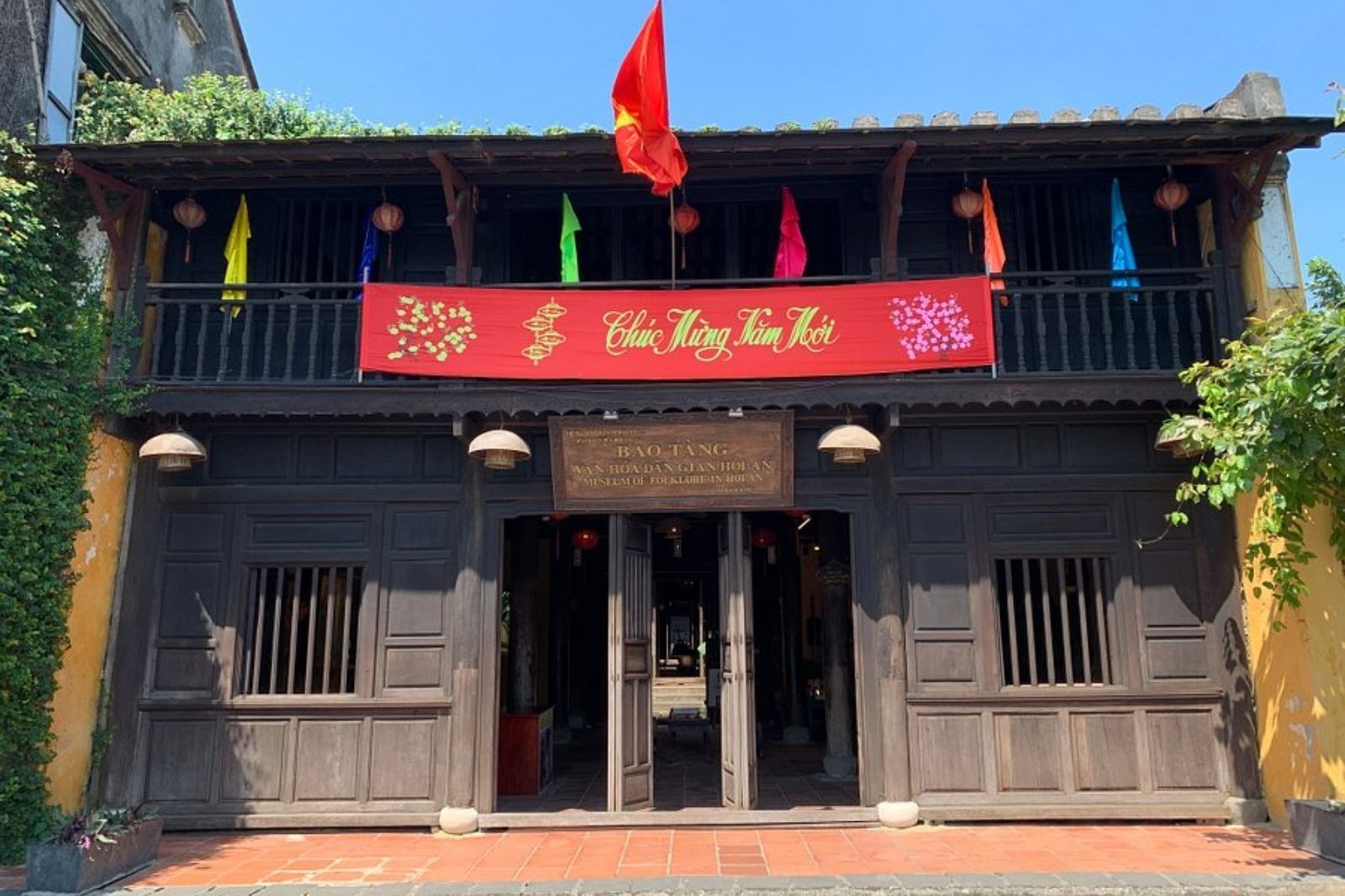
Hoi An Museum of Folklore in Hoi An Ancient Town
Photo: Hoi An Museum of Folklore in Hoi An Ancient Town 

2. History of the Hoi An Museum of Folk Culture

Hoi An Museum of Folklore officially opened to visitors on March 24, 2005, after being renovated from a typical ancient house in the ancient town. This building has existed for over 200 years, having witnessed the prosperous development phase of the Hoi An trading port in the 16th–17th centuries – a period of trade and cultural exchange between Vietnam, China, Japan, and Western countries.

The museum was established to preserve and introduce local folklore cultural values, including both tangible and intangible heritage. Beyond displaying artifacts, it also organizes folk art performance activities, helping visitors better understand the life and traditional customs of Hoi An residents. After over 20 years of operation, the museum has become an important cultural attraction in the ancient town. Converting an ancient house into a thematic exhibition space also demonstrates the local efforts to preserve and promote the values of the UNESCO World Heritage Site in Hoi An.

The museum preserves many valuable artifacts
Photo: The museum preserves many valuable artifacts 

3. Architecture of the ancient house housing the Hoi An Museum of Folk Culture

To better understand the architectural value of this building, you can look through the key features of the ancient house housing the Hoi An Museum of Folklore through the following elements:

  • Scale and structure: The house is approximately 57 m long and 9 m wide, consisting of two stories with a sturdy ironwood floor system – a familiar material in Hoi An's ancient houses.
  • Architectural style: The building was constructed in the traditional tube-house style, with a narrow frontage but deep interior, where connected house bays keep the inside space well-ventilated.
  • Materials and details: The roof is tiled with moss-covered yin-yang tiles over time, and the ironwood column and rafter system is delicately carved, demonstrating the craftsmanship and skill of ancient carpenters.
  • Cultural imprint: The house's architecture shows a harmonious combination of traditional Vietnamese style with influences from China and Japan, reflected in the wooden doors, decorative patterns, and spatial layout.
  • Functional use: The first floor is typically dedicated to folk culture performances and presentations, while the second floor serves as an artifact display space.
  • Harmony with the environment: The entire building was constructed to adapt to Hoi An's riverfront landscape and climate, creating a close and sustainable feel over time.

The combination of traditional architecture, reasonable functionality, and aesthetic value contributes to the unique appeal of Hoi An Museum of Folklore, making it a noteworthy stop on your journey to explore the ancient town.

4. What is on display at the Hoi An Museum of Folk Culture?

Regarding exhibition content, the Hoi An Museum of Folklore is designed scientifically, clearly, and easy to follow.

  • Exhibition area: Around 369 m², neatly arranged within the ancient house space.
  • Number of artifacts: Over 483 original artifacts, carefully collected and preserved.
  • Main exhibition themes:
    • Folk plastic arts
    • Folk performing arts
    • Traditional craft villages
    • Folk daily life
  • Typical artifact types:
    • Traditional costumes of the Viet – Chinese communities
    • Ancient musical instruments such as the monochord (dan bau) and ceremonial drums
    • Familiar labor tools such as plows, hoes, and fishing nets
    • Everyday items such as pots, jars, and wooden tables and chairs
  • Additional stored artifacts: Over 346 other artifacts, including folk paintings, horizontal lacquered boards and parallel sentences inlaid with mother-of-pearl, and products from traditional craft villages.
  • Spatial arrangement: Exhibition areas are arranged in a clear sequence, making it easy for visitors to follow from folk arts to everyday life.

Thanks to its coherent arrangement and rich content, Hoi An Museum of Folklore offers high educational and research value, helping visitors gain a deeper understanding of the history and culture of Hoi An.

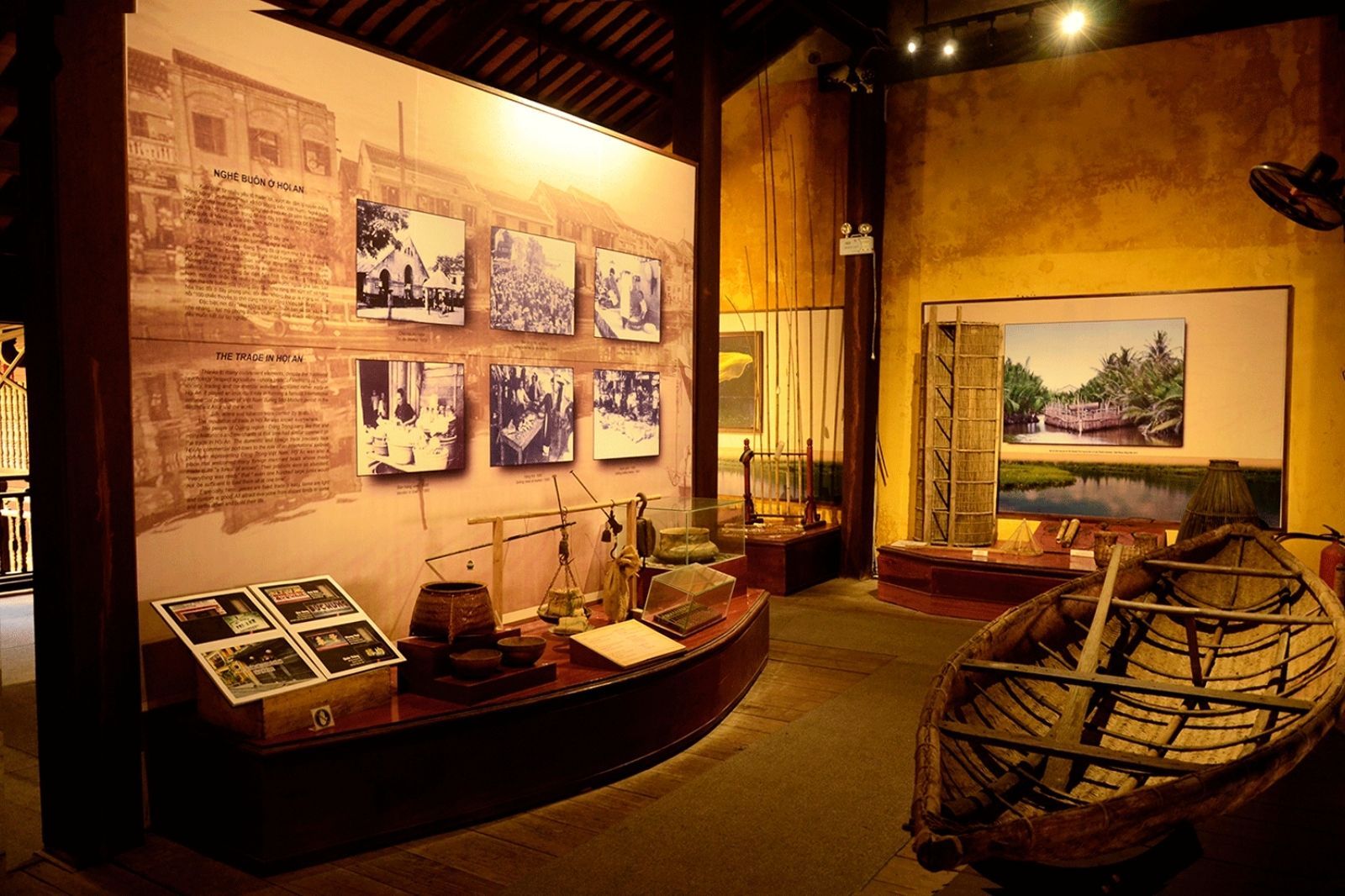
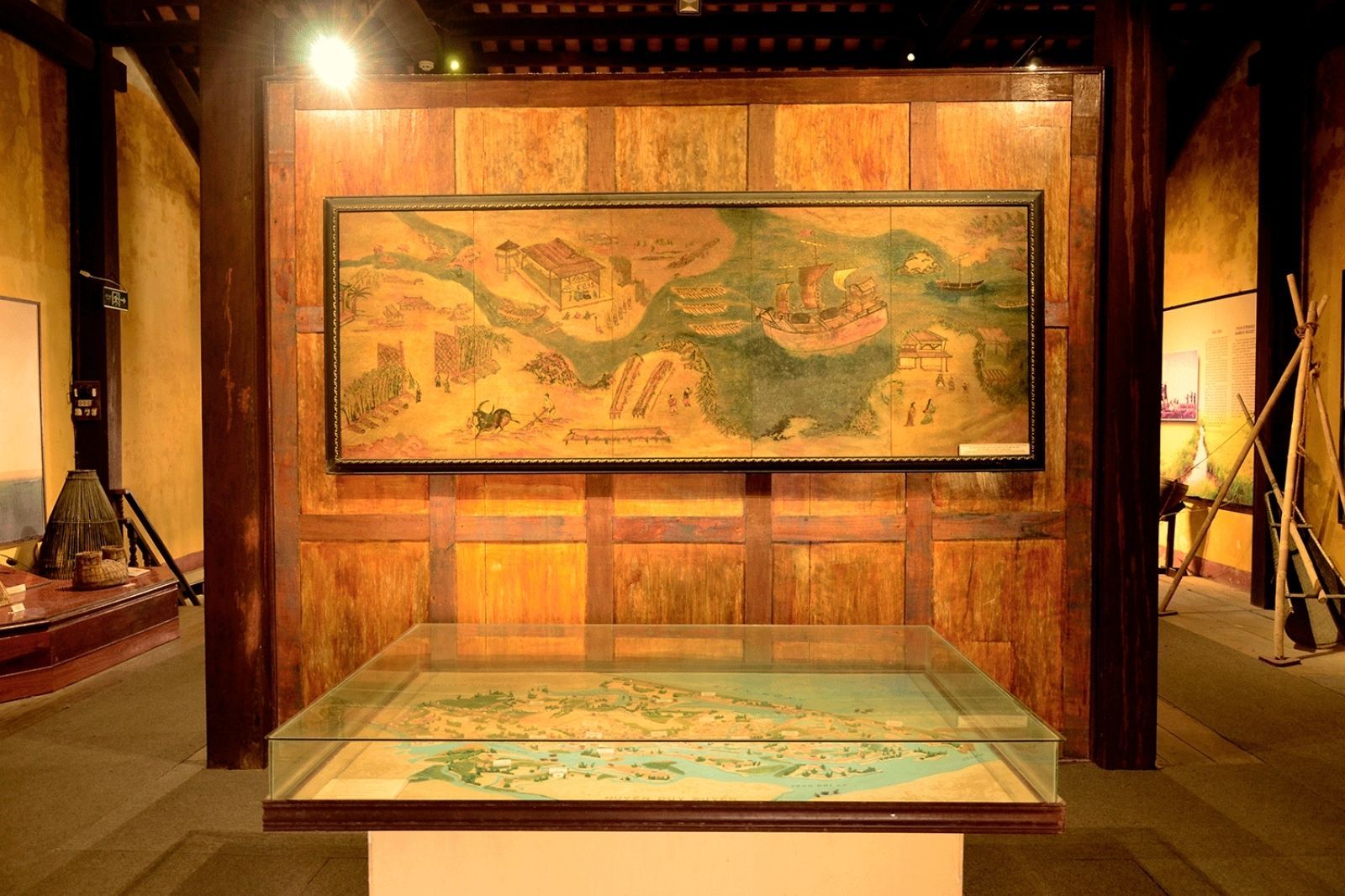
Exhibits inside the museum
Photo: Exhibits inside the museum 

5. Typical forms of folk culture showcased at the museum

The museum focuses on introducing rich forms of folk culture, recreating the spiritual life of Hoi An residents across generations. Highlights include:

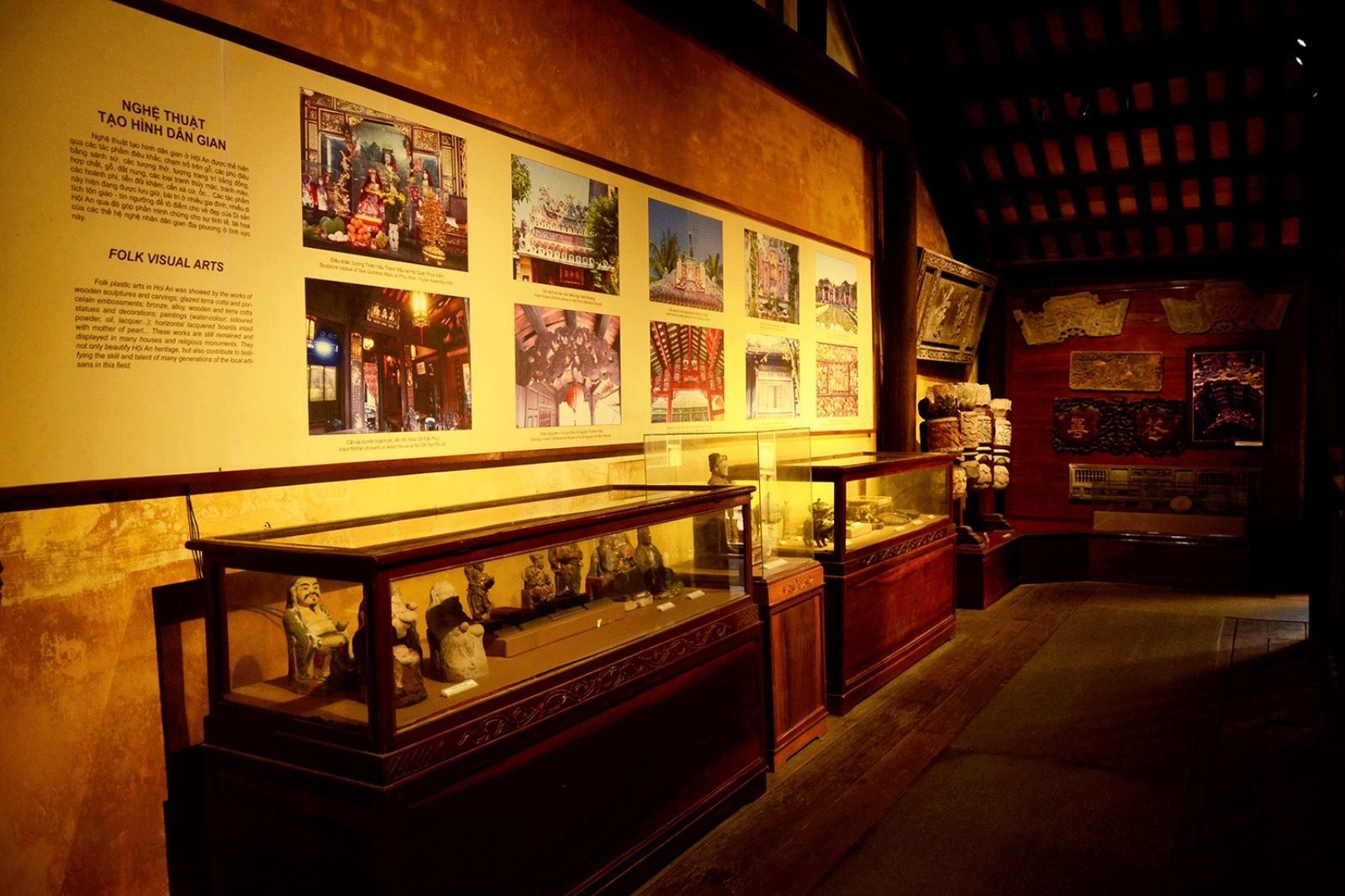
  • Folk plastic arts: Including sculptures, wood carvings, worship statues, decorative statues made of bronze, wood, and terracotta; ink wash paintings, color paintings, horizontal lacquered boards and couplets inlaid with mother-of-pearl.
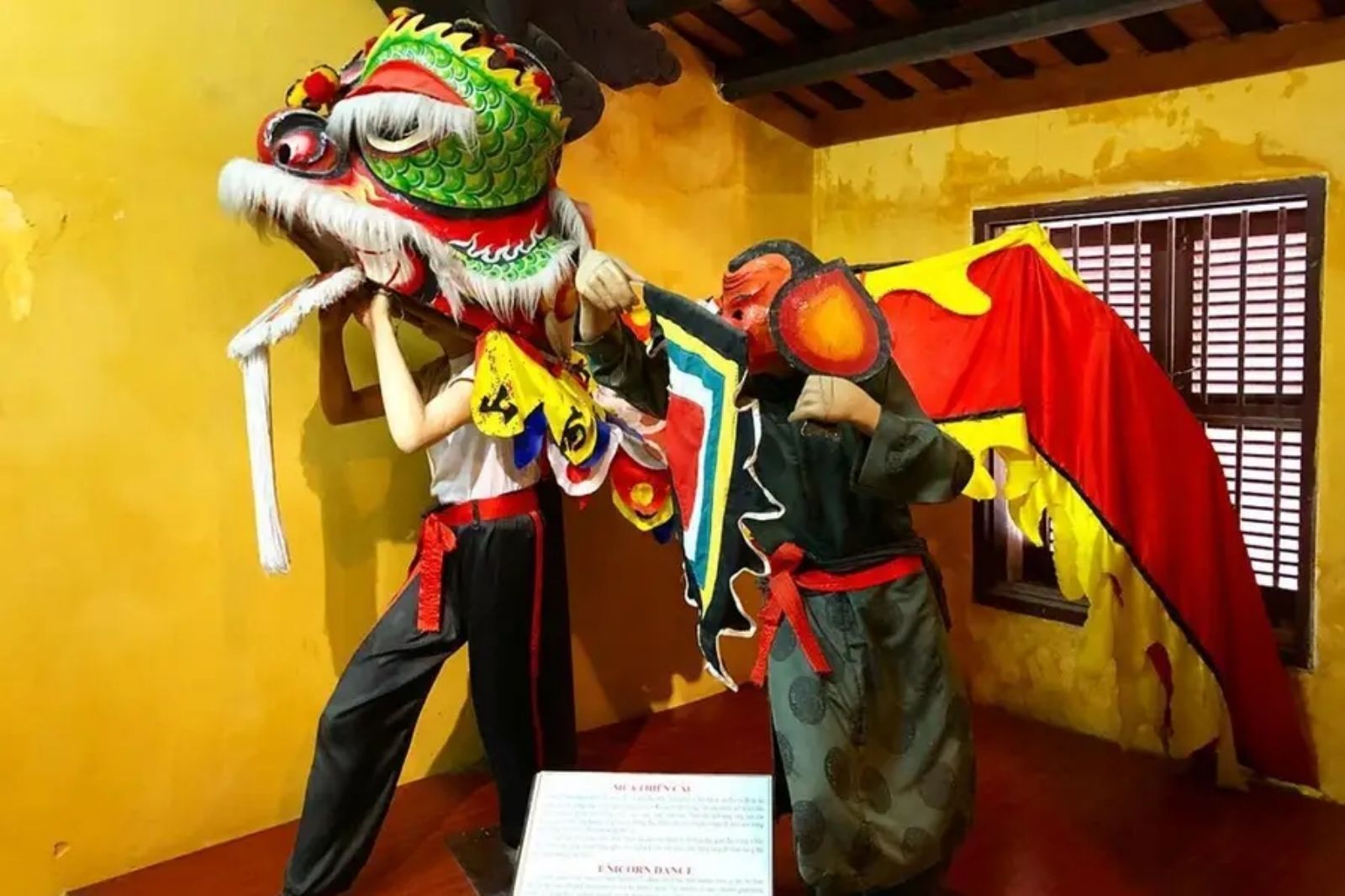
  • Folk performing arts: Forms such as the Celestial Dog Dance (Thien Cau dance - an exorcism and blessing dance popular during the Mid-Autumn Festival with its own unique structural technique); Ba Trao singing (a boat-rowing chant of fishermen performed during the Whale Worship Festival with a team of 10–16 people); and Bai Choi (a Central Vietnam folk game with playing cards and lively call-and-response singing).
  • Traditional craft villages: Introducing river fishing, trade, agriculture, traditional medicine, Kim Bong carpentry, Nam Dieu - Thanh Ha pottery, and tailoring, where visitors can experience custom quick tailoring.
  • Folk daily life: Focusing on traditional costumes (ao dai, ba ba shirt, Chinese wedding attire) and wedding customs with rituals such as sending word, visiting the house, engagement, setting dates, and welcoming the bride.

These forms are not only displayed but also presented through periodic performances, offering visitors a vivid experience.

Folk plastic arts
Photo: Folk plastic arts 

6. Ticket prices and opening hours of the Hoi An Museum of Folk Culture

To proactively arrange your time and budget for your visit, you should take note of some basic information about ticket prices and opening hours of Hoi An Museum of Folklore as follows:

  • Ticket prices:
    • Vietnamese visitors: 80,000 VND/person
    • Foreign visitors: 120,000 VND/person
  • Ticket type applied: The museum admission ticket is usually bundled with the Hoi An Ancient Town entrance ticket, allowing access to multiple heritage sites in the ancient town.
  • Opening hours: The museum welcomes visitors from 7:00 to 21:00 daily, except on the 20th of every month for professional maintenance activities.
  • Notes on buying tickets: Visitors should purchase tickets at official counters in the ancient town to avoid buying invalid tickets.

With flexible opening hours and convenient combo tickets, Hoi An Museum of Folklore is easy to add to your ancient town itinerary, making your trip more complete and fulfilling.

7. Tips for first-time visitors to the Hoi An Museum of Folk Culture

To ensure a smooth and easy-to-follow visit to Hoi An Museum of Folklore, especially for first-time visitors, you can keep the following points in mind:

  • Visiting time: You should spend about 30–45 minutes visiting the entire museum. Start on the first floor with performance activities, then proceed to the second floor to view the displayed artifacts.
  • Preparation before visiting: Bring your Hoi An Ancient Town ticket to present when requested. Dress neatly and respectfully, avoiding short shorts or sleeveless tops.
  • Museum regulations: Do not touch artifacts to prevent damage. Photography is allowed, but flash should be restricted in sensitive areas.
  • Combining itineraries: You can combine your museum visit with nearby attractions such as the Covered Bridge, Cantonese Assembly Hall, and Nguyen Hoang Night Market. Walking or bicycling is the best choice in the ancient town.
  • Suitable for children: If traveling with young children, this is a great opportunity for them to learn about folk culture and traditional life.
Visit without touching artifacts
Photo: Visit without touching artifacts 

Hoi An Museum of Folklore is not just a place to display artifacts, but also a space that helps visitors better understand the life, customs, and spirit of Hoi An residents across generations. Within an ancient house, every room and tiny detail contributes to recreating the picture of folk culture tied to the formation and development of Hoi An – a heritage preserved with respect and long-term conservation awareness. To fully explore the values of Hoi An Ancient Town, you should choose an all-inclusive Hoi An tour package, where the Museum of Folklore is an important stop alongside the Covered Bridge, assembly halls, ancient houses, and the Hoai River. An all-inclusive tour makes transportation convenient, offers clear commentary from a tour guide, and ensures a well-organized itinerary suitable for families, groups of friends, or first-time travelers. This is a simple and effective way to make your Hoi An trip complete, relaxed, and rich in cultural experiences.

Loading......

Featured destinations