Hoi An Weather: Detailed 4-Season Update & Best Time to Visit

Central

Da Nang

Hoi An

Sovaba.travel

Updated at: 24/09/2026

1. Overview of Year-Round Climate in Hoi An

Hoi An features a tropical monsoon climate with warm temperatures nearly year-round. The average temperature ranges from 25–27°C, rarely dropping below 18°C or exceeding 36–37°C. Humidity is generally high, around 75–90%, making summer days feel hotter than the actual temperature.

Hoi An's climate can be divided into two distinct seasons, each giving the ancient town a different appearance.

  • Dry season (around February–August): The weather is relatively dry and sunny with low rainfall, perfect for outdoor activities, exploring the Ancient Town, cycling, discovering the countryside, and beach relaxation.

  • Rainy season (around September–January): Rain occurs more frequently, concentrated heaviest in October–November. This is also the period when Hoi An is susceptible to typhoons, tropical depressions, and localized flooding, especially in the Ancient Town area.

The average annual rainfall is around 2,000–2,500 mm, mostly concentrated in the final months of the year. Meanwhile, Hoi An's coastal areas maintain a very pleasant temperature of about 23–30°C, creating favorable conditions for beach activities from late spring through the end of summer.

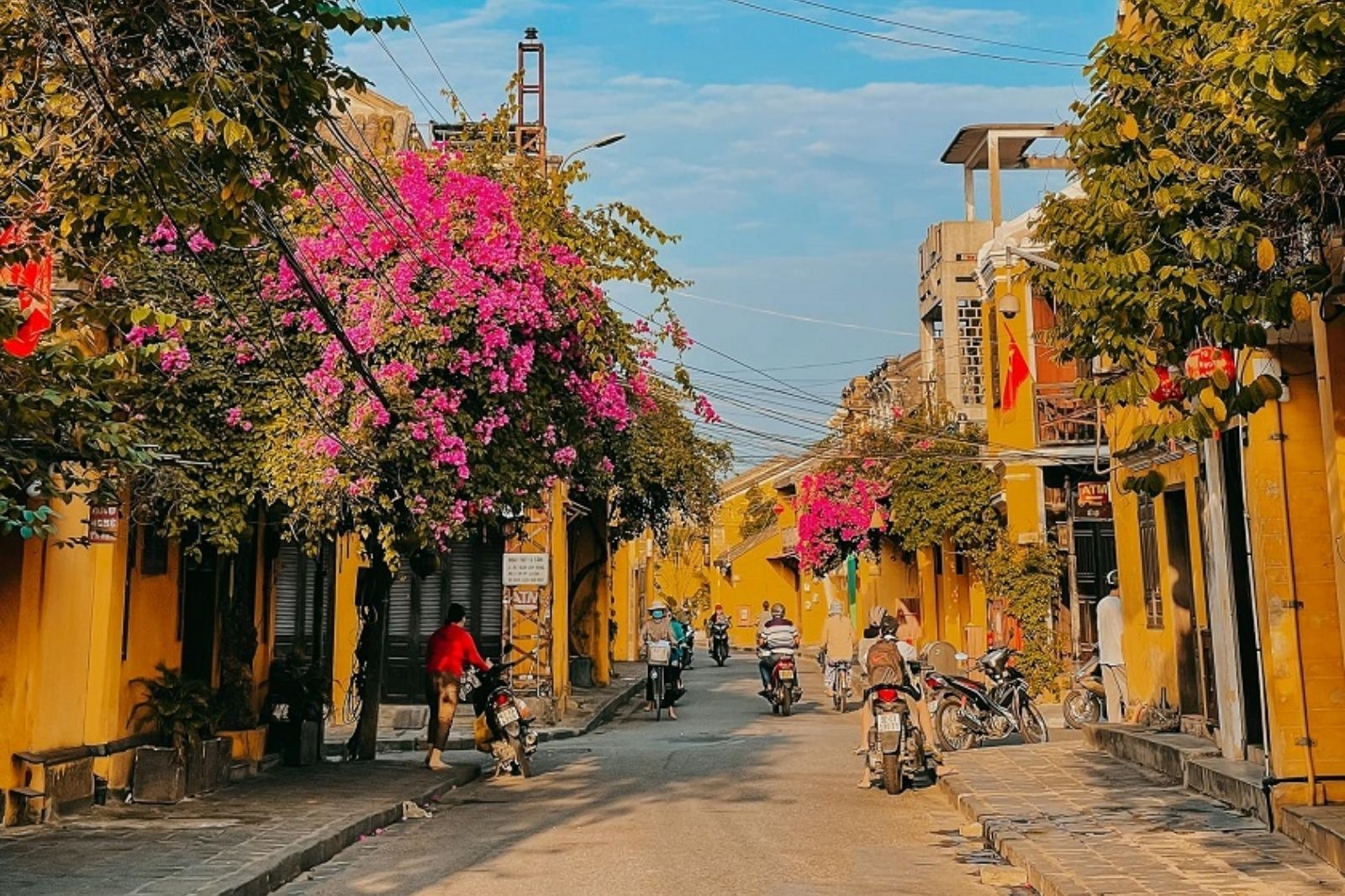
Hoi An belongs to Central Vietnam

Photo: Hoi An belongs to Central Vietnam 

2. Hoi An Weather in Spring (February – April)

Following the chilly days of winter, Hoi An enters spring with mild, dry, and sunny weather. This is considered one of the most pleasant times to stroll through the ancient streets, leisurely cycle through the countryside, or find a quiet corner by the Hoai River to watch the rhythm of local life.

  • Temperature: Daytime ranges from 26–31°C, and nighttime ranges from 20–24°C. The weather is moderately warm without the pronounced sweltering heat of summer.

  • Rainfall: This is a period of low rainfall during the year. February usually sees only about 25–35 mm over 5–6 rainy days; heading into March and April, rainfall increases slightly but remains under 80 mm.

  • Sea and Humidity: Sea water temperatures are around 23–26°C, becoming suitable for beach getaways. Humidity remains relatively high but is generally more comfortable than the summer months.

The biggest plus of spring is the gorgeous lighting and stable weather. Clear days create ideal conditions to capture the golden hues of the ancient town, the lush green suburban rice fields, or the shimmering lanterns at night. On full moon nights, the ancient town becomes especially magical with its lantern festival atmosphere in the cool weather.

3. Hoi An Weather in Summer (May – August)

Starting in May, Hoi An enters vibrant summer days with abundant sunshine, bright skies, and high temperatures. This is also when the riverside city takes on a more lively pace of life, as beaches, the countryside, and outdoor activities become attractive choices for visitors.

  • Temperature: Daytime ranges around 33–35°C, with June and July typically being the hottest months. Nighttime temperatures hover around 25–27°C. High humidity can make the heat feel more intense, especially at noon.

  • Rainfall: Averages about 90–110 mm/month, with about 9–12 rainy days. Summer rains usually occur in the afternoon or evening and do not last very long, while mornings and early afternoons are generally very sunny.

  • Sea: Water temperature is around 28–30°C, quite ideal for activities such as swimming, kayaking, or exploring nearby islands.

However, the summer sun in Hoi An is quite intense. If you have outdoor sightseeing plans, it is best to limit movement between 11:00 AM and 3:00 PM, and prepare hats, sunscreen, and drinking water. An afternoon shower can quickly wet the streets, but it rarely lasts all day, so with a flexible itinerary adjustment, you can still fully enjoy your trip.

Scenery of Hoi An on beautiful sunny days

Photo: Scenery of Hoi An on beautiful sunny days 

4. Hoi An Weather in Autumn (September – November)

Autumn in Hoi An marks the beginning of the rainy season, when rainfall increases significantly, averaging around 306–459 mm. Particularly, October and November are the months with the highest rainfall of the year. Temperatures drop to about 24.4–27.6°C, with cloudy skies and fairly high humidity (83–86%). During this time, the area may experience storms or heavy rain, sometimes causing minor flooding in the Ancient Town.

Key Characteristics:

  • Showers or prolonged periods of rain occur, sometimes continuously for several days.
  • When flooded, the Ancient Town creates a contemplative, poetic, and distinct atmosphere.
  • Fewer tourists, offering a quiet and gentle ambiance.

Tourism Advantages: Airfares, hotels, and services often drop by about 30–50%, making it ideal for budget-conscious travelers. The scenery of the ancient town in the rain also provides unique and romantic photo opportunities.

Disadvantages: Heavy rain can affect travel and sightseeing schedules; some marine activities or outdoor tours may be temporarily suspended, and there is a possibility of minor flooding in the ancient town.

Hoi An in the rainy season
Photo: Hoi An in the rainy season 

5. The Best Time to Visit Hoi An During the Year

The most ideal time to visit Hoi An usually falls between February and April, when the weather transitions into spring with a pleasant and stable climate. This period features gentle sunshine, little rain, and temperatures ranging from 22–30°C, making it very favorable for sightseeing, strolling through the ancient town, visiting Japanese Covered Bridge, Thanh Ha Pottery Village, or relaxing at nearby beaches. Thanks to the dry and not-too-hot weather conditions, many travelers and locals consider this the "golden season" to explore Hoi An, when the beauty of the ancient town is at its clearest and most complete.

According to the experience of many travelers, it is advisable to avoid visiting Hoi An during the peak months of June and July to avoid overcrowding and higher costs.

Visiting Hoi An at its best from February to May

Photo: Visiting Hoi An at its best from February to May 

Hoi An's weather, with its clear distinction across the 4 seasons of the year, is the key factor helping travelers choose the best time to visit according to their needs for relaxation, exploration, or cultural experiences. Understanding the characteristics of the dry and rainy seasons, temperatures, and rainfall will not only help you plan ahead but also ensure a complete trip that saves time and money. To make your journey to explore the ancient town convenient, safe, and all-inclusive, you can choose an all-inclusive Hoi An tour package with Sovaba Travel—a reputable tour operator with a well-designed itinerary, professional services, and locally knowledgeable tour guides. The tours are flexibly designed according to Hoi An's seasonal weather, helping you enjoy the finest moments at the ancient town, Japanese Covered Bridge, traditional craft villages, Hoai River, and many other prominent destinations.

Loading......

Featured destinations