How is a Hue Nha Ruong Built? Lesser-Known Traditional Materials and Techniques
Central
Thua Thien Hue
Hue Garden Houses
Sovaba.travel
Updated at: 24/09/2026
1. Hue Ruong House: A cultural symbol of the ancient capital
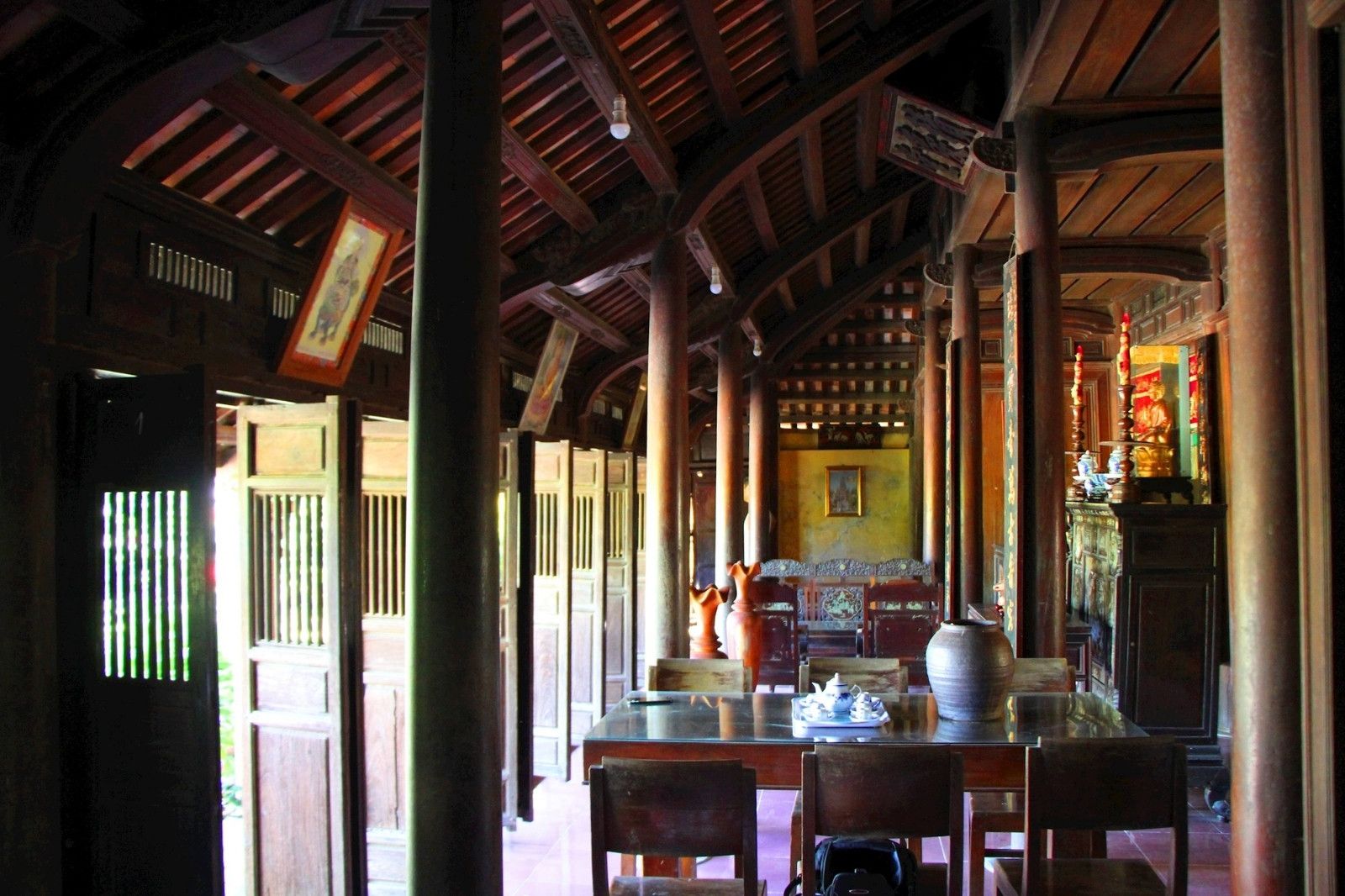
For more than a century and a half, from 1802 to 1945, Nha Ruong became a cultural symbol of the royal capital, closely tied to the Nguyen Dynasty. Elevating beyond its architectural role, Nha Ruong is deeply rooted in the lives and mindset of the ancient capital's people, present in all social strata—from royal palaces to private residences. It was not merely a place for daily living, but also a sacred site for ancestral worship, reflecting dignity and preserving clan traditional values.
Photo: Nha Ruong - A unique cultural feature of the imperial capital
The refinement of Nha Ruong also lies in its harmony with nature. These houses are usually set within spacious garden house compounds, surrounded by lush greenery, ponds, and rockeries, creating a peaceful and serene living space. This architectural style reflects a characteristic living philosophy of Hue people: "simple yet elegant, rustic yet poetic". Today, despite the passage of time, these ancient Nha Ruong houses still stand as vivid testament to the golden age of Vietnamese architecture, serving as a precious heritage to be cherished and preserved.
2. Preparation process and traditional materials
Before construction begins, the homeowner must undergo an extremely elaborate and careful preparation process.
Consulting Feng Shui
This is the first and most important step. Most Nha Ruong houses are built facing south, with the main gate and pathway designed so that visitors must curve around to the sides rather than entering directly. This follows traditional Eastern philosophy, aiming to generate balance and vital energy for the home.
Primary Materials
The materials used must be of the highest quality to ensure durability and aesthetic appeal.
Wood: Wild jackfruit wood, Merawan, or Afzelia are top choices. Jackfruit wood, in particular, is favored for its beautiful golden color, fine grain, high strength, and resistance to warping or cracking.
Bamboo: Bamboo used for purlins and beam structures must be mature and sturdy, harvested in early spring and soaked in water for about 100 days before being dried.
Rattan and Straw: Rattan vines from Song and Ma rattan species are used for binding cords, while straw and thatch grass are dried and carefully stored for roofing.
Every material—from bamboo soaked for 100 days to precious jackfruit wood—is meticulously prepared, demonstrating respect for nature and the craftsman's dedication, contributing to the timeless beauty of Nha Ruong.
Photo: Nha Ruong is built from precious woods, creating timeless beauty
3. Unique construction techniques
The most special and quintessential aspect of Hue's Nha Ruong lies in its structural technique, which is matched by very few places.
Metal-Free Joinery Structure
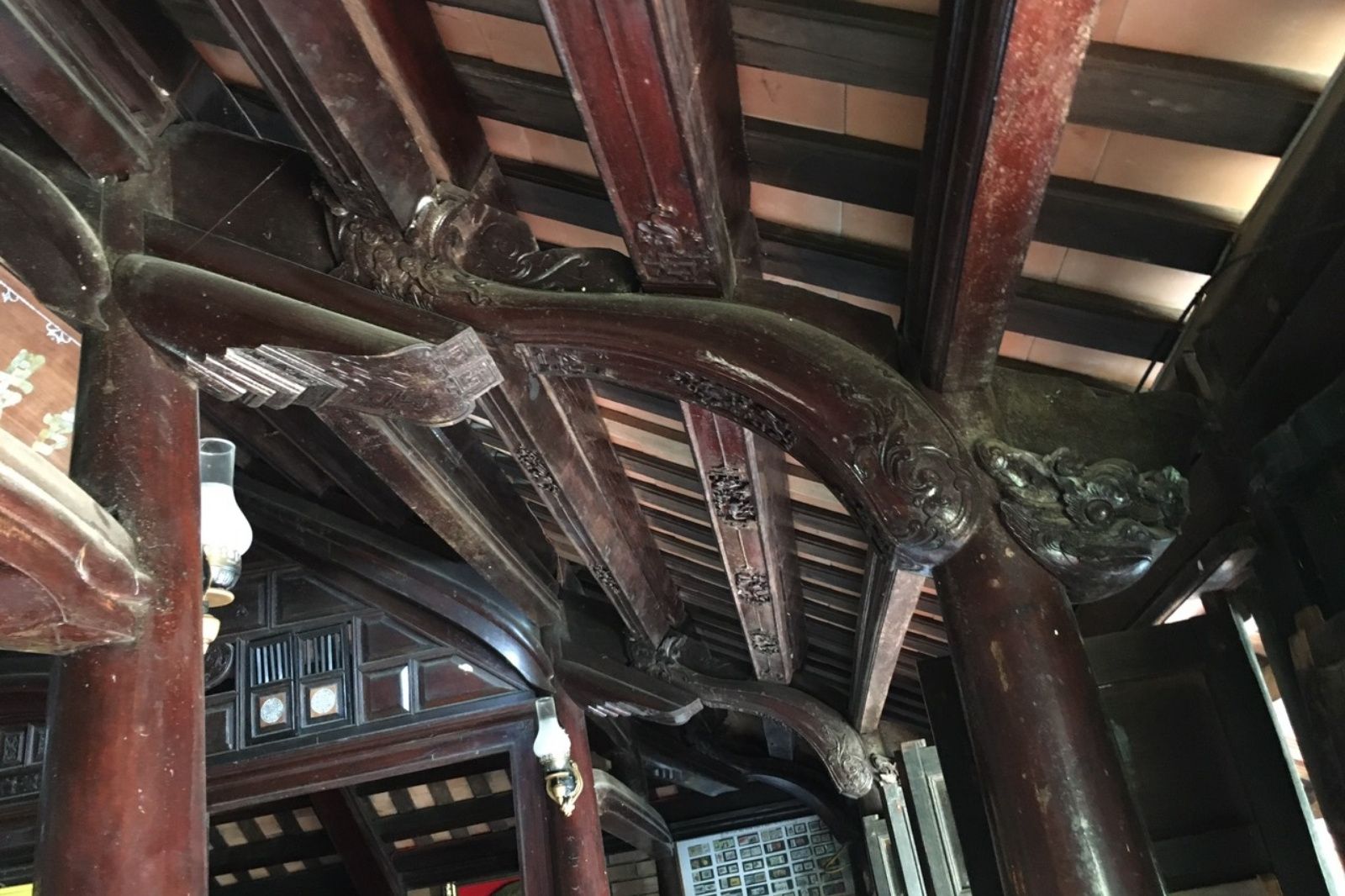
The entire house, no matter how large, is erected completely using a system of wooden mortise-and-tenon joints and pegs. Columns, rafters, and beams are joined by mortise and tenon, locked with wedges and wooden or bamboo pegs, without using a single metal nail or screw. This not only makes the house easy to dismantle and relocate, but also showcases the extraordinary skill of the carpenters.
The Foundation
The floor is typically prepared with a mixture of clean earth mixed with lime and ash to prevent termites. This mixture is compacted in multiple layers, creating a solid, crack-resistant surface. For aristocratic homes, the floor might be paved with Thanh bluestone or marble slabs.
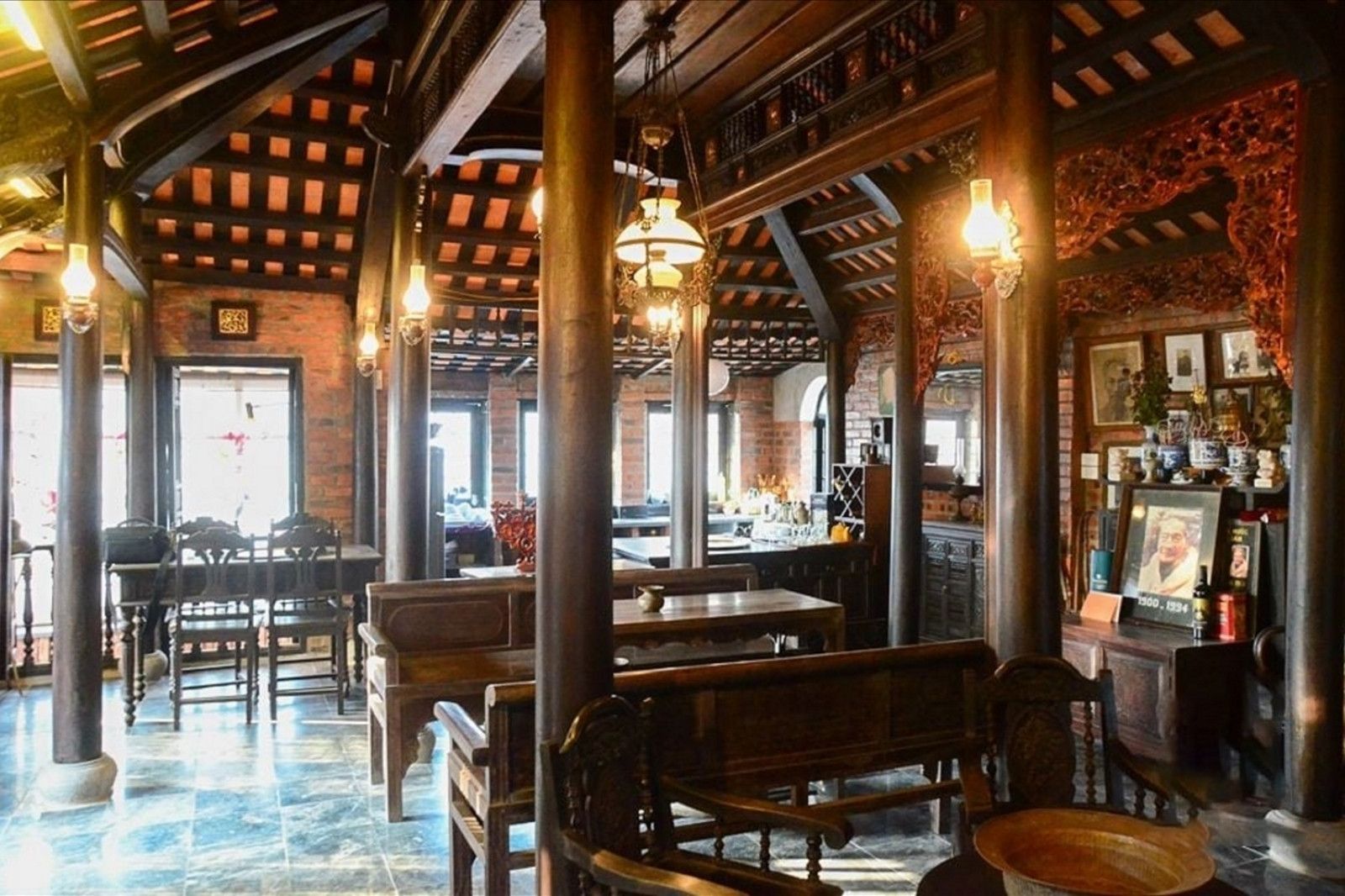
Photo: Interior architecture of Hue Nha Ruong
Column System and Bay Layout
A typical Nha Ruong features 56 columns resting on stone plinths to resist moisture and rot. The main columns (cot cai) and secondary columns (cot quan) divide the house into 3 main bays and 2 side wings (chai).
Central Bay: The largest area, dedicated to ancestor worship and receiving guests, embodying reverence and dignity.
Flanking Bays and Side Wings: Smaller in area, serving as family living and resting quarters.
Wall and Roof Construction Techniques
Earthen Walls: Walls are made from a mixture of pliable clay mixed with straw and bamboo fiber. This mixture is kneaded by foot, then systematically applied over a bamboo framework to form a strong bond. Once finished, the wall surface is smoothed and whitewashed with lime plaster, giving an appearance similar to brick walls.
Roofing: The roof has a steep pitch, tiled with traditional flat tiles (ngoi liet) or yin-yang tiles (ngoi am duong), laid in two thick layers. This not only allows rain water to drain rapidly during storms, but also keeps the house cool in summer and warm in winter.
Intricate Woodcarvings
One of the most unique aspects of Hue's Nha Ruong is its intricate and elaborate carved motifs. Every small detail—from purlins, rafters, and columns to doors—is meticulously carved with swirling clouds, floral patterns, parallel sentences, and the four sacred seasons... This serves not only ornamental purposes but also carries profound Feng Shui and aesthetic significance, transforming the house into a living wooden sculpture.
These sophisticated construction techniques not only grant lasting beauty to Nha Ruong but also stand as a vivid testament to the talent, creativity, and living philosophy in harmony with nature of ancient Hue artisans.
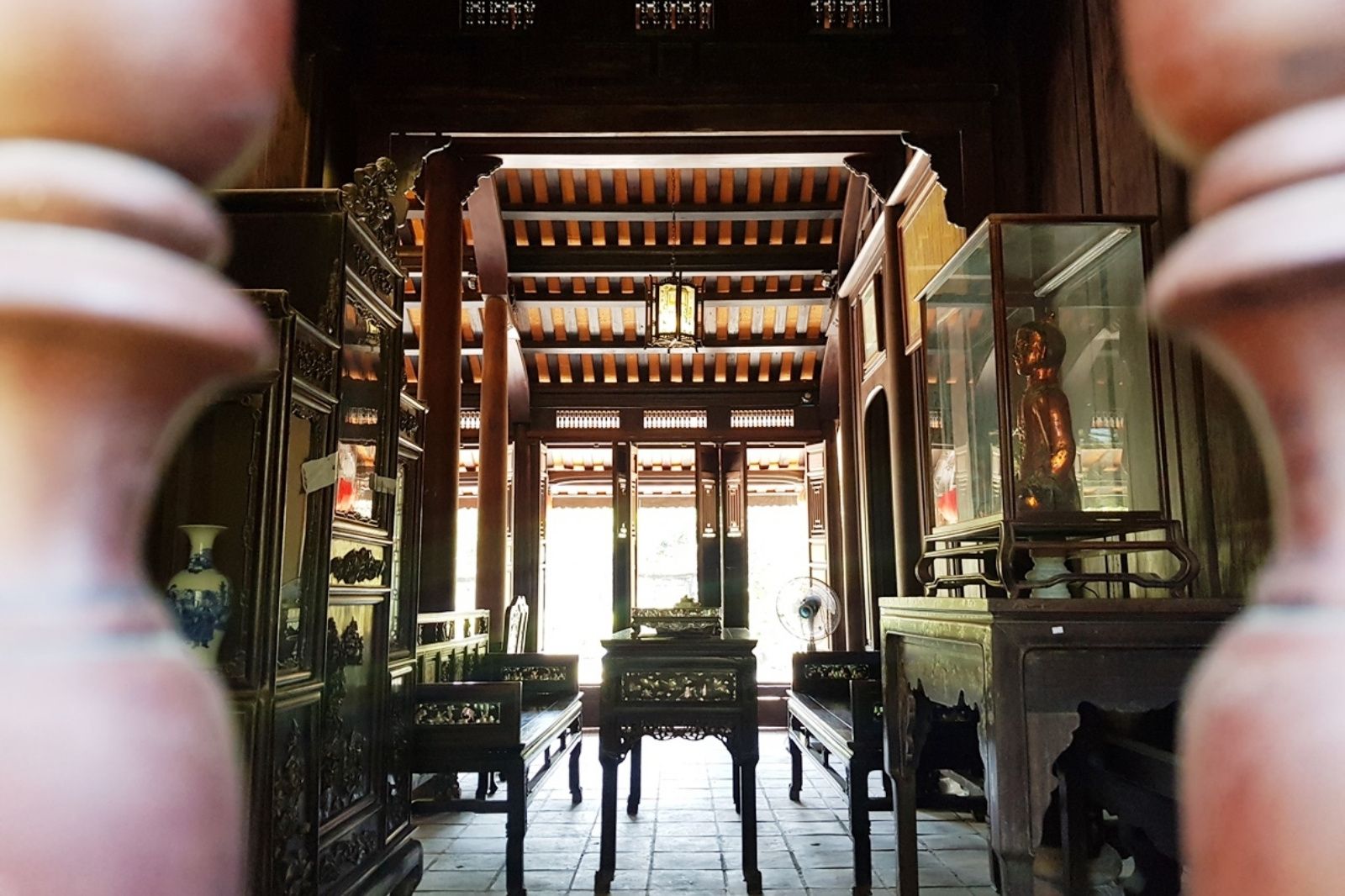
Photo: Impressive ancient Hue Nha Ruong houses
Those refined techniques not only create lasting beauty for Nha Ruong but also serve as a living testament to the mastery and nature-harmonizing philosophy of the ancient Hue people. To directly admire and discover these cultural values, join Sovaba Travel on a Hue garden house tour, where you can immerse yourself in a nostalgic space and gain a deeper understanding of the architectural essence of the imperial capital.