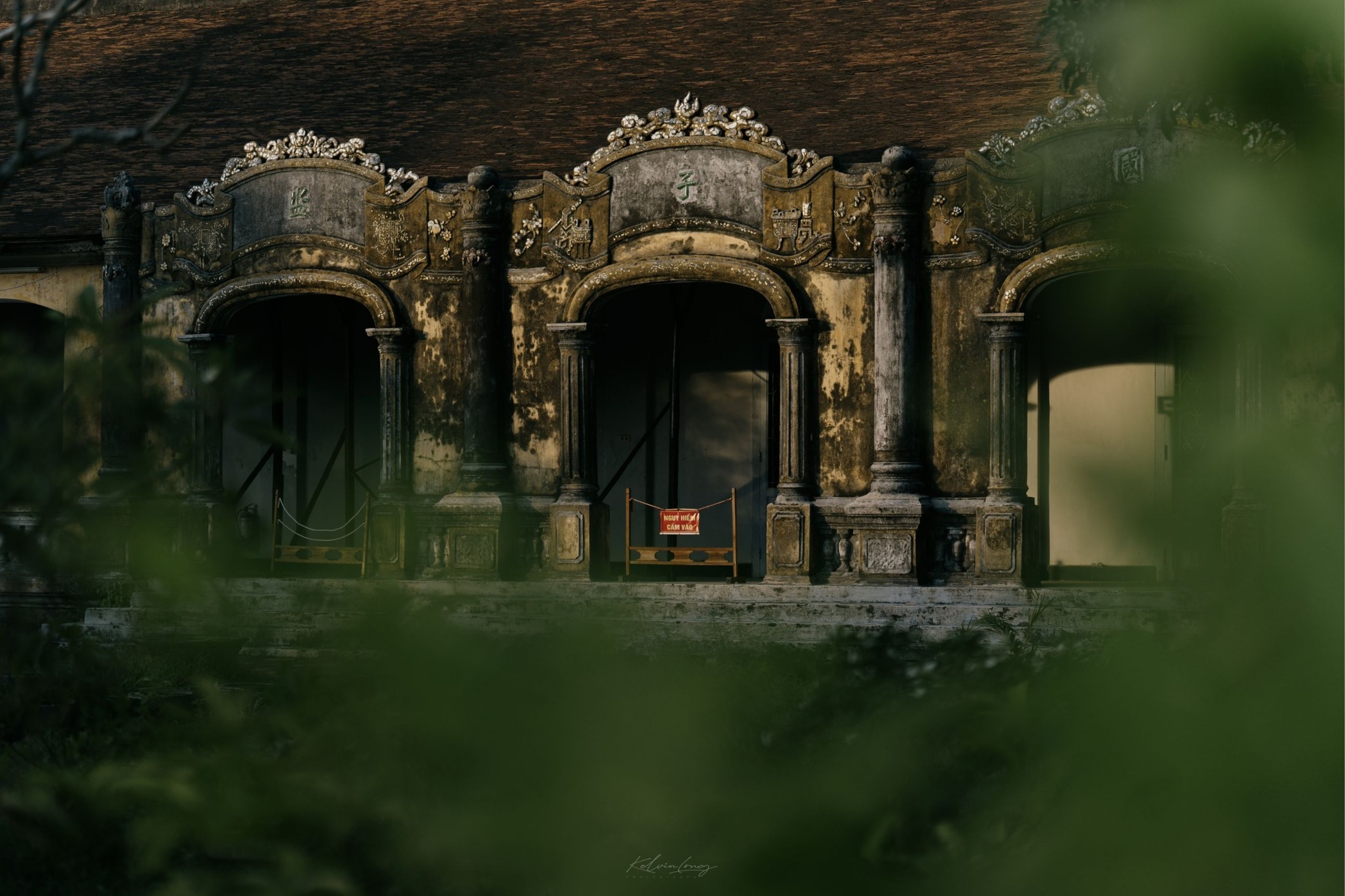
Imperial Academy Hue: Discovering the First University under the Nguyen Dynasty

Central

Thua Thien Hue

Sovaba.travel

Updated at: 24/09/2026

1. The History of Hue Imperial Academy

The Imperial Academy Hue was established in 1803, right after King Gia Long unified the country and chose Hue as the capital. Initially, the school was named Doc Hoc Duong (or Quoc Hoc Duong), located in An Ninh Thuong Village, Huong Tra District, an area now belonging to An Binh Village, Kim Long Ward. The structure was situated next to the Temple of Literature and faced directly towards the Perfume River, a location chosen according to Confucian feng shui principles: close to water, airy, and in harmony with nature.

In 1820, King Minh Mang renamed the school to Imperial Academy (Quoc Tu Giam), ushering in a period of strong development for education under the Nguyen Dynasty. Just one year later, the school was expanded with the construction of Di Luan Duong as the main lecture hall, along with two rows of classrooms on both sides, each with 19 compartments. During the Tu Duc era (1848–1854), the complex was further expanded with a 9-compartment house, surrounding brick walls, living quarters for students, and two side gates exclusively for them. In 1854, King Tu Duc also composed an essay and a poem engraved on a stone stele erected in the schoolyard, demonstrating the high regard for knowledge and the studious tradition.
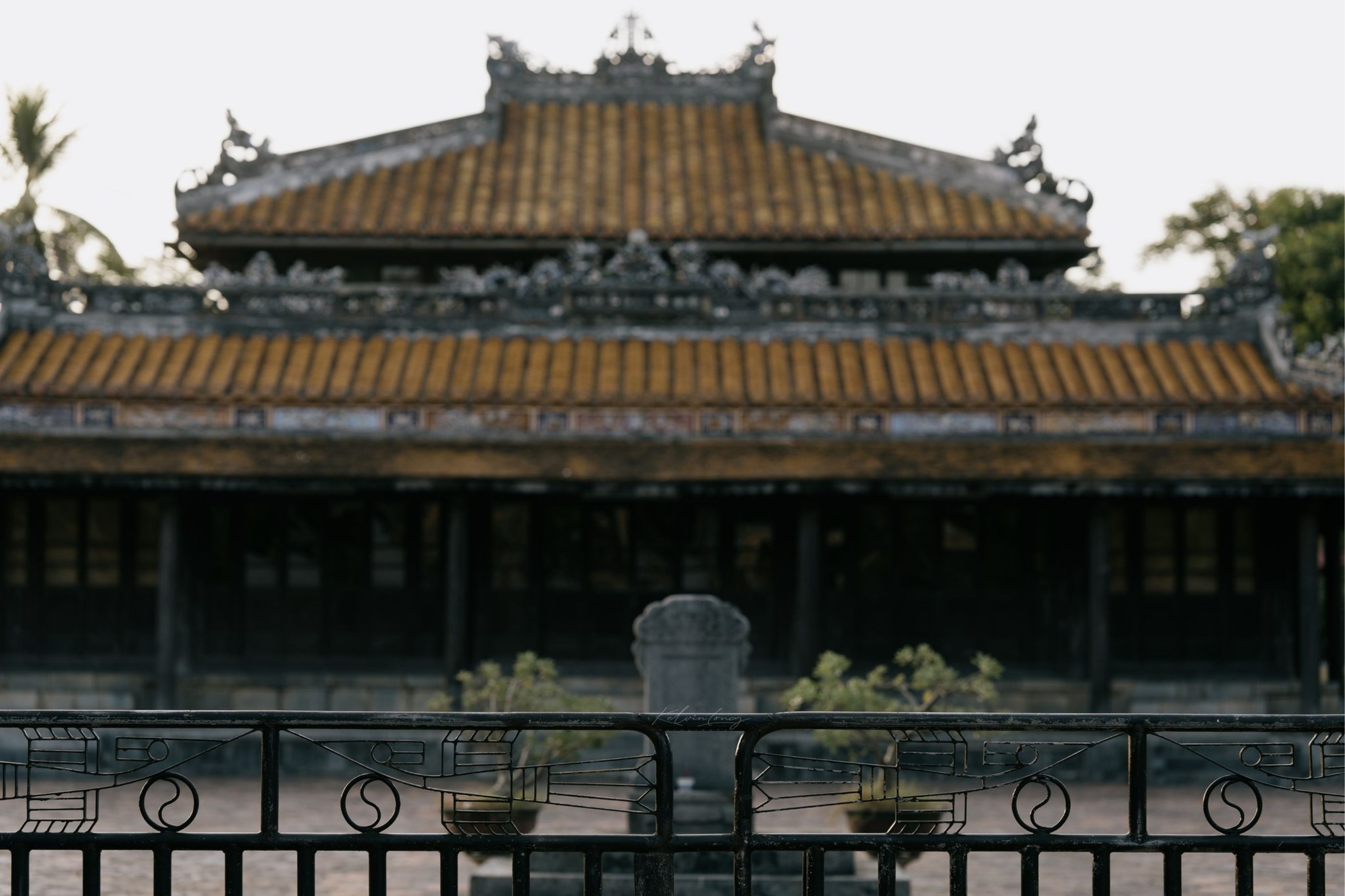
Imperial Academy Hue was established under King Gia Long
Photo: Imperial Academy Hue was established under King Gia Long 

The school suffered severe damage from the Giap Thin typhoon in 1904, but was restored afterward. In 1908, under King Duy Tan, the Imperial Academy was moved into the Imperial City (the current location on 23 Thang 8 Street) for convenient management and ceremonial organization. In 1923, Tan Tho Vien became Khai Dinh Museum, while a new library named Bao Dai Library was built behind Di Luan Duong. The Imperial Academy operated until 1945, when the Nguyen Dynasty ended and Confucian education officially came to a close.

Over its more than 120 years of existence, the Imperial Academy Hue trained over 500 doctorates and junior doctorates, attracting scholars from across various localities, including royal descendants, students from aristocratic backgrounds, recommended scholars, and graduates. The first national exam was held in 1822, with the names of successful candidates engraved on steles placed at the adjacent Temple of Literature.
2. Distinctive Architecture of Hue Imperial Academy

The architecture of the Imperial Academy Hue reflects the royal court style of the Nguyen Dynasty, harmoniously combining the grand scale of major structures with smaller items, creating a balanced layout rich in artistic value. The campus spans about 200m on each side, consisting of two main areas at the front and back, separated by Le Truc Street.

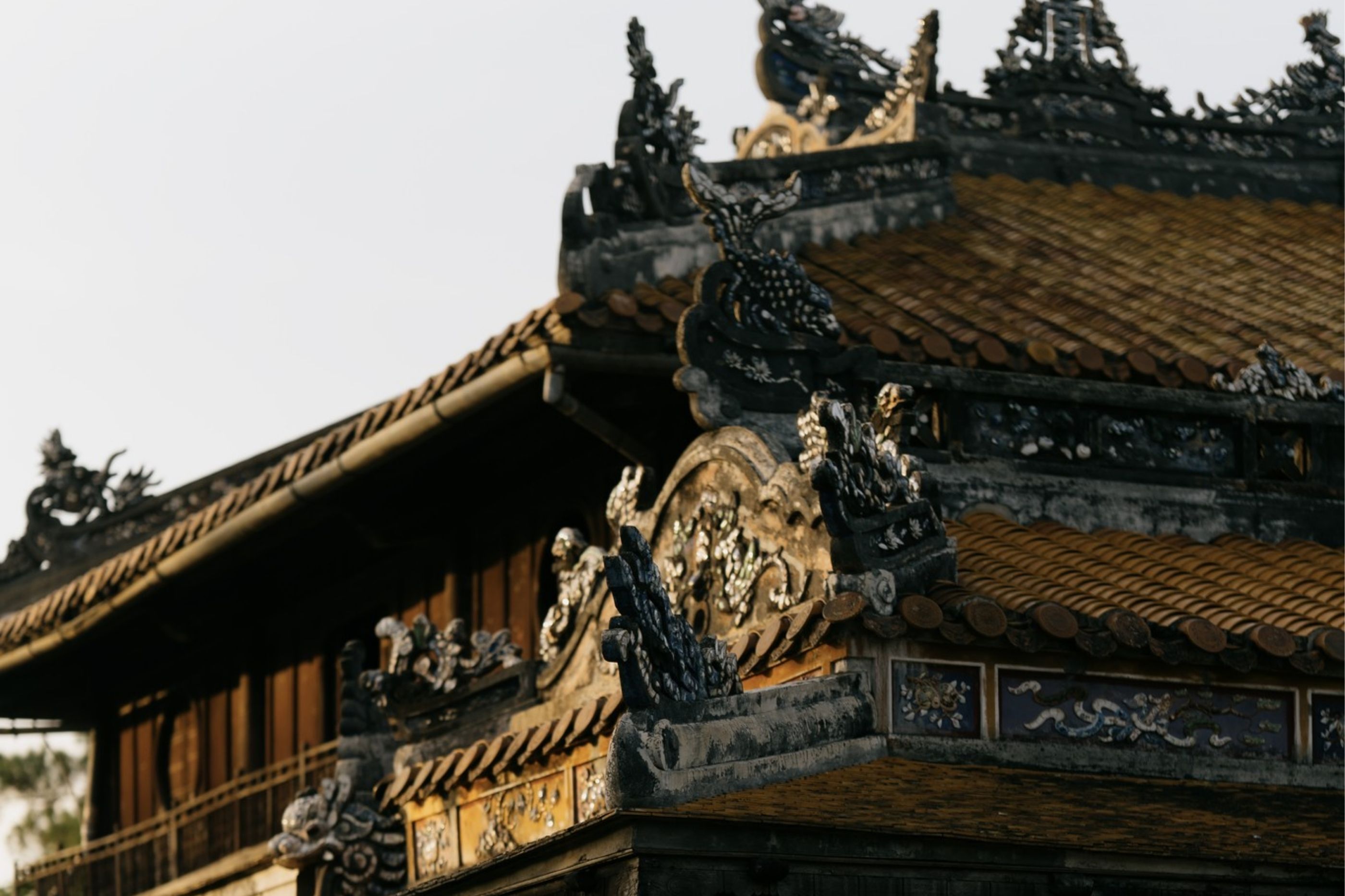
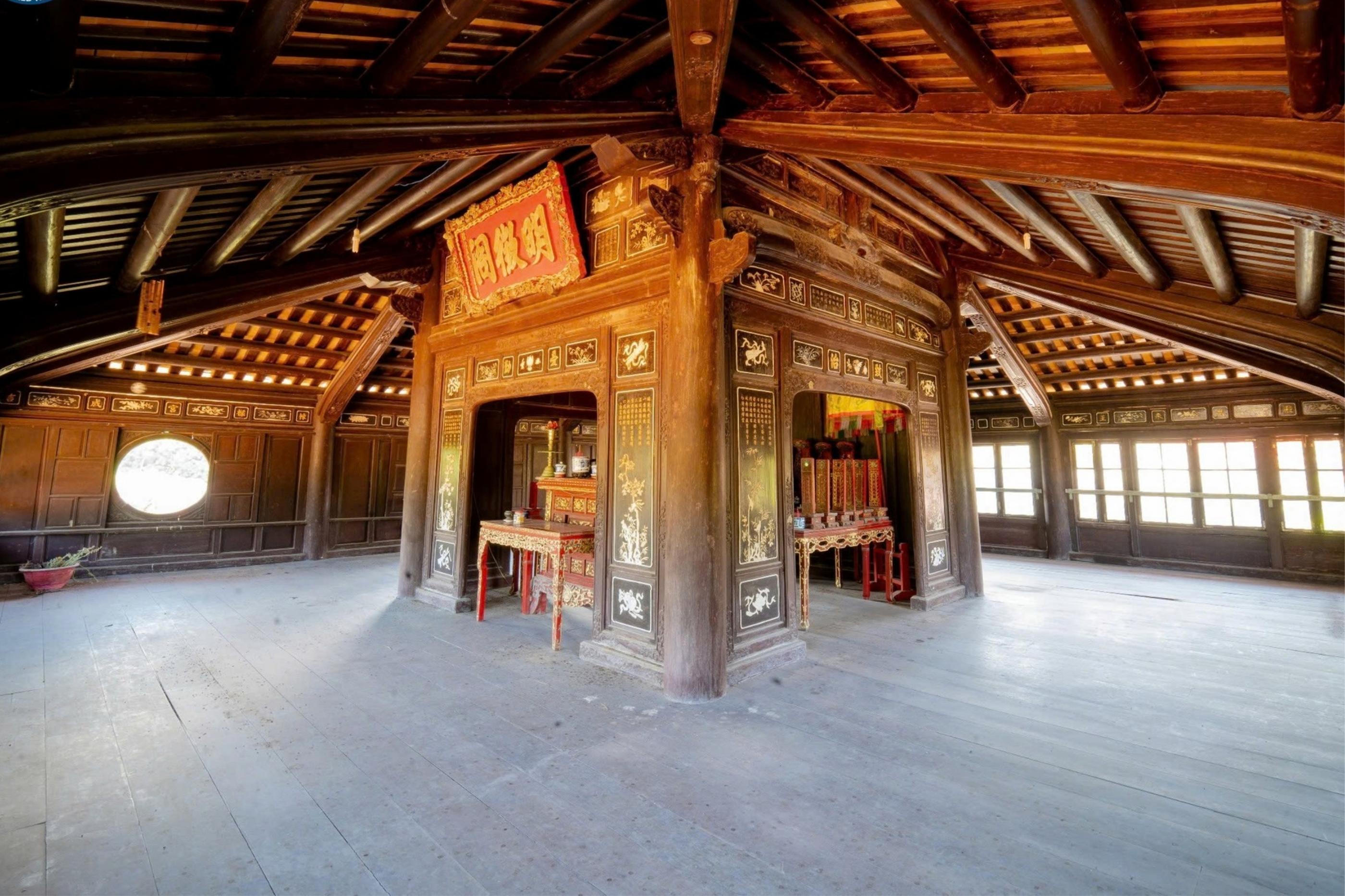
The center of the entire complex is Di Luan Duong – a large lecture hall built in the double-roof style, featuring layered roofs and a meticulously carved precious wood structure. Many decorative details are inlaid with ivory and embellished with porcelain relief, showcasing the exquisite craftsmanship of Nguyen-era artisans. Behind Di Luan Duong is Tan Tho Vien (now the Hue Museum of Royal Antiquities), which originally evolved from Long An Palace and Minh Trung Pavilion built in 1845.

Patterns reflecting Hue royal court architecture
Photo: Patterns reflecting Hue royal court architecture 

Flanking Di Luan Duong are rows of classrooms; previously, each row consisted of 19 compartments along with student living quarters and offices for the Te Tieu (Rector) and Tu Nghiep (Vice-Rector), who were in charge of managing the school's operations. In front of the lecture hall courtyard stand two important steles: a stele from the Thieu Tri era engraved with the poem "Huynh tu thu thanh" praising the atmosphere of studying, and a stele from the Tu Duc era with an essay honoring academic values. In addition, at the nearby Temple of Literature, there are 32 stone steles inscribing the names of 293 doctorates of the Nguyen Dynasty from the Minh Mang exam in 1822 to the Khai Dinh exam in 1919.

The entire architecture not only served educational purposes but also demonstrated the Nguyen Dynasty's veneration for learning: surrounding brick walls and dedicated gates for scholars created a quiet, solemn space true to the spirit of the highest educational center of the era.

3. Cultural and Educational Significance of Hue Imperial Academy

Imperial Academy Hue is the only feudal university in Vietnam that still retains an almost intact structure. This monument clearly reflects the tradition of respecting education across dynasties, especially the Nguyen Dynasty, where nurturing talents was considered the foundation of state building. Here, scholars received scholarships, food supplies, books, and lamp oil to focus on their studies—a fairly comprehensive form of educational support in the context of that time.

The site still preserves many royal poems composed by Nguyen kings and two stone steles of high literary and artistic craftsmanship value. Thanks to these outstanding values, in 1993, the Imperial Academy became part of the Complex of Hue Monuments, recognized by UNESCO as a World Cultural Heritage site. Today, the venue functions as the Thua Thien Hue Historical Museum, displaying many royal antiquities and helping visitors gain a deeper understanding of the ancestors' studious tradition.

The Imperial Academy is evidence of the development of education under the Nguyen Dynasty
Photo: The Imperial Academy is evidence of the development of education under the Nguyen Dynasty

The Imperial Academy is also testament to a transformative period in Vietnamese education: moving from a traditional Confucian model to a modern one, marked by the establishment of Quoc Hoc Hue High School in 1896 with a curriculum teaching French and the national Vietnamese script. This shift paved the way for modern education while concluding the Imperial Academy's role as the training center for scholars during the feudal era.

4. Visitor Guide to Hue Imperial Academy

If you want to explore the Imperial Academy Hue, its current address is 23 Thang 8 Street, Phu Xuan Ward, Hue City – located inside the Hue Citadel. From central Hue, you can travel by motorbike or car, taking about 10-15 minutes: go straight along Bui Thi Xuan Street, cross Da Vien Bridge, turn onto Le Duan Street, and reach the destination.

Ideal time: Early morning or late afternoon to avoid the heat, with a visit duration of 1-2 hours. Don't miss: Admiring Di Luan Duong, reading the doctoral steles, and visiting the antiquities museum.

Note: Wear respectful attire, keep the area clean, and take photos respectfully in this cultural space. Combine your trip with a visit to the nearby Temple of Literature for a complete experience. If traveling in a group, you can hire a tour guide to hear detailed historical stories.

Spend 1 to 2 hours visiting and learning about the Imperial Academy
Photo: Spend 1 to 2 hours visiting and learning about the Imperial Academy 

The Imperial Academy Hue is not only the last mark of Confucian education, but also an important slice of history from the Nguyen Dynasty and Vietnamese academic culture. Strolling through the school campus, among stone steles, ancient lecture halls, and solemn surroundings, visitors can easily feel the spirit of learning that nurtured generations of scholars. This is a place where the past remains vividly present, helping travelers reflect on the development journey of Vietnamese knowledge over more than a century. If you wish to continue exploring Hue in greater depth, don't forget to visit other key sites such as the Temple of Literature, Long An Palace, Hue Museum of Royal Antiquities, Quoc Hoc Hue High School, or more broadly, the Imperial City, Tu Duc Tomb, Minh Mang Tomb… Each destination unfolds its own story, complementing the complete picture of the ancient capital heritage.

Loading......

Featured destinations