|

Back Home

Khai Dinh Tomb: Unveiling Its History and Little-Known Mysteries

Central

Thua Thien Hue

Khai Dinh Tomb

Sovaba.travel

Updated at: 31/08/2026

1. Where is Khai Dinh Tomb located?

Khai Dinh Tomb is located on the slope of Chau Chu Mountain (also known as Chau E), in Thuy Bang Commune, Huong Thuy Town, Thua Thien Hue Province. The monument is situated about 10 km south of Hue city center and forms an important part of the Complex of Hue Monuments – a UNESCO World Cultural Heritage site.

The tomb's site was carefully chosen by Emperor Khai Dinh, strictly adhering to traditional Eastern feng shui principles. In front stands a low hill serving as a screen ("tien an"), blocking the wind and gathering energy. On either side are Chop Vung Mountain (Left Blue Dragon) and Kim Son Mountain (Right White Tiger), forming a solid "left dragon - right tiger" position. The overall space harmoniously blends mountains, pine forests, and water elements, offering a landscape that is both majestic, peaceful, and solemn.

Thanks to its convenient location, visitors can easily reach the tomb by motorbike, private car, or guided Hue tours. Currently, the admission fee is about 150,000 VND/adult (updated 2026), with daily opening hours from 7:30 AM to 5:30 PM. With its special feng shui terrain and harmonious landscape, Khai Dinh Tomb is not only a unique architectural structure but also a destination rich in cultural and artistic values of the Nguyen Dynasty.
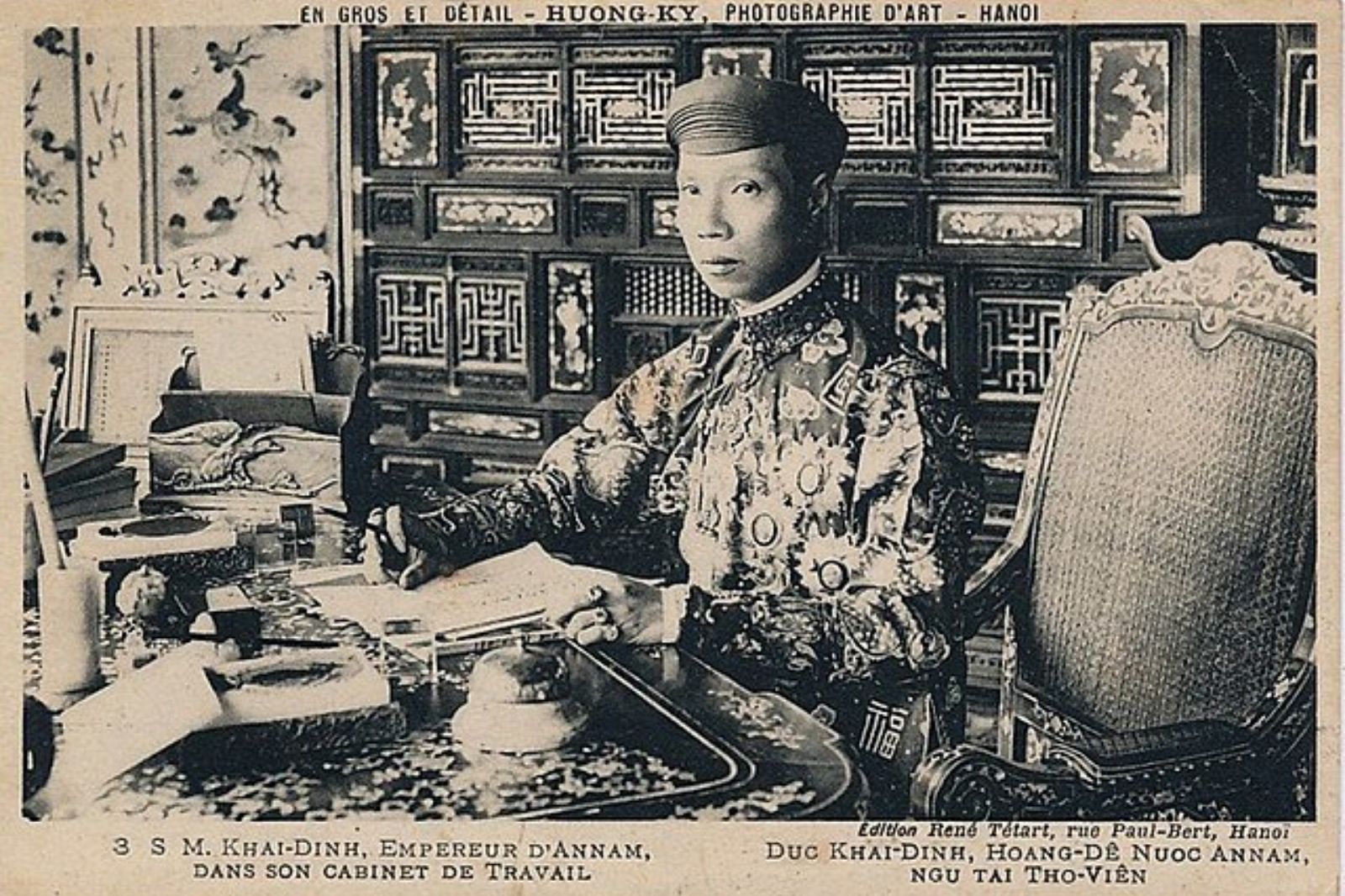
Documents about Emperor Khai Dinh
Photo: Documents about Emperor Khai Dinh 

2. The construction process of Khai Dinh Tomb

Emperor Khai Dinh (given name Nguyen Phuc Buu Dao) ascended the throne in 1916 at the age of 31 and ruled until 1925. Right from the early years of his reign, he harbored plans to construct his own mausoleum—a structure carrying a distinct personal signature and reflecting an aesthetic mindset different from previous emperors.

Construction of the tomb began on September 4, 1920, under the command of Grand Marshal Le Van Ba, with the participation of hundreds of talented artisans and craftsmen nationwide, including the painter Phan Van Tanh. The construction process spanned 11 years (1920–1931) with an exceptionally elaborate scale and investment. In 1925, Emperor Khai Dinh passed away before the tomb was completed, and his remains were temporarily interred. Subsequently, Emperor Bao Dai—his successor—continued to direct construction according to the original design, completing the project in 1931.

Notably, to serve the construction, the royal court imported many modern materials from abroad: cement, steel, and slate tiles from France, alongside ceramics, porcelain, and colored glass from China and Japan. This combination created a monument showcasing a rare East-West fusion in Vietnamese royal architecture. Khai Dinh Tomb is also the last mausoleum of the Nguyen Dynasty, marking a transitional phase and closing an era of feudalism in Vietnam.

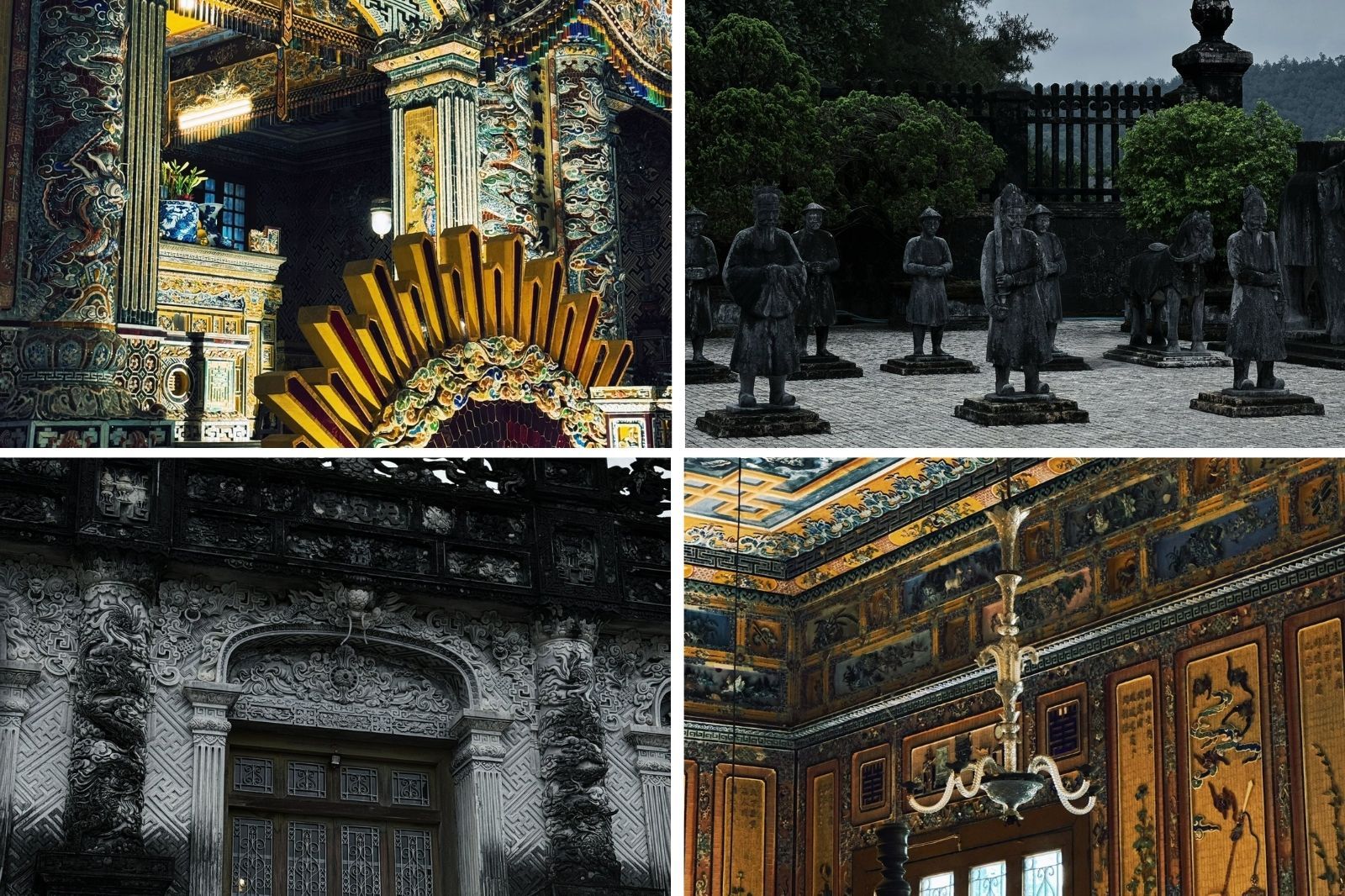
Highlighted by architecture featuring a blend of multiple cultures
Photo: Highlighted by architecture featuring a blend of multiple cultures  

3. What makes Khai Dinh Tomb's architecture unique compared to other royal tombs?

Distinctly different from the traditional tombs of the Nguyen Dynasty—such as the majesty of Gia Long Tomb, the solemnity of Minh Mang Tomb, or the poetic charm of Tu Duc Tomb—Khai Dinh Tomb stands out with an East-West fusion architectural style, boldly combining classical and modern elements. Overall, the structure is designed in a solid rectangular shape, featuring a system of 127 steps leading up to the courtyard tiers. Notably, the entire tomb was built with modern reinforced concrete and cement imported from France—completely replacing traditional bricks and tiles, creating a unique appearance compared to contemporaneous works.

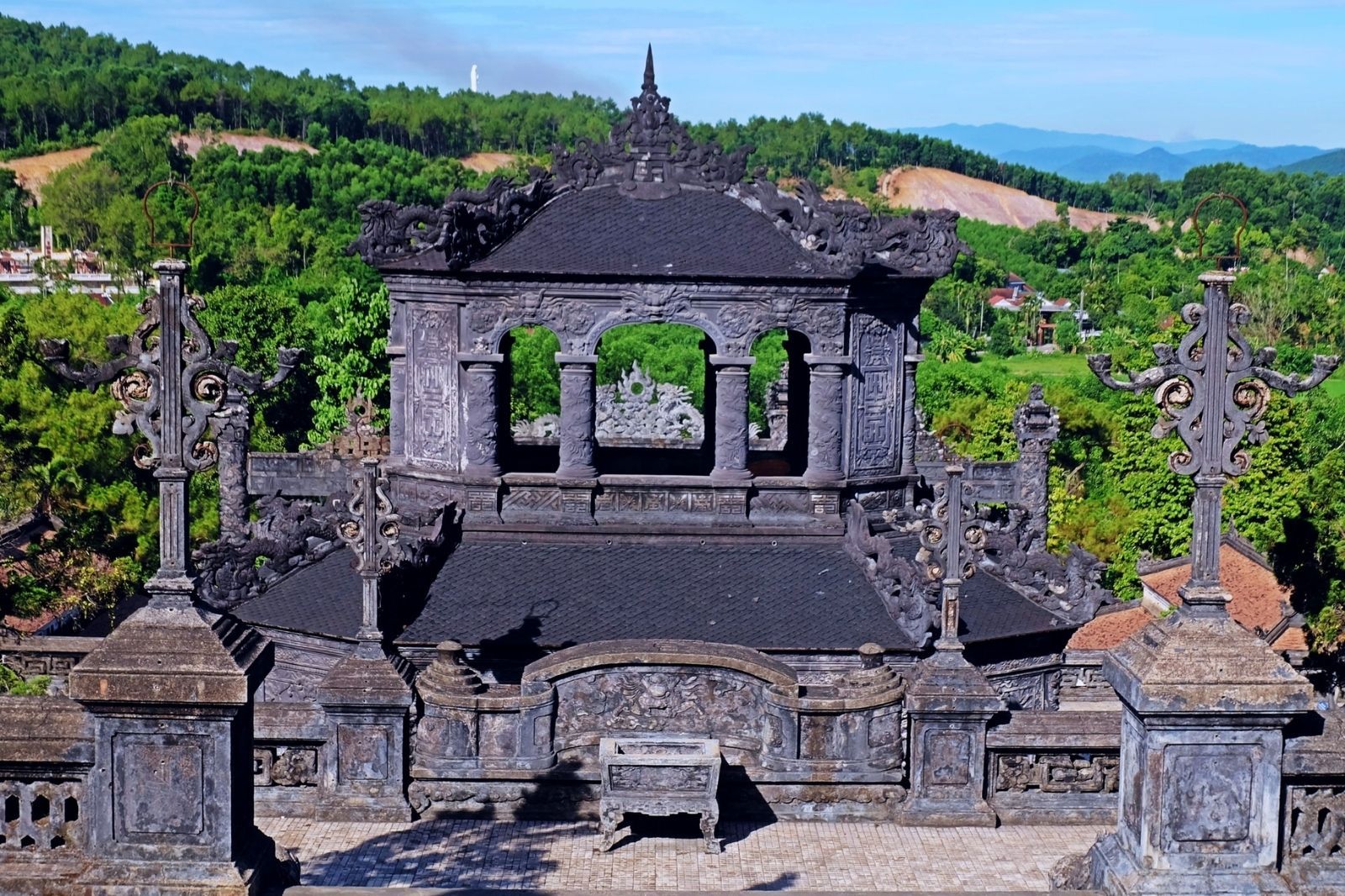
Khai Dinh Tomb also clearly demonstrates cultural fusion in every architectural detail. The Triple Gate (Tam Quan) and pillar posts show influences of Indian and Buddhist architecture; the octagonal stele pavilion columns recall the Romanesque style; while the fencing system resembles Gothic-style Cross motifs from the West. Although covering a more modest area compared to many other mausoleums (approx. 117 m x 48.5 m), the structure achieves a high level of refinement, with every detail meticulously crafted. As a result, Khai Dinh Tomb is often likened to a "medieval European castle" amid the pine-covered hills of Hue.

This unique architectural blend once caused Khai Dinh Tomb to be viewed as out of place within the Nguyen Dynasty tomb system; however, it also affirms an exceptional creative value, vividly reflecting the historical and cultural transition during the French colonial era.

Khai Dinh Tomb stands out with its ancient charm and unique patterns
Photo: Khai Dinh Tomb stands out with its ancient charm and unique patterns 

4. Lesser-known mysteries and stories about Khai Dinh Tomb

Hidden behind its grand and distinctive exterior, Khai Dinh Tomb preserves many interesting details and little-known stories that contribute to the unique charm of this monument.

Mysteries and Unique Details at Khai Dinh Tomb

  • Burial location is no longer a secret: Unlike the traditional practice of keeping the burial site hidden in Nguyen Dynasty tombs, Emperor Khai Dinh's remains were placed directly beneath the bronze statue in Thien Dinh Palace—an almost public position, rare in feudal tomb architecture.
  • Rumors about the builders: Folklore still circulates stories that to keep the design secret, some artisans involved in building the tomb were not allowed to survive. Although there is no concrete evidence, this detail reflects the imagination and mystery surrounding the monument.
  • “Nine Dragons Hiding in Clouds” – A painting masterpiece: The ceiling of Thien Dinh Palace is highlighted by the painting “Nine Dragons Hiding in Clouds” (Cuu Long An Van) created by the artist Phan Van Tanh. The artwork depicts nine dragons emerging and disappearing in the clouds, symbolizing the supreme power and status of the emperor.
  • Appearance of modern materials and items: The tomb's interior impresses with exquisite mosaic details, featuring Western objects such as alarm clocks, tennis rackets, and kerosene lamps—something virtually unheard of in traditional mausoleums.

These blend of real and mythical elements make Khai Dinh Tomb not just a mere historical monument, but a "living story" that vividly reflects cultural synthesis and the unique context of a historical period.

5. The impressive interior of Thien Dinh Palace

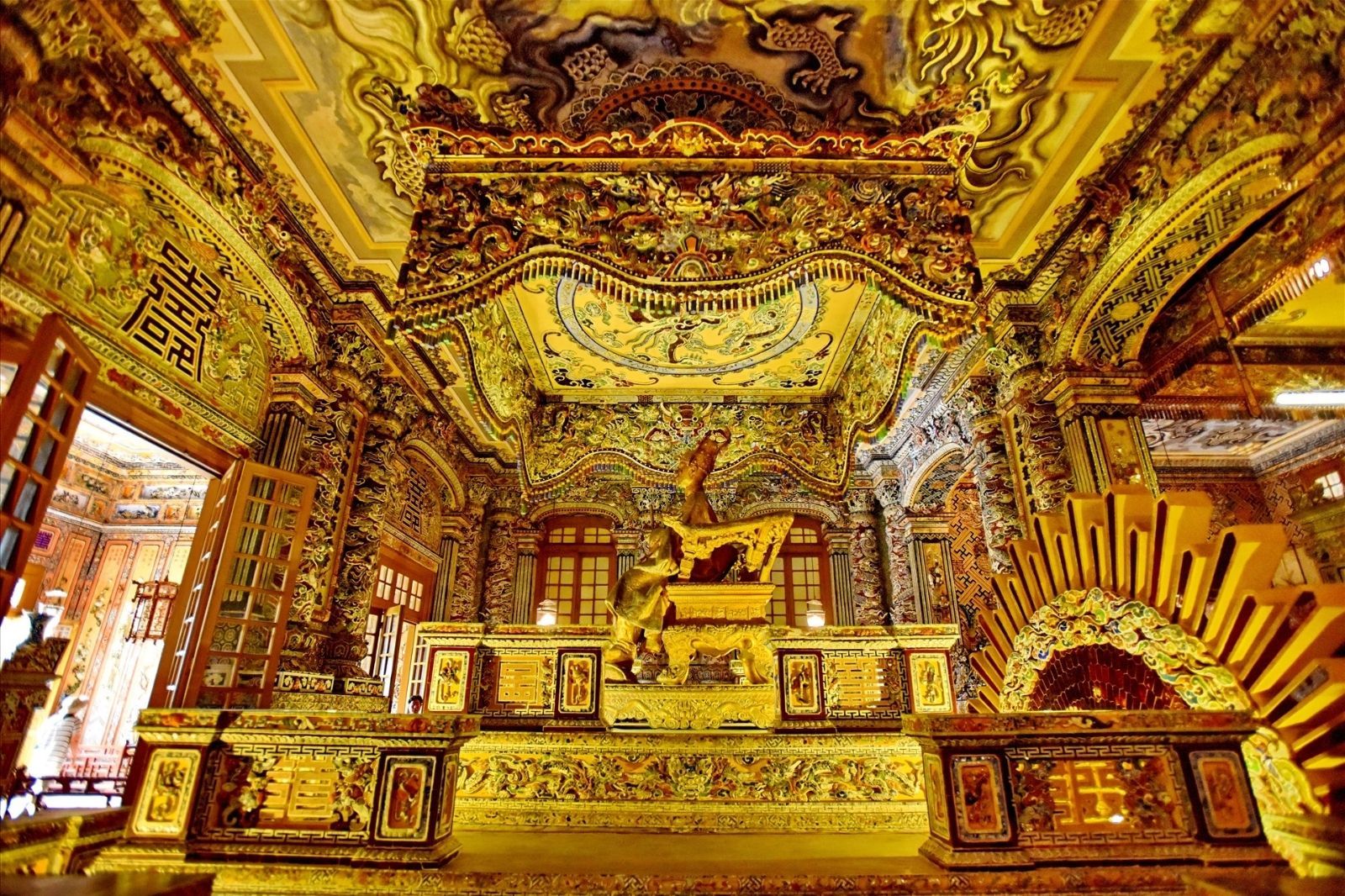
Amidst the tomb's unique overall architecture, Thien Dinh Palace is considered the "heart" and the space that best demonstrates the peak of Nguyen Dynasty royal art. Located on the highest tier of the mausoleum, Thien Dinh Palace houses the bronze statue of Emperor Khai Dinh (nearly 2 meters tall, in royal attire) along with his ancestral tablet, creating a most solemn and sacred space. However, what makes this place truly special is the interior decoration art reaching a rare level of exquisite craftsmanship.

  • Large-scale porcelain and glass mosaic space: All four walls, ceiling, and pillars are composed of tens of thousands of porcelain and colored glass shards imported from China, Japan, and France. This combination of materials creates a shimmering light effect, turning the space into a vibrant and radiant spectacle.
  • Diverse, symbolic motifs: Decorative panels recreate traditional motifs such as the Four Seasons (Pine - Chrysanthemum - Bamboo - Ochna), the Eight Treasures, Five Blessings, crowns... intermingled with everyday details bearing modern accents, clearly reflecting the cultural fusion of the era.
  • Royal canopy (Buu Tan) – A sculptural masterpiece: The canopy above the emperor's statue is inlaid with porcelain weighing nearly 1 ton, yet it appears as soft and flowing as silk fabric, creating an impressively supple impression.
  • Luxurious interior space: The palace floor is paved with marble, divided into 5 spacious bays, enhancing the grand stature and ceremonial nature of the monument.

With porcelain mosaic artistry reaching the pinnacle of craftsmanship, Thien Dinh Palace is not only a worship space but also a living testament to the remarkable artistic mastership of ancient artisans, leaving modern visitors mesmerized by its resplendent beauty even after more than 90 years.

6. Why was Khai Dinh Tomb controversial in the history of the Nguyen Dynasty?

Not only impressing visitors with its unique architecture, Khai Dinh Tomb is also one of the most debated monuments in Nguyen Dynasty history, clearly reflecting the contradictions of a turbulent period.

Why was Khai Dinh Tomb controversial in Nguyen Dynasty history?

  • Huge construction costs: To complete the tomb, Emperor Khai Dinh petitioned the French administration to increase land taxes nationwide by 30%. This decision met with widespread criticism, especially given the difficult living conditions of the people and famines taking place in many areas.
  • "Out of place" architectural style: Not adhering to traditional standards of Nguyen royal architecture, the tomb bore a strong East-West fusion imprint. This led some contemporary scholars to regard the structure as overly modern, or even "detached from identity."
  • Sensitive political context: Emperor Khai Dinh reigned when Vietnam was under French protectorate rule and was often viewed as a monarch with limited power. Consequently, his tomb was to some extent associated with luxury, ostentation, and the dependency of the late Nguyen court.

However, from a modern perspective, many researchers have reached a more balanced assessment, regarding Khai Dinh Tomb as clear evidence of the transitional spirit and East-West cultural convergence, reflecting a unique historical era in Vietnam's developmental journey.

The remains of the emperor lie beneath the bronze statue
Photo: The remains of the emperor lie beneath the bronze statue  

Khai Dinh Tomb is not merely a historical monument, but an artistic masterpiece reflecting the fusion of East and West during a unique era of the Nguyen Dynasty. Every exquisite ceramic mosaic detail and unique architectural line hides a story, making it an unmissable destination for visitors traveling to Hue. Amidst its magnificence and mystery, you will clearly feel the blend of past and present, tradition and modernity.

If you are looking for a complete journey to explore the Ancient Capital heritage, let Sovaba Travel accompany you on the Khai Dinh Tomb tour and other highlights of Hue. Not only will you admire the magnificent architecture of Ung Lang, but you will also have the opportunity to experience the culture, history, and little-known stories—all told through the perspective of knowledgeable and dedicated guides.

Loading......

Featured destinations