|

Back Home

King Dinh and King Le Temples: Two Sacred Temples in Hoa Lu Ancient Capital

Northern

Ninh Binh

Sovaba.travel

Updated at: 31/08/2026

1. Introduction to King Dinh Temple and King Le Temple in Hoa Lu Ancient Capital

King Dinh Temple and King Le Temple are located in Truong Yen commune (now Tay Hoa Lu ward), Hoa Lu district, Ninh Binh province. This was the center of the Eastern Citadel of the ancient Hoa Lu capital – the first capital of the centralized feudal state of Vietnam.

  • King Dinh Tien Hoang Temple: Dedicated to King Dinh Bo Linh (Dinh Tien Hoang) – the first emperor after more than 1,000 years of Northern domination, along with his parents, princes (Dinh Lien, Dinh Hang Lang, Dinh Toan), and the four pillars of the royal court. This is the only temple in Vietnam that fully worships both the king and the royal family of the Dinh dynasty.

  • King Le Dai Hanh Temple: Located about 300-500 meters north of King Dinh Temple, it worships King Le Hoan (Le Dai Hanh), Queen Duong Van Nga, Prince Le Long Dinh (Le Ngoa Trieu), along with several other key figures such as Princess Le Thi Phat Ngan and General Pham Cu Luong.

The two temples were built during the Ly dynasty and underwent major restorations in the 17th century during the Later Le dynasty. They are not only places to honor the contributions of the two heroic kings, but also vivid witnesses to the three dynasties: Dinh, Early Le, and Ly. King Dinh - King Le Temples have been ranked among the Top 100 Famous Century-Old Structures in Vietnam and serve as an important highlight of the annual Hoa Lu Ancient Capital Festival (usually held in the 3rd lunar month).
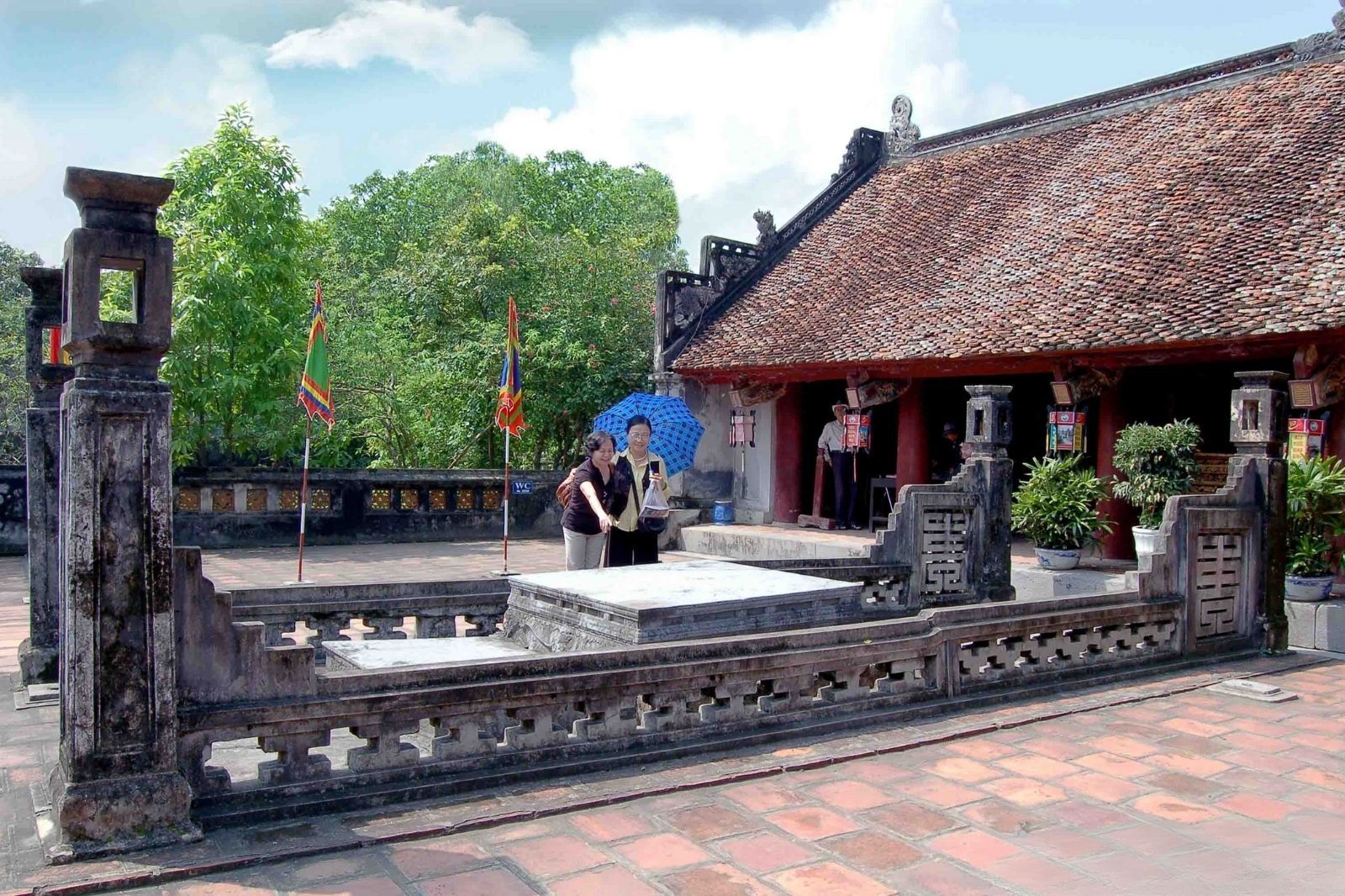
Heroic imprint of Dai Co Viet Capital

Photo: Heroic imprint of Dai Co Viet Capital

2. History of King Dinh Temple and King Le Temple

After Ly Thai To moved the capital to Thang Long in 1010, the people of Hoa Lu built temples dedicated to the two kings right on the foundation of the old palace to commemorate their merit in unifying the country and defending national independence.

King Dinh Temple

Dinh Bo Linh (924–979), born in the Dai Hoang region (now part of Ninh Binh), defeated the 12 warlords in 968, ascended the throne as Emperor, established the national name Dai Co Viet, and chose Hoa Lu as the capital. After he and his son Dinh Lien were assassinated in 979, the royal court erected a temple in their memory. The current temple was rebuilt between 1600 and 1606 and further restored in 1898, contributing to the preservation of its historical and architectural value over many centuries.

King Le Temple

Le Hoan (941–1005) was a talented general under the Dinh dynasty. Following a political crisis, he ascended the throne (as Emperor Le Dai Hanh), led the military and people to defeat the Song invaders in 981, and consolidated national independence and stability. His temple was built at the same time as King Dinh Temple and was reconstructed in the 17th century, becoming one of the exemplary structures in the Hoa Lu Ancient Capital complex.

Archaeological excavations carried out from 1977 to 1998 confirmed that the current location of the two temples rests on the foundation of the ancient palace. Notably, many bricks from the Dinh – Le era were discovered bearing the inscription "Dai Viet Quoc Quan Thanh Chuyen" (Bricks for the Citadel of the Great Viet State), providing crucial evidence of the scale and historical significance of the ancient capital.

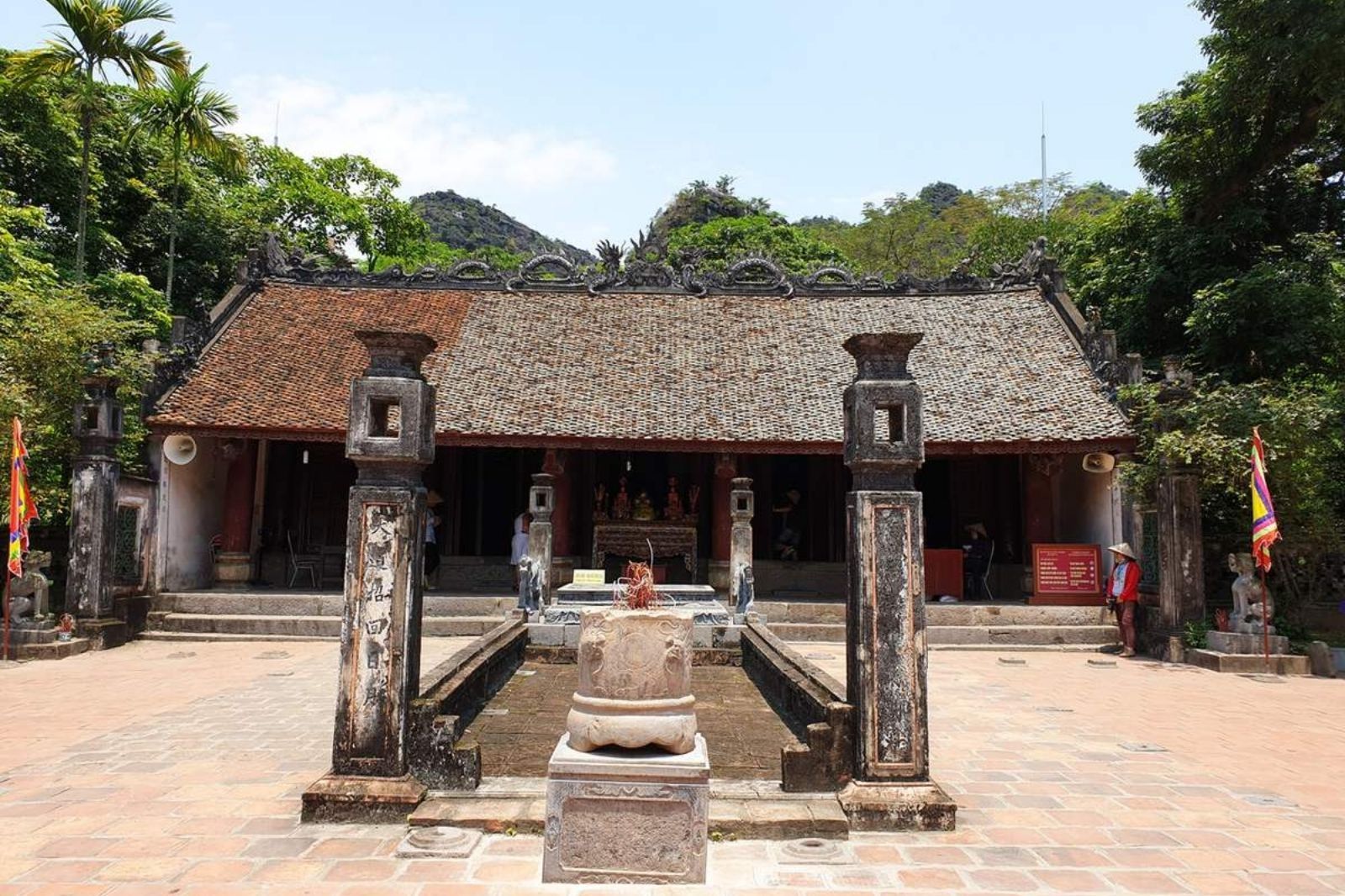
Golden imprint of an entire dynasty
Photo: Golden imprint of an entire dynasty 

3. Unique Architecture of the Two Ancient Temples in Hoa Lu

Both temples demonstrate the finest 17th-century woodcarving craftsmanship, harmoniously blending stone, wood, and gold-gilded red lacquer.

King Dinh Temple (area ~3,000 m²):

  • Main axis faces East, facing Ma Yen Mountain (shaped like a horse saddle) where the King's tomb is located.
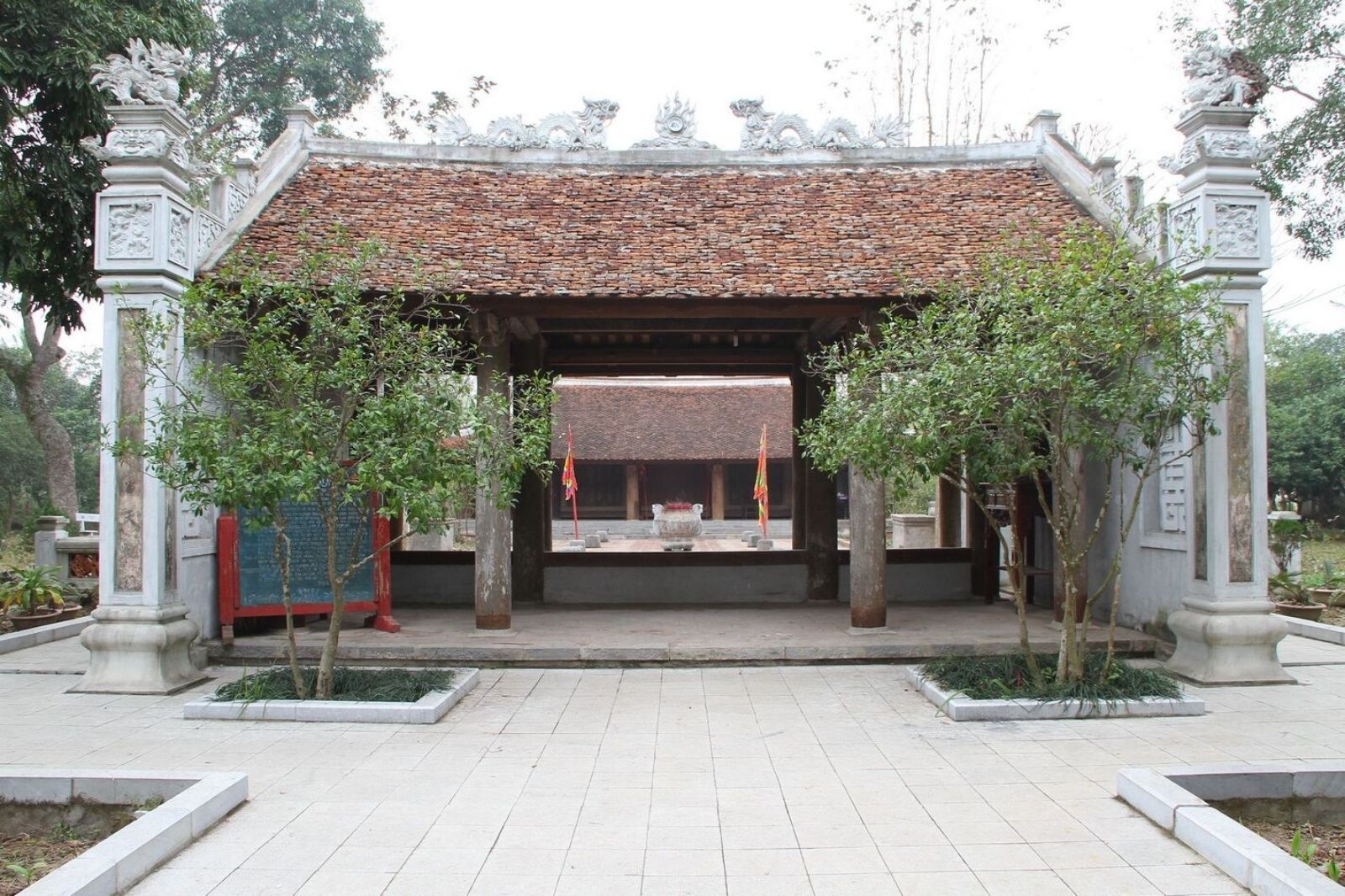
  • Main components: Ngo Mon Gate (2 tiers with 8 roofs), the Dragon Yard, 5-bay Front Hall (Bai Duong), Incense Burning Pavilion (Thieu Huong - worshipping 4 generals: Nguyen Bac, Dinh Dien, Trinh Tu, Luu Co), and Sanctuarium (Chinh Cung - worshipping the King and 3 princes: Dinh Lien, Dinh Toan, Hang Lang).
  • Highlights: A pair of exquisitely carved stone dragon beds (national treasures), 17th-century wooden altar tables, and a Sanskrit-inscribed Buddhist sutra pillar from the Dinh dynasty.

King Le Temple (smaller scale, more intimate space):

  • Similar architecture: 5-bay Front Hall (Bai Duong), Incense Burning Pavilion (worshipping Pham Cu Luong), and Sanctuarium (worshipping the King, Duong Van Nga, Le Long Dinh, and Princess Phat Ngan).
  • Notable for masterful folk woodcarvings inspired by the legend of King Le's birth (his mother dreamt of lotus flowers and a king tiger harboring him).

The two temples are not only architectural structures but also preserve numerous precious artifacts: lotus-patterned bricks from the Dinh dynasty, stele inscriptions recording merits, bronze statues, and worship thrones...

4. Tips for Visiting King Dinh and King Le Temples

To have a complete journey to Hoa Lu Ancient Capital and explore King Dinh and King Le Temples, visitors should take note of the following information:

General Information

AttractionOpening HoursTicket Price (Approx.)
King Dinh Tien Hoang Temple07:00 – 18:0020,000 VND/person/visit
King Le Dai Hanh Temple07:00 – 18:0020,000 VND/person/visit

Note: Primary and secondary school students pay around 10,000 VND/visit; children under 1m tall enter for free.

Best Time to Visit

  • From the 1st to 3rd lunar months: To experience the vibrant atmosphere and rich cultural heritage of Truong Yen Festival.
  • From May to June (calendar months): The season of golden ripe rice fields and blooming lotuses, perfect for combining with visits to nearby attractions such as Mua Cave and Trang An Lotus Pond.

Visiting Notes

  • Dress Code: Hoa Lu Ancient Capital is a spiritual travel site, so visitors should dress modestly and respectfully.
  • Etiquette: Maintain order, speak softly, and avoid making loud noises.
  • Cleanliness: Keep the surroundings clean and refrain from littering to preserve the ancient landscape.

Keeping these details on hours, ticket prices, and tips in mind will ensure visitors are well-prepared for a smooth and meaningful visit to this sacred historical complex.

Where thousand-year history endures
Photo: Where thousand-year history endures

The King Dinh and King Le Temple complex at Hoa Lu Ancient Capital is not only a vivid architectural museum displaying the pinnacle of 17th-century carving craftsmanship with its majestic "Noi Cong Ngoai Quoc" layout and one-of-a-kind national treasure green stone Dragon Bed. More importantly, this is a sacred historical site where visitors embark on a "pilgrimage back to the roots", fully feeling Dinh Tien Hoang's nation-building aura and Le Dai Hanh's fierce determination to defend the country. Exploring every temple roof and carved detail is how future generations pay tribute to and honor those who founded and unified the country, while reaffirming pride in the lasting foundation of independence of the Dai Co Viet nation.

Loading......

Featured destinations