Tay Ho Conical Hat in Hue: The Traditional Craft Shaping an Iconic Symbol of Hue Women

Central

Thua Thien Hue

Sovaba.travel

Updated at: 30/10/2026

1. Where Is Tay Ho Conical Hat Village in Hue?

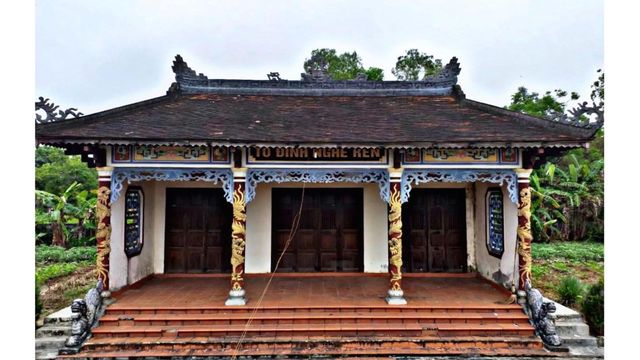
Nestled in the tranquil countryside of Phu Vang, Tay Ho conical hat village is one of the historic centers preserving Hue's time-honored hat-making craft. The village is located in Tay Ho Hamlet, Phu Ho Commune, Phu Vang District, Thua Thien Hue Province (according to former administrative boundaries), approximately 12 km east of Hue city center.

This area exudes the characteristic serenity of the central Vietnamese countryside. Modest houses nestled behind lush trees, courtyards laid out with sun-drying leaves, and the sight of diligent artisans working over hat frames create an authentic, rustic atmosphere. The craft of conical hat-making has endured across generations, becoming an integral part of daily life and local memory.

From central Hue, visitors can travel to the village by motorbike, car, or taxi in about 30–40 minutes, depending on traffic conditions. The route is relatively accessible, making it easy to combine with visits to other rural villages and cultural attractions in the Phu Vang area.

Traditional beauty preserved in Tay Ho conical hats

Photo: Traditional beauty preserved in Tay Ho conical hats

2. History and Development of the Tay Ho Conical Hat Craft

The hat-stitching craft in Tay Ho dates back hundreds of years, initially serving daily needs for sun and rain protection. Through generations, village women have passed their techniques down to their daughters and granddaughters. Many young girls begin learning the craft around the age of ten, becoming familiar with each step under the guidance of their grandmothers and mothers.

Around 1959–1960, artisan Bui Quang Bac created the poem conical hat by pressing verses between two layers of leaves. The two lines of poetry he first introduced into the hat were:

“Whoever visits dreamlike Hue
Brings back a poem conical hat as a gift.”

From then on, the conical hat became an emblem of the homeland's scenic beauty. Beneath the delicate layers of leaves lie depictions of Truong Tien Bridge, Thien Mu Pagoda, and Ngu Binh Mountain alongside gentle verses of poetry. The poem conical hat quickly became a beloved keepsake sought after by many travelers to Hue. In 2010, Hue conical hats were granted geographical indication protection by the Intellectual Property Office of Vietnam, recognizing the distinctive value of this traditional handicraft.

As time passed and industrial products grew increasingly prevalent, the number of households pursuing hat-making in Tay Ho gradually declined. Nonetheless, the rhythmic sound of needles piercing through leaf layers is still preserved beneath several village roofs. The hats crafted today continue to carry the artisan's dexterity and the timeless grace that has come to symbolize the women of Hue.

Verses of poetry hidden beneath layers of leaves, revealed by sunlight

Photo: Verses of poetry hidden beneath layers of leaves, revealed by sunlight

3. The Making Process of Tay Ho Conical Hats

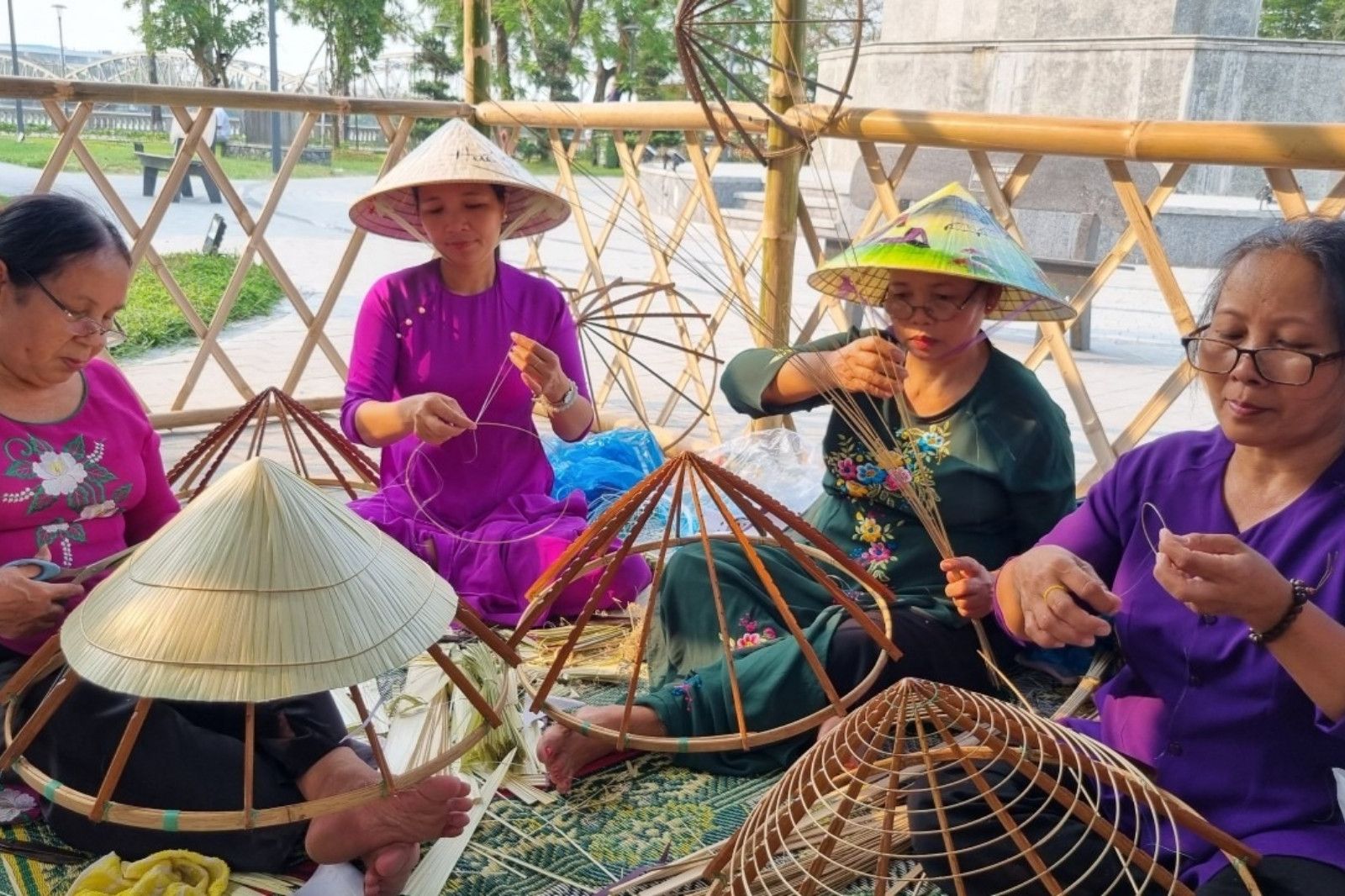
To create a Tay Ho conical hat, artisans must complete around 15 distinct steps, from selecting leaves and framing rims to stitching and finishing. Although the materials are modest—primarily palm leaves and seasoned bamboo—each element must be carefully selected and treated to ensure the hat is lightweight, durable, and holds its graceful shape.

  • Selecting and preparing the leaves: Young palm leaves, once harvested, are dew-dried and pressed multiple times with a wooden flatiron until smooth and flat. Acceptable leaves must be soft, retain a natural color, and remain free of tears or bruising.

  • Forming the frame and rims: Seasoned bamboo is split, shaved into slender splints, and bent into a conical framework. The circular rims must be precisely calibrated to ensure a balanced, symmetrical form. This step is typically handled by male craftsmen.

  • Arranging leaves and stitching the hat: This is the stage requiring the utmost finesse and patience. The artisan carefully arranges layers of leaves over the frame, aligning each layer neatly before using nylon thread to sew fine, regular stitches. For poem hats, verses or silhouettes are placed between two layers of leaves, only revealing themselves when held up to the light.

  • Finishing the hat: Once stitched, artisans trim excess leaves, bind the rims, attach a decorative topper, and coat the hat with oil to enhance its sheen and water resistance. The completed hat is then dried thoroughly before reaching customers.

At first glance, the craft may seem like simply arranging leaves and passing a needle through bamboo rims. However, achieving an elegant contour, even stitches, and tightly fitted layers requires years of practice. Thus, every finished Tay Ho conical hat bears a distinctive touch born of the artisan's skilled hands and meticulous care.

Tay Ho conical hat - The traditional craft shaping an iconic symbol of Hue women

Photo: Tay Ho conical hat - The traditional craft shaping an iconic symbol of Hue women

4. Visitor Experience and Exploring the Tay Ho Hat-Making Craft

Visiting Tay Ho conical hat village offers travelers the opportunity to step into the tranquil rhythm of a suburban craft village in Hue. Inside local households, familiar sights include neatly stacked, pressed leaves, orderly bamboo frames, and nimble hands swiftly guiding needles through hat rims.

Visitors can pause at a local household to observe the hat-making process, chat with artisans about how poem hats are crafted, or try stitching a few lines under their guidance. If you are looking for a souvenir emblematic of Hue, a poem conical hat featuring Truong Tien Bridge, Thien Mu Pagoda, or poetic verses concealed within the leaves is an excellent choice.

Helpful visitor information:

  • Admission: Currently, there is no fixed entrance fee; visitors should inquire beforehand if they wish to join hands-on workshops with local households.

  • Best time to visit: Around 8:00 AM – 4:00 PM, when households are actively engaged in craft production.

  • Visit duration: Approximately 2–3 hours, depending on chosen activities.

  • Notes: As these are private living and working spaces of local residents, please ask for permission before taking photographs or participating in the hat-making process.

Observing the hat-making process

Photo: Observing the hat-making process 

From Tay Ho village—the birthplace of poem conical hats—to the graceful image of Hue women in traditional ao dai, the conical hat has truly become an inseparable part of ancient capital culture. It is not merely a souvenir, but a living emblem encapsulating the charming elegance and distinctive romance of Hue. Exploring Tay Ho craft village offers a wonderful way to fully appreciate these heritage values and take home a piece of Hue's soul on your journey.

Follow Sovaba Travel to discover more captivating stories about Hue, from heritage and cuisine to traditional craft villages.

Featured destinations