Thai Vi Temple: An Ancient Temple in the Heart of Tam Coc Bich Dong
Northern
Ninh Binh
Tam Coc - Bich Dong
Sovaba.travel
Updated at: 24/09/2026
1. Where is Thai Vi Temple?
Thai Vi Temple is located in Van Lam Village, Ninh Hai Commune, Hoa Lu District, Ninh Binh Province, situated within the Tam Coc – Bich Dong scenic area – part of the Trang An Landscape Complex.
From Tam Coc boat pier, visitors only need to travel about 2–3 km to reach this ancient temple. Thanks to its convenient location, many tourists often combine a visit to Thai Vi Temple with a boat trip on the Ngo Dong River to explore the characteristic beauty of the Tam Coc area. Surrounding the temple are majestic limestone ranges, lush green rice fields, and a poetic winding river, creating a natural scene often dubbed as the 'Ha Long Bay on land' of Ninh Binh.
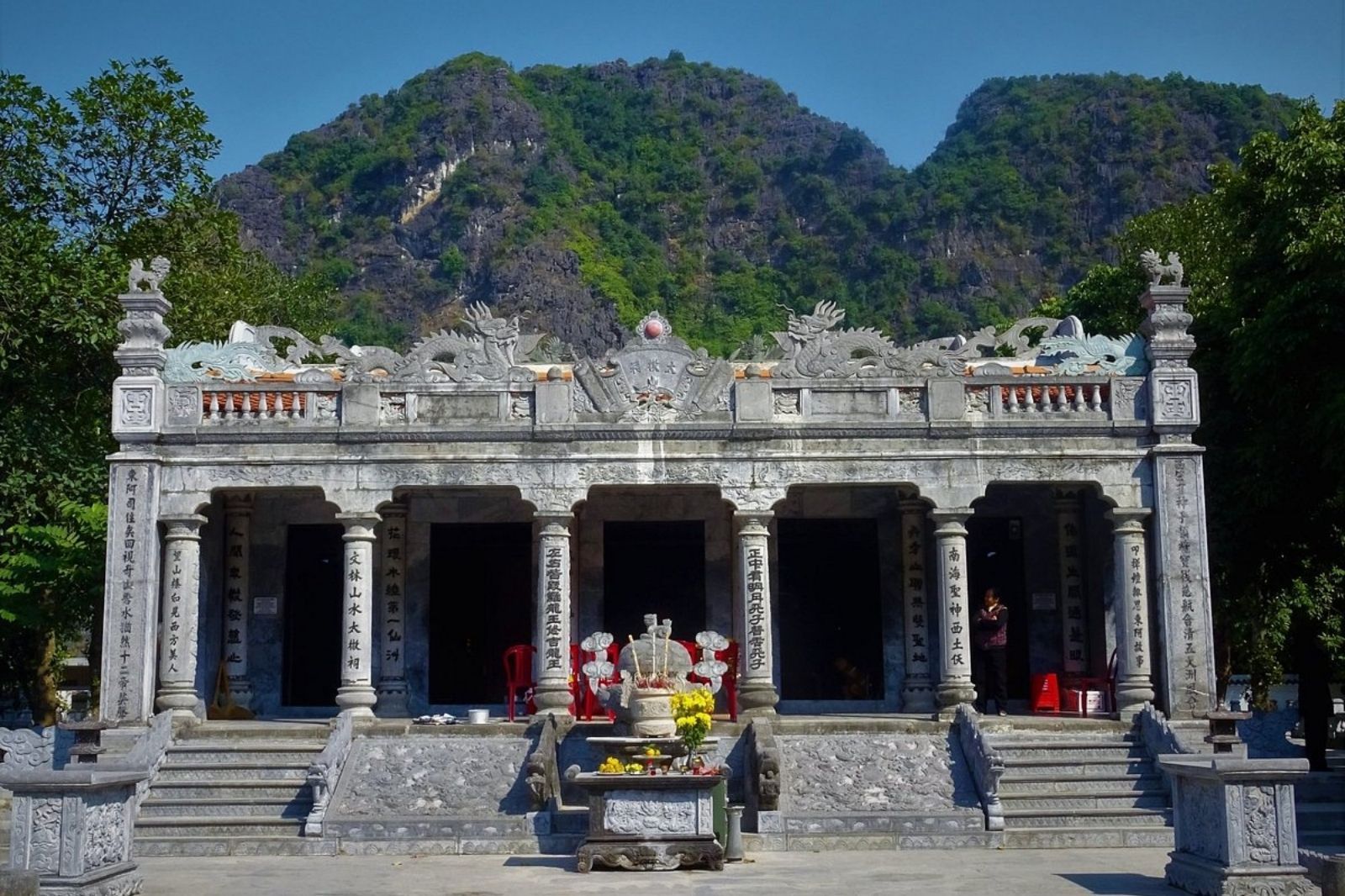
Photo: Thai Vi Temple is associated with the story of the first king of the Tran Dynasty
2. History of Thai Vi Temple Construction
Thai Vi Temple was built in 1258 during the reign of King Tran Thai Tong – the monarch credited with leading Dai Viet during the initial phase of the resistance against the Mongol invaders. The temple was once an important part of the Vu Lam Royal Step-Over Palace, a strategic military base built by the Tran Dynasty to prepare forces for national defense.
After abdicating the throne to his son, Tran Thanh Tong, King Tran Thai Tong retired to this area to practice Buddhism, contributing to the development of Buddhism during the Tran Dynasty. Today, Thai Vi Temple worships not only King Tran Thai Tong but also other Tran Dynasty kings such as Tran Nhan Tong and Tran Anh Tong, alongside renowned generals like Tran Hung Dao, Tran Quang Khai, and Empress Hien Tu – who helped reclaim land and establish many villages in the region.
Recognizing its special historical and cultural value, Thai Vi Temple was designated a National Historical and Cultural Relic in 1994. During the anti-French resistance war, this site was also used as a revolutionary base, serving as a vivid testament to the patriotic tradition and resilient spirit of the Vietnamese nation.
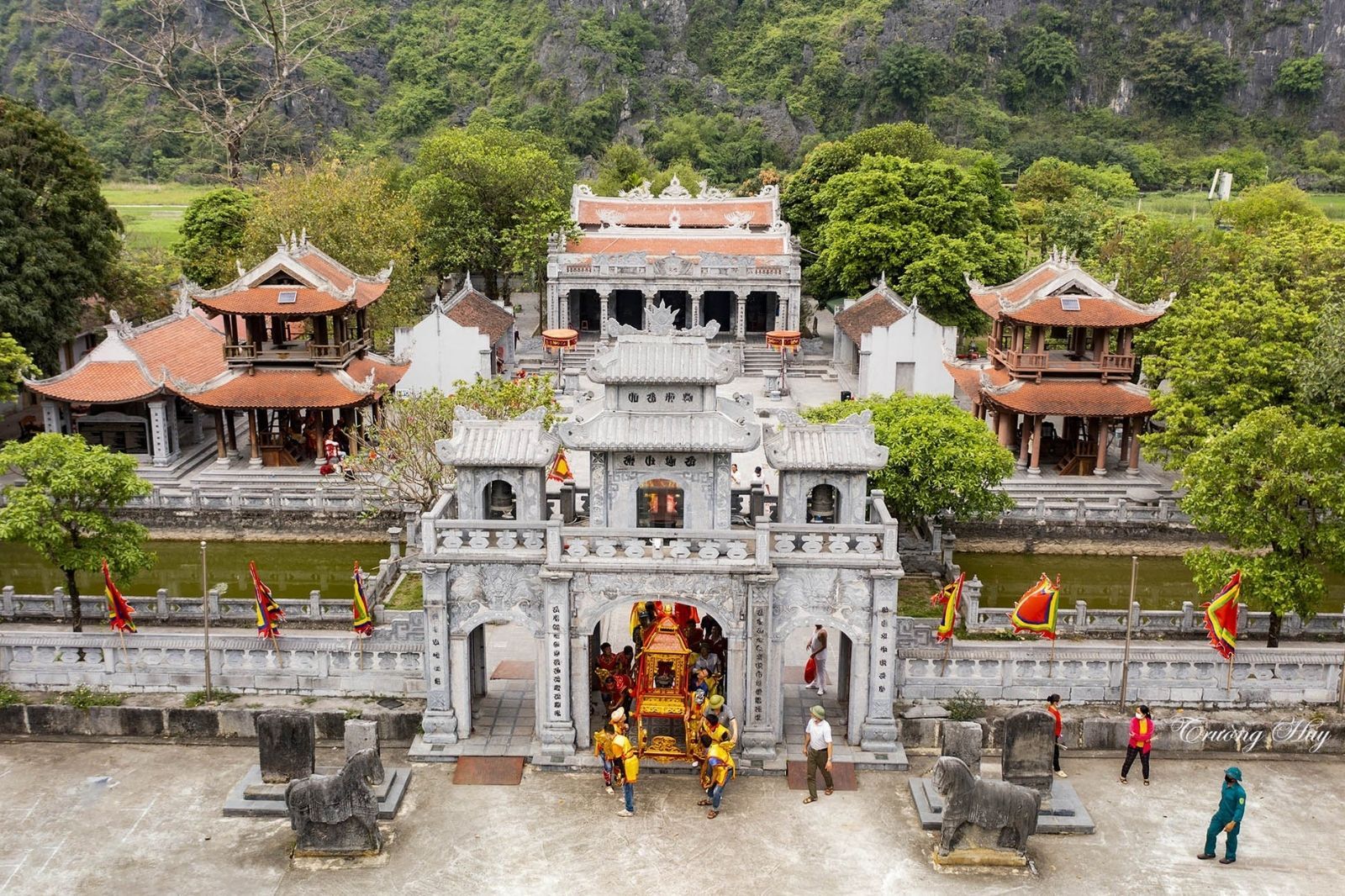
The architecture of Thai Vi Temple strongly reflects the Tran – Nguyen style, laid out in the shape of the Sino-Vietnamese character 'Đinh' (丁) with a majestic triple-arched gate (Tam Quan), a spacious courtyard, front hall, middle hall, and inner sanctuary.
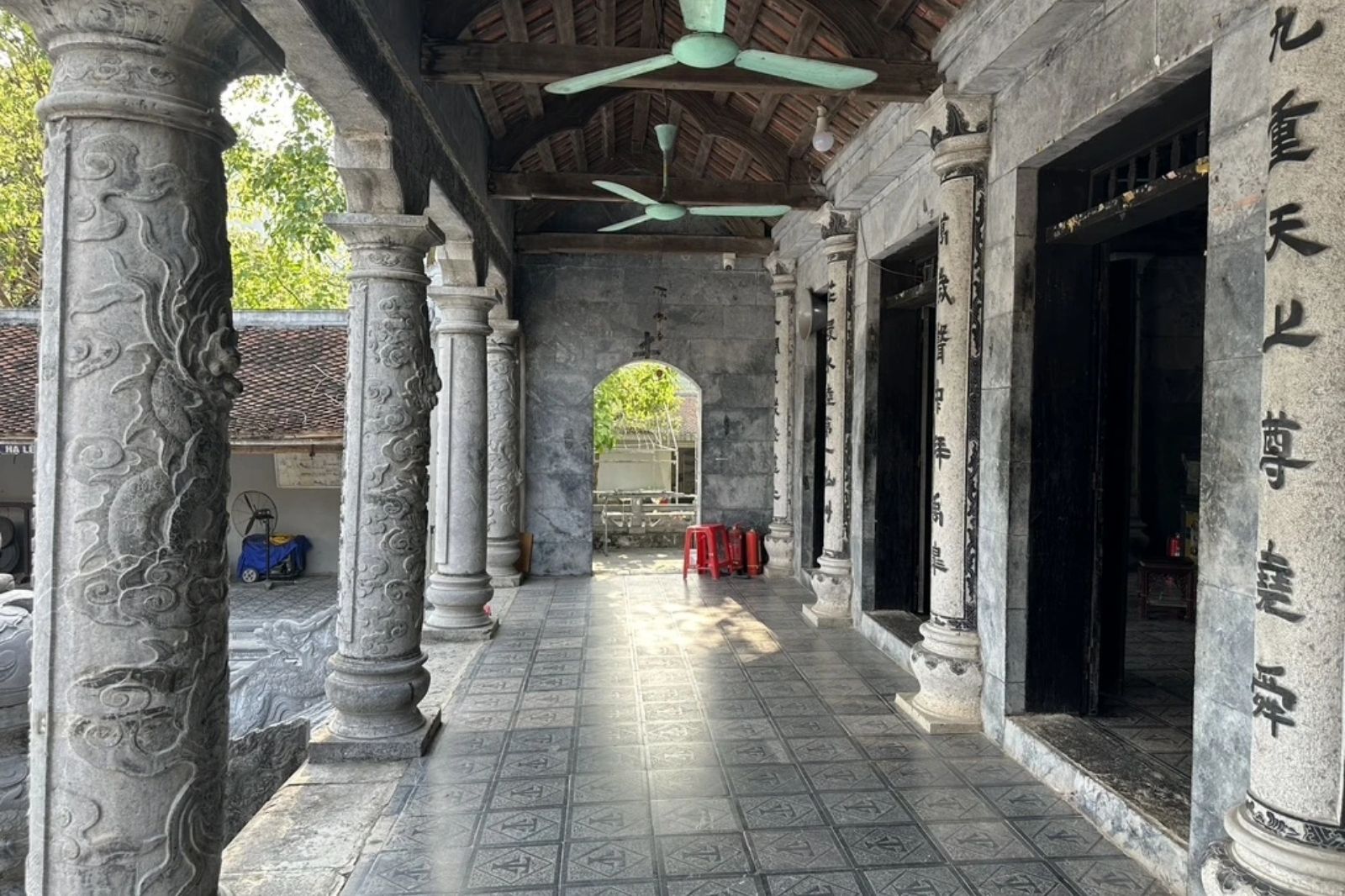
28 green stone pillars, standing 3.2m tall, are intricately carved with the four sacred creatures (dragon, qilin, turtle, phoenix) and dragons playing with water.
The beam, rafter, and purlin system is crafted from rare ironwood.
A 2-story, 8-roof bell tower constructed during the reign of King Duy Tan.
Two lotus ponds, stone horse statues, and stone steles carving the merits of the Tran Dynasty kings.
The picturesque landscape of green mountains and turquoise waters here reminds visitors of the popular couplet:
“Thảo tú sơn liêm vô song thánh địa
Hoa hoàng thủy nhiễu đệ nhất thiên châu”
It is the harmonious combination of the stone "Noi Cong Ngoai Quoc" architecture and splendid feng shui that creates the unique beauty of Thai Vi Temple.
4. Annual Thai Vi Temple Festival
Thai Vi Temple Festival is one of the largest and most important festivals in Ninh Binh Province, held annually or triennially (in the years of the Rat, Horse, Cat/Rabbit, and Rooster) from the 14th to the 17th day of the 3rd lunar month. The festival carries the significance of:
Commemorating the contributions of the Tran Kings.
Celebrating the historic victory over the Mongol Empire (the 15th day of the 3rd lunar month marks the day the King returned to Thien Truong to pay homage to ancestors and celebrate victory).
Expressing gratitude for the heroic sacrifices of the soldiers.
The festival includes both a solemn ritual part and vibrant festive activities:
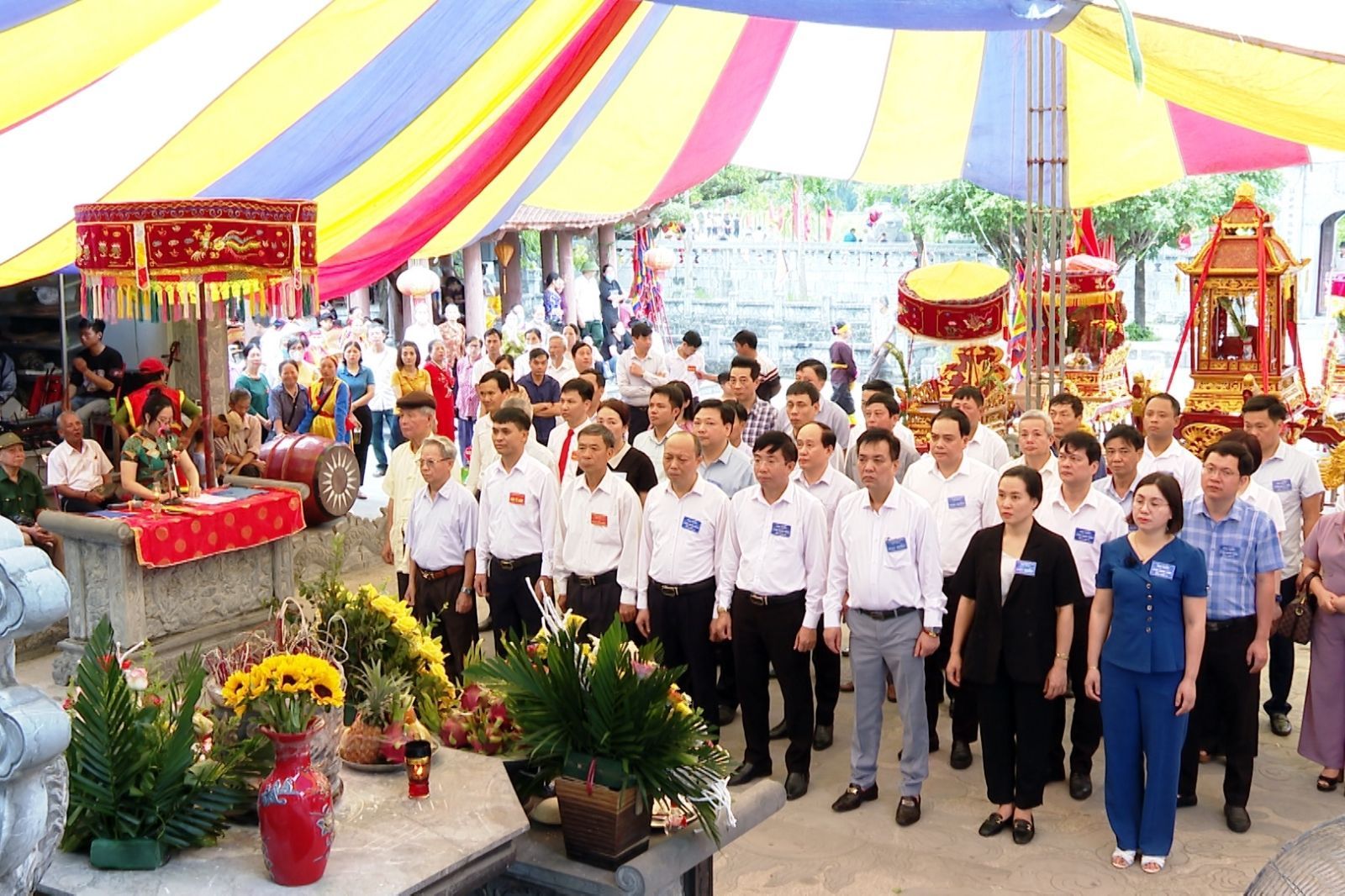
Rituals: Temple opening ceremony, procession of the sacred incense burner to Cac Communal House, sacrificial rituals of villages belonging to the ancient Vu Lam Canton, offerings at Thai Vi Temple, and Ca Cong singing to praise the merits of the Tran kings.
Festivities: Organizing the human character formation of “Thien ha thai binh” (Peace Under Heaven) and “Truc Lam dao si” (Truc Lam Taoist Monks) with 120 young boys and girls, along with many folk games such as human chess, wrestling, lion dance, dragon dance, and boat racing.
Thai Vi Temple Festival not only commemorates the achievements of predecessors but is also a vivid painting of cultural traditions and the martial spirit of the nation.
Photo: Thai Vi Temple Festival
5. Experience Visiting Thai Vi Temple
Visiting Thai Vi Temple, tourists can choose between two modes of transportation:
By Land: Pass through Van Lam boat dock and follow the road parallel to the Ngo Dong River.
By Water (Most Unique): Take a boat down the Tam Coc – Bich Dong stream from Dinh Cac pier. This experience allows visitors to immerse themselves in the vast open space, admiring the grey-green limestone mountain ranges resembling a "fairyland" before setting foot at the temple.
Thai Vi Temple is not just a sightseeing spot to admire architecture, but also an opportunity for visitors to let go of worldly worries, reconnect with their roots, and deeply appreciate the grand cultural and historical values of the Tran Dynasty – a spiritual heritage shining for generations.
Photo: Visiting Thai Vi Temple: Discovering culture and history
Thai Vi Temple, with its status as an "unrivaled sacred land" in the heart of Tam Coc – Bich Dong, is not only a preserver of the glorious golden marks of the heroic Tran Dynasty, but also a magnificent stone architectural museum blending perfectly with nature. The rowing journey along the Ngo Dong River, gazing at the ancient temple leaning against majestic Cam Son Mountain, is a journey back to the roots, offering a deep sense of grand cultural and historical values. Thai Vi Temple and its solemn festival will forever be an endless song of praise for patriotism, martial spirit, and ancestral craftsmanship, allowing the spiritual heritage of the Tran Dynasty to shine forever alongside the nation through millennia.