The Art of Hue Royal Tea Tasting: Cultural Essence of the Imperial Court

Central

Thua Thien Hue

Sovaba.travel

Updated at: 24/09/2026

1. History and origins of Hue Imperial Tea appreciation

The habit of drinking tea has long been present in Vietnamese cultural life, but it was not until the Nguyen Dynasty (1802–1945) that the art of tea tasting was truly elevated to a solemn royal ritual. Under the influence of Chinese culture combined with the elegant spirit of the Vietnamese, the Nguyen kings transformed a cup of tea into a symbol of authority, refinement, and hospitality. Tea was present in lavish banquets, royal festivals, and even in private quiet moments for the king to find peace and wisdom.

In the royal space of Hue, tea transcended the role of an ordinary beverage to become an element with spiritual significance. Premium teas such as Tinh Tam Lake lotus tea, high-quality Man tea… were all carefully selected, not only to entertain distinguished guests but also to convey respect and connection. On major ceremonial occasions such as the Lunar New Year or the Nam Giao Esplanade offering ceremony, tea was offered as an expression of gratitude to heaven, earth, and ancestors, clearly reflecting the harmony between nature, humans, and the royal spirit.
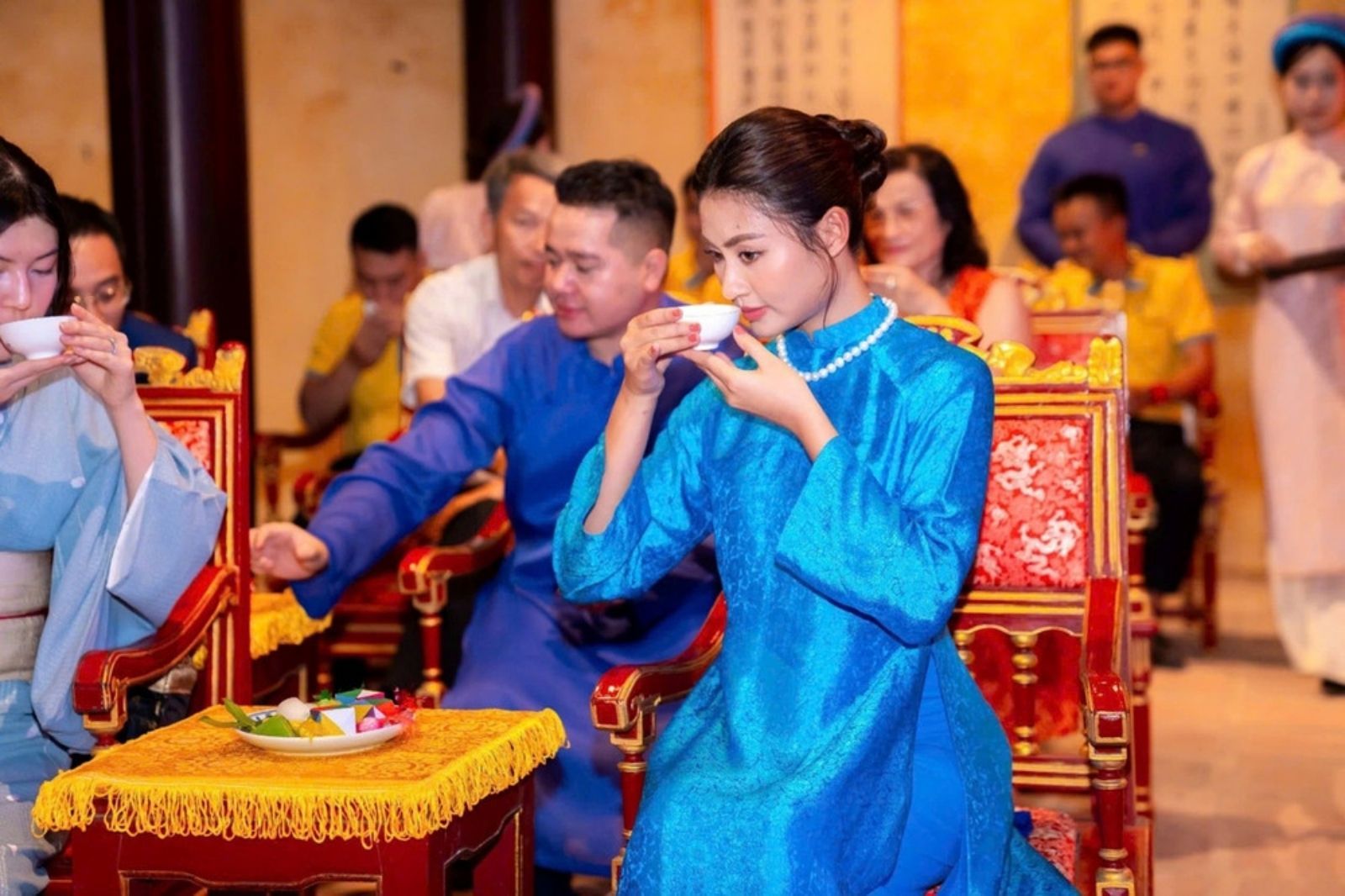
Enjoying tea is a solemn royal ritual
Photo: Enjoying tea is a solemn royal ritual 

2. Cultural significance of the art of imperial tea appreciation

The art of Hue royal tea tasting is not simply brewing and drinking tea, but a whole journey steeped in sophistication. From selecting tea leaves, scenting methods, to every brewing movement, everything is performed with meticulous care and a sense of appreciation. Each time tea is poured into a small jade cup, each sip taken slowly on the lips carries a sense of lightness and ease, as if human beings are merging into the elegant breath of heaven and earth.

In Hue culture, tea is likened to a pure gift bestowed by nature. Enjoying tea not only brings relaxation, but is also a form of meditation, where the human soul finds peace and tranquility amidst the flow of life. Royal concubines, princesses, or high-ranking mandarins, when enjoying tea, allowed their minds to settle, feeling the harmony between flavor and state of mind.

Especially in the imperial court, offering tea was a ritual expressing hospitality and respect. A cup of tea was presented not only with solemnity but also blended with poetry, music, or cultural stories, creating an elegant space for interaction, where spirit and art met in nobility.

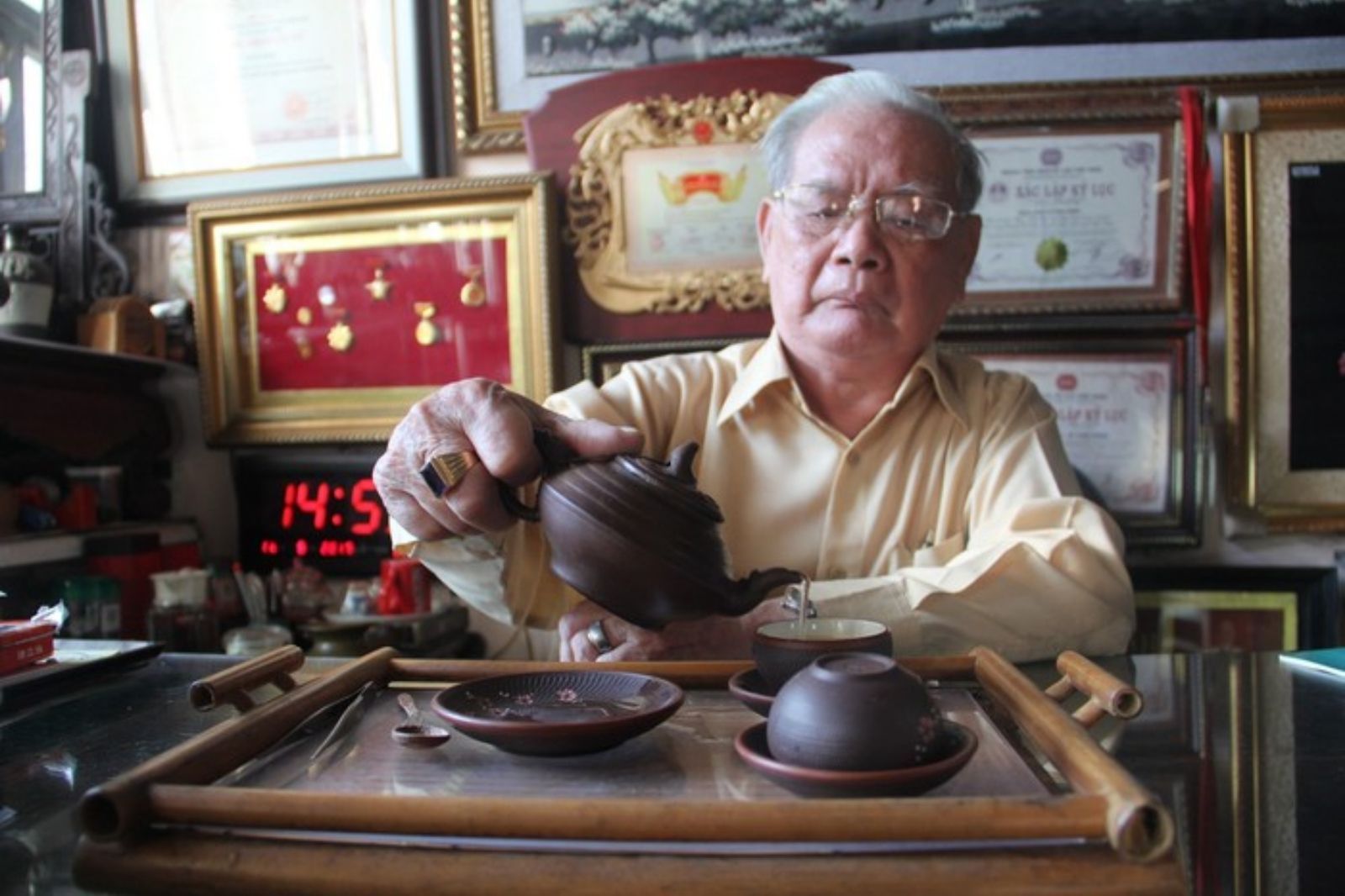
The tea brewer must be careful and meticulous
Photo: The tea brewer must be careful and meticulous 

3. The authentic ritual of Hue Imperial Tea appreciation

To perform the art of Hue royal tea tasting in a standard manner, it is necessary to follow these steps, ensuring traditional authenticity while providing a profound experience:

Selecting Premium Tea

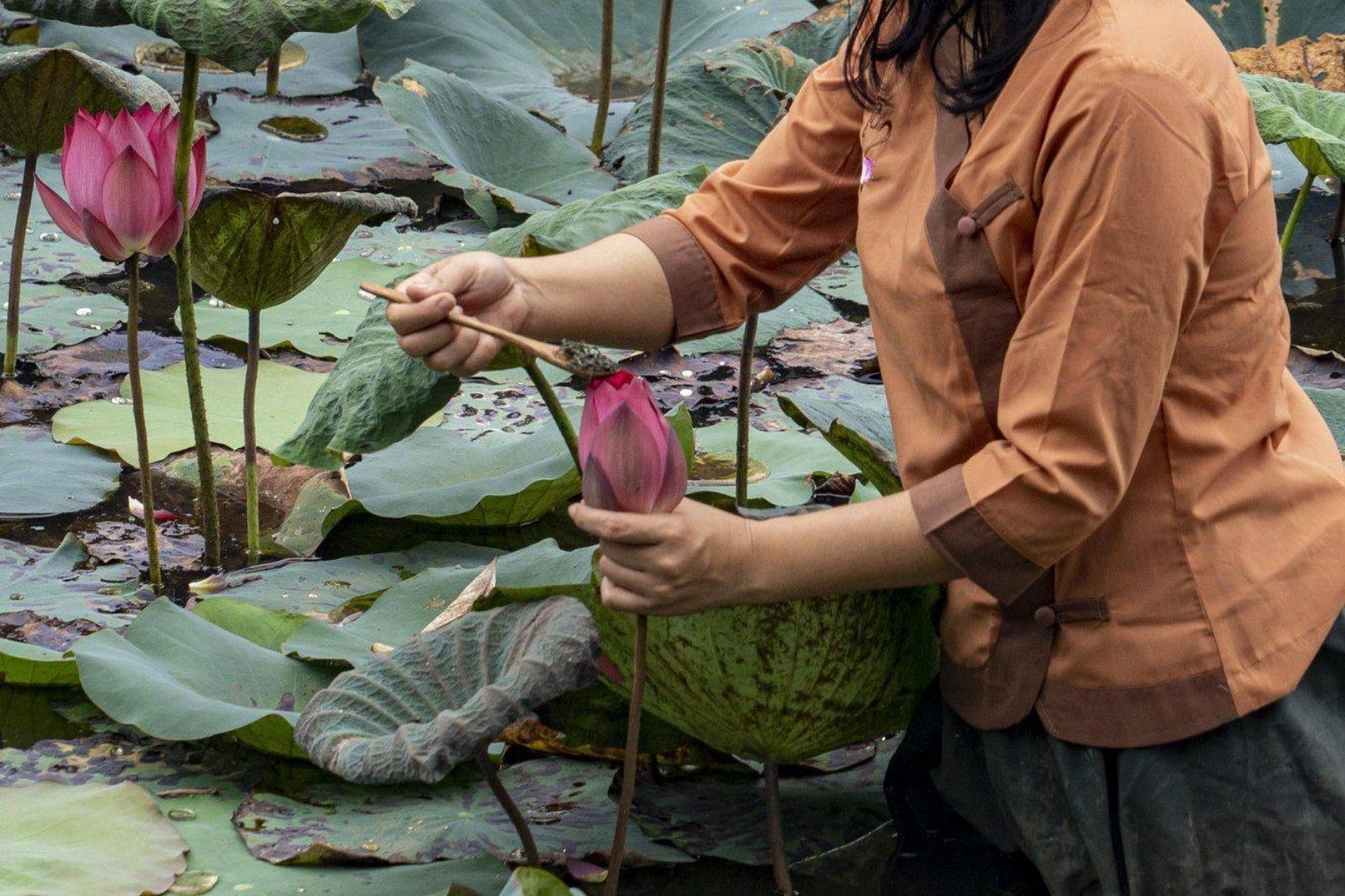
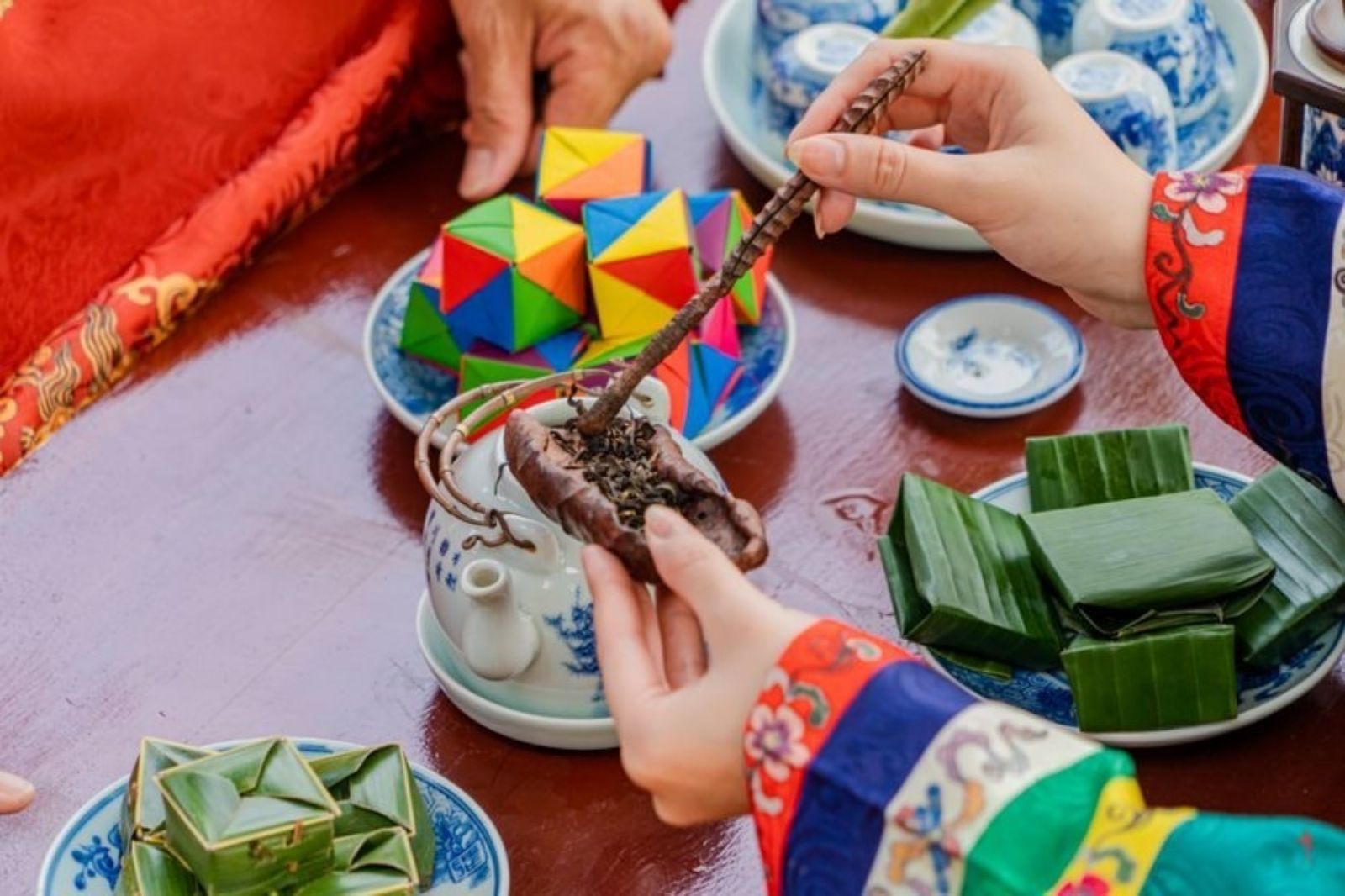
The types of tea used in the Hue imperial court were usually high-quality lotus tea, jasmine tea, or Man tea. Lotus tea, with its gentle fragrance from lotus flowers infused with tea leaves, is a symbol of nobility and purity. Tea leaves must be selected from young leaves and processed by hand to preserve their natural flavor.

The tea used for tasting is lotus tea
Photo: The tea used for tasting is lotus tea 

Preparing Tea Utensils

Tea utensils in the Hue imperial court were usually made of high-grade ceramics or other premium materials, with exquisite designs deeply rooted in cultural heritage. The basic set includes:

  • Teapot: Compact, usually made of porcelain or terracotta.
  • Teacups: Small cups that help retain heat and tea aroma.
  • Tea tray: Often made of wood or bamboo, creating an elegant aesthetic.
  • Fairness pitcher (Justice cup): Used to distribute tea evenly before pouring into small cups.

Tea Brewing Process

Royal tea brewing is not only a technique but also an art. The steps to brew tea include:

  • Warming and rinsing utensils: Use boiling water to heat and clean the utensils, helping the tea retain its original flavor.
  • Adding tea to the pot: Use an appropriate amount of tea, about 5–7g for 150ml of water, depending on the type of tea.
  • Rinsing the tea: Pour hot water (80–90°C) into the pot, wait 10–15 seconds, then pour it out to remove dust and awaken the tea leaves.
  • Brewing the tea: Pour hot water into the pot, wait 30–60 seconds for the tea to steep, then pour into the fairness pitcher and divide evenly into small cups.
  • Enjoying the tea: Take small sips, feel the flavor, and let your soul blend with the tea's fragrance.

Tea Tasting Space

The tea tasting space of the Hue royal court is usually simply yet elegantly arranged, with a tea table placed in a living room or garden in a quiet atmosphere. Some key elements to create an ideal space include:

  • Music: Hue Royal Court Music or Nha Nhac helps enhance relaxation.
  • Fragrance: Burning agarwood incense or using fresh flowers to create a peaceful atmosphere.
  • Lighting: Soft, natural light helps create a sense of comfort.
Enjoying tea and listening to Hue Singing
Photo: Enjoying tea and listening to Hue Singing 

The art of Hue royal tea tasting is not only a ritual but also a cultural journey where people find tranquility and a deep connection with tradition. By understanding and practicing this art, you not only enrich your personal experience but also contribute to preserving a precious heritage of the nation.

Loading......

Featured destinations