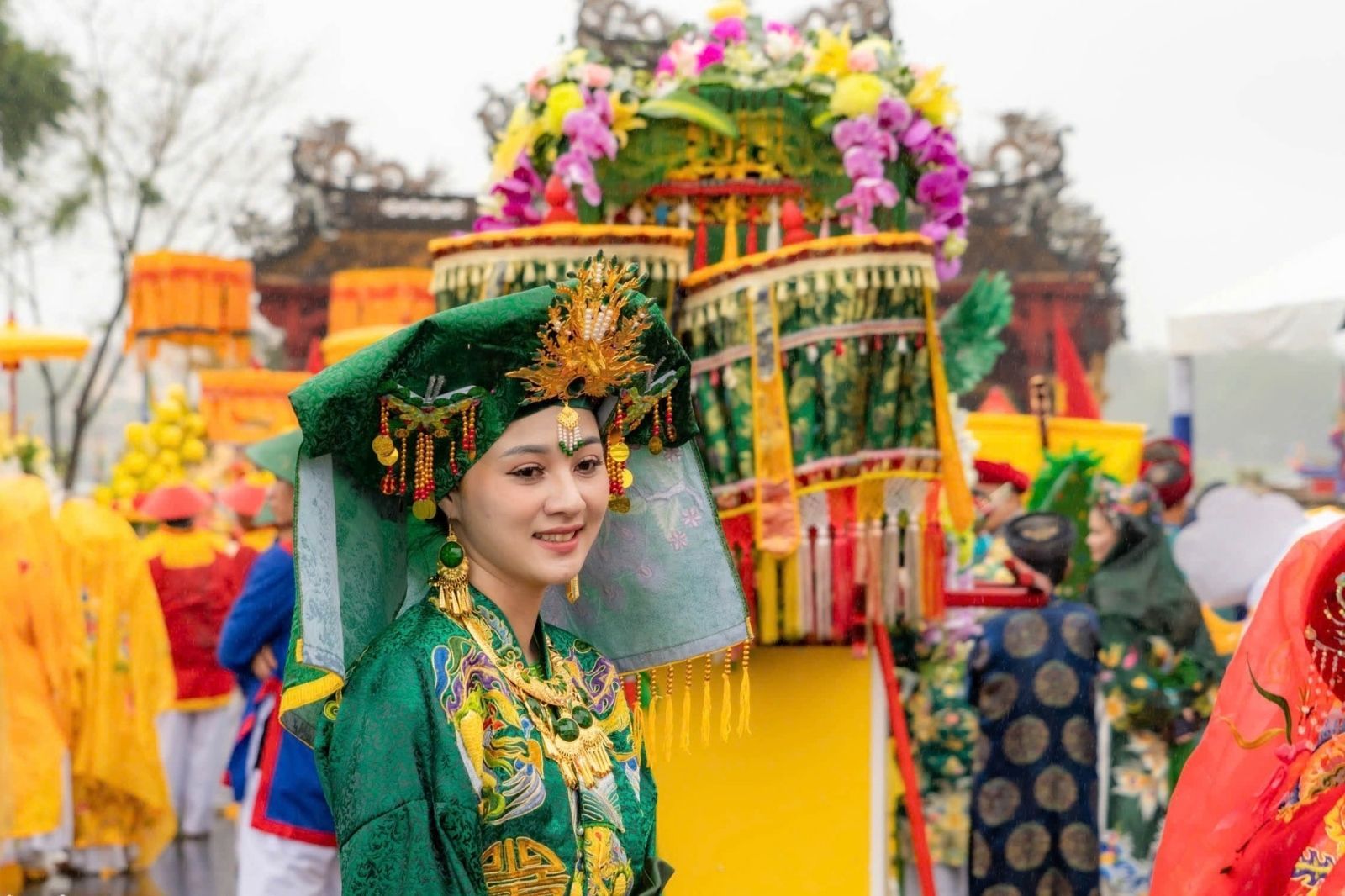
The Beauty of Mother Goddess Worship in Hue: Spiritual Cultural Identity of the Ancient Capital

Central

Thua Thien Hue

Sovaba.travel

Updated at: 02/10/2026

1. What is Mother Goddess worship?

Mother Goddess worship is one of the most distinctive folk beliefs of the Vietnamese people, originating from the custom of worshipping Goddesses and the image of the powerful Mother figure. In Hue, this belief bears its own unique mark with the Four Realms (Tu Phu) system – different from the Three Realms (Tam Phu) popular in the North. The Four Realms include four sacred realms: Heavenly Realm (Thien Phu), Earthly Realm (Dia Phu), Water Realm (Thoai Phu), and Mountain and Forest Realm (Nhac Phu). Each realm is governed by a Holy Mother, among whom Holy Mother Thien Y A Na – a Viet-ized Cham goddess – plays a central role in the spiritual life of Hue people.

Not stopping at honoring women, Mother Goddess worship also reflects humanity's eternal desire for a prosperous, happy, and peaceful life. With that significance, in 2016, UNESCO honored "Practices of Mother Goddess worship of the Three Realms of Vietnamese people" as an Intangible Cultural Heritage of Humanity, affirming the spiritual value and enduring vitality of this belief in Vietnamese cultural life.
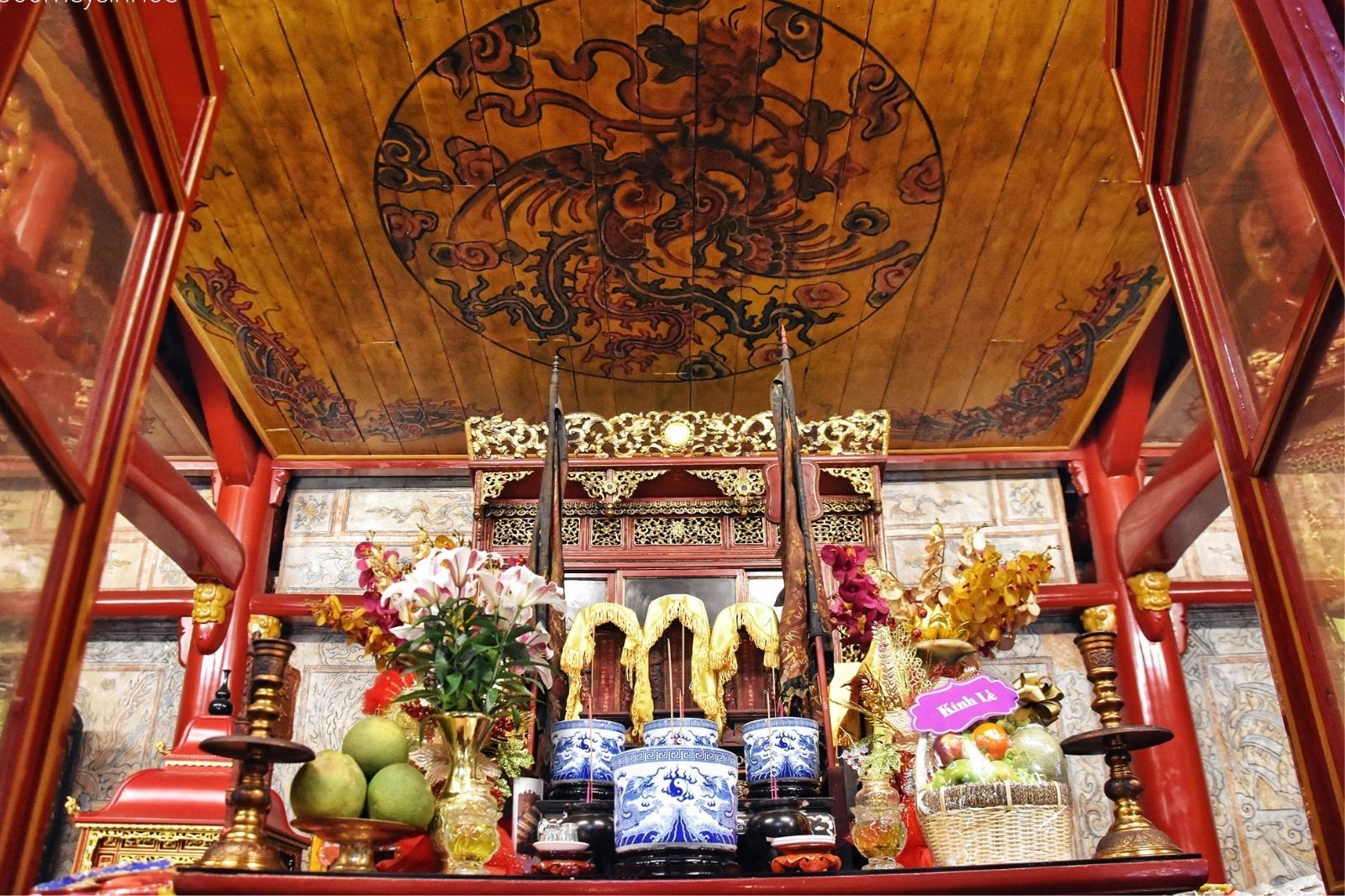
Hue Nam Temple, also known as Hon Chen Temple
Photo: Hue Nam Temple, also known as Hon Chen Temple  

2. Origins and development of Mother Goddess worship in Hue

Mother Goddess worship in Hue is a unique intersection between Viet and Cham cultures. When waves of Viet migrants moved into the Thuan Hoa – Phu Xuan region, they brought along Mother Goddess worship from the North, especially the tradition of worshipping Holy Mother Lieu Hanh in Nam Dinh. In the new land, this belief blended with the custom of worshipping the Cham goddess, typically Thien Y A Na, a deity revered as the "Mother of the Realm" of the Cham people. This cultural synthesis was recorded very early in the work O Chau Can Luc (1555) by Duong Van An, with descriptions of worship rituals at the Kim Tra River, where Hue Nam Temple (Hon Chen Temple) stands today.

Moving into the Nguyen Dynasty, Mother Goddess worship in Hue was elevated to the status of a national ritual. In 1802, King Gia Long conferred upon Thien Y A Na the title "Thien Y A Na Dien Ngoc Phi", officially affirming the central role of this deity in spiritual life. By the reign of King Dong Khanh, Hue Nam Temple (Hon Chen Temple) became the main center of Mother Goddess worship in Hue, gathering tens of thousands of devotees. Major festivals take place in the third and seventh lunar months with solemn procession rituals of the Holy Mother by both land and water on the Perfume River, creating a cultural-spiritual space that is both solemn and artistic, deeply ingrained in the lives of the Ancient Capital's residents.

Hon Chen Temple Festival
Photo: Hon Chen Temple Festival  

3. Rituals and unique performing arts

In the sacred space of Mother Goddess worship, rituals are not merely religious ceremonies, but also a harmony of spirituality, art, and folk culture. Especially in Hue, rituals accompanying performance forms have created a vivid picture, both solemn and rich in artistic quality, contributing to affirming the unique value of this belief.

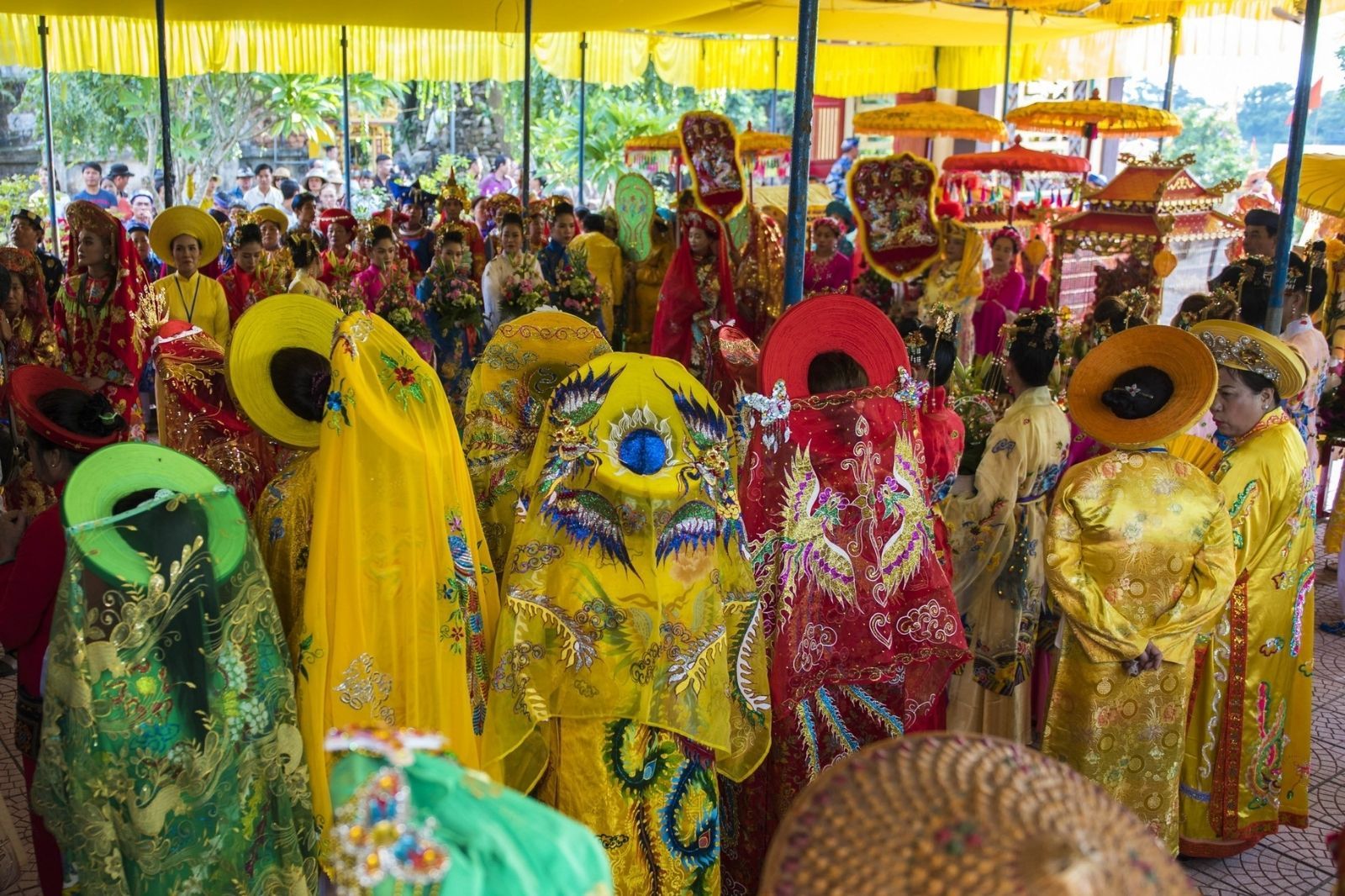
Hon Chen Temple Festival 

Hon Chen Temple Festival, held in the seventh lunar month, is the highlight of Mother Goddess worship in Hue. This is an occasion for the community to perform rituals welcoming the Holy Mother, praying for national peace and prosperity. The most special highlight is the procession on the Perfume River, featuring dozens of dragon boats carrying the Holy Mother's palanquin, royal decree chests, and worship items such as flags and fans. This ritual holds not only spiritual significance but is also a colorful folk picture, attracting thousands of devotees and tourists.

Chau Van Singing and Hau Dong Rituals

Chau van singing is a unique folk art form closely linked with Hau Dong (mediumship) rituals in Mother Goddess worship. In Hue, Chau Van singing inherits traditional national music, bearing the characteristic melodies of Hue singing (Ca Hue). Spirit mediums, dressed in splendid costumes, embody deities to pray for blessings and fortune. Collective Hau Dong rituals in Hue are a distinctive feature, different from individual Hau Dong in the North, creating richness in religious practice.

Costumes and Dances 

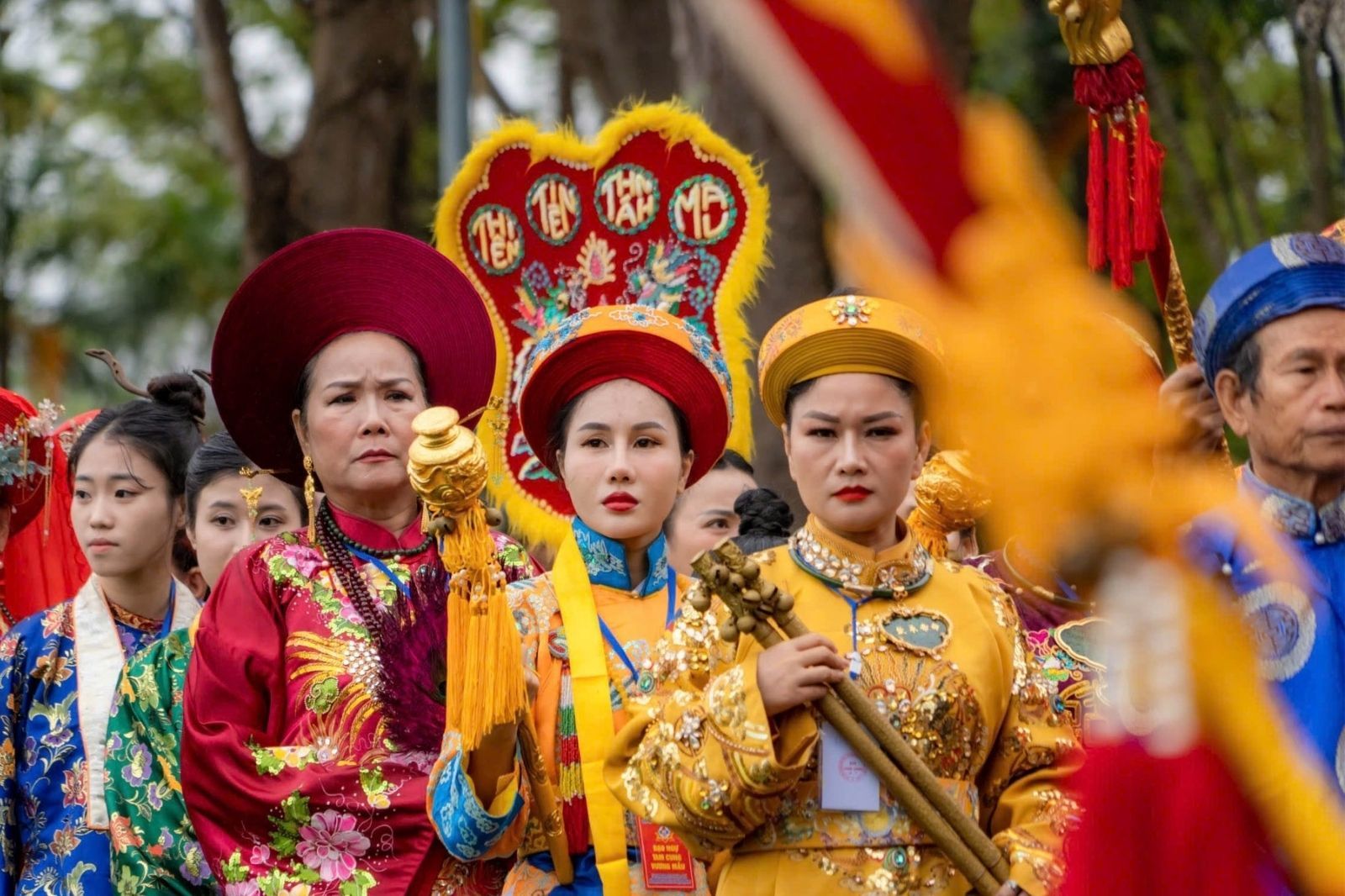
Costumes in Mother Goddess worship rituals in Hue are a combination of Viet and Cham elements, featuring vibrant Ao Dai, turbans, and exquisite accessories. The ritual dances, especially the Shadow Dance (Mua Bong), are highly expressive, portraying the images of deities. These elements not only honor the beauty of women but also demonstrate a remarkable cultural interplay.

Costumes in Mother Goddess worship rituals
Photo: Costumes in Mother Goddess worship rituals 

4. Cultural and spiritual significance of Mother Goddess worship

Mother Goddess worship honors the role of women not only in nurturing and raising life but also as a symbol of strength, tolerance, and protection. Holy Mothers like Thien Y A Na or Lieu Hanh are viewed as guardian deities accompanying the people through hardships. Hidden beneath this form of worship is a profound humanistic value: liberating the image of women from feudal social prejudices, placing them at the center of the community's spiritual life.

In Hue, Mother Goddess worship is likened to a "living museum" of Vietnamese culture. From the majestic temple architecture, sacred Chau Van music, to colorful palanquin procession rituals, everything reflects community solidarity, love for the homeland, and the nation's tradition of "when drinking water, remember the source".

Belief honoring the role and beauty of women
Photo: Belief honoring the role and beauty of women 

Not only tied to the past, Mother Goddess worship also guides people toward the present with aspirations for health, prosperity, and happiness. Rituals such as Hau Dong are not merely communication between humans and deities, but also a bond uniting the community, where faith and hope are shared, building enduring vitality for a unique cultural heritage of the Vietnamese nation.

Mother Goddess worship in Hue is a precious gem in the spiritual cultural treasure of the Ancient Capital. With the unique interplay between Viet and Cham cultures, alongside colorful rituals such as the Hon Chen Temple Festival and Chau Van singing, this belief not only honors the role of women but also contributes to preserving national identity. In a modern context, preserving and promoting Mother Goddess worship not only helps protect cultural heritage but also opens up opportunities for spiritual tourism development, bringing Hue's image further onto the world map.

Loading......

Featured destinations