The Restorations and Rebuildings of Our Lady of La Vang Shrine After the War
Central
Quang Tri
La Vang Holy Land
Sovaba.travel
Updated at: 24/09/2026
1. History of La Vang Holy Land and its War Damages
La Vang Holy Land originated from the apparition of the Virgin Mary in 1798, during the period of anti-Catholic persecution under the reign of King Canh Thinh (Tay Son dynasty). According to tradition, Our Lady appeared under a banyan tree, comforting and guiding the parishioners to overcome hardship by using 'lá vằng' (Jasminum subtriplinerve leaves) to cure diseases. Since then, La Vang has become a sacred pilgrimage site, attracting millions of faithful every year.
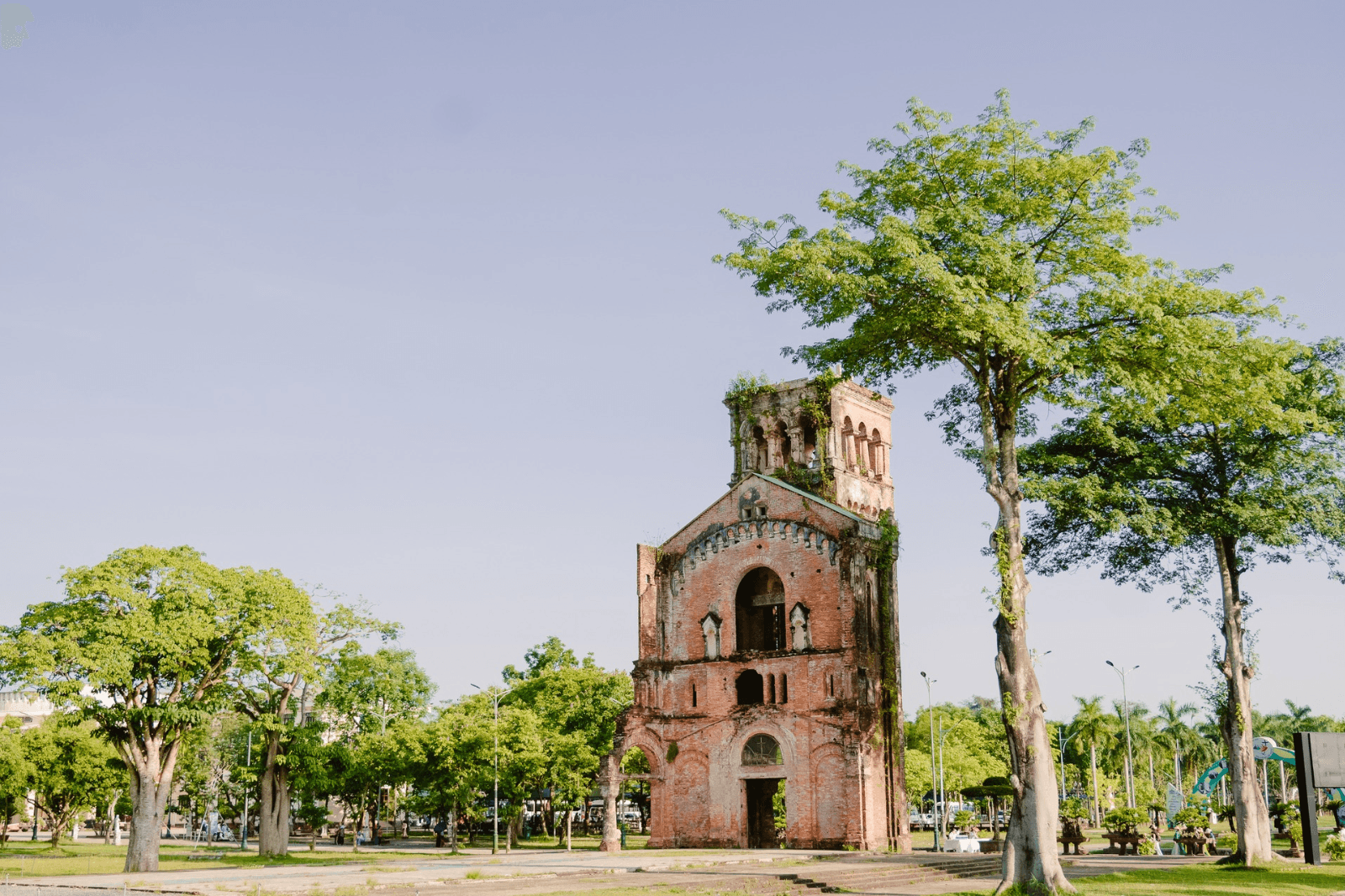
However, the geographical position of La Vang, located near the frontline of battle in Quang Tri, caused it to suffer heavy losses throughout the wars. In particular, the 1972 Fiery Red Summer campaign destroyed almost everything, leaving only the ancient bell tower as a resilient symbol of faith.
Photo: Our Lady of La Vang Shrine
In 1972, amid escalating war, La Vang became the focus of shellings and bombardments. The church, built between 1924 and 1928 according to the design of architect Carpentier and undergoing major restoration in 1959, was completely destroyed by bombs and bullets. Other structures such as the rectory, retreat house, and the Lovers of the Holy Cross Convent of Di Loan were also flattened. Only the ancient bell tower and the area of three artificial banyan trees, where Our Lady is believed to have appeared, remained standing, despite bearing many scars of war.
2. Phases of Restoration and Reconstruction of La Vang Holy Land
Having gone through more than two centuries of ups and downs alongside national history, Our Lady of La Vang Holy Land has been restored and rebuilt many times after wars, natural disasters, and political changes. Each restoration period is not only a journey of architectural reconstruction, but also proof of the loyalty and enduring faith of the Catholic community. Below are the key milestones in the journey of preserving and restoring this sacred site.
1885–1901 Period
Before 1972, La Vang was destroyed in 1885 when the thatch-roofed church dedicated to Our Lady was burned during the Van Than movement. In 1886, Bishop Gaspar Loc decided to rebuild a tile-roofed church on the old foundation. This project took 15 years to complete and was inaugurated in 1901 on the occasion of the 1st La Vang Congress. The new church was named "Our Lady Help of Christians" and was designed in a traditional Vietnamese architectural style combined with a Western facade.
1924–1928 Period
Since the tile-roofed church built in 1901 was deteriorating and lacked capacity, in 1924, Bishop Allys (Ly) entrusted Father Morineau to begin construction of a new Basilica following the design of architect Carpentier. The project was completed in 1928, featuring a prominent two-story bell tower amidst sand dunes and forest landscapes. This church was consecrated on August 20, 1928, during the 9th La Vang Congress. In 1959, the basilica underwent major renovations, replacing the entire wooden structure with iron materials to increase durability.
In 1961, the Catholic Bishops' Conference of Vietnam (South) declared La Vang as the National Marian Center, and Pope John XXIII elevated the church to the rank of Minor Basilica through the Papal Bull Magnonos on August 22, 1961.
Post-1972 Period
After the war in 1972, La Vang Holy Land fell into ruins. Pilgrimage activities were interrupted until 1990 when local authorities allowed religious ceremonies to resume. From 1995, restoration efforts began with prominent projects such as:
Chapel of Our Lady: A corrugated iron roof erected behind the ancient bell tower.
Eucharistic Chapel: Built in 2002.
Rosary Square, Podium, Pilgrimage House: Repaired or built anew from 2004.
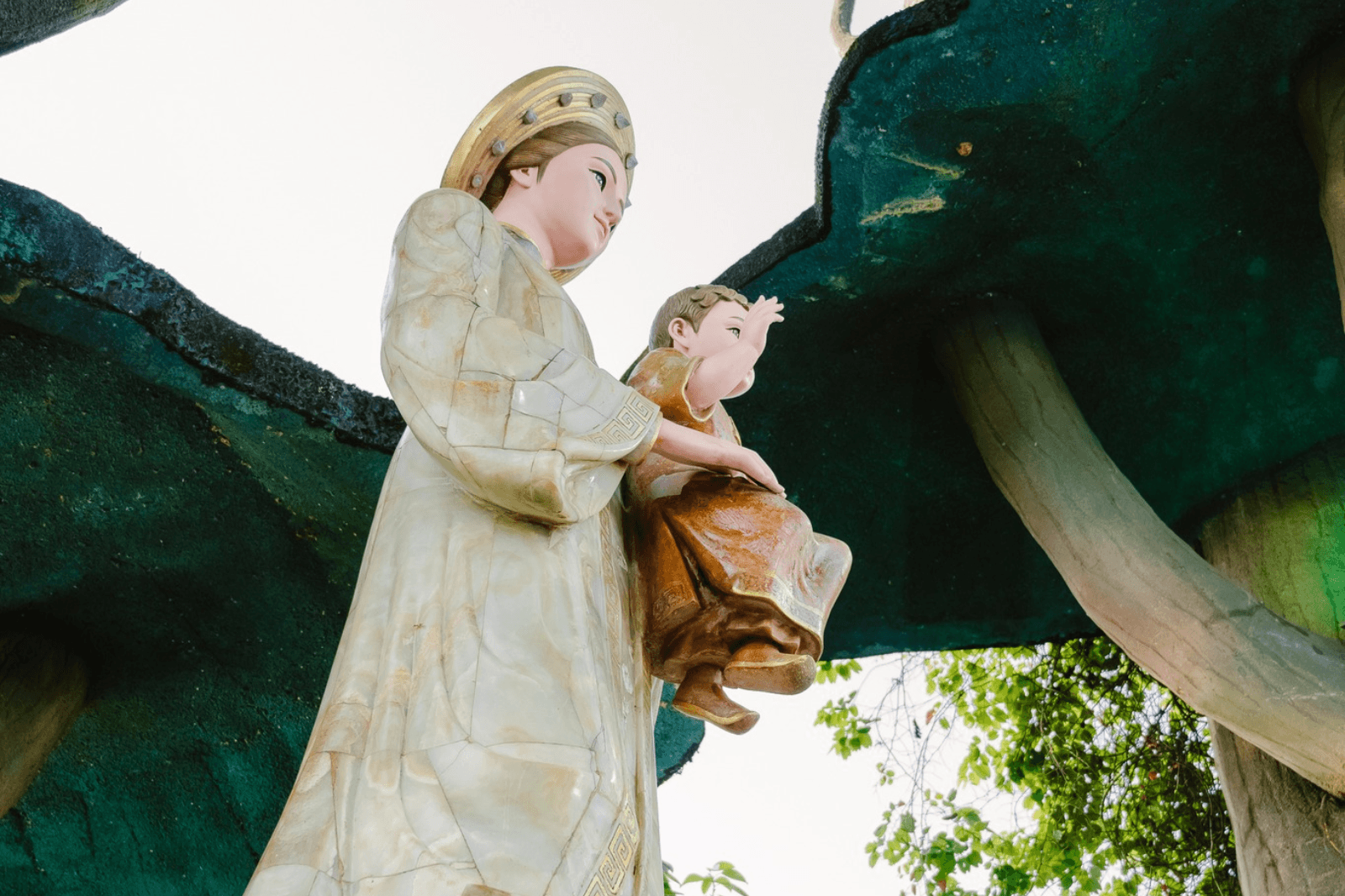
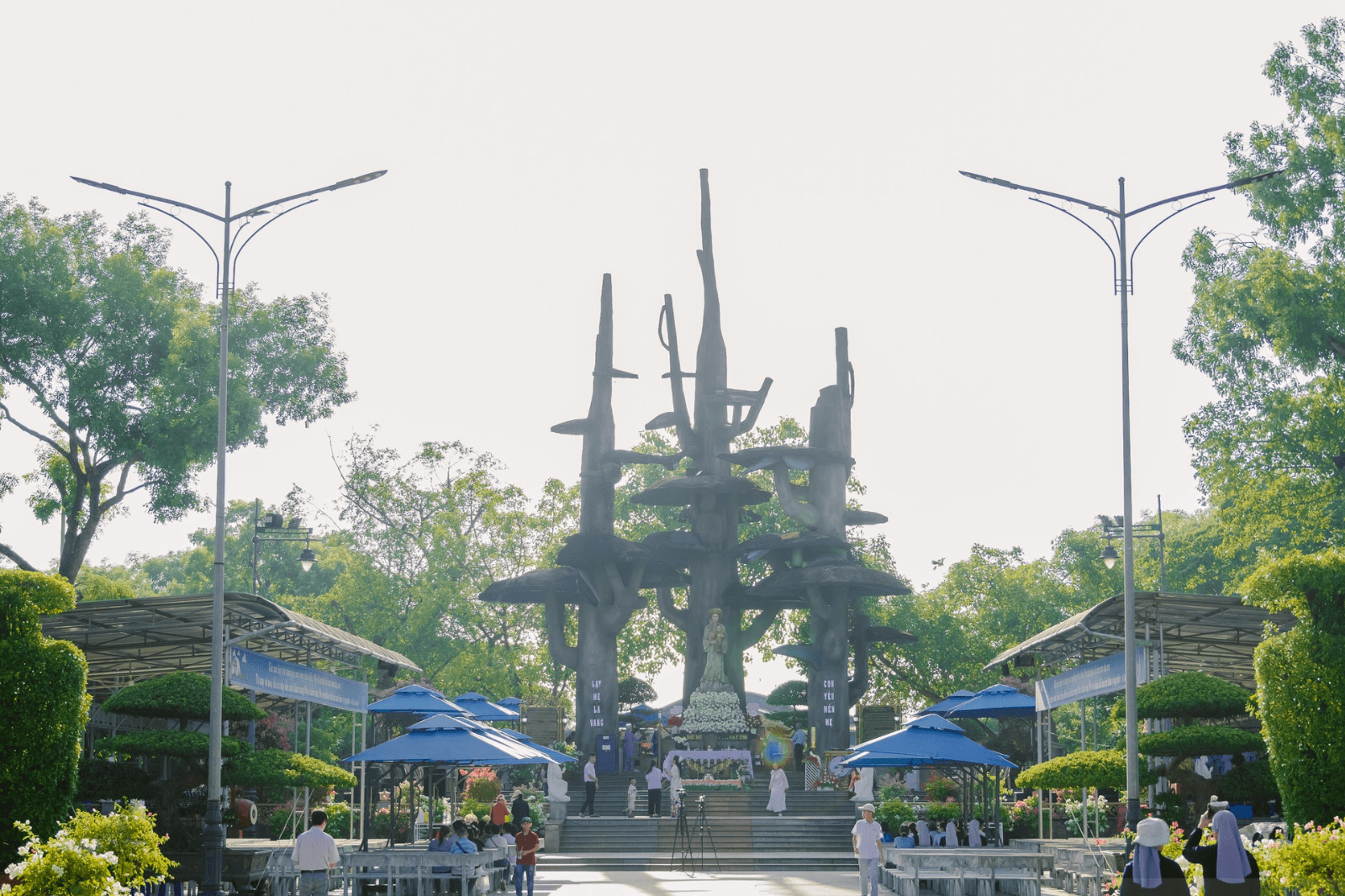
Three artificial banyan trees: Designed by architect Ngo Viet Thu, construction began in 1963 but was only completed in 2008. The three banyan trees recreate the site of Our Lady's apparition, with the statue of Our Lady of La Vang holding the Infant Jesus placed in the center. This statue, created by sculptor Van Nhan, was blessed by Pope John Paul II in Rome in 1998.
Photo: The remaining ruins after the war
2012–Present Period
On August 15, 2012, the groundbreaking ceremony for the new Basilica was held, marking an important turning point in the reconstruction of La Vang. The new structure, designed in traditional Vietnamese East Asian architecture style, has an area of 13,464 m², a length of 132m, a width of 102m, and a capacity of 5,000 people. The carved patterns and tiled roofs carry a strong Vietnamese soul, reminiscent of traditional communal houses and wooden beam houses (nhà rường).
In 2008, the government of Quang Tri Province granted an additional 21 hectares of land to expand the Holy Land, serving the religious and pilgrimage needs of the faithful. This demonstrates support from local authorities in preserving and developing La Vang as a spiritual and cultural center.
3. The Significance of the Restorations and Reconstructions
Each restoration and rebuilding of La Vang Holy Land is not merely an effort to restore physical facilities, but also holds deep spiritual significance. The new structures rising from the rubble stand as proof of the resilience of Catholic faith amidst historical challenges. The ancient bell tower, though scarred by bombs and bullets, still stands firm as a symbol of hope and Our Lady's protection.
In addition, structures such as the three artificial banyan trees, the sacred well, and the bas-reliefs not only serve religious purposes but are also cultural attractions, drawing non-Catholics as well. Lá vằng, believed to be pointed out by Our Lady, has also become a specialty product bought by visitors as a symbol of healing and peace.
Photo: Three artificial banyan trees erected
Looking back at the restorations and rebuildings of La Vang Holy Land, we see not only the marks of time or the consequences of war, but also the solidarity of generations of Catholics and Vietnamese people. Each recreated work stands as a testament to the strength of community unity and love for a place that has become a sacred symbol. La Vang Holy Land was rebuilt not only with bricks and stone, but also with silent prayers and hearts turned toward spiritual roots, so that today, it continues to be a destination of faith, peace, and ongoing history.
If you are looking for a meaningful journey to quiet your soul and connect with your spiritual roots, let a pilgrimage to Our Lady of La Vang Holy Land be your starting point. With its sacred atmosphere, vivid history, and tranquil scenery, La Vang is an ideal destination for both individual and group journeys. Do not hesitate to plan your trip; book a tour to visit La Vang Holy Land to experience the spiritual beauty and sacred heritage in the heart of Quang Tri.