Thien Mu Pagoda – A Sacred Symbol Linked to the Soul of Hue

Central

Thua Thien Hue

Thien Mu Pagoda

Sovaba.travel

Updated at: 24/09/2026

1. An overview of Thien Mu Pagoda in Hue

Thien Mu Pagoda is situated on Ha Khe Hill, on the left bank of the Perfume River, about 5km west of Hue city center. It is one of the oldest and most beautiful pagodas in Vietnam, built in 1601 under Lord Nguyen Hoang – the first lord of Dang Trong. With a prime location along the poetic Perfume River, the pagoda is not only a place of Buddhist worship but also a sacred symbol closely tied to the cultural soul of Hue.

Spanning a large area of approximately 4 hectares, the pagoda encompasses numerous ancient architectural works harmoniously blended with lush green nature. Every year, Thien Mu Pagoda welcomes millions of domestic and international visitors, becoming an unmissable check-in point when traveling to Hue. Beyond its religious value, the pagoda is also a rich source of inspiration for poetry, music, and art, as well as an indispensable part of the journey to explore the world cultural heritage in Hue.
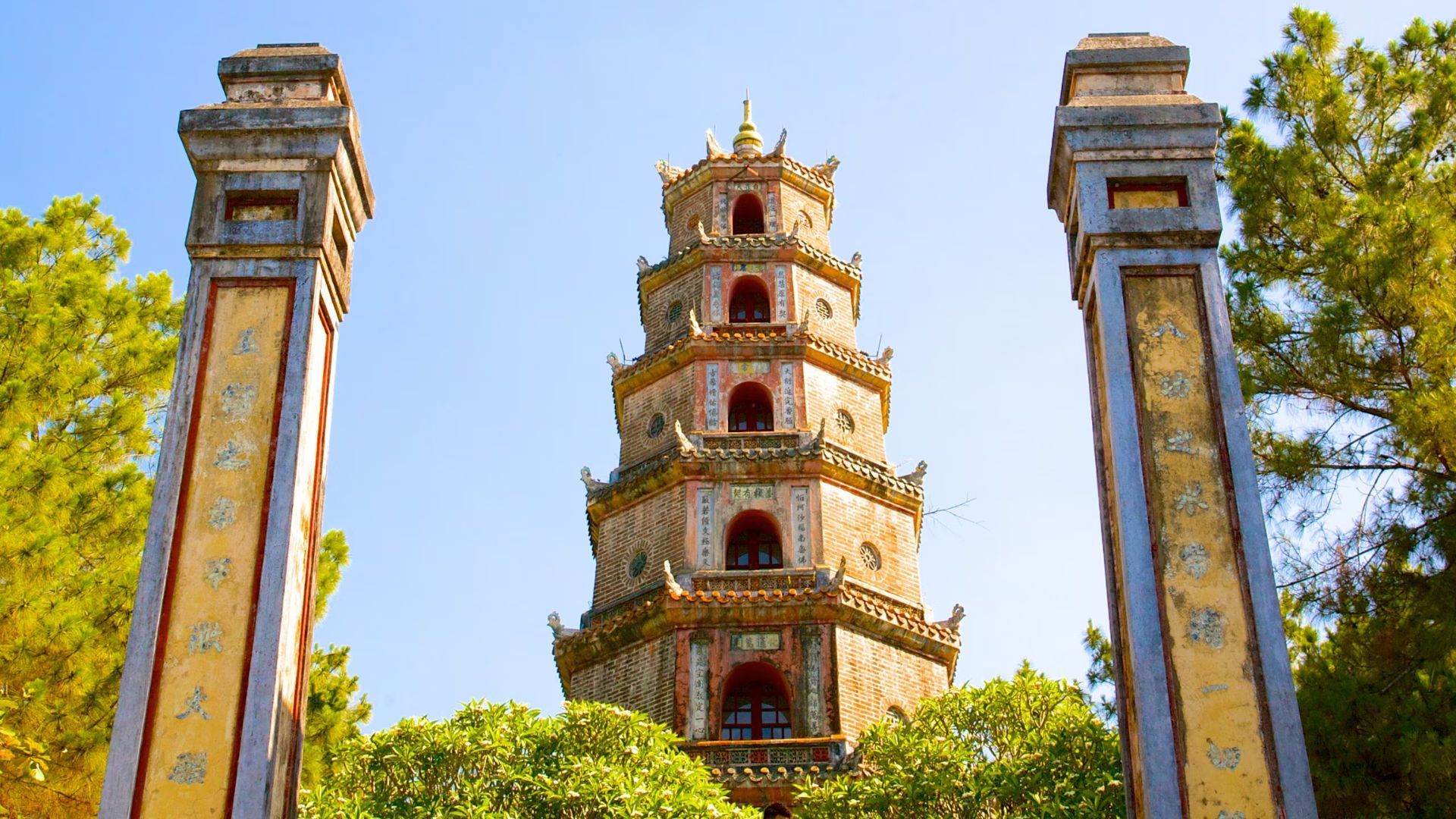
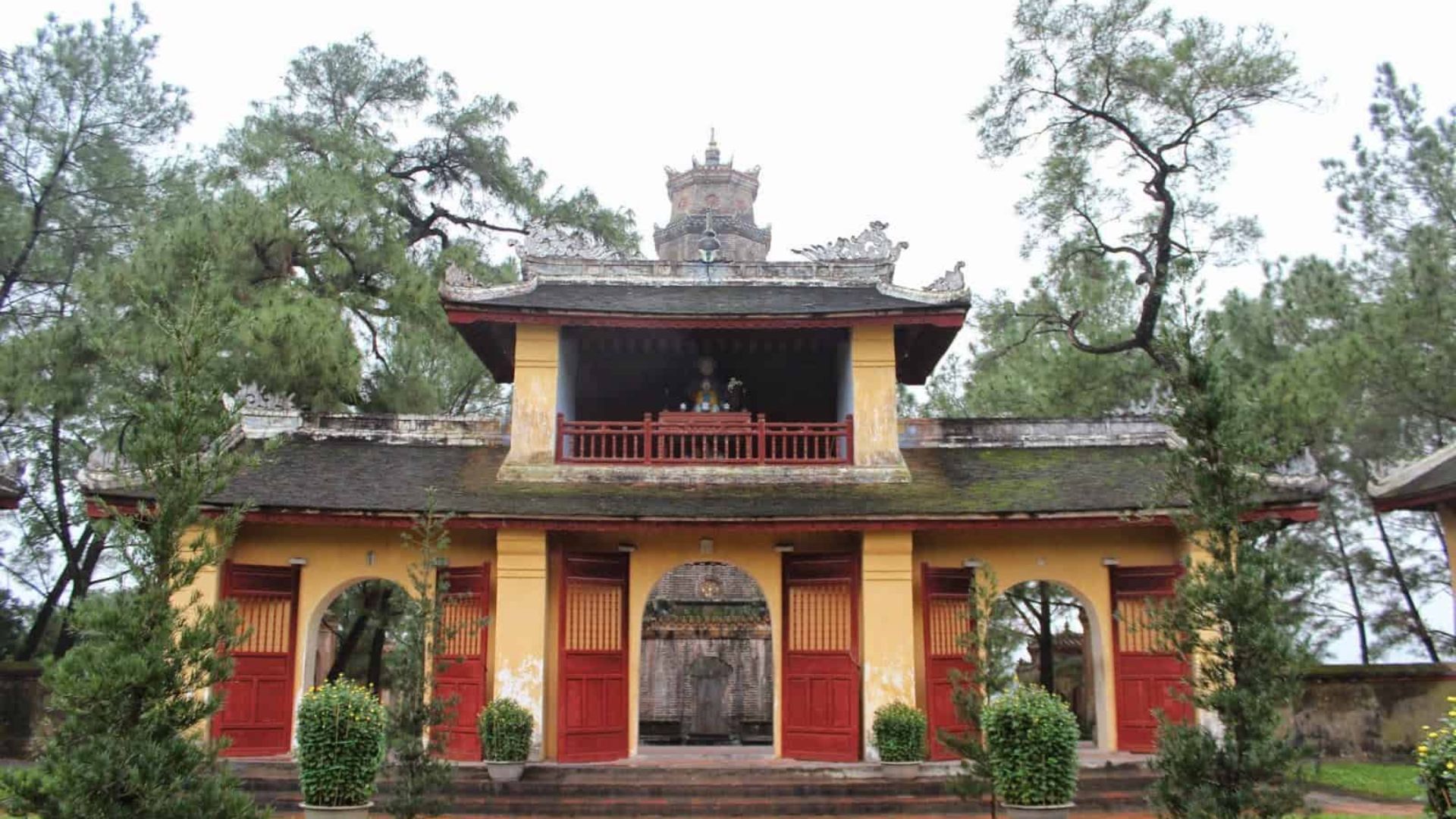
The main gate of Thien Mu Pagoda glimpsed beneath lush green trees.

2. The history and significance of Thien Mu Pagoda

The history of Thien Mu Pagoda is closely linked to the territorial expansion of the Nguyen Dynasty. Legend has it that in 1601, Lord Nguyen Hoang, while on an inspection tour, met an old woman wearing a red shirt and blue pants (believed to be Thien Mu - the Celestial Lady) on Ha Khe Hill. The fairy prophesied: "Whoever comes here to build a pagoda will gather sacred energy, making Nam country powerful." Following the prophecy, Lord Nguyen Hoang built the pagoda and named it Thien Mu, meaning "Celestial Lady".

Throughout various dynasties, the pagoda was renovated and expanded multiple times. In 1710, Lord Nguyen Phuc Chu ordered the casting of the Dai Hong Chung bell weighing over 2 tons, inscribed with a verse praising the prosperity of the Nguyen Dynasty. In 1844, King Thieu Tri constructed Phuoc Duyen Tower – a prominent symbol of the pagoda. The pagoda was once the venue for important national Buddhist ceremonies and witnessed many historical events, from the Nguyen Lords to the Tay Son Dynasty and the Nguyen Dynasty.

The significance of Thien Mu Pagoda far exceeds that of a religious structure. It symbolizes the gathering of heaven and earth's sacred energy, contributing to the strength of Dang Trong. For the people of Hue, the pagoda preserves the nation's soul, reflects the essence of Vietnamese Buddhist culture, and stands as a symbol of peace and prosperity.

3. What makes the architecture of Thien Mu Pagoda unique?

The architecture of Thien Mu Pagoda is a harmonious blend of traditional Buddhist style and natural elements, creating a contemplative and ancient beauty. The pagoda grounds are divided into two main parts: the area in front of Nghi Mon (the main gate) and the rear area.

  • Tam Quan Gate (Three-door Gate): The entrance to the pagoda, featuring four towering pillars leading up 15 steps to Huong Nguyen Pavilion (now only the foundation remains).
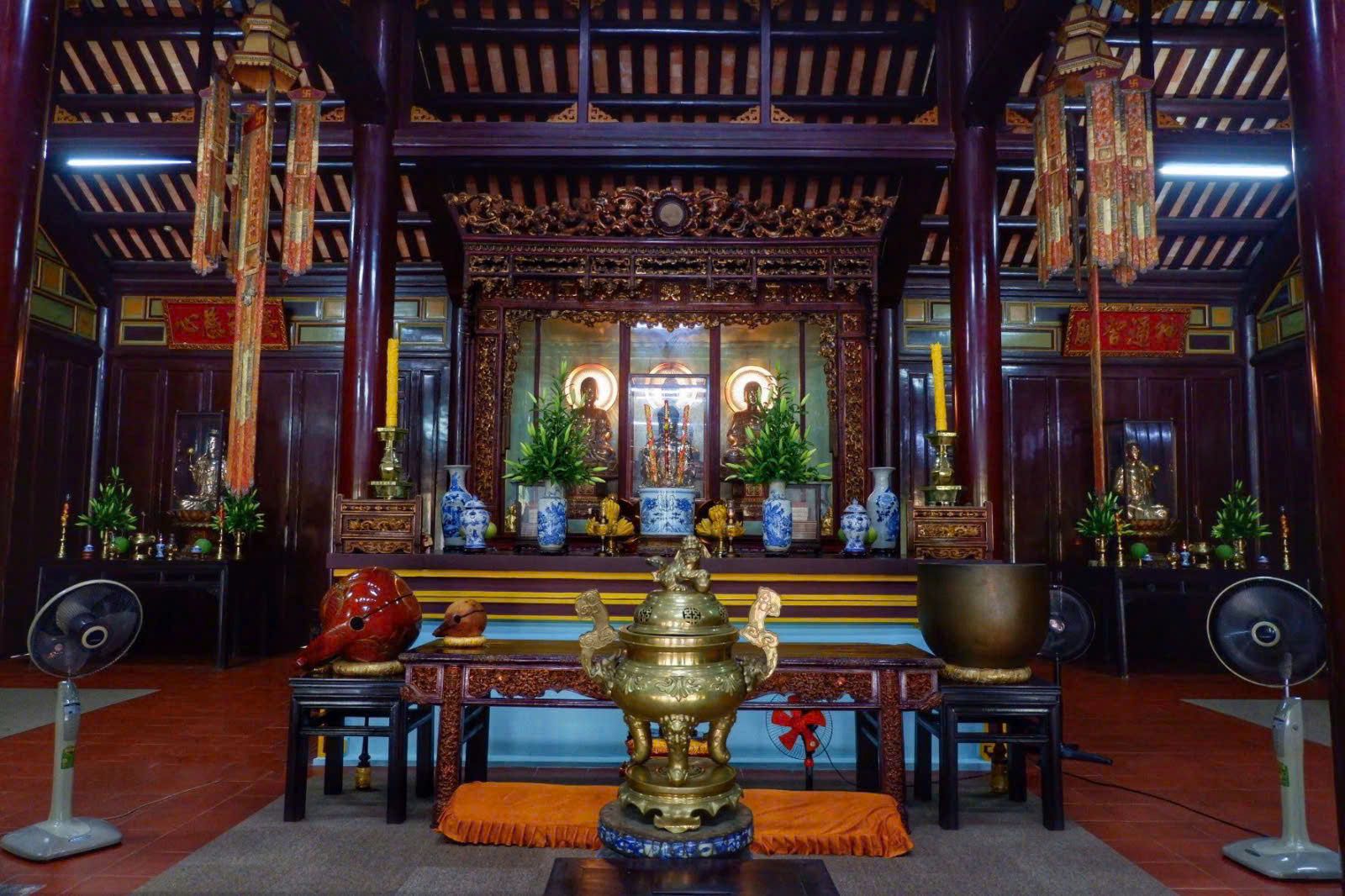
  • Dai Hung Sanctuary: The main hall, magnificent with bronze Buddha statues, a bronze chime cast in 1677, and red-lacquered gilded horizontal lacquered boards presented by Lord Nguyen Phuc Chu in 1714.
  • Other structures: Including Thien Vuong Shrine, the Preaching Hall, ancient tree gardens, lotus ponds, and hexagonal stele pavilions.

What makes it special is the pagoda's architecture based on the Bagua layout, reflecting Buddhist philosophy regarding the balance of Yin and Yang. The entire pagoda harmonizes with the Perfume River, creating a serene ambiance that helps visitors find inner peace.

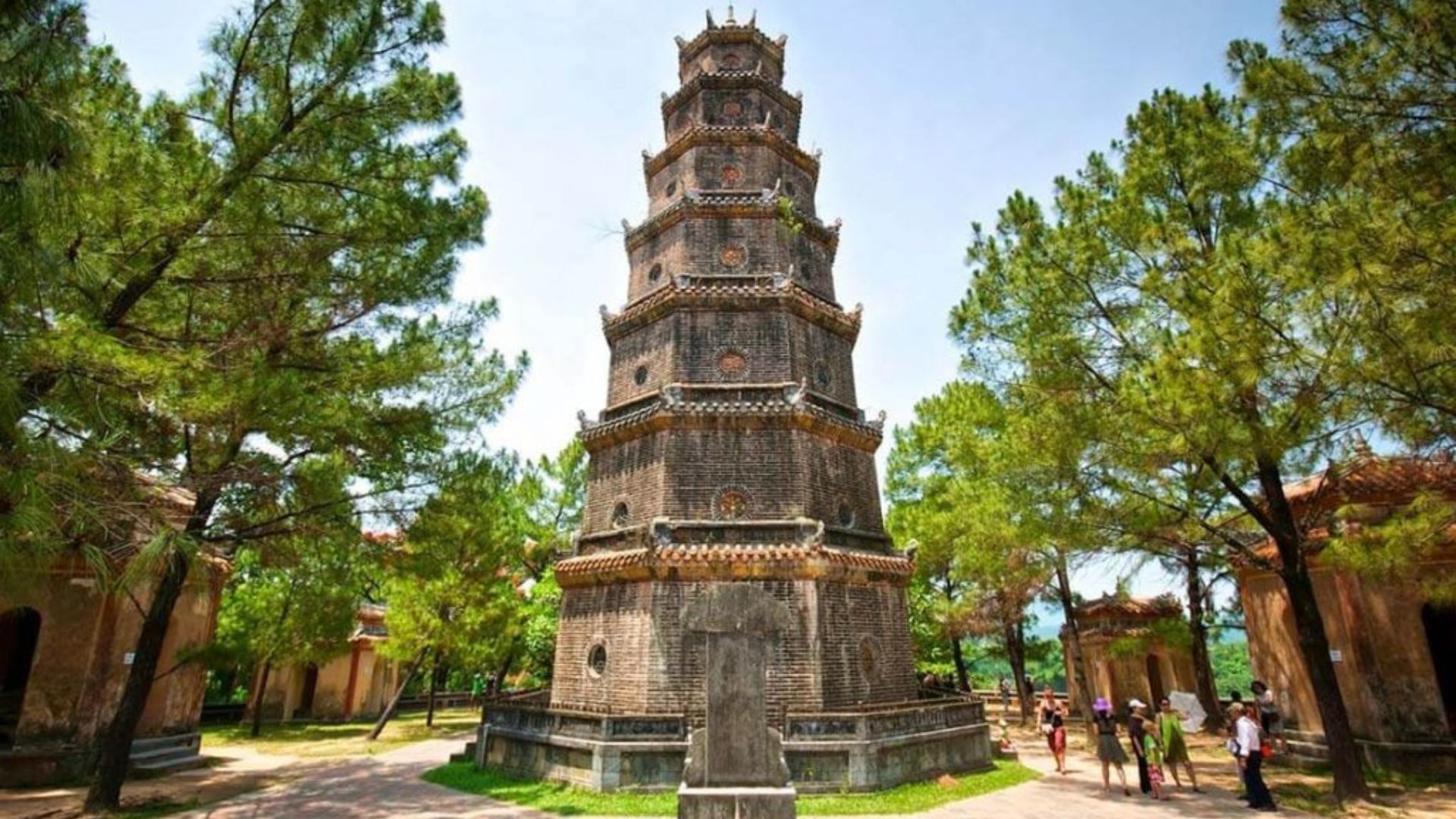
Illustration of an artistic structure at Thien Mu Pagoda.

4. Phuoc Duyen Tower – The iconic symbol of Thien Mu Pagoda

Phuoc Duyen Tower is the most prominent structure and is considered the icon of Thien Mu Pagoda. Built by King Thieu Tri in 1844, the tower stands 21 meters tall with 7 octagonal tiers, each dedicated to a Buddha. The highest tier is dedicated to Sakyamuni Buddha, symbolizing ultimate enlightenment.

The tower was built of raw bricks and intricately decorated with dragon and phoenix motifs, carrying the meaning of praying for blessings and protecting sacred energy. From the top tiers, visitors can take in panoramic views of the Perfume River and Hue City. Phuoc Duyen Tower is not only an architectural masterpiece but also a repository of precious antiques, reflecting the construction art of the Nguyen era.

Phuoc Duyen Tower standing tall against the blue sky.

5. Thien Mu Pagoda in the spiritual life of Hue locals

For the people of Hue, Thien Mu Pagoda is a sacred place that has anchored the community's spiritual life for centuries. It is one of the two earliest national pagodas in Dang Trong, frequently holding major Buddhist rituals to pray for national peace and prosperity. Locals often visit the pagoda to practice meditation and pray for peace, health, and good fortune.

The pagoda is also deeply embedded in Hue's culture through poetry (such as the poem "Thien Mu Chung Thanh" by King Thieu Tri), music, fine arts, and folklore. In daily life, the pagoda bell echoing along the Perfume River serves as a reminder of tranquility, helping people break free from the hustle of everyday life. For Buddhists, the pagoda is a place to practice teachings and spread compassion and wisdom.

Mystical prayer space at the pagoda.

6. Visitor guide and tips for Thien Mu Pagoda

To make your visit to Thien Mu Pagoda in Hue complete, keep in mind these useful tips:

  • Best time to visit: Visit early in the morning (7–9 AM) or late afternoon (4–6 PM) to avoid the heat and admire the sunset along the Perfume River. Spring (February–April) or Autumn (September–November) are the best seasons, offering cool weather and blooming flowers.
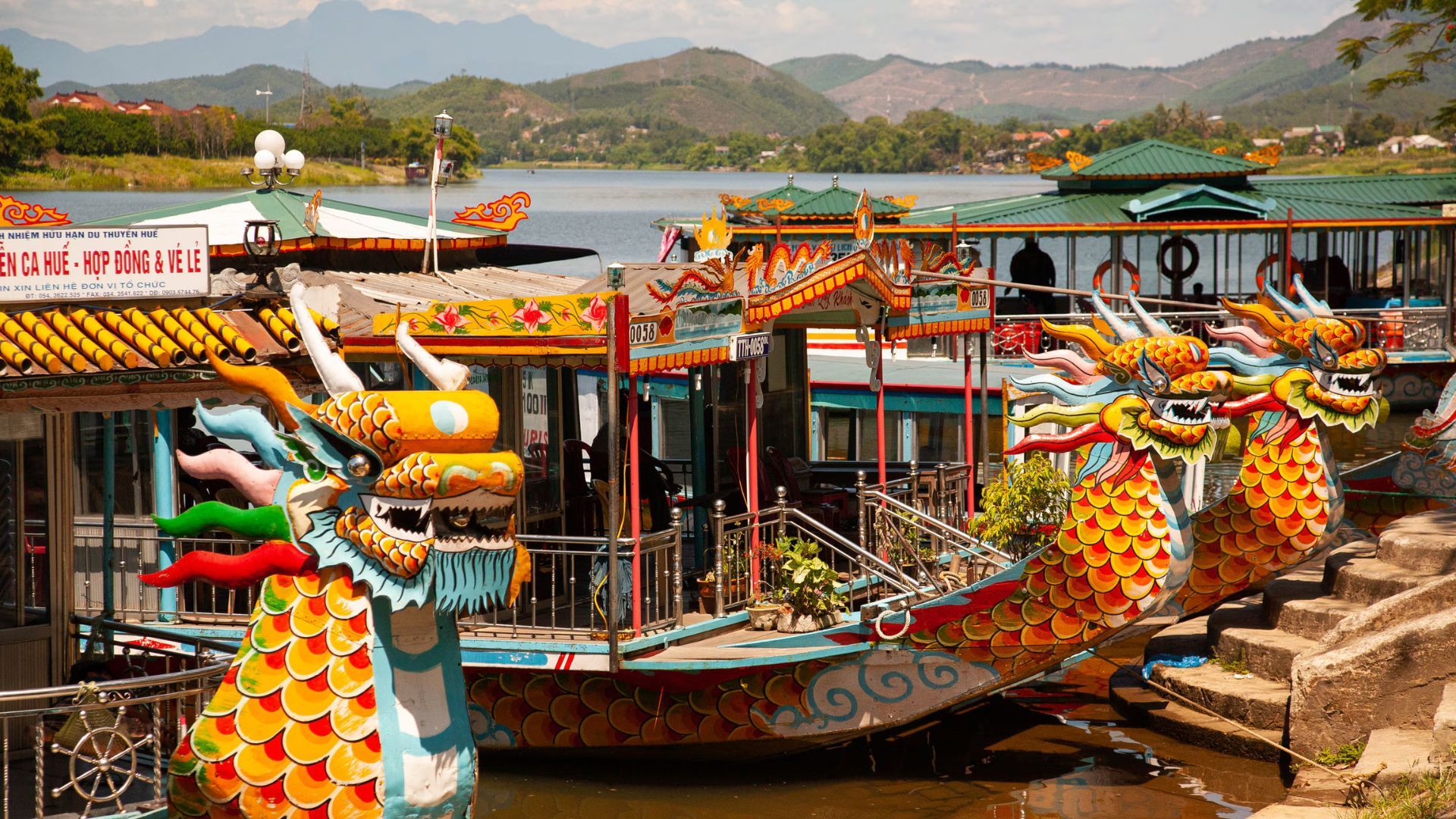
  • Transportation: From central Hue, you can travel by motorbike, bicycle (about 15–20 minutes), or take a dragon boat on the Perfume River to enjoy the scenery. If traveling in a group, renting a car or joining a group tour is convenient.
  • Dress code and etiquette: Wear polite, modest clothing (long pants, sleeved shirts). Refrain from talking loudly and take photos respectfully in worship areas. Entrance is free, but donations are welcome.
  • Highlight activities: Admire the view around Phuoc Duyen Tower, stroll through ancient tree gardens, listen to the temple bell, and enjoy tea if available. Combine your visit with nearby attractions like the Imperial City of Hue and Minh Mang Tomb.
To sightsee at Thien Mu Pagoda, visitors can travel on boats decorated with lively patterns.

Thien Mu Pagoda is not only an ancient religious structure, but also a spiritual symbol deeply rooted in the history and life of Hue's people. Over time, the pagoda has preserved its serene, peaceful ambiance and distinct cultural values, becoming an essential stop on the journey to discover the ancient capital. Visiting Thien Mu Pagoda is an opportunity for travelers to slow down and gain a deeper appreciation for the pace of life and rich heritage of Hue. For a convenient and fulfilling visit, you can opt for an all-inclusive Thien Mu Pagoda tour with Sovaba Travel. The tour combines Thien Mu Pagoda with highlights such as the Imperial City, royal tombs, and the Perfume River, complete with a tour guide knowledgeable in local history and culture. It is an ideal choice for travelers looking to save time, travel easily, and gain a comprehensive understanding of Hue during their trip.

Loading......

Featured destinations