Top 5 Most Famous Ancient Houses in Hoi An: Unique Centuries-Old Architecture

Central

Da Nang

Hoi An

Sovaba.travel

Updated at: 24/09/2026

1. Tan Ky Old House

Address: 101 Nguyen Thai Hoc, Minh An Ward. 

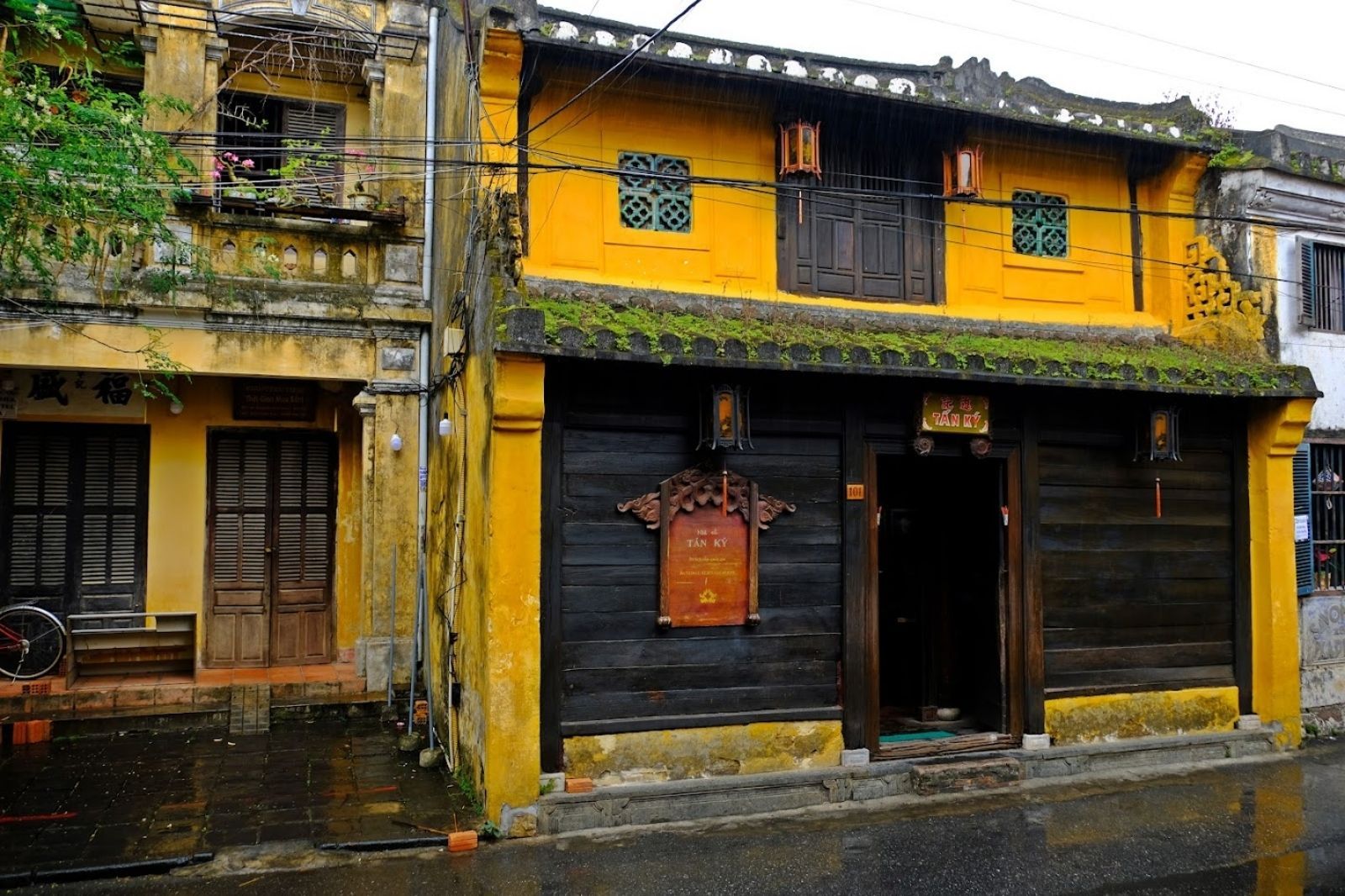
Tan Ky Ancient House is one of the leading symbols of Hoi An's ancient house architecture, boasting a history of over 200 years. Built in 1741 by the Le family—wealthy merchants of Chinese origin—the house was once a bustling trading hub for agricultural products. The name "Tan Ky" signifies prosperity, and through 7 generations, it has preserved its cultural values intact, becoming a national historical-cultural relic in 1990 and recognized by UNESCO as a world heritage site.

In terms of architecture, Tan Ky Ancient House is a harmonious blend of three cultures: Vietnamese (traditional three-bay house, yin-yang tiled roof), Chinese (exquisite decorative motifs such as fish-headed dragon-tailed creatures, pomegranates, bats), and Japanese (two stacked pillars symbolizing heaven and man, five straight pillars symbolizing the five elements). The most unique feature is that the entire structure uses no nails, relying solely on mortise and tenon joints, allowing the house to stand firm through hundreds of years and historic floods, such as the 1964 flood that reached the roof of the first floor. Inside, many precious antiques are preserved, such as the unique "Hundred Birds" couplet set and the horizontal lacquered board "Tich Duc Luu Ton" conveying a profound message of life values.
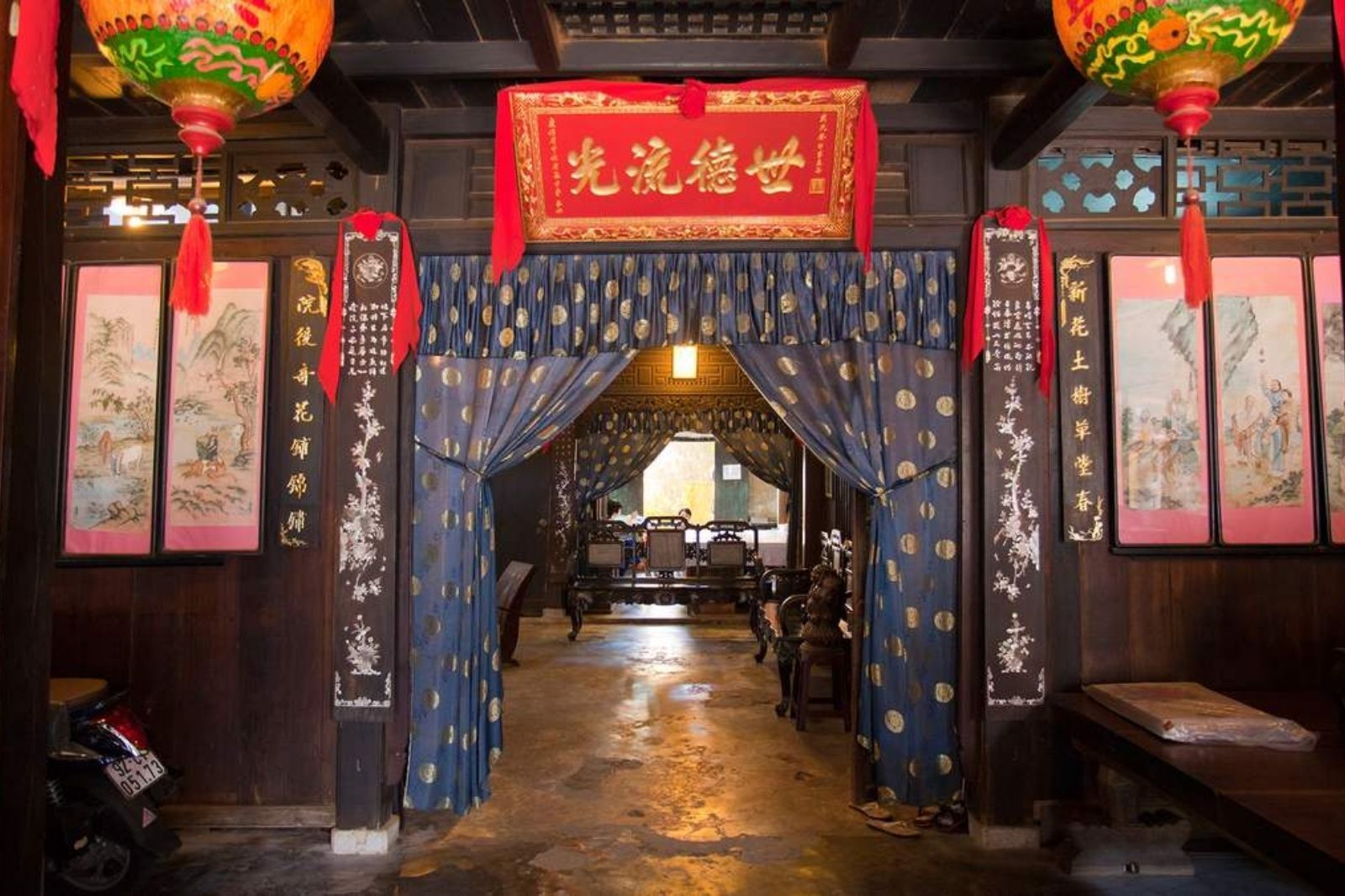
Tan Ky Ancient House
Photo: Tan Ky Ancient House 

2. Phung Hung Old House

Address: 4 Nguyen Thi Minh Khai, near the Covered Bridge. 

With a history spanning over 240 years (built in 1780), Phung Hung Ancient House is vivid proof of the prosperity of the Hoi An trading port. The first owner was a wealthy Vietnamese merchant who named it "Phung Hung", meaning prosperity, and the house was once a store trading forest and agricultural products such as cinnamon, pepper, salt, and raw silk. Today, the 8th generation still lives here and preserves it, making it a national historical-cultural relic since 1993.

The architecture of Phung Hung Ancient House is a refined harmony of three styles: Vietnamese (wooden frame system, crossbeams, two-sided roof), Chinese (balcony, main door with crab-shell ceiling, and carp motifs symbolizing luck and prosperity), and Japanese ("four seas" roof in the middle bay). The house is a two-story tube house with 80 sturdy ironwood pillars resting on stone pedestals, and beams intricately carved by craftsmen from the Kim Bong carpentry village. Notably, the second floor features a trapdoor for moving goods to escape floods—a smart design that saved 160 people during the 1964 flood.

Phung Hung Ancient House
Photo: Phung Hung Ancient House  

3. Duc An Old House

Address: 129 Tran Phu, near the Museum of Trade Ceramics. 

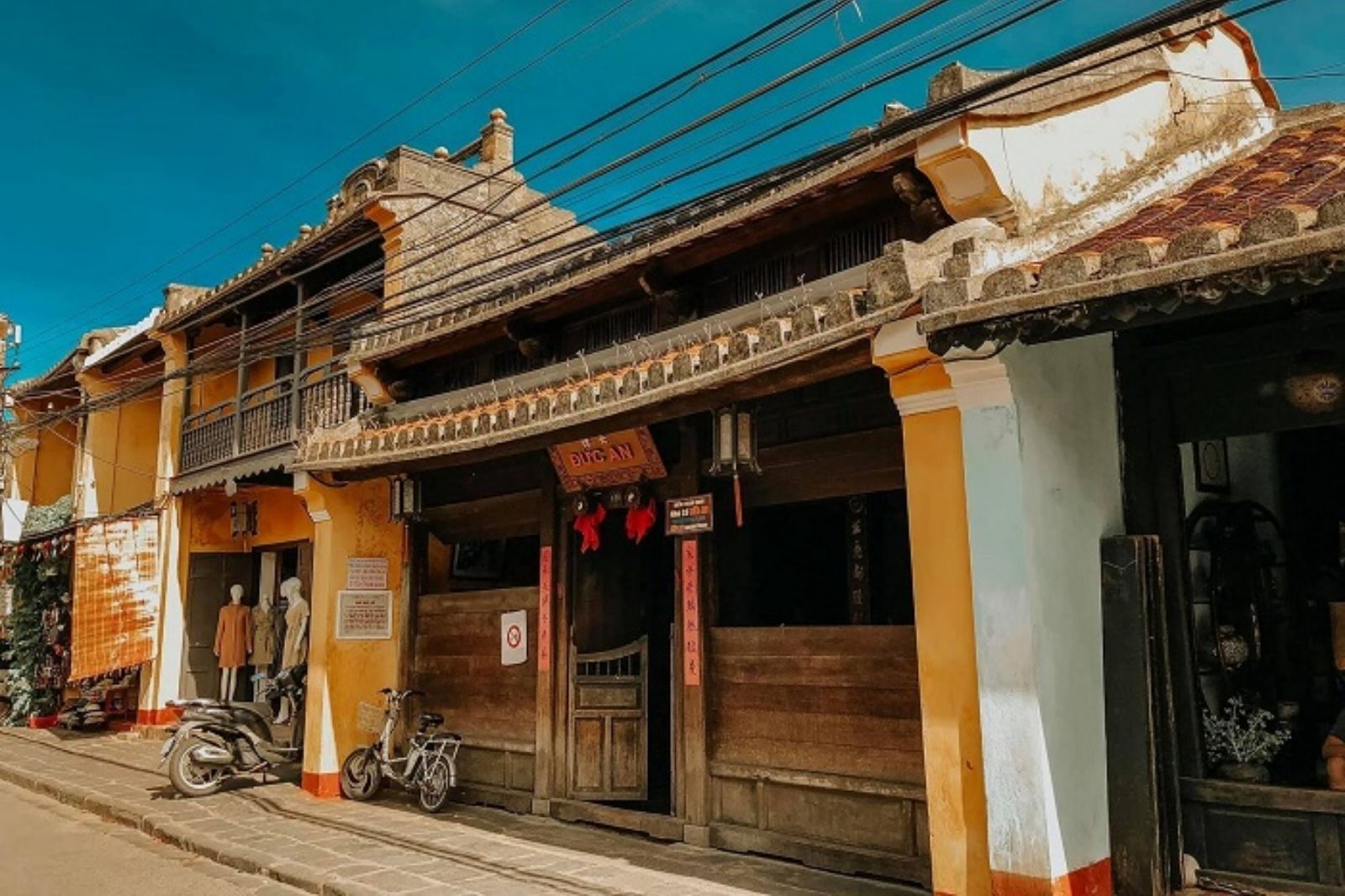
Duc An Ancient House, built in 1830 during the reign of King Minh Mang, is nearly 200 years old and serves as a special "historical witness" of Hoi An. Originally a bookstore and Chinese medicine shop owned by the Phan family, the house was once an important revolutionary base: storing documents for the Duy Tan movement (1908), founding the Vietnam Revolutionary Youth League (1927), and the Quang Nam Party Committee (1930). In 2010, it was recognized as a city-level cultural monument commemorating Comrade Cao Hong Lanh.

The architecture of Duc An Ancient House follows the Central Vietnamese "nha ruong" style combined with coastal urban characteristics: a tube shape 7m wide and 40m long, with a central doorway, two trading windows, and two "eyes" above the door—a signature feature of Hoi An ancient houses. The entire frame is made of Kien Kien wood (a durable wood species from Quang Nam), with a yin-yang tiled roof and sturdy brick walls. The interior is symmetrically arranged, featuring a front space for business, a living room for worshiping Guan Yu and ancestors, and rooms connected via a central courtyard to catch natural light.

Duc An Ancient House
Photo: Duc An Ancient House  

4. Quan Thang Old House

Address: 77 Tran Phu, Minh An Ward 

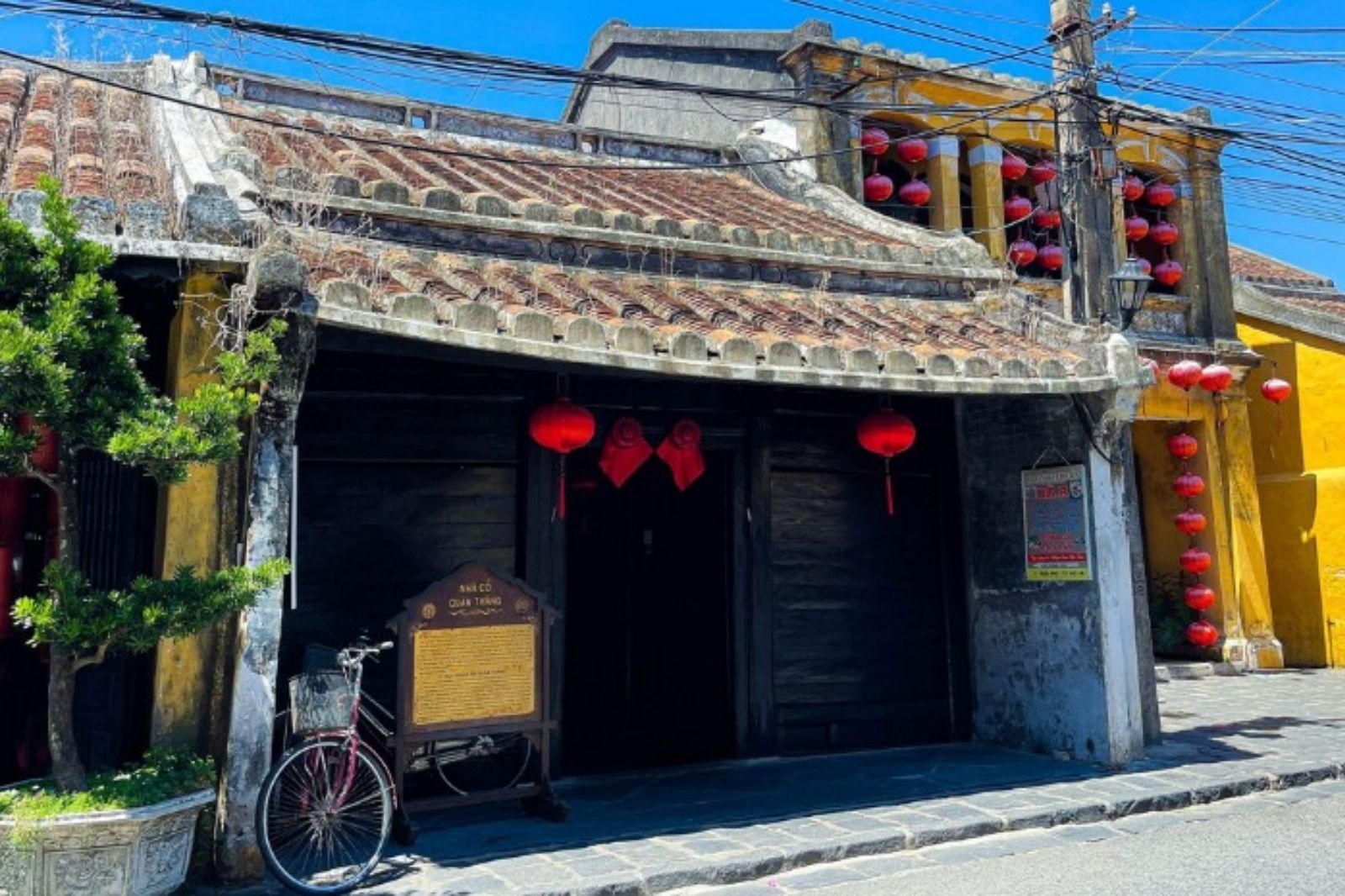
Over 150 years old (built around the 18th century), Quan Thang Ancient House is one of the most beautiful ancient houses in Hoi An, built in the Huaxia Chinese style. Owned by a Chinese merchant named Quan Thang, the house was once a busy store for local products and traditional medicine. It has witnessed many historical events, including major floods (with high-water marks carved into the wooden walls in 1964, 1999, 2007, and 2009), and is recognized as a Hoi An cultural relic.

The architecture of Quan Thang Ancient House blends Vietnamese and Chinese elements: a yin-yang tiled roof that keeps it warm in winter and cool in summer, a solid ironwood structure, and intricate carvings by Kim Bong craftsmen. Designed as a single-story tube house connecting two streets (Tran Phu and Nguyen Thai Hoc), it features a shop in the front, a skylight decorated with miniature landscapes, family living spaces, and an ancient cooking stove. The horizontal lacquered boards, couplets, and antiques reflect the past prosperity of its merchant owners.

Quan Thang Ancient House
Photo: Quan Thang Ancient House 

5. Diep Dong Nguyen Old House

Address: 80 Nguyen Thai Hoc, Minh An Ward 

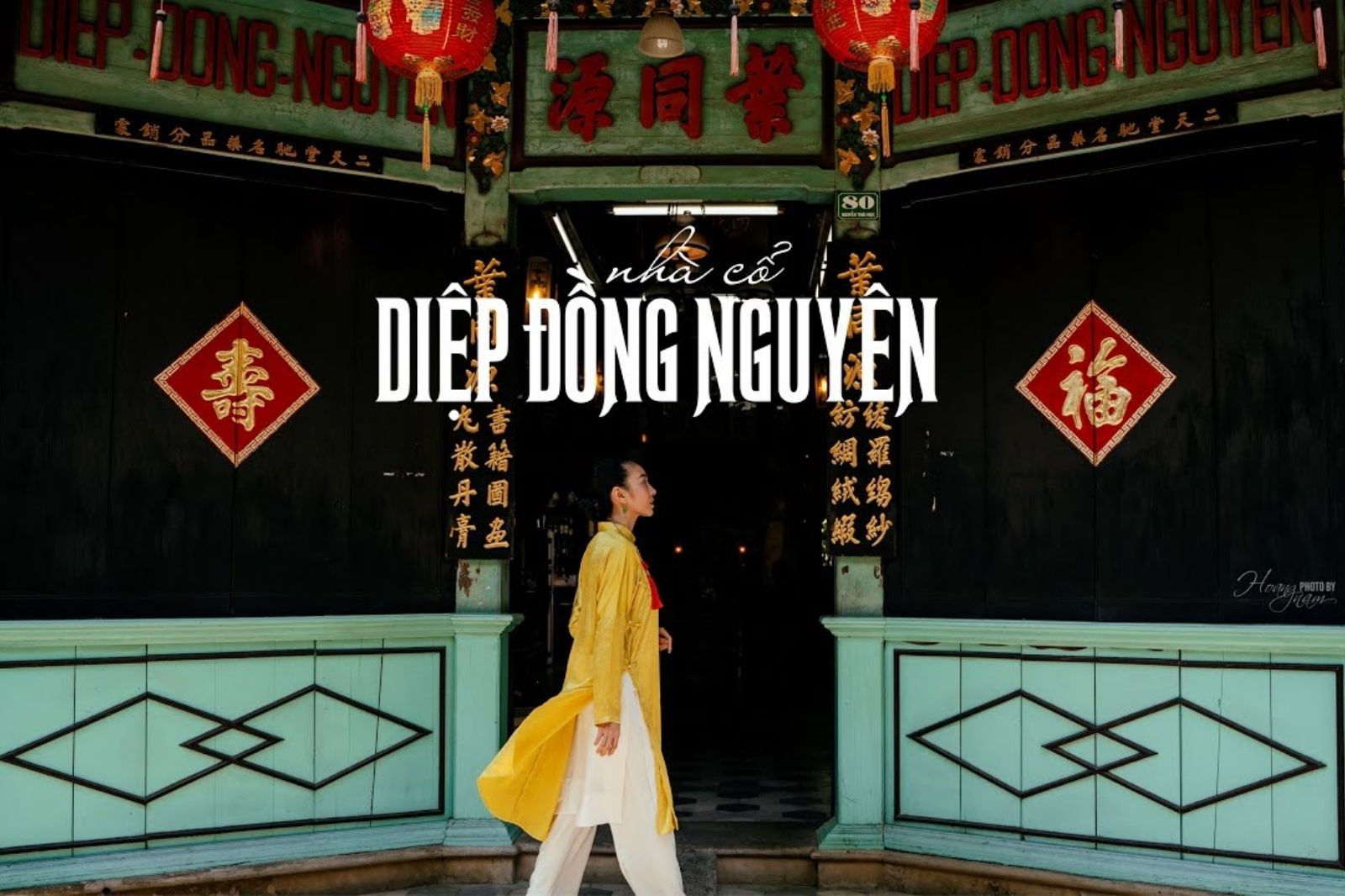
Built in the late 19th century, Diep Dong Nguyen Ancient House is a vivid "antique museum" in Hoi An. The first owner was Mr. Diep Ngo Xuan—a merchant of Guangdong origin who opened the Diep Dong Xuan Chinese pharmacy. Across multiple generations, the house has preserved a rare collection of antiques, from ancient Vietnamese, Chinese, and Japanese coins (including the oldest Thai Binh Hung Bao coins) to King Bao Dai's desk and Queen Nam Phuong's dressing table.

The architecture of Diep Dong Nguyen Ancient House is a fusion of Vietnamese, Japanese, and Chinese styles: a two-story tube house with a yin-yang tiled roof, delicately carved precious wood, and a French-style balcony combined with traditional railings. The second floor features floor openings and ancient bookcases holding Han-Nom land records, creating an airy and harmonious atmosphere.

Diep Dong Nguyen Ancient House
Photo: Diep Dong Nguyen Ancient House 

The centuries-old ancient houses in Hoi An are not merely tourist attractions, but living spaces preserving memories of a once-thriving heritage town. Through every wooden truss, yin-yang tiled roof, and living space layout, visitors can clearly feel the architectural sophistication and cultural depth of Hoi An across generations. Exploring the 5 most famous ancient houses in Hoi An is the perfect way to understand the heritage value behind the lasting charm of this land. To make your journey to Hoi An convenient, complete, and insightful, you can choose an all-inclusive Hoi An tour with Sovaba Travel. Featuring a thoughtfully designed itinerary that combines visiting ancient houses, the Ancient Town, the Covered Bridge, traditional craft villages, and local culinary experiences, Sovaba Travel helps you explore Hoi An thoroughly, comfortably, and efficiently. It is an ideal choice for both first-time visitors to Hoi An and those looking to discover its heritage in a more structured, professional way.

Loading......

Featured destinations