Where is Phong Nha Cave? Everything You Need to Know
Central
Quang Binh
Phong Nha Cave
Sovaba.travel
Updated at: 31/08/2026
1. Where is Phong Nha Cave?
Phong Nha Cave is located within Phong Nha - Ke Bang National Park, in Bo Trach District, former Quang Binh Province (now Quang Tri Province). Specifically, in Son Trach Commune, Bo Trach District, former Quang Binh Province. The cave is about 50 km northwest of Dong Hoi City, the center of Quang Binh Province (now Quang Tri Province), including the distance to the boat dock. Phong Nha - Ke Bang National Park is a vast nature reserve famous for its rich limestone cave system, and Phong Nha Cave is one of the most prominent caves here.
Photo: Phong Nha Cave is located within the Phong Nha - Ke Bang National Park complex
2. Detailed information and how to access Phong Nha Cave
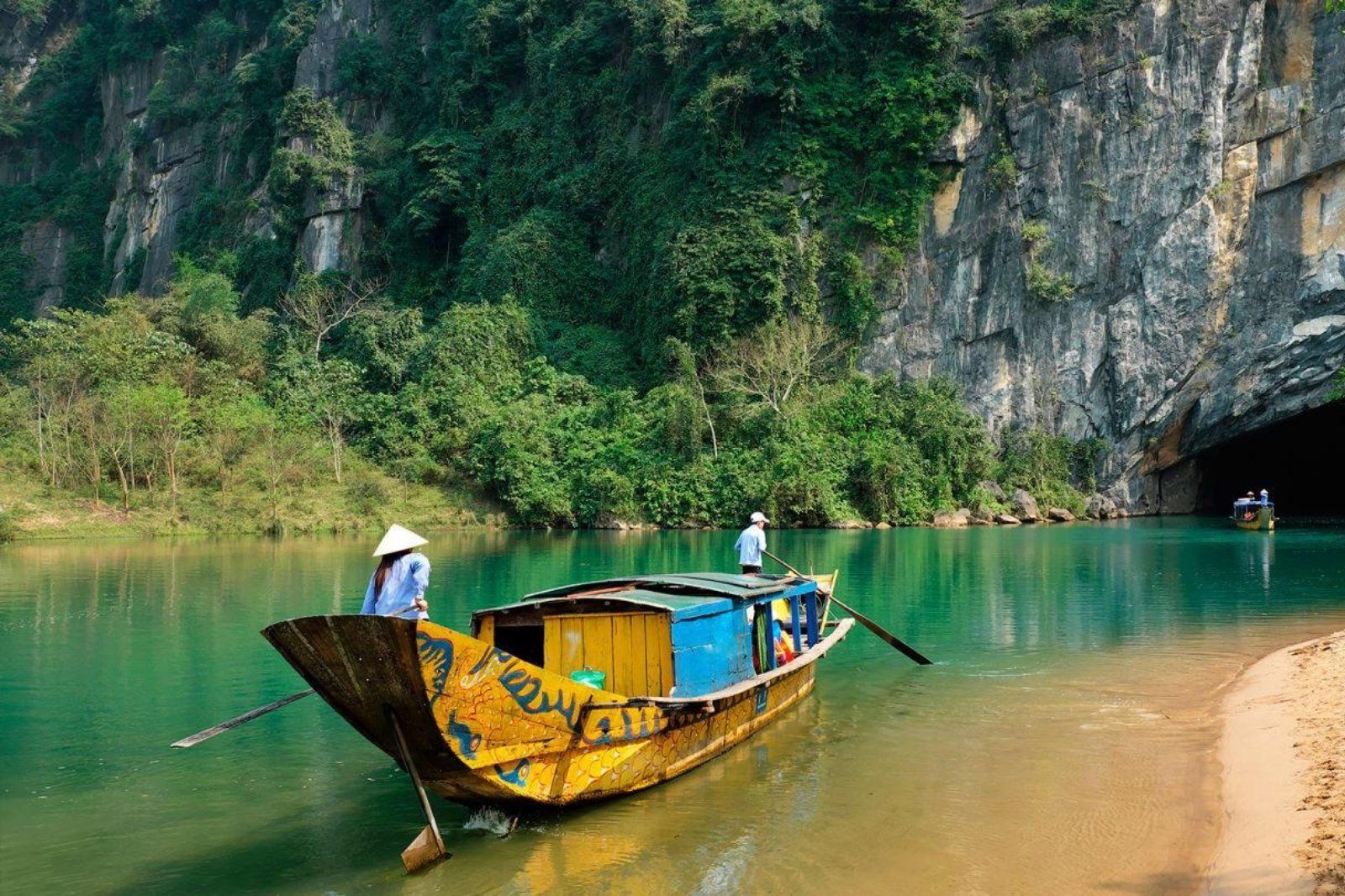
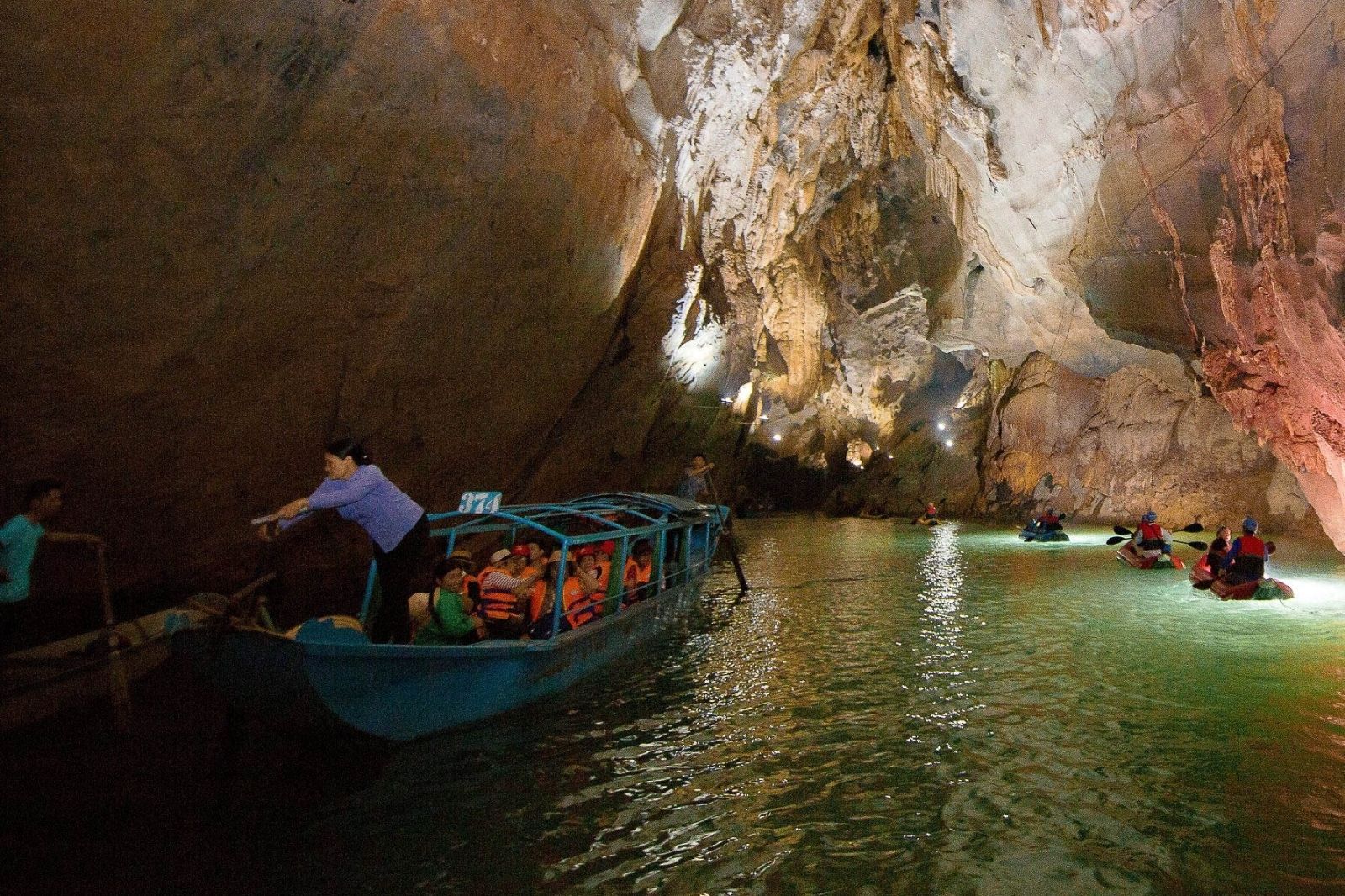
To access the beauty inside, visitors are required to travel by boat on the Son River. This river serves as the main waterway, leading straight to the towering cave entrance, about 10 meters high, marking the entry into the karst cave world. Phong Nha Cave is a masterpiece formed through complex geological processes, estimated to be over 400 million years old dating back to the Paleozoic Era. The cave boasts an astonishing total length of up to 7,729 meters.
Structurally, Phong Nha Cave includes:
A complex of over 20 large and small cave chambers.
The main corridor open for tourism, which is approximately 1,500 meters long.
The space inside the cave changes dramatically and impressively:
Outside, the cave ceiling maintains a height of about 10 meters above the water surface.
However, going deeper inside, from the fourth chamber onwards, the space expands unexpectedly. The cave ceiling soars from 25 to 40 meters, creating a majestic and overwhelming feeling.
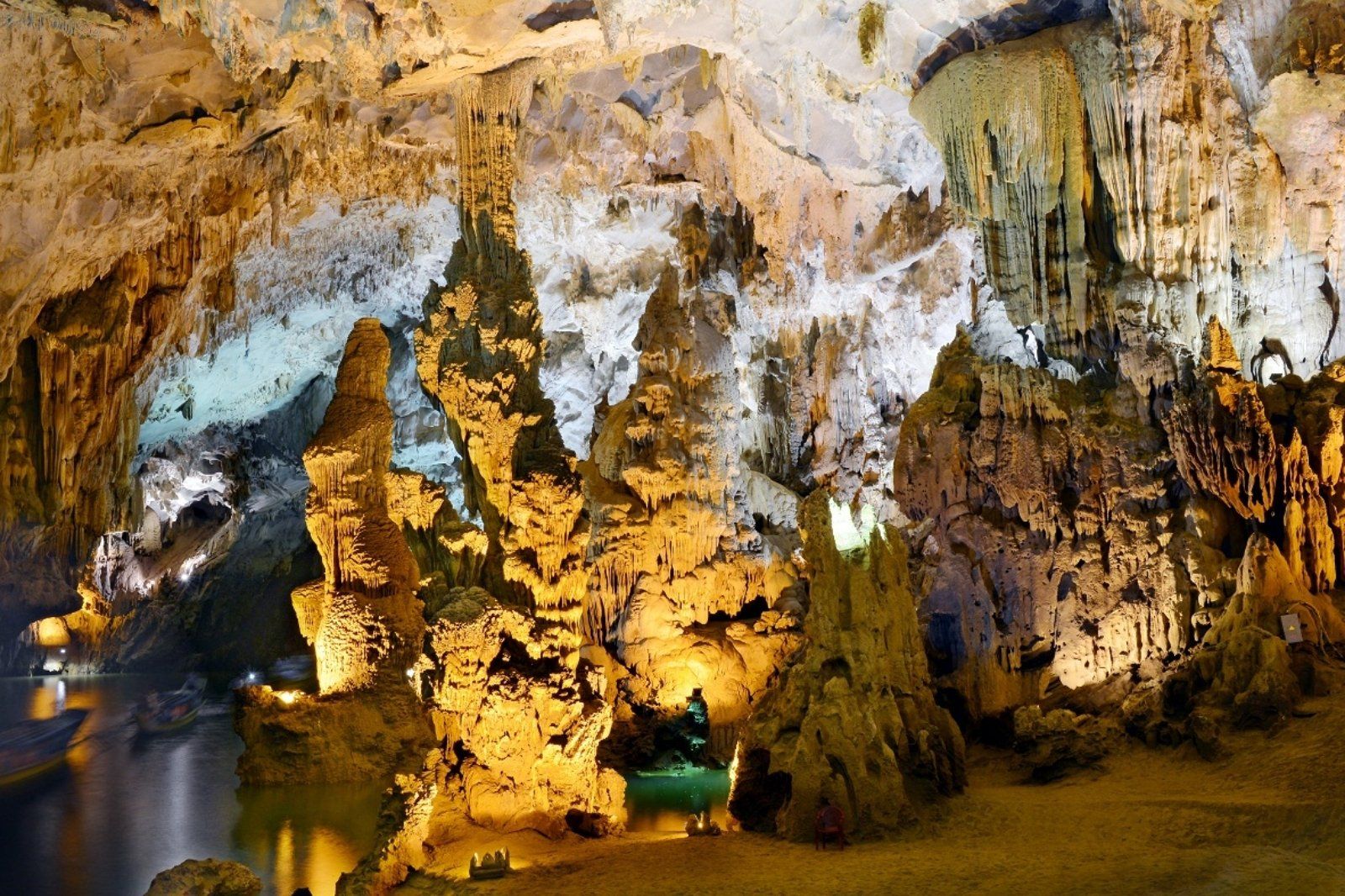
The unique character and vibrancy of Phong Nha are maintained thanks to the ongoing process of limestone weathering. Geological structures such as stalactites, stalagmites, and stone drapes are continuously created and altered over time, proving nature's tireless activity.
Photo: Stalactite system formed over millions of years
Hidden deep inside the cave is an underground river system nearly 13,969m long, a silent stream that brings a cool and magical sensation. Phong Nha Cave is divided into two distinct parts: the dry cave and the wet cave. Each part possesses a unique, enchanting beauty that leaves anyone who visits lingering in awe.
3. How to travel from Dong Hoi to Phong Nha Cave
To get to Phong Nha Cave, visitors usually start their journey from Dong Hoi City, the largest city nearest to the national park. Here are the modes of transportation:
Bus: There are buses running from central Dong Hoi to Phong Nha like route B4, taking over an hour with departures every 45 minutes. This is a cost-effective option suitable for travelers who want to experience local public transport; however, it takes more time due to passenger drop-off and pick-up stops.
Tourist car or private car: Visitors can rent a private car or join a tour from Dong Hoi. This option offers comfort and flexibility with timing, especially suitable for large groups or families.
Motorbike: If you love freedom and scenic roadside views, renting a motorbike in Dong Hoi is an exciting choice, costing only from 130k to 200k VND. The road to Phong Nha is quite easy to travel and very scenic; however, make sure you are a confident rider and prioritize safety.
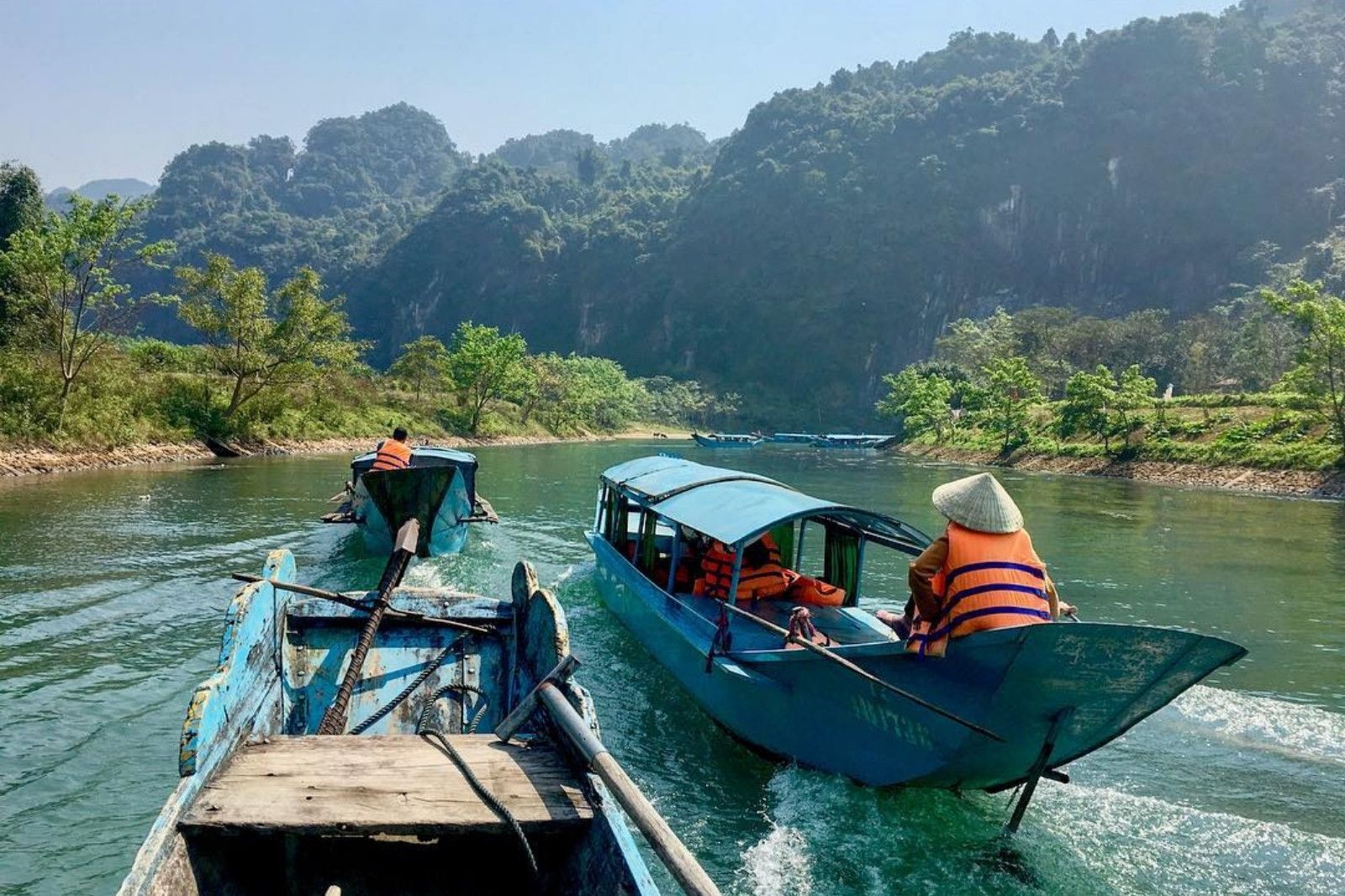
Upon arriving at Phong Nha boat dock, to enter Phong Nha Cave, you need to take a boat ride along the Son River. The boat journey usually takes about 30 minutes, carrying visitors past riverside landscapes featuring lush green cornfields and rustic local houses.
Photo: Easily travel to Phong Nha by various means of transportation
4. What makes Phong Nha Cave special?
Phong Nha Cave stands out with a series of special records such as the most beautiful underground river, the highest and widest cave entrance, the finest sand and rock beaches, the largest and most beautiful dry cave, the most magnificent stalactites, the longest water cave, and the clearest underground lake. The space inside the cave is adorned with countless magical stalactites and stalagmites, alongside underground corridors hundreds of meters long, creating a mystical scenery matched by few places. The chambers bear poetic names like Cung Dinh (Royal Court), Bi Ky (Inscription), and Co Tien (Fairy), each evoking a fascinating fairytale story.
Phong Nha Cave has a stable temperature ranging from 18 to 20°C, remaining cool year-round and ideal for visiting in any season. However, during the rainy season from September to November, rising water levels on the Son River may cause some areas inside the cave to flood, restricting sightseeing. For visitors' convenience, the cave is equipped with a sturdy wooden walkway system that is easy to navigate and safe, even for large groups.
Photo: Learn about Phong Nha Cave
5. The history of formation and naming of Phong Nha Cave
Phong Nha Cave was formed during the Late Ordovician period (about 450 million years ago), through phases of rifting and tectonic faulting in the Tertiary period (35 million years ago). The process of limestone dissolution by underground water created a complex cave system, with the Son River as its main "lifeline".
The name "Phong Nha" originates from local dialect, meaning "wind through teeth" referring to the strong airflow from the cave entrance. Historical records show Duong Van An mentioned the cave in 1550, and King Minh Mang bestowed the title "First Cave of the Southern Sky" in 1824. In 1991, a British-Vietnamese expedition team fully explored it, opening the era of modern tourism. Furthermore, the cave once served as a refuge for King Ham Nghi against French colonial forces, adding historical and cultural value.
Photo: Important notes when visiting Phong Nha Cave
6. The best time to visit Phong Nha Cave
The prime time to explore Phong Nha Cave is from March to August – the dry season with little rain, where outdoor temperatures reach 30–36°C while inside the cave remains a cool 20–21°C. During this time, the Son River's water level is low, making it easy to travel by boat and observe stalactites clearly. Avoid the rainy season (September to February) due to slippery paths and flooding risks.
If visiting from April to June, you also have the chance to participate in local festivals and avoid the peak summer crowds. Always check the weather forecast before leaving to ensure a smooth trip.
7. Experiencing Phong Nha Cave by boat
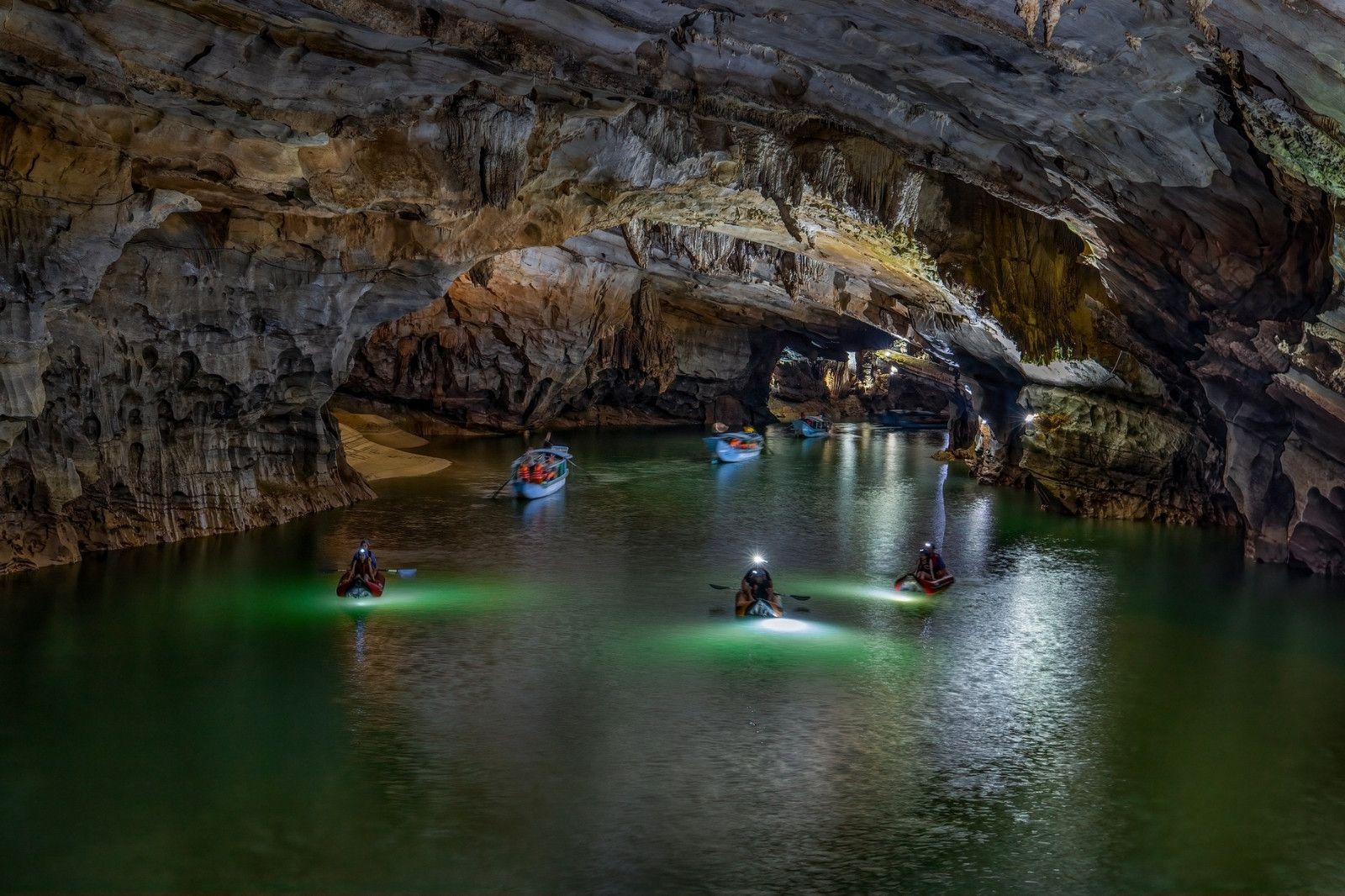
The experience considered the most impressive highlight when visiting Phong Nha Cave is the boat trip along the Son River, carrying visitors about 1.2 km deep into the heart of the cave. Wooden boats hand-rowed by local fishermen glide silently across clear blue waters, flanked by towering limestone cliffs, creating a scenery both majestic and pristine. The tranquil atmosphere, punctuated by the sound of wind echoing inside the cave—the origin of the name "Phong Nha"—provides a unique feeling rarely found anywhere else.
After docking, visitors continue on foot for about 500 meters to admire the magical stalactite system, illuminated by LED lights that accentuate uniquely shaped natural rock formations. The entire journey lasts around 2 hours, perfectly suited for a light, safe adventure suitable for all ages, from families with young children to seniors.
Photo: Experience visiting Phong Nha Cave by boat
8. Is Phong Nha Cave suitable for children and the elderly?
Phong Nha Cave is considered highly suitable for families with children and elderly members thanks to sightseeing primarily by boat on the Son River, featuring a gentle itinerary with no climbing or strenuous activity required. Young children are often excited by the feeling of taking part in a "river adventure", while being captivated by the shimmering light reflecting off stalactite formations inside the cave. For seniors, sitting comfortably on the boat makes the trip relaxing and less exhausting.
However, families should keep a few important points in mind: children under 5 need close supervision from adults, while elderly visitors should check their cardiovascular health before the trip due to high humidity inside the cave (around 95%) and a few short walking sections after landing.
Photo: Phong Nha Cave is suitable for families with young children and the elderly
In addition to its natural beauty, Phong Nha Cave serves as a gateway to explore other caves within Phong Nha - Ke Bang National Park, creating an attractive exploration journey for tourists. This destination not only offers a nature experience but also an opportunity to learn more about the region's ancient geological history.
Phong Nha Cave is not just a cave, but a natural wonder where you can admire nature's majestic and mysterious beauty. With its convenient location in former Quang Binh, you can easily reach it from Dong Hoi and embark on a memorable exploration journey. If you are planning your trip, contact Sovaba Travel for the most professional and safe Phong Nha Cave tour experiences.