|

Back Home

Who Discovered Phong Nha Cave? Unveiling Its Formation Process

Central

Quang Binh

Phong Nha Cave

Sovaba.travel

Updated at: 28/08/2026

1. Who discovered Phong Nha Cave?

Phong Nha Cave was not a sudden discovery, but rather the result of generations of human approach and exploration. According to historical records, the ancient Champa people are considered the first to discover and use this cave thousands of years ago, when the land of Quang Binh still belonged to the Champa Kingdom (from the 2nd century to 1832). Evidence includes ancient Champa inscriptions carved into the cliff walls inside the cave, showing that they regarded this place as a religious site and shelter.

By the 16th century, Duong Van An – a Vietnamese scholar – became the first person to write about Phong Nha Cave in his 1550 work "O Chau Can Luc". He described it as a magnificent cave with an underground river and shimmering stalactites. However, it was not until the late 19th century that the French priest Léopold Michel Cadière truly put the cave on the modern exploration map. In 1899, he explored the Cham inscriptions and honored Phong Nha as the "Number One Cave of Indochina". Later, British explorer Barton (1924) and British-Vietnamese survey teams starting in the 1990s contributed to clarifying the cave's scale.

In short, Phong Nha Cave was first discovered by the ancient Champa people, but Western and Vietnamese explorers brought it into the light of science.
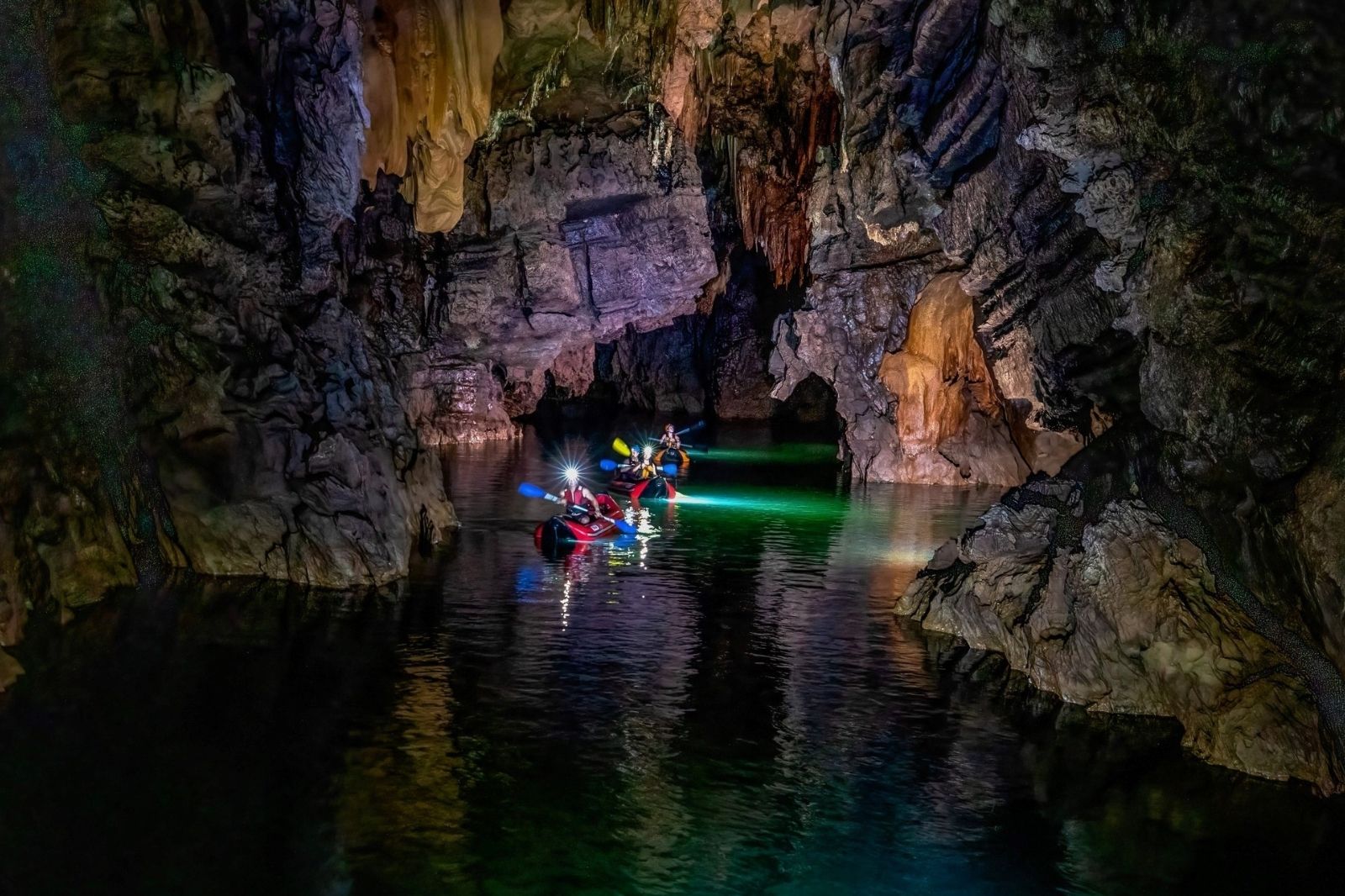
Phong Nha Cave existed long before it was discovered
Photo: Phong Nha Cave existed long before it was discovered

2. When was Phong Nha Cave discovered?

The history of Phong Nha Cave's discovery spans many periods, starting from ancient times. Traces of Champa inscriptions show that the cave was known since the time of the Champa Kingdom, around the 2nd to 19th centuries. By 1550, Duong Van An made the first written record in Vietnamese literature, describing the cave under names such as Thay Tien Cave or Trooc Cave.

The modern era began in the late 19th century: In 1899, Léopold Cadière explored and published discoveries regarding Cham relics. In 1924, Barton surveyed for 14 days and compared the cave to world-famous caves like Padirac (France) or Drach (Spain). In 1935, a local resident accidentally discovered a dry cave 1,000m from the main entrance. By the 1990s, British expedition teams collaborated with Hanoi University of Science to accurately measure the cave's length up to 7,729m, with an underground river 13,969m long.

This process was not just a discovery, but also an expansion of awareness regarding the cave's scale through each historical phase.

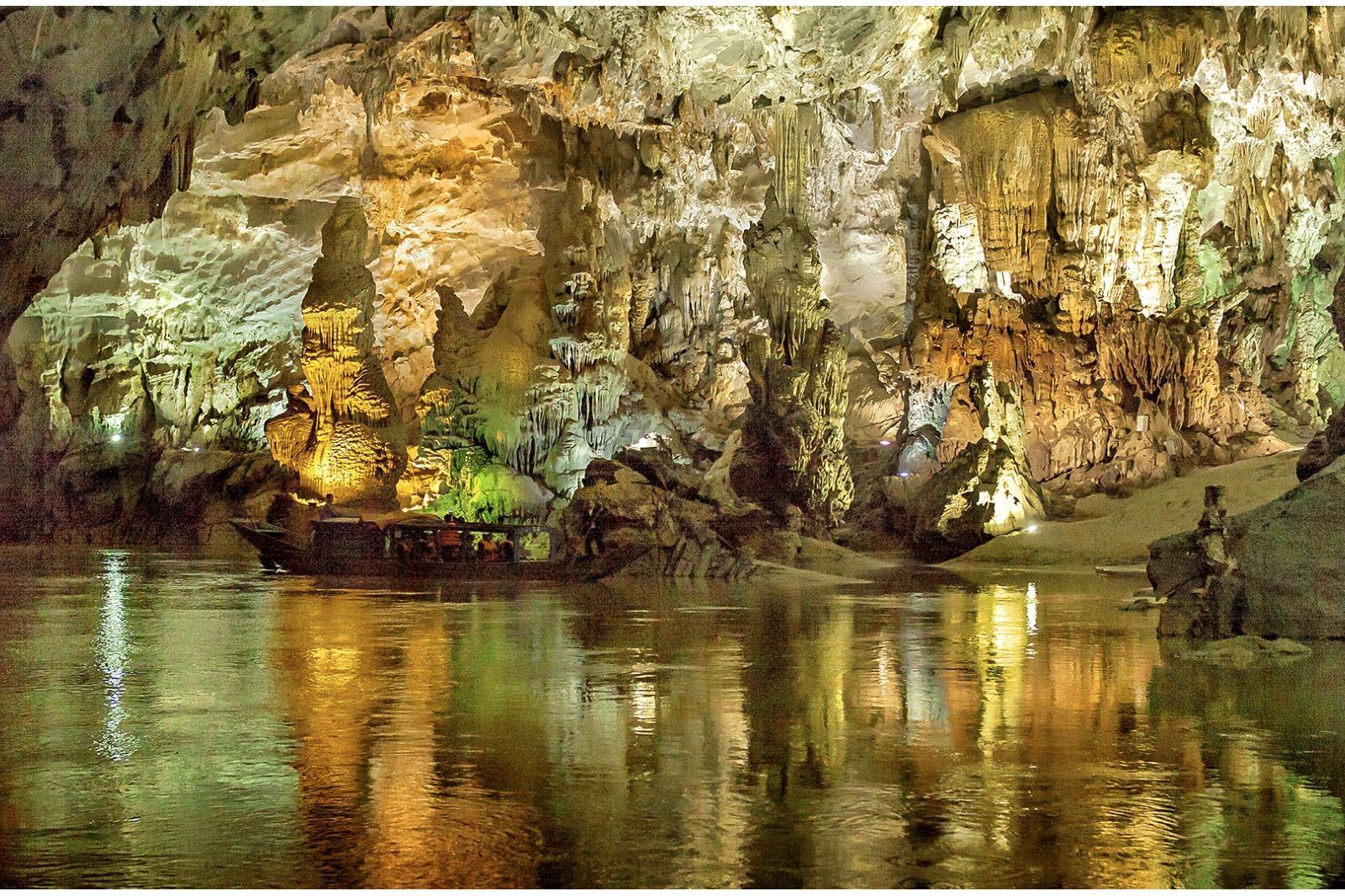
Phong Nha Cave was formed from limestone blocks dating back about 400 million years
Photo: Phong Nha Cave was formed from limestone blocks dating back about 400 million years

3. Local people and the initial discovery of Phong Nha Cave

The local people of Quang Binh, especially the Champa community and ethnic minority groups, played an important role in the history of Phong Nha Cave. Since ancient times, the Cham people used the cave as a place of worship and shelter, leaving behind stone steles and inscriptions – vivid evidence of cultural marks. Bi Ky Cave (or Bi Ky Grotto) is the place preserving 97 ancient Cham scripts, discovered by Cadière in 1899.

Into the 20th century, local residents continued to contribute. In 1935, a local resident accidentally found a dry cave at an altitude of 200m, expanding the scope of exploration. During Vietnam's resistance wars, the cave served as a shelter and logistics base for civilians and troops, with bomb marks still visible at the cave entrance. More recently, Mr. Ho Khanh – a Phong Nha local – contributed to the discovery of Son Doong Cave (2009), part of the Phong Nha - Ke Bang system, proving the indispensable role of the local community in preservation and exploration.

4. The role of explorers in researching Phong Nha Cave

Western and Vietnamese explorers elevated Phong Nha Cave from a local cavern into a world heritage site. Priest Léopold Cadière (1899) was a pioneer who explored Cham relics and published its cultural values. He ventured 600m inside by dugout canoe, discovering stone steles and Cham brick altars.

In 1924, British explorer Barton spent 14 days surveying, rating the cave on par with world wonders. In the 1990s, Howard Limbert led the British-Vietnamese expedition team, collaborating with Hanoi University of Science to conduct detailed measurements and determine the cave's length up to 10,130m (later adjusted to 7,729m). They also discovered additional sub-caves such as Tien Cave and Paradise Cave (2005).

Leopold-Michel-Cadiere-la-nguoi-dau-tien-tien-hanh-nghien-cuu-khoa-hoc-ve-dong-phong-nha.jpg
Photo: Léopold Michel Cadière was the first person to conduct scientific research on Phong Nha Cave

5. The scientific survey process of Phong Nha Cave through various stages

The survey process of Phong Nha Cave can be divided into main phases, reflecting advancements in geological science:

  • Ancient Period (2nd-19th centuries): The Cham people conducted preliminary exploration by carving inscriptions and building altars, treating the cave as a religious site.
  • Colonial Period (Late 19th - Early 20th centuries): Cadière (1899) and J. Pavis surveyed cultural aspects, discovering Cham brick altars. Barton (1924) focused on geology and preliminary measurements.
  • Modern Period (1935-1990): Discovery of the dry cave (1935). In 1990, the British-Vietnamese team surveyed comprehensively, using modern measurement technology to identify underground rivers and stalactites.
  • Contemporary Period (Since 1995): Following tourism commercialization (1995), international projects such as FFI (1998) and Germany (2005) supported conservation. In 2009, the discovery of Son Doong expanded the system. Geological studies confirmed the cave formed starting 400 million years ago across 5 major tectonic phases: Ordovician-Silurian, Devonian, Carboniferous-Permian, Mesozoic, and Cenozoic.

This process is not only scientific but also supports sustainable tourism, helping protect a diverse ecosystem.

6. How did Phong Nha Cave become known to the world?

Phong Nha Cave stepped onto the world stage thanks to a combination of scientific discovery and international recognition. Initially, through reports by Cadière (1899) and Barton (1924), the cave was introduced in European journals as the "Number One Cave of Indochina". In 1990, British expedition teams released detailed data, attracting international media attention.

A major milestone occurred in 2003, when UNESCO recognized Phong Nha - Ke Bang National Park as a World Natural Heritage Site for its geological value and biodiversity. In 2009, the discovery of Son Doong (the world's largest cave) was covered by National Geographic, BBC, and NHK, turning Phong Nha into a tourism hotspot. In 2015, UNESCO expanded its recognition criteria for cultural and biological values.

Phong Nha Cave has undergone a process of continuous expansion and change over millions of years
Photo: Phong Nha Cave has undergone a process of continuous expansion and change over millions of years

Understanding the origin, history, and formation process of Phong Nha Cave not only makes your trip more meaningful, but also makes every step inside the cave deeper. For every stalactite formation and underground river branch carries within it layers of time's sediment and stories of ancient nature. To not just "go" but also "understand", a well-organized guided tour with expert guides from Sovaba Travel will be the doorway to an authentic experience. Beyond taking you to the most beautiful spots, a Phong Nha Cave tour helps you connect with the cultural, historical, and scientific values that a solo journey could hardly provide.

Loading......

Featured destinations