Discover 5 Top Tourist Attractions Near Dong Ba Market for a Complete Trip

Central

Thua Thien Hue

Dong Ba Market

Sovaba.travel

Updated at: 24/09/2026

1. Truong Tien Bridge

Truong Tien Bridge (also known as Trang Tien Bridge) is located right next to Dong Ba Market, only about 200 meters away, spanning the Perfume River. Built from 1897-1899 under the reign of King Thanh Thai, the bridge was originally named Thanh Thai, then renamed several times through historical periods, including Clemenceau during the French colonial era and finally Trang Tien since 1975. With a length of 402.6 meters and a width of 6 meters, the bridge features a European Gothic design with 6 comb-shaped steel spans, making it the first bridge in Indochina constructed using Western techniques.

The highlight of the bridge is its colorful illumination system, especially sparkling at night, changing from pink, blue to white. The bridge was severely damaged during wars, collapsing three times between 1899 and 1968, and underwent major restoration in 1991. Today, both sides of the bridge have pedestrian paths for locals and tourists, making it an ideal place to admire the Perfume River, take sunset photos, or stroll in the evening.

Note: Visit at sunset (around 5-7 PM) to enjoy the romantic atmosphere, or combine it with the night market at the foot of the bridge to enjoy fresh seafood. Crossing the bridge is free of charge, but if you go by motorbike, park near the market for convenient walking. The best season to visit is from September to November, when the weather is cool and pleasant with less rain.
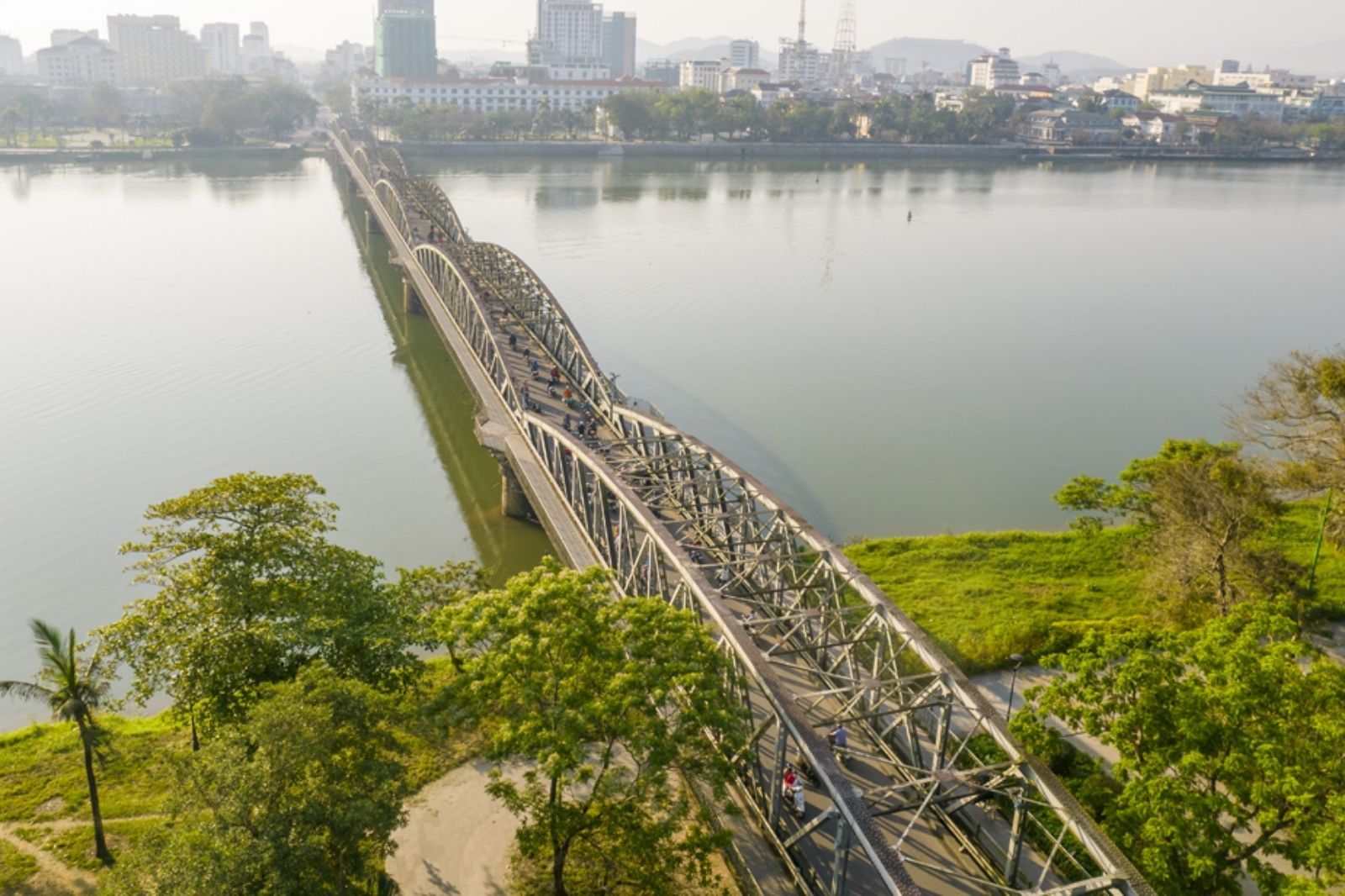
Truong Tien Bridge
Photo: Truong Tien Bridge 

2. Perfume River

Perfume River flows right next to Dong Ba Market, with the market located on the north bank of the river. Just a few steps away, you can easily access it from the market to admire the river or join a boat tour. The river is about 80 km long, originating from the Truong Son mountains, flowing through Hue, and emptying into Tam Giang Lagoon. The name "Huong" (Perfume) comes from the fragrant flowers falling into the river from upstream, especially in autumn, creating a charming aroma.

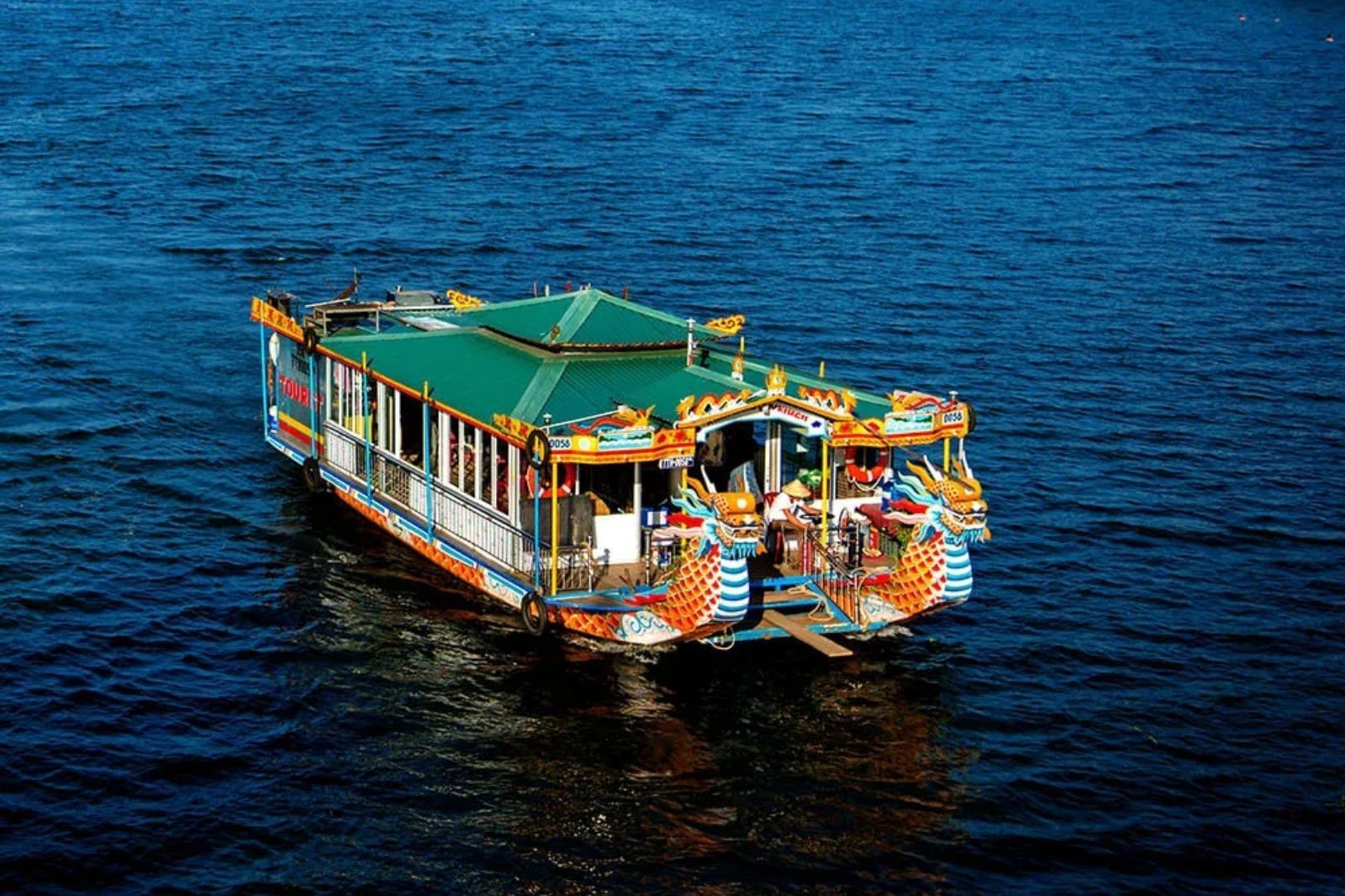
The Perfume River is not only a symbol of nature but also closely linked to the history and culture of Hue, flowing past the Nguyen Dynasty royal tombs and hosting festivals such as the Hue Festival. Visitors can join a dragon boat cruise to listen to Hue folk singing – a distinctive folk art form performed by artists on the boat.

Note: Join a late afternoon boat tour (about 1-2 hours, price from 100,000-200,000 VND/person) to listen to Hue folk singing and enjoy afternoon tea. The ideal season is from January to April, when the weather is cool with little rain. If you prefer peace and quiet, take a walk along the riverbank near the market for free sightseeing. Combine with Perfume River festivals in even-numbered years for a full experience.

Tourists can experience a Perfume River boat cruise

Photo: Tourists can experience a Perfume River boat cruise

3. Imperial City of Hue

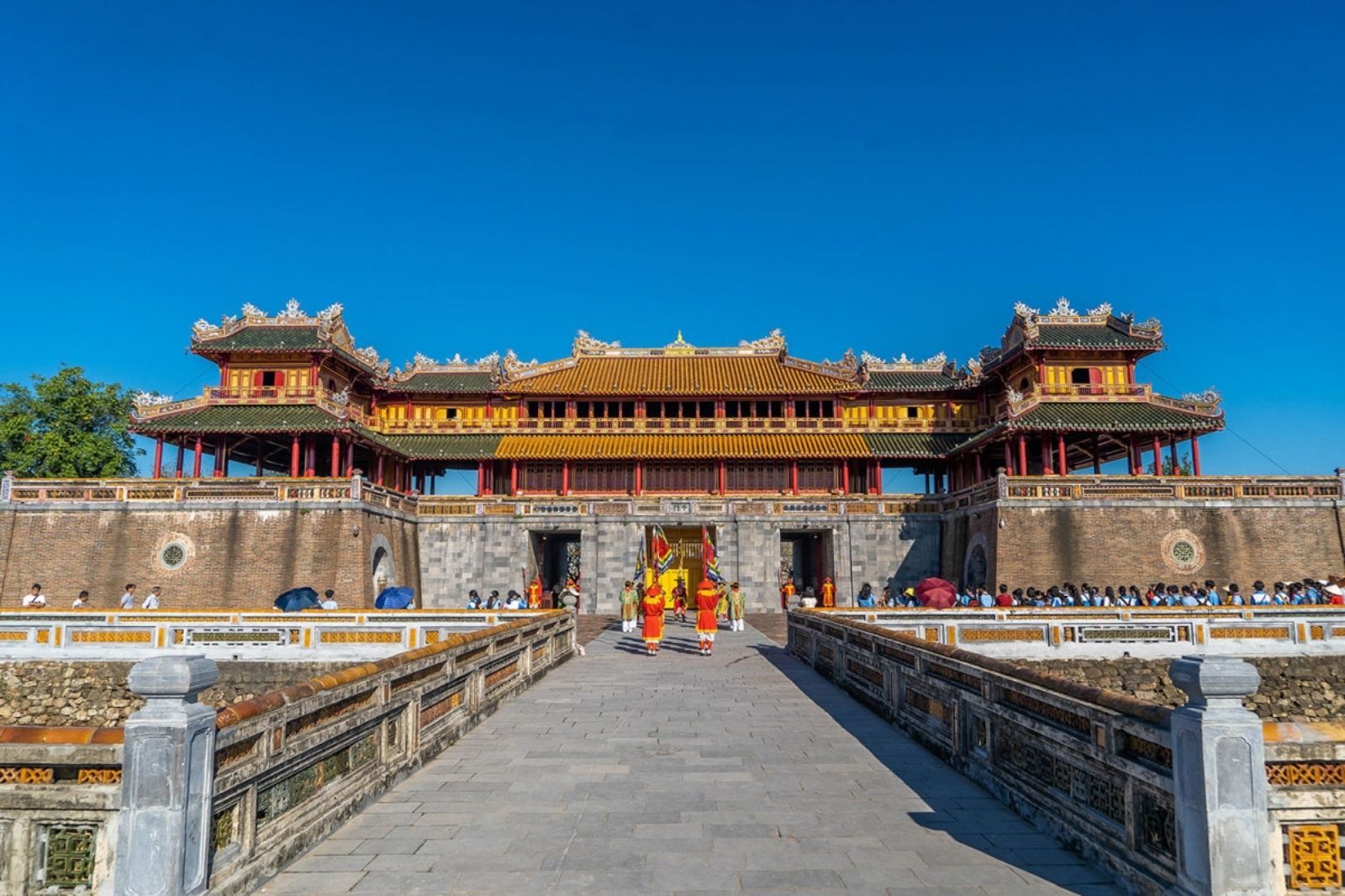
Hue Imperial City (Hue Citadel) is a prominent destination belonging to the Complex of Hue Monuments, recognized by UNESCO as a World Cultural Heritage site. Located just a few minutes away from Dong Ba Market, visitors can easily combine both into the same itinerary. This was once the political and cultural center of the Nguyen Dynasty with a system of palaces, temples, and gardens that are well-preserved. Visiting the Imperial City, you will have the opportunity to explore iconic structures such as Ngo Mon Gate, Thai Hoa Palace, the Forbidden Purple City, and many other outstanding royal architectural works.

Note: Entrance fee is 200,000 VND/adult, open from 7:00 AM to 5:00 PM. Hire a tour guide (about 300,000 VND/group) for a deeper understanding of history. Explore early in the morning to avoid the heat, and spend 3-4 hours. 

Hue Imperial City

Photo: Hue Imperial City 

4. Hue Museum of Royal Antiquities

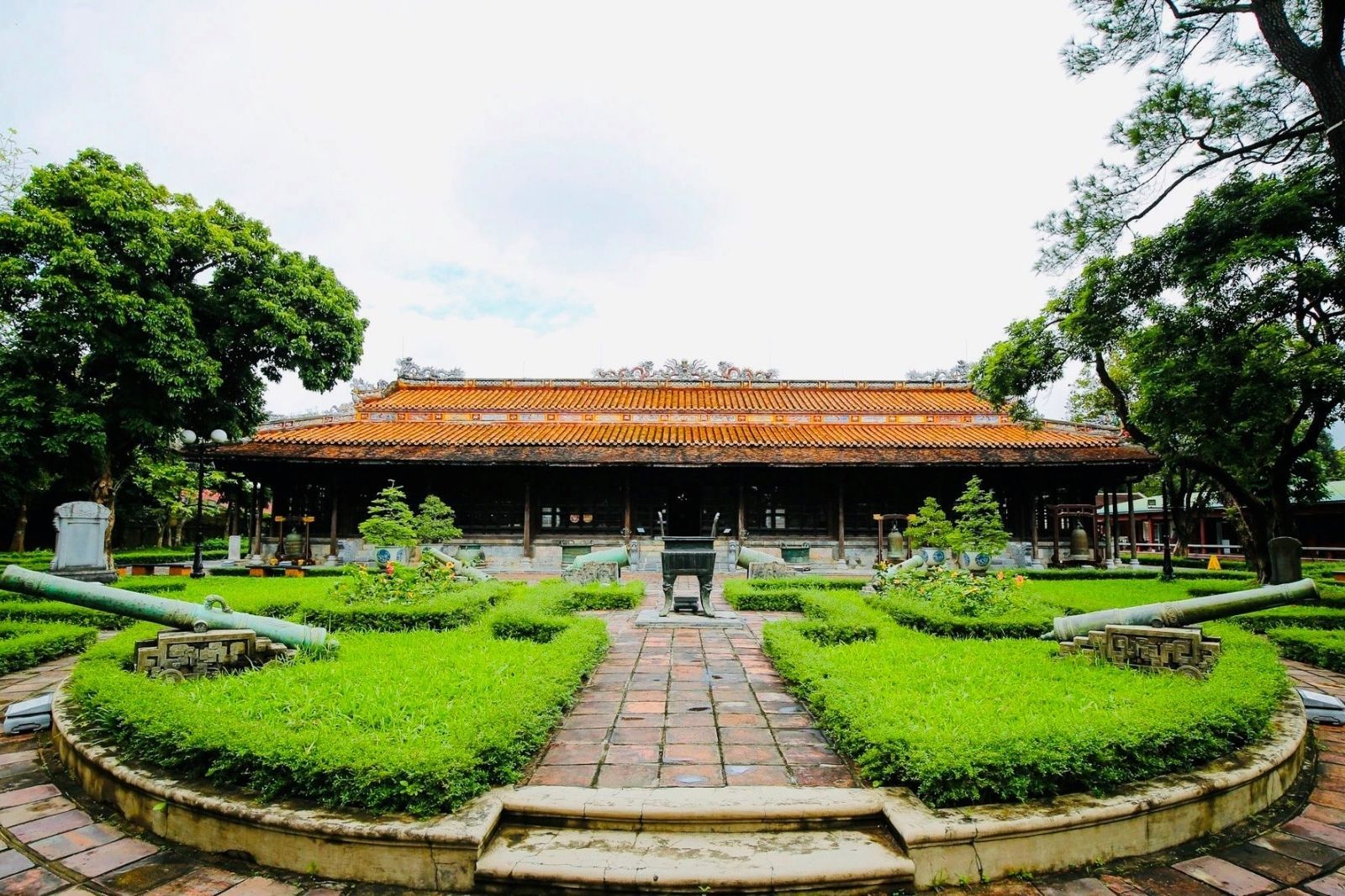
Hue Museum of Royal Antiquities is located about 1.5 km from Dong Ba Market, inside the Imperial City area but with a separate entrance. Established in 1923 during the reign of Khai Dinh, the museum is housed in Long An Palace – one of the most beautiful palaces in Vietnam, featuring 128 precious wooden pillars carved with poems and the four sacred mythical creatures (Dragon-Unicorn-Turtle-Phoenix).

The museum preserves many precious artifacts from the Nguyen Dynasty, including porcelain, royal attire, French enamelled ware (Phap Lam), bronzeware, and Champa statues. The collections reflect court life, from royal garments to daily utensils, with many items originating from China, Japan, and France.

Note: Ticket price is 50,000 VND/adult, open from 6:30 AM to 5:30 PM in summer. Spend 1 hour exploring, paying attention to special exhibitions like "Treasures of the Nguyen Dynasty". Combine with the Imperial City to save time. No flash photography to protect the artifacts.

Hue Museum of Royal Antiquities
Photo: Hue Museum of Royal Antiquities

5. Quoc Hoc Hue National High School

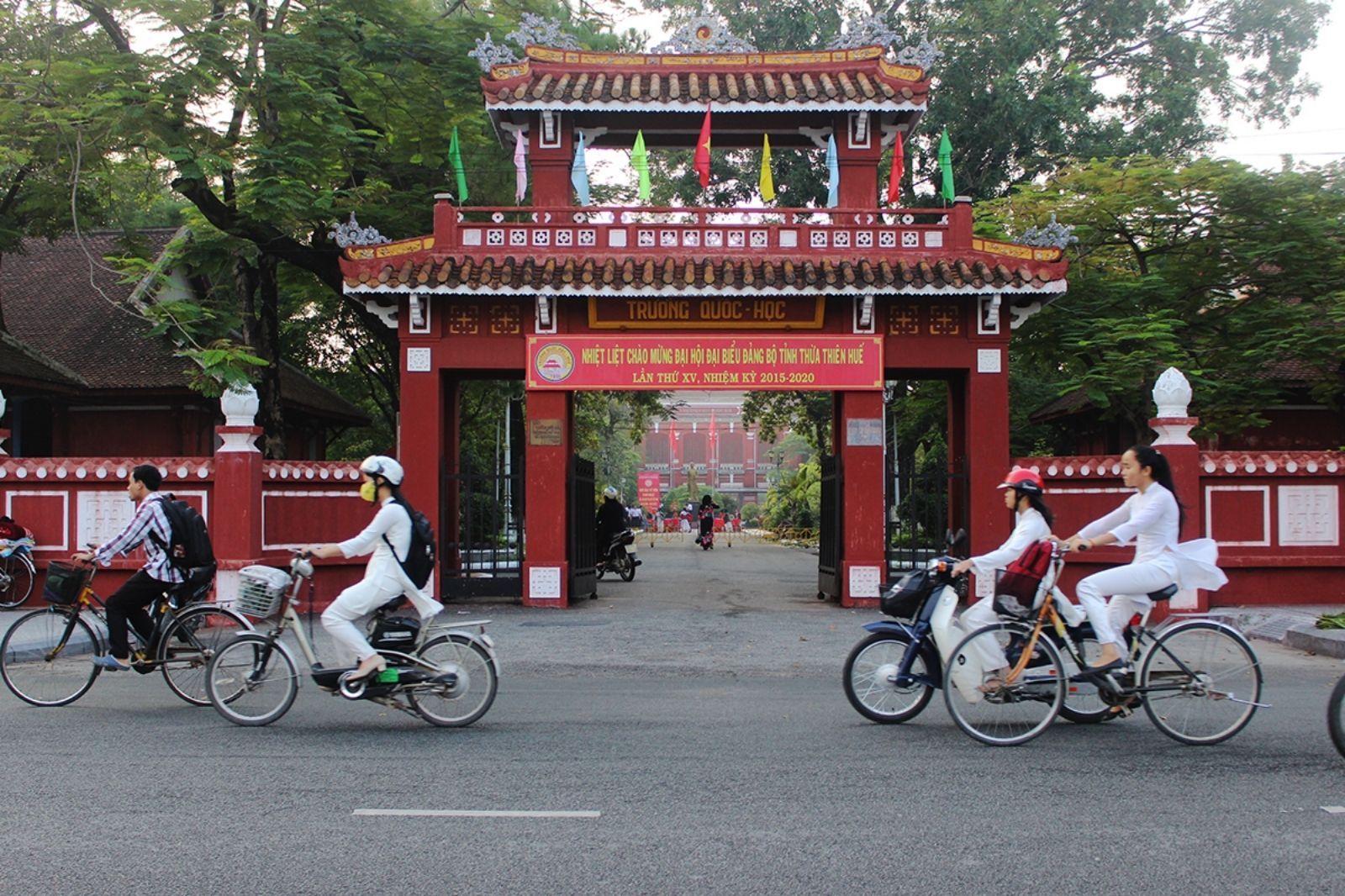
Quoc Hoc Hue High School is located about 500 meters from Dong Ba Market, right on the bank of the Perfume River. Founded in 1896 under the reign of King Thanh Thai, it is one of the three oldest high schools in Vietnam, originally built for children of royalty and high-ranking officials. Featuring characteristic red French colonial architecture, a spacious campus with a football field, swimming pool, and a statue of President Ho Chi Minh, the school was the learning place of many famous leaders such as Ho Chi Minh, Vo Nguyen Giap, and Pham Van Dong.

Today, it is one of the top specialized high schools in Vietnam, with more than 17 international Olympic medals. The green campus is especially beautiful during the pink shower tree season, known as the "season of pink clouds".

Note: Free admission, but visit only after school hours (after 5:15 PM) or on weekends to avoid disturbing classes. Take a stroll to admire the architecture and chat with students. The best season is spring when the flowers are in full bloom.

Quoc Hoc Hue High School
Photo: Quoc Hoc Hue High School 

Exploring Dong Ba Market and surrounding tourist destinations not only helps you better understand the daily life of Hue locals, but also opens up a colorful cultural journey, from rustic dishes and historical stories to the signature slow-paced lifestyle of the ancient capital. And to make your trip as complete, convenient, and rich in experience as possible, you can choose a Dong Ba Market tour with Sovaba Travel. With a well-designed itinerary, knowledgeable local guides, and many exciting experiences, the tour will take you from strolling through the market and enjoying cuisine to discovering prominent landmarks just steps away.

Loading......

Featured destinations