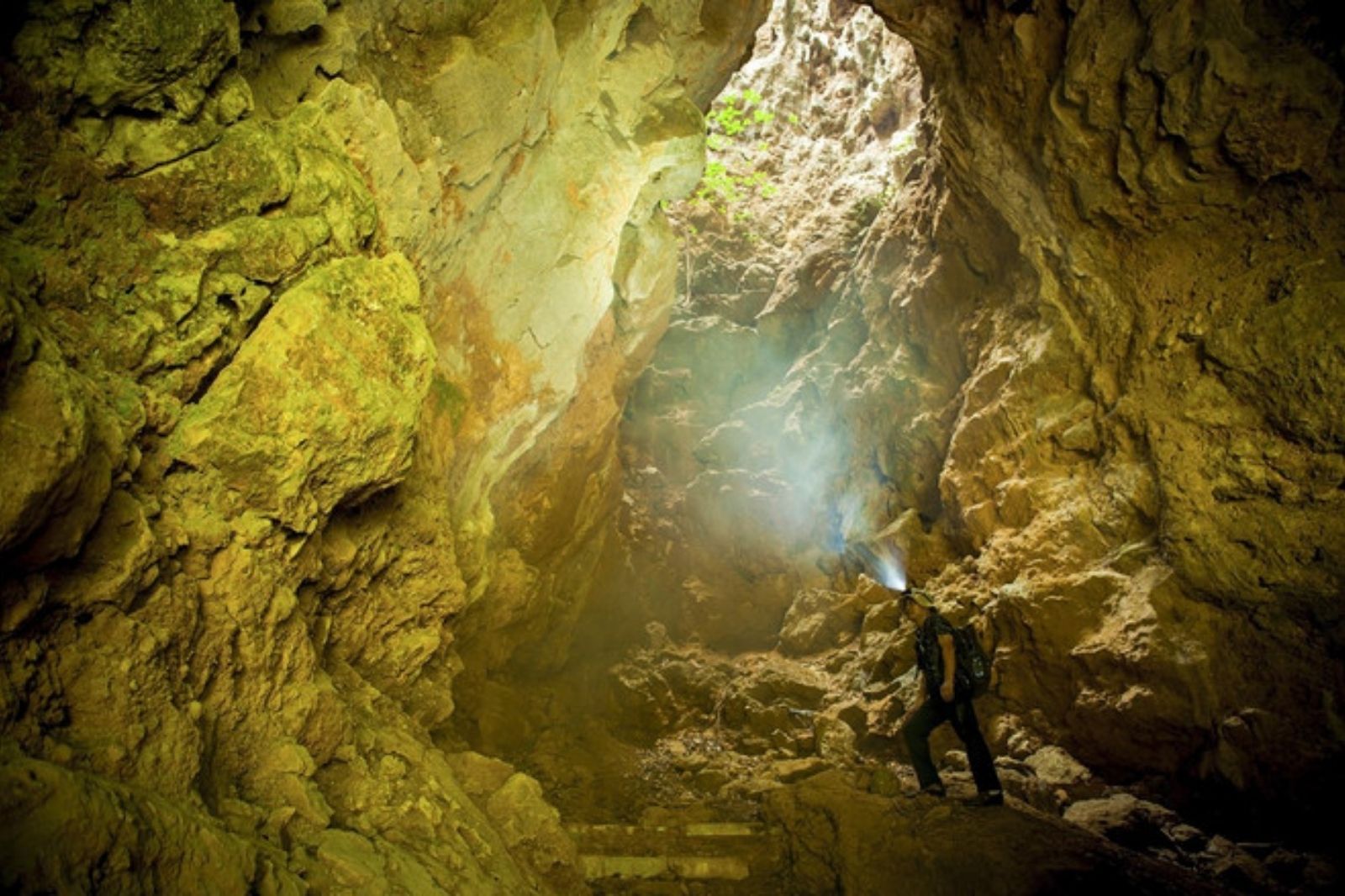
Tam Cốc is located in Văn Lâm village (or Đam Khê), Ninh Hải commune, Hoa Lư district, Ninh Bình province, about 7km from Ninh Bình city center and around 100km from Hanoi. The area covers a natural space of about 350.3 hectares, featuring typical karst topography: limestone mountains, rivers, caves, and rice fields.
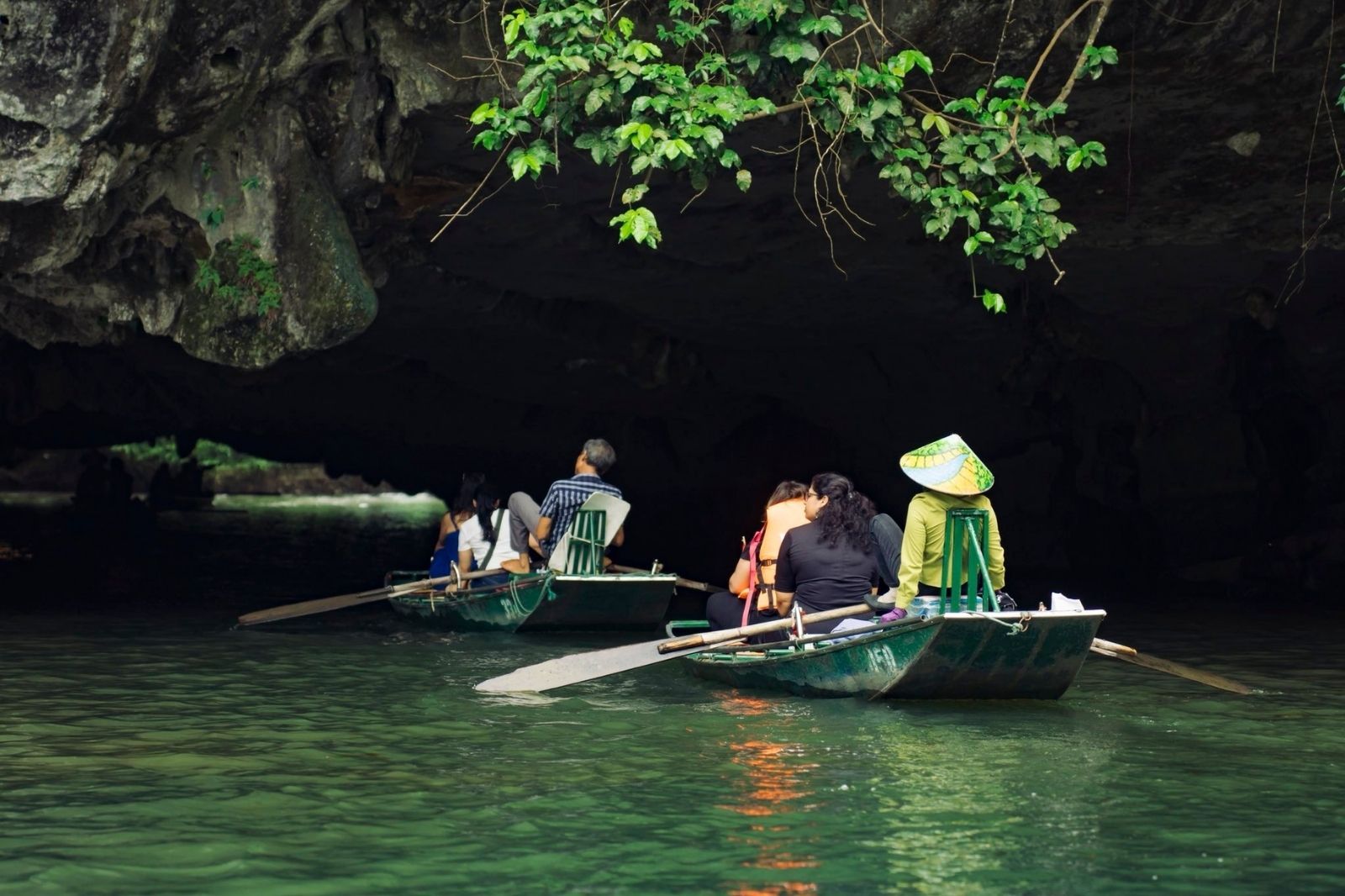
The Ngô Đồng River is the "main character", winding through three mountains to create three caves. The boat journey usually lasts 1.5–2 hours (round trip), starting from Văn Lâm pier. Visitors sit on hand-rowed sampans navigated by locals, taking in the scenery while listening to folklore about the stalactites.
Highlights:
- Water-through cave system (boats pass directly through the heart of the mountains).
- Stalactites in diverse, intricate shapes.
- Seasonal landscape changes: green rice fields (January–April), golden ripe rice (May–June), or peaceful high-water seasons.
- Connection to historical relics of the Trần Dynasty (Thái Vi Temple, Vũ Lâm Royal Step-Over Palace).
Historically, Tam Cốc is not only a natural wonder but also closely associated with cultural heritage sites. This area was once part of the Hoa Lư ancient capital – the first capital of Đại Việt in the 10th century. The caves and limestone mountains here witnessed numerous historical events while preserving cultural values through ancient pagodas like Bích Động Pagoda – a pagoda built in the 17th century on a mountainside with architecture blending nature and man-made creation. Tam Cốc's geography is characterized by karst landforms, with winding rivers flowing past mountain ranges, rice fields, and shimmering stalactite caves, creating a majestic yet romantic natural landscape.