Discovering Ho Quyen Arena: The Site of Legendary Elephant vs. Tiger Battles

Central

Thua Thien Hue

Thuy Bieu Village

Sovaba.travel

Updated at: 24/09/2026

1. History of Ho Quyen Tiger Arena

Ho Quyen Arena was not built spontaneously, but was the result of an elephant-tiger fighting tradition dating back to the time of the Nguyen Lords (1558–1775). According to historical records, the first recorded match occurred in 1750 under Lord Nguyen Phuc Khoat: on Da Vien Island on the Perfume River, 40 elephants defeated 18 tigers in front of the Lord and royal courtiers. Initially, these duels held ritualistic significance to pray for national peace, but gradually evolved into a form of royal entertainment reserved exclusively for the aristocracy.

However, hosting these events outdoors presented many dangers. During King Gia Long's reign, a tiger once escaped its tether and killed an elephant keeper. In 1829, during the Tu Tuan Dai Khanh ceremony, King Minh Mang witnessed firsthand a tiger charging directly toward his royal dragon boat on the north bank of the Perfume River. Fortunately, the incident was prevented, but it prompted him to construct a dedicated arena to ensure safety.
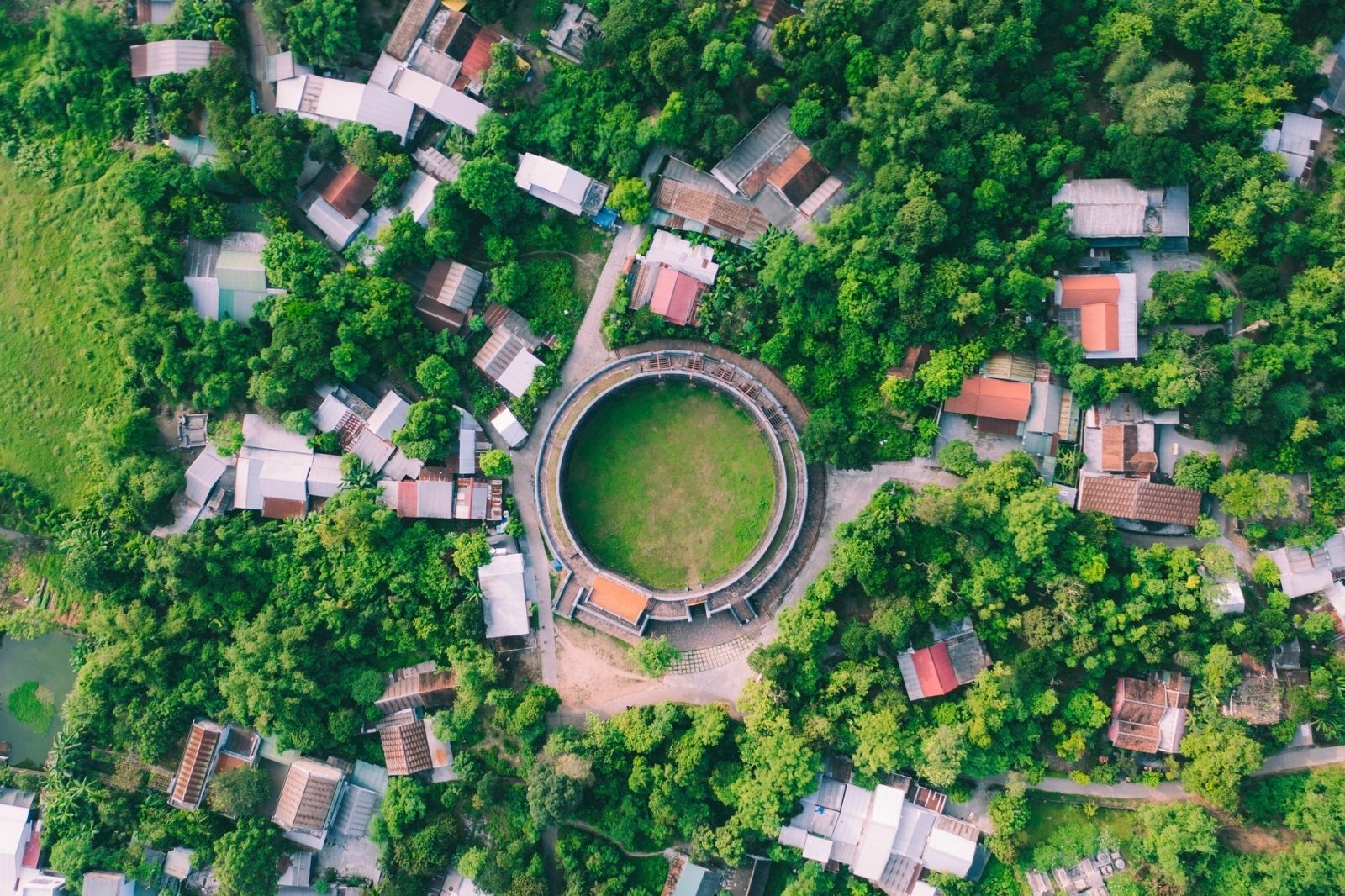
Ho Quyen Arena was built during the reign of King Minh Mang
Photo: Ho Quyen Arena was built during the reign of King Minh Mang 

In 1830 (Canh Dan year), King Minh Mang had Ho Quyen built in Truong Da hamlet, Nguyet Bieu village (now Thuy Bieu ward, Hue City), about 4 km west of the Citadel. This structure served both to maintain the fights and to act as a symbol of royal power, with matches held annually or at the king's pleasure. The last battle took place in 1904 under King Thanh Thai, ending a tradition that lasted over 150 years.

Today, Ho Quyen Arena is a national monument within the Complex of Hue Monuments—a UNESCO World Cultural Heritage site recognized in 1993. Thanks to a restoration project from 2019 to 2022, the structure has been restored almost to its original condition, serving as vivid evidence of a special court culture of the Nguyen Dynasty.
2. Unique architecture of the Vietnamese 'Colosseum'

One of the elements making Ho Quyen Arena special is its open-air ring-shaped architecture—a rare design in Vietnam reminiscent of the ancient Roman Colosseum. The entire structure was built from large bricks, compacted earth, laterite stone, and lime mixed with molasses, ensuring durability across centuries.

  • Main structure: The arena features two concentric surrounding walls. The inner wall is 5.8–5.9m high and about 4.5m thick, enclosing a circular arena bowl with a diameter of 44m—where the battles took place. The outer wall is 4.75m high, with a total perimeter of about 140–145m, featuring a drainage system meticulously carved with tiger-face patterns.
  •  Royal tribune: Facing Southeast (or North according to some documents) is the royal stand reserved for the king, elevated above other positions, with a 24-step staircase for the king and high courtiers on the left, and steps for officials and soldiers on the right. From here, the king could observe the entire battle safely.
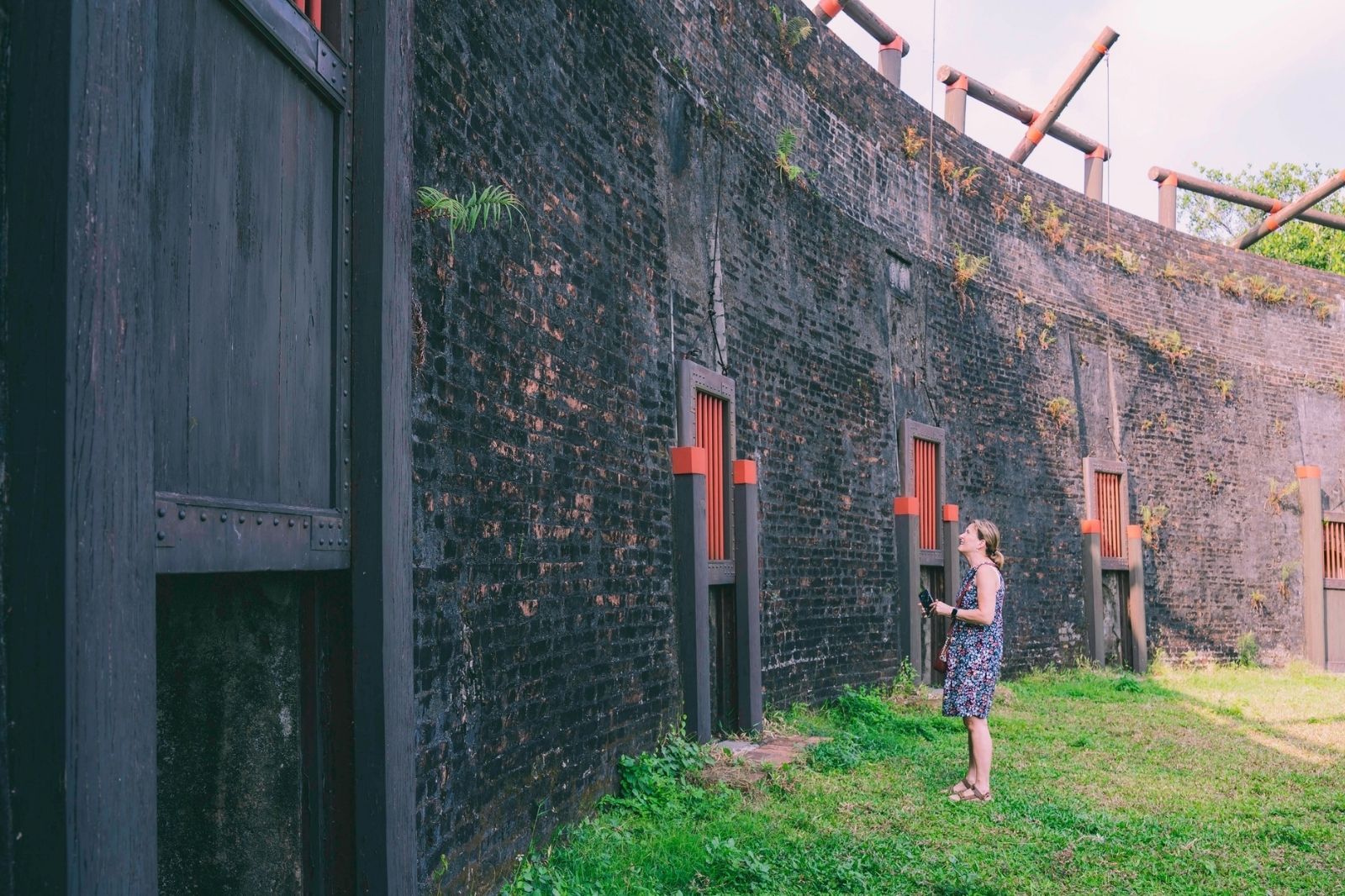
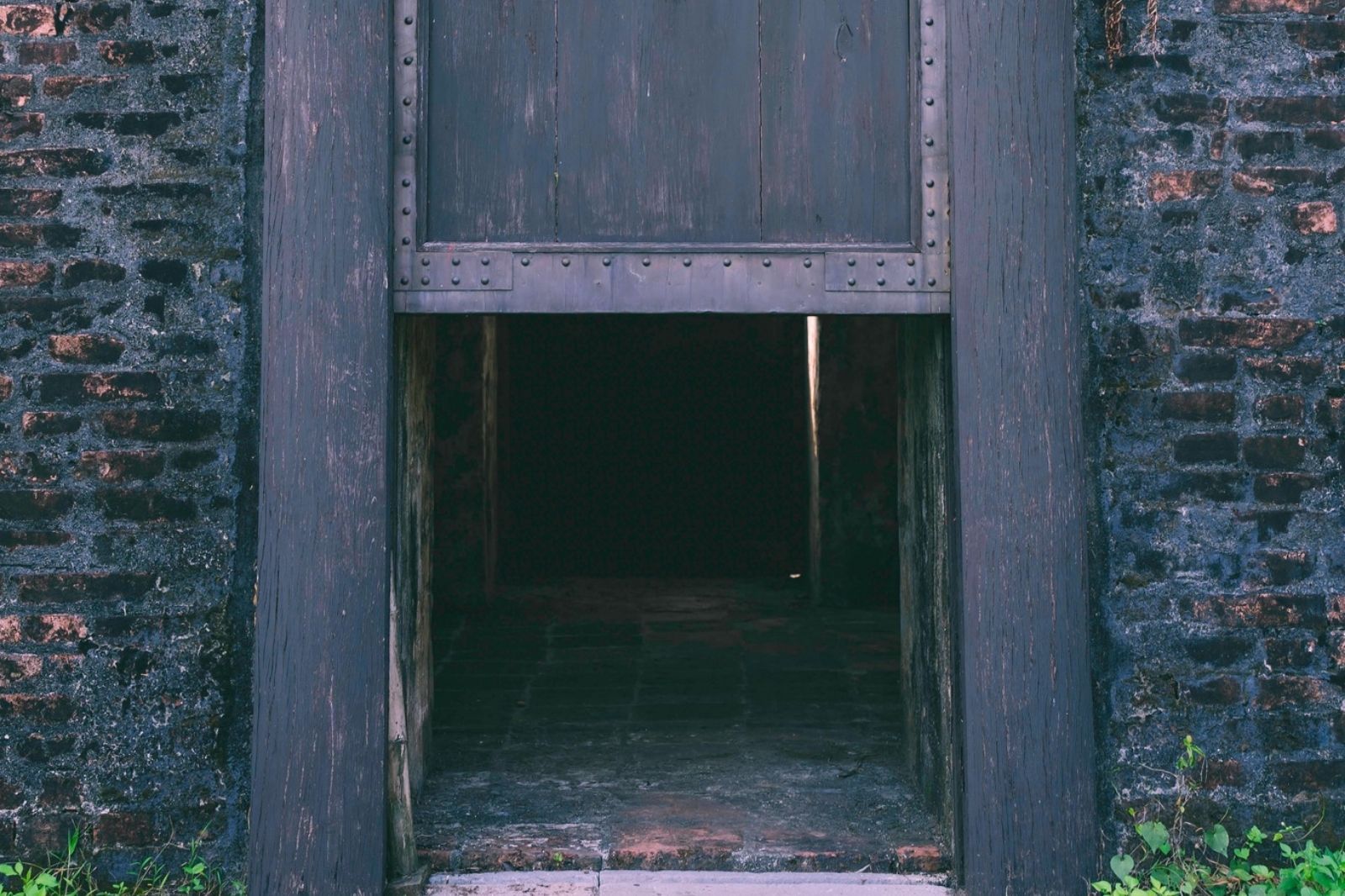
  • Tiger cages and main gate: Opposite the tribune are five separate tiger cages, each equipped with a feeding trough and a wooden pulley system to open doors safely. The main gate is 8 thuoc 7 tac high (approx. 3.2m) and 4 thuoc 5 tac wide (approx. 1.7m), made of ironwood with stone bases, carved with the characters "Ho Quyen"—a symbol of strength and authority.

This architecture not only served practical purposes but was also symbolic: elephants represented terrestrial strength, while tigers symbolized wild forests and mountains. The harmonious combination of functionality and artistry transformed Ho Quyen into an architectural masterpiece of the Nguyen Dynasty.

Tiger cages
Photo: Tiger cages 

3. Legendary elephant-tiger battles

The battles at Ho Quyen Arena were not just life-and-death contests, but also colorful historical spectacles. They usually took place in spring or autumn with solemn rituals: the king traveled by dragon boat from Nghenh Luong Dinh and by palanquin shaded by four yellow umbrellas and four royal parasols, escorted by red-clad soldiers, court music, and Three Talents and Five Elements flags. People on both sides of the road set up altars and offerings to welcome the procession, turning the festival into a major cultural event.

Some notable battles:

  • 1750: 40 elephants vs. 18 tigers at Da Vien – the largest-scale fight during the Nguyen Lords era.
  • 1904: The final match under King Thanh Thai, where a female elephant proudly gored a tiger to death after it leaped onto her forehead. Detailed in the book The Complex of Hue Monuments by Phan Thuan An.

Despite their drama, these battles were also tragic: hundreds of tigers and elephants were sacrificed, reflecting the harshness of feudal society. Today, they are viewed as part of heritage, serving as a reminder of human progress.

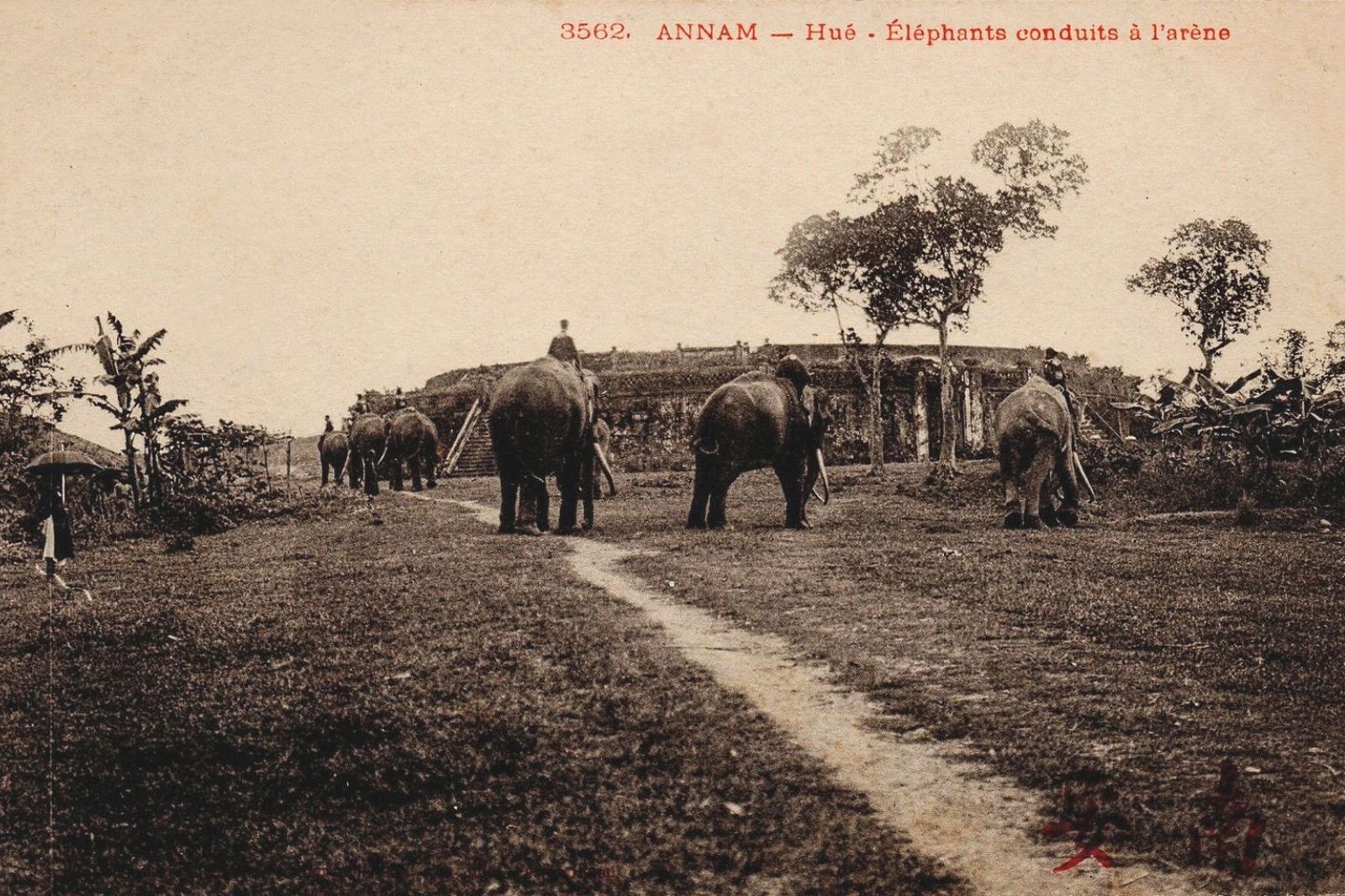
Old archival materials at Ho Quyen Arena
Photo: Old archival materials at Ho Quyen Arena 

4. Visitor guide to Ho Quyen Tiger Arena

For a complete and convenient visit to Ho Quyen Arena, you can refer to the useful information below.

  • Transportation: From central Hue, you can travel by motorbike or taxi along Nguyen Tat Thanh Street, taking about 10–15 minutes. The stop is right at the foot of Long Tho Hill.
  • Ideal time: It is best to visit in the early morning or late afternoon to avoid the heat, especially if combined with a cycling tour exploring Hue countryside.
  • Note: Bring drinking water, a hat/cap, and sunscreen. Preserve the monument and do not climb the ramparts. If traveling in a group, hiring a tour guide is recommended to hear interesting historical stories.
  • Combined sightseeing: After visiting Ho Quyen Arena, you can continue exploring the pomelo gardens in Thuy Bieu Village or visit the famous Xuan Dai Garden House nearby. 
Tourists visiting Ho Quyen Arena
Photo: Tourists visiting Ho Quyen Arena 

Ho Quyen Arena is not only a special historical testament of the Nguyen Dynasty, but also vivid proof of martial spirit, architectural ingenuity, and unique cultural identity of the nation. Although the elephant vs. tiger battles now exist only in memory, the site still holds immense value for understanding Vietnamese history, culture, and traditions. If you have the chance to visit Hue, do not miss the opportunity to visit Ho Quyen to feel the heroic breath of the past and take pride in the nation's heritage.

Loading......

Featured destinations