Exploring Gia Long Tomb: The First Tomb Complex of the Nguyen Dynasty
Central
Thua Thien Hue
Tomb of King Gia Long
Sovaba.travel
Updated at: 24/09/2026
1. Where is Gia Long Tomb?
Gia Long Tomb is located in Huong Tho Commune, Huong Tra Town, Thua Thien Hue Province (now Huong Tho Ward, Hue City). The complex is situated about 16-20 km southwest of Hue city center, in an unspoiled mountainous region surrounded by the Perfume River and the Thien Tho Son mountain range. As the first royal tomb complex of the Nguyen Dynasty, it was constructed between 1814 and 1820 over a vast area of more than 20 hectares, encompassing 42 large and small hills.
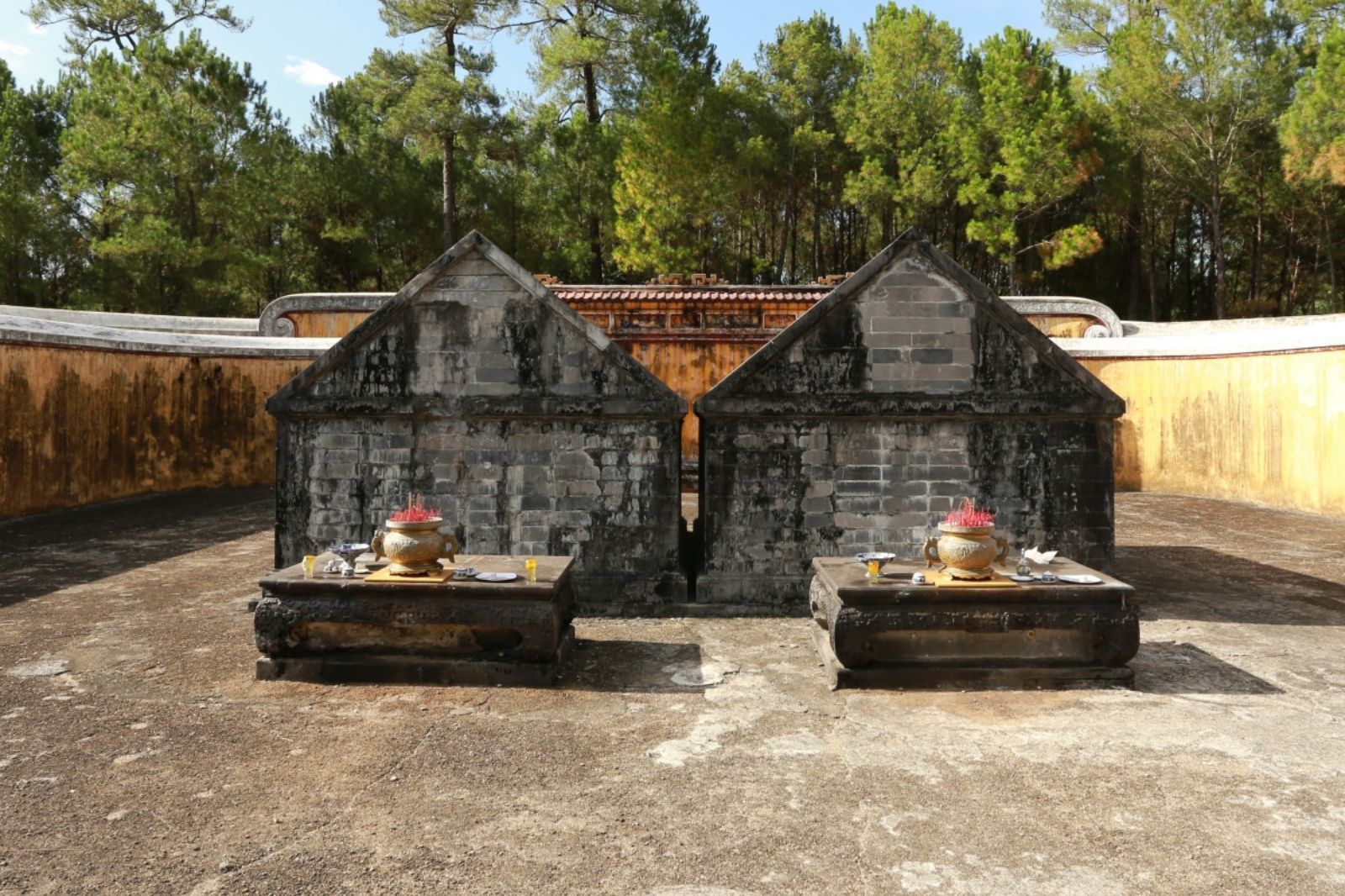
The complex is not only the tomb of Emperor Gia Long (1762-1820) but also the resting place of Empress Thua Thien Cao and many other royal family members. Situated amidst majestic nature, Gia Long Tomb is recognized by UNESCO as part of the Complex of Hue Monuments, attracting visitors with its pristine beauty and profound historical value.
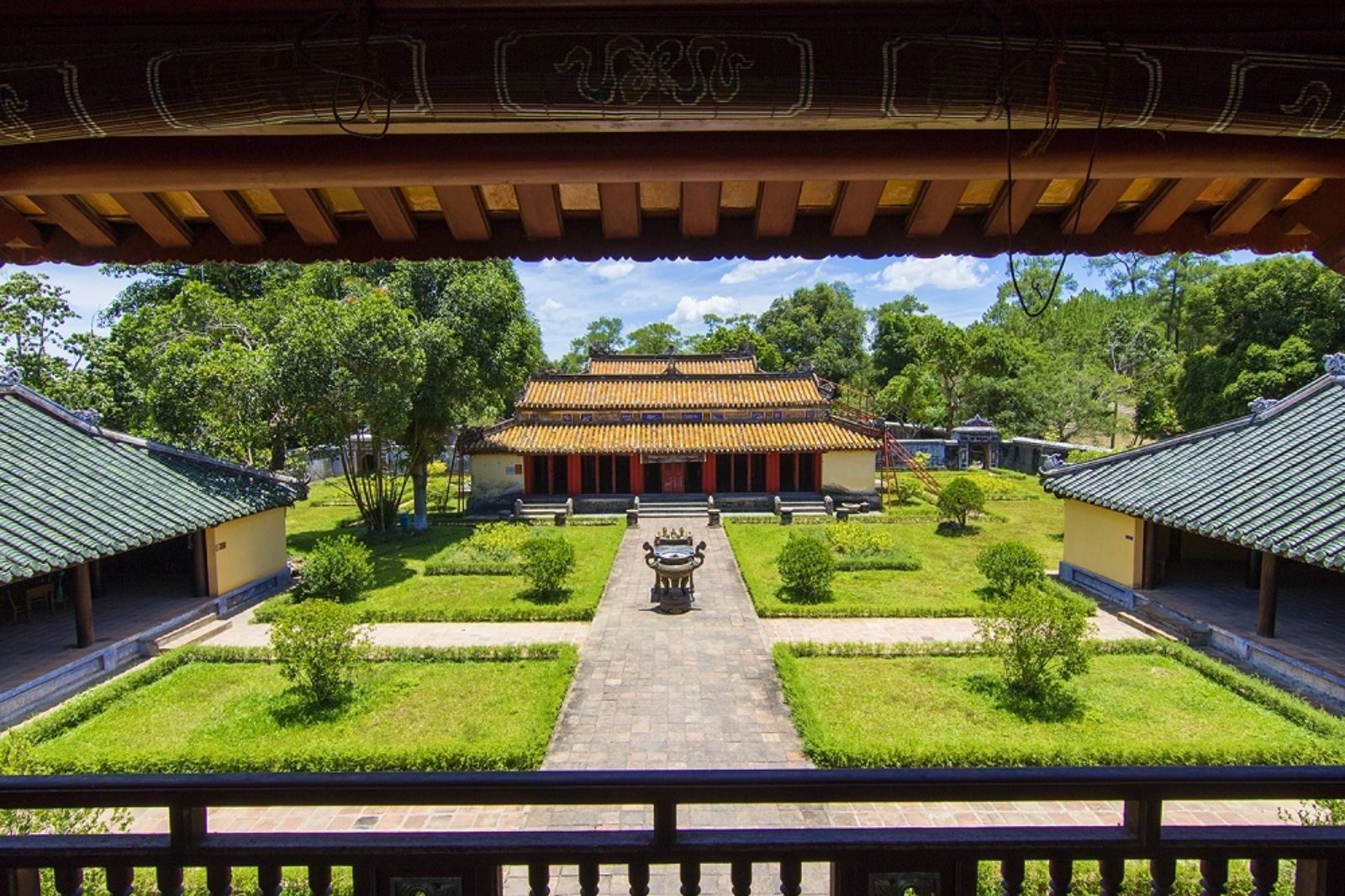
Photo: Gia Long Tomb is the resting place of Emperor Gia Long
2. History of Gia Long Tomb and the legacy of Emperor Gia Long
Gia Long Tomb was built to honor and bury Emperor Gia Long (Nguyen Phuc Anh, 1762 – 1820), the founding emperor of the Nguyen Dynasty – the last feudal dynasty in Vietnamese history. After defeating the Tay Son dynasty and unifying the country in 1802, he reigned until his death in 1820.
Construction of the tomb began in 1814, when Empress Thua Thien (Tong Thi Lan) – his lifelong companion during hardship years – passed away. Emperor Gia Long personally selected the Thien Tho mountain range as the site for the tomb, personally inspecting and supervising the construction process. The project commenced in 1814 and was only completed in 1820 (under King Minh Mang), taking 6 years, the longest construction time among all Nguyen Dynasty tombs. A special detail: Gia Long passed away in 1820, but his body was temporarily interred elsewhere before officially being moved to Thien Tho Tomb in 1821.
This is also the only tomb of the Nguyen Dynasty where three empresses are buried together:
Empress Thua Thien Cao (first wife)
Empress Thuan Thien Cao (second wife, reinterred in 1843)
Several other concubines at Ta – Huu Tung Vien
Photo: Two stone tombs of the emperor and empress
3. Scale and layout of the Gia Long Tomb complex amidst the mountains of Hue
Boasting the grandest scale among the Nguyen Dynasty tombs, Gia Long Tomb spreads across a vast area of rolling mountains, encompassing 42 named hills, with Dai Thien Tho serving as the main frontal screen. The layout is divided into three main sections:
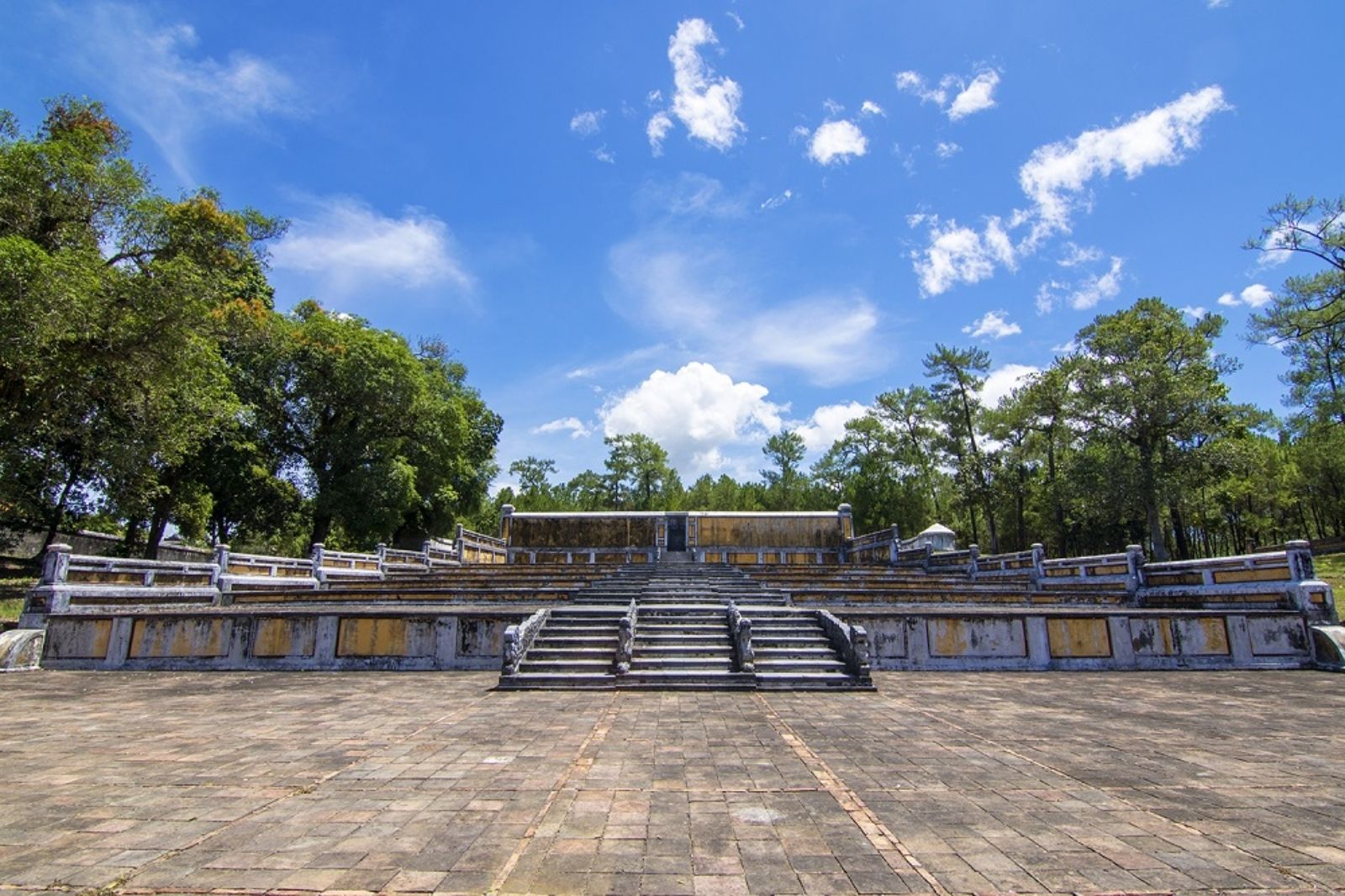
Tomb Section (Buu Thanh): Situated on a high hill, where Emperor Gia Long and his Empress are interred, featuring a large lotus pond in front symbolizing purity.
Worship Section (Shrine): Includes Minh Lau – the main hall for worship, and Bi Dinh (Stele Pavilion) with a stone stele inscribed with an epitaph composed by King Minh Mang.
Auxiliary Section: Ponds, pine forests, and winding paths seamlessly blending with the nature of Hue.
The entire complex is surrounded by pine forests and streams, creating a picturesque natural landscape that sets it apart from more urbanized tombs.
4. Architecture of Gia Long Tomb
The architecture of Gia Long Tomb is distinguished by a harmonious blend of artificial elements and nature, creating a majestic and expansive beauty. Unlike later tombs with elaborate details, this site uses simple granite and baked brick with a sparse density of structures to highlight the surrounding mountain scenery. Key elements include:
Minh Lau: A three-story tower with curved roofs, decorated with intricate dragon and phoenix patterns.
Bi Dinh (Stele Pavilion): Houses a 3-meter-tall stone stele inscribed with 2,500 Chinese characters praising the virtues and accomplishments of Emperor Gia Long.
Lotus Pond and Stone Bridge: Creating balance and high aesthetic value.
Overall, the architecture reflects classic East Asian style, preserving the pristine beauty of Hue's mountainous region and making visitors feel like stepping into a fairytale forest.
Photo: The ideal visiting time is in the morning
5. Guide to visiting Gia Long Tomb
Gia Long Tomb (officially Thien Tho Tomb) is located in Huong Tho Commune, Huong Tra Town, Thua Thien Hue Province, about 45 – 50 km southwest of Hue city center.
There are 3 popular ways to get there:
By motorbike or self-drive car: Take Highway 49 - turn onto the Hue bypass road - continue on Provincial Road 8B - look for the sign "Thien Tho Lang". The last section of about 4 km is a dirt road; it can be a bit slippery during the rainy season, but compact cars can still enter.
Dragon boat on Perfume River: Boat route from Toa Kham Wharf or Dao Tan Wharf - head upstream on the Perfume River - dock at the ferry station right at the foot of the tomb (very romantic, priced around 150 – 200k VND/round trip).
Day tour: Sovaba Travel offers Hue travel tours that include full-package Gia Long Tomb visits, covering vehicles, tour guides, and admission tickets.
Entrance ticket in 2025: 150,000 VND/adult, free for children under 13 years old and seniors over 60 years old (must present ID/Passport).
The ideal visiting time is early morning or late afternoon to avoid the summer heat. The tomb is open daily, but the gate to Buu Thanh is only opened during Lunar New Year or anniversary occasions for cleaning.
Note: Bring drinking water, sunscreen, and comfortable shoes due to the hilly terrain; respect the sacred space and avoid photographing the main tomb area without permission; and combine your visit with nearby tombs like Minh Mang Tomb to optimize your itinerary.
Photo: Attire notes when visiting tombs
Gia Long Tomb is not only a unique architectural work but also a majestic, solemn symbol of the founder of the Nguyen Dynasty. Standing as one of the tomb complexes of the Nguyen Dynasty, this place opens an important historical chapter, demonstrating a standard architectural style and a grand planning vision, completely different from the lavish complexity of later tombs. Visiting Gia Long Tomb, travelers not only admire the absolute harmony between man-made structures and the majestic natural landscape (Minh Thanh) but also feel a profound story of love and devotion between Emperor Gia Long and Empress Thua Thien Cao. This is where Vietnamese history, love, and culture merge, offering an absolutely tranquil atmosphere that inspires deep reflection.