Exploring Tu Duc Tomb: The Most Poetic Tomb of the Nguyen Dynasty

Central

Thua Thien Hue

Tomb of Tu Duc

Sovaba.travel

Updated at: 02/10/2026

1. Where is Tu Duc Tomb?

Tu Duc Tomb is located in Thuy Ba village, Thuy Xuan ward, Hue city, Thua Thien Hue province. The complex is situated in a narrow valley to the right of Canh Vong hill (also known as Vong Canh hill), about 6–7 km southwest of Hue city center. This area originally belonged to the ancient Cu Chanh canton, now Thuong Ba village, surrounded by lush green pine forests, offering a quiet and solemn atmosphere completely separated from the noisy urban life.

Traveling to Tu Duc Tomb is quite convenient. From Hue Railway Station, visitors can follow Bui Thi Xuan street, then turn into Huyen Tran Cong Chua street to reach the tomb complex. Popular means of transportation include:

  • Motorbike: rental cost is around 100,000–150,000 VND/day, flexible and easy to move around
  • Taxi: fares range around 100,000–150,000 VND/trip
  • Bus No. 4: departs from Hue city center, suitable for budget-conscious travelers

For larger groups, renting a private car is the optimal choice, especially when combining visits to nearby famous tombs such as Khai Dinh Tomb or Minh Mang Tomb in the same itinerary.

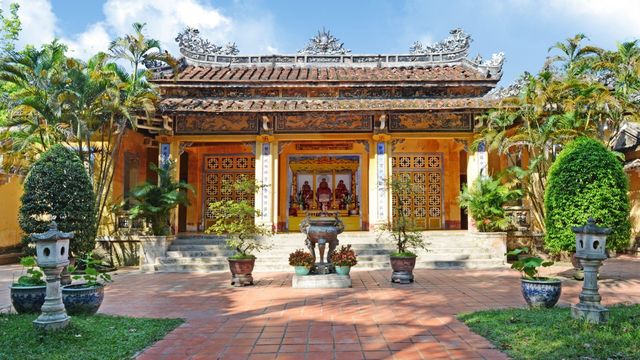
Tu Duc Tomb amidst green natural scenery, demonstrating harmony between architecture and landscape.
Photo: Tu Duc Tomb amidst green natural scenery, demonstrating harmony between architecture and landscape.

2. History of Tu Duc Tomb

King Tu Duc (given name: Nguyen Phuc Hong Nham, 1829–1883) was the longest-reigning emperor of the Nguyen Dynasty, ruling for 36 years (1847–1883). He was famous as a deeply knowledgeable Confucian scholar and an outstanding poet with over 400 works and many classic writings. Construction of the emperor's tomb began in 1864, initially named Van Nien Co, later changed to Khiem Cung – reflecting the spirit of humility. After the king passed away in 1883, the structure was officially named Khiem Lang.

The tomb was built during a turbulent period in the country, marked by internal rebellions and increasing pressure from French colonialists. Therefore, the tomb served not merely as a resting place, but also as a royal palace retreat – a place where the king retired to rest, enjoy nature, and compose poetry. Although basically completed in about 3 years, the tomb complex continued to undergo large-scale renovations across multiple phases, comprising over 50 architectural structures spread across nearly 12 hectares, consuming significant royal court resources.

A particularly notable feature is that King Tu Duc himself composed the Khiem Cung Ky stele inscription, carved on the largest stone stele among the Nguyen Dynasty tombs. The content of the inscription clearly reflects the deep inner thoughts, humility, and personal sorrows of a king with a poet's soul. In 1993, Tu Duc Tomb was recognized by UNESCO as a World Cultural Heritage site, as part of the Complex of Hue Monuments – a prime testament to Vietnam's historical, cultural, and architectural values.

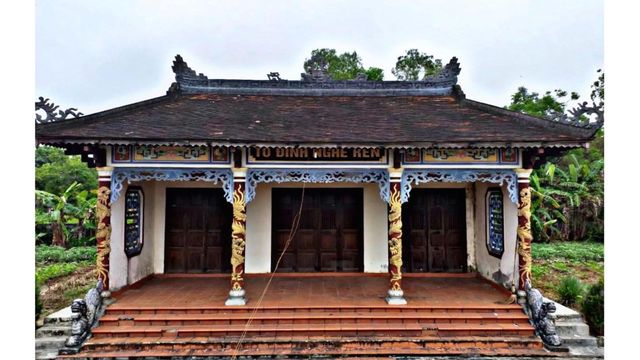
Architecture of Tu Duc Tomb with ancient stone structures, surrounded by trees and ponds.
Photo: Architecture of Tu Duc Tomb with ancient stone structures, surrounded by trees and ponds.

3. The poet king and the poetic soul behind Khiem Tomb

King Tu Duc was not only a monarch but also a talented artist with a sensitive soul. He especially loved poetry, music, and natural beauty. For this reason, Khiem Lang was created based on Confucian philosophy, yet imbued with romantic qualities, markedly different from the majestic grandeur of Minh Mang Tomb or the elaborate, modern-blended style of Khai Dinh Tomb.

A unique feature is that all structures within the tomb complex bear the word "Khiem" (Humility) – such as Vu Khiem, Thuong Khiem, Tu Khiem... expressing the living philosophy of humility that the king always pursued. The overall tomb complex resembles a living poem, where architecture and nature blend seamlessly, creating a peaceful space that helped the king "dispel sorrow" amidst turbulent times. Today, stepping foot here, visitors can easily feel the solemn, deep, yet highly poetic atmosphere, true to the image of a "poet king" in Vietnamese history.

Tu Duc Tomb - preserving cultural values and historical imprints of the Nguyen Dynasty.
Photo: Tu Duc Tomb - preserving cultural values and historical imprints of the Nguyen Dynasty.

4. Unique architecture of Tu Duc Tomb

The architecture of Tu Duc Tomb stands out for its sophistication, intricacy, and harmony with nature, considered the finest "architectural poem" in the Nguyen Dynasty tomb system. The entire tomb complex spans about 475 hectares, including nearly 50 large and small structures, all containing the word "Khiem" to emphasize the king's virtue of humility. The tomb is divided into two main areas: the palace section (living quarters) and the tomb section (burial area), arranged in parallel along two vertical axes, using Giang Khiem Mountain as a screen and streams as water features gathering energy.

  • Palace section: Starts from Khiem Cung Mon (a two-story pavilion gate), leading to Luu Khiem Lake with Tinh Khiem Island – where flowers were planted and rare animals raised. Surrounding the lake are Xung Khiem Ta and Du Khiem Ta, where the king enjoyed the view and wrote poetry. Hoa Khiem Palace is the centerpiece, flanked by Phap Khiem Vu and Le Khiem Vu. Luong Khiem Palace is dedicated to Queen Mother Tu Du (the king's mother), while On Khiem Duong houses royal items. Notably, Minh Khiem Theater is the oldest theater in Vietnam, where Tuong opera and Hue traditional music were performed.
  • Tomb section: Includes Bai Dinh (Honor Courtyard) with rows of stone civil and military mandarin statues, and Bi Dinh (Stele Pavilion) housing a stone stele weighing over 20 tons engraved with "Khiem Cung Ky" – King Tu Duc's autobiography about his ascetical life. The tomb itself is simple, hidden among pine trees, reflecting his humble style.

The uniqueness lies in the fact that the mausoleum is not just a tomb, but also a royal garden, complete with pine forests, lakes, and flowing streams, evoking the feel of a living ink wash painting. This architecture is influenced by Eastern feng shui, harmoniously combining human artifice and nature, standing apart from other tombs like Khai Dinh Tomb (French style) or Minh Mang Tomb (majestic).

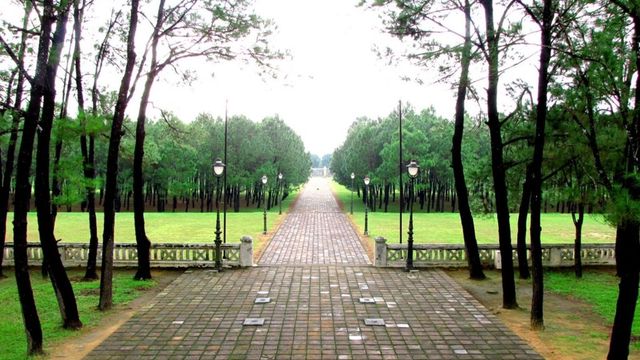
Admiring the peaceful and solemn beauty of Tu Duc Tomb.
Photo: Admiring the peaceful and solemn beauty of Tu Duc Tomb.

5. Key highlights of Tu Duc Tomb

When visiting Tu Duc Tomb, visitors should not miss the following highlight structures, as each clearly reflects the historical and aesthetic values of the monument complex.

  • Khiem Cung Mon Gate: The main gate featuring ancient pavilion architecture, opening into the vast expanse of the whole tomb complex.
  • Luu Khiem Lake & Tinh Khiem Island: The large, serene central lake, with Tinh Khiem Island creating a special landscape highlight.
  • Xung Khiem Ta & Du Khiem Ta: Two pavilions on the water, where King Tu Duc used to relax, compose poems, and enjoy music.
  • Bi Dinh Pavilion (Khiem Cung Ky): Houses the largest stone stele of the Nguyen Dynasty, inscribed with text composed by King Tu Duc himself.
  • Luong Khiem Palace & Minh Khiem Theater: Living and entertainment space for the emperor with exquisite architecture.
  • Main Tomb Area: The separate burial site, conveying a solemn and quiet atmosphere.
  • Boi Tomb: Tomb of King Kien Phuc, smaller in scale but rich in historical value.

Overall, these structures not only create harmonious beauty for the entire tomb complex but also contribute to portraying the image of a poet king with a deep inner life.

Lush green pond system at Tu Duc Tomb.
Photo: Lush green pond system at Tu Duc Tomb.

6. Latest ticket prices for Tu Duc Tomb

According to updated information for 2026, the admission ticket prices for Tu Duc Tomb are as follows:

  • For Vietnamese visitors aged 13 and above: ticket price is 100,000 VND/person.
  • Vietnamese children aged 7 to 12: ticket price is 20,000 VND/person; children under 7 are completely free.
  • Foreign visitors aged 13 and above: ticket price is 150,000 VND/person. Foreign children generally enjoy similar pricing policies to Vietnamese children, depending on the period and specific regulations.

The above ticket prices include full admission to the entire grounds of Tu Duc Tomb, with no additional costs inside the tomb area. In addition, visitors can choose combo tickets for multiple monuments in the Hue Citadel complex, such as a 2-site route (Tu Duc Tomb – Dong Khanh Tomb) with a reference price of around 200,000 VND, saving both cost and travel time.

7. Tips for first-time visitors to Tu Duc Tomb

If it is your first time visiting Tu Duc Tomb, thorough preparation will help you have a smooth, complete, and rich experience. Here are important tips you should not miss:

  • Clothing and gear preparation: Wear polite, modest clothing (avoid short skirts and revealing tops); rent Ao Dai or ancient costumes on-site for photo shooting (around 50,000–100,000 VND/set). Bring sunscreen, hats, sunglasses, drinking water, and light snacks because the area is vast with a lot of walking.
  • Sightseeing itinerary: Start from Vu Khiem Gate, walk along Luu Khiem Lake to the pavilions, then explore Hoa Khiem Palace, Minh Khiem Theater, and finish at the tomb area with Bi Dinh Pavilion. Don't miss Tinh Khiem Island and the pine forest – ideal spots for relaxing.
  • Important notes: Maintain cleanliness, do not pick flowers or touch artifacts; take photos without flash for preservation. If traveling in a group, hire a tour guide (around 200,000 VND/hour) to hear deeper historical stories. Combine with nearby attractions like Vong Canh Hill (for panoramic views of Hue), Thuy Xuan incense village, or Huong Lam pagoda.
  • Money-saving tips: Buy combo tickets if visiting multiple tombs; travel by bicycle or motorbike to save transportation costs. If staying in Hue, choose a central hotel for easy access.
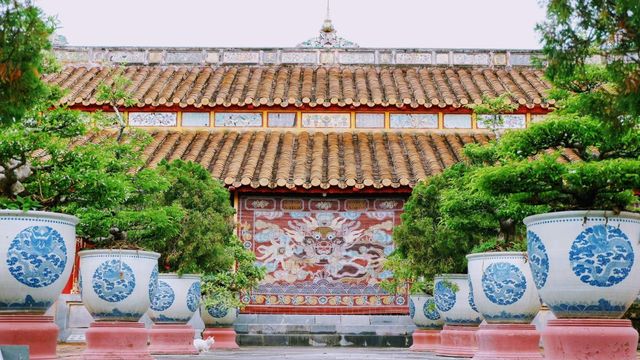
A check-in spot at the tomb featuring impressive natural scenery and ancient architecture.
Photo: A check-in spot at the tomb featuring impressive natural scenery and ancient architecture.

Tu Duc Tomb is not merely a mausoleum, but also a quiet symphony between architecture, nature, and the soul of a poet king. The harmony between the lake, pine forest, palaces, and poetry creates a space that is both majestic and profound, clearly reflecting the contemplative living philosophy and loneliness of King Tu Duc during a turbulent historical era. Among the Nguyen Dynasty tomb complex, Tu Duc Tomb stands out as a destination of emotional depth, where visitors can not only sightsee but also pause to feel, reflect, and understand the past. If you have the chance to visit Hue, this is undoubtedly an unmissable landmark to fully experience the most poetic and humane beauty of the Nguyen Dynasty.

Featured destinations