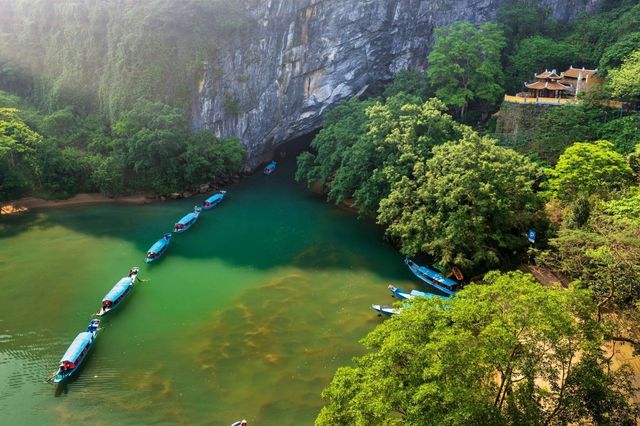
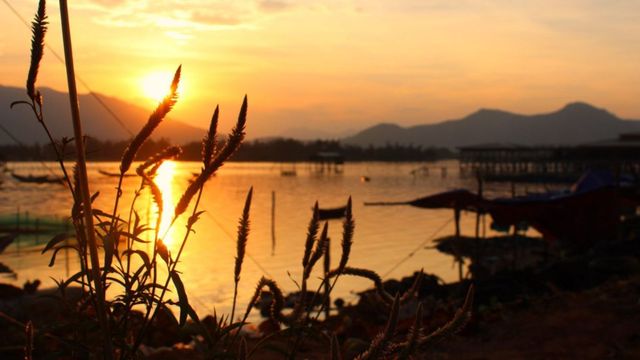
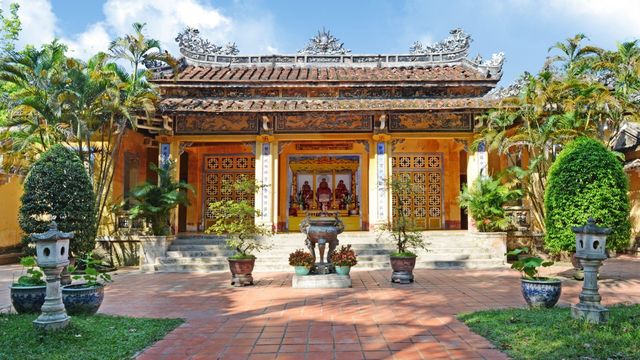
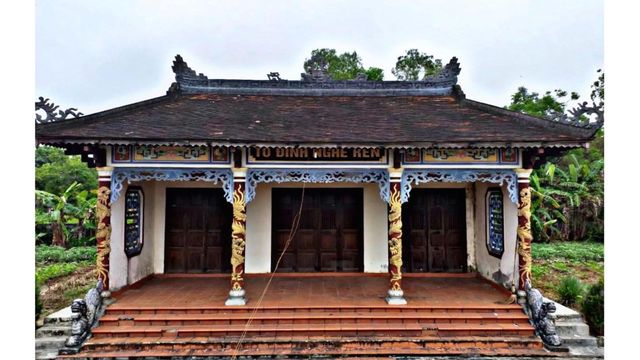
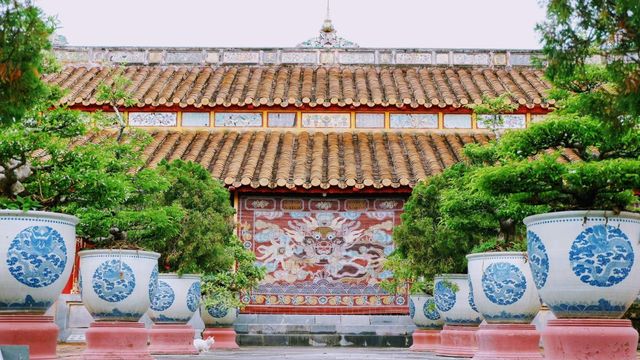
Minh Mang Tomb is located on Cam Ke (or Cam Khe) Mountain, near the Bang Lang confluence in Long Ho Ward, Phu Xuan District, Hue City, about 12–14 km southwest of the city center. This is where the Ta Trach and Huu Trach tributaries merge to form the gentle Perfume River, bringing a characteristic picturesque mountain-and-water scenery of the Ancient Capital. Not only boasting romantic scenery, the location of Minh Mang Tomb is also considered one of the finest feng shui lands of the Nguyen Dynasty. After many years of surveying, the high-ranking mandarin Le Van Duc chose this plot of land, which was approved by Emperor Minh Mang after more than a decade of deliberation. In 1840, the Emperor officially decided to construct Hieu Lang (Minh Mang Tomb) here.
The special feature of the tomb complex is the harmonious combination of architecture and natural terrain. Viewed from above, the entire site resembles the image of a person resting peacefully: Kim Phung Mountain behind acts as a head pillow, the Bang Lang confluence in front symbolizes extended legs, while the gentle Trung Minh Lake and Tan Nguyet Lake embrace the tomb complex like soft arms. This layout creates a "leaning against mountains and facing water" posture—backing onto mountains, facing the river—a symbol of stability, prosperity, and longevity according to Eastern feng shui beliefs.
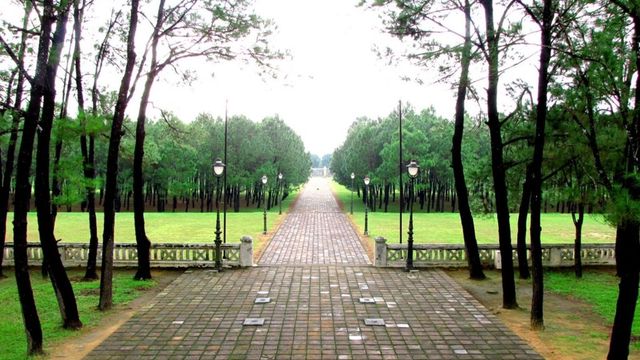
Enclosing the entire tomb area is the La Thanh (outer wall), about 1,750 m long, creating an isolated and solemn space. The combination of mountains, rivers, scenic lakes, and forests not only enhances the majestic beauty of the site but also makes Minh Mang Tomb an architectural masterpiece blending perfectly with nature, regarded as one of the most beautiful and balanced tombs of the Nguyen Dynasty.