Non Nuoc Pagoda: A travel guide to the thousand-year-old ancient pagoda in Ninh Binh
Northern
Ninh Binh
Non Nuoc Mountain
Sovaba.travel
Updated at: 24/09/2026
1. Where is Non Nuoc Pagoda?
Non Nuoc Pagoda is located in Hoa Lu Ward (some sources record Thanh Binh Ward), Ninh Binh City, Ninh Binh Province. The pagoda is situated at the foot of Non Nuoc Mountain, right at the confluence of Day River and Van River, occupying an important strategic position from ancient times to the present.
Distance from Ninh Binh city center: only about 1-2 km.
Distance from Mua Cave: about 7 km.
Distance from Trang An - Hoa Lu tourist area: about 8-9 km.
This location offers a panoramic view of rivers, mountains, and modern Ninh Binh city, creating a sense of peace in the heart of the urban area. Non Nuoc Mountain along with the pagoda has been recognized as a national historical and cultural monument.
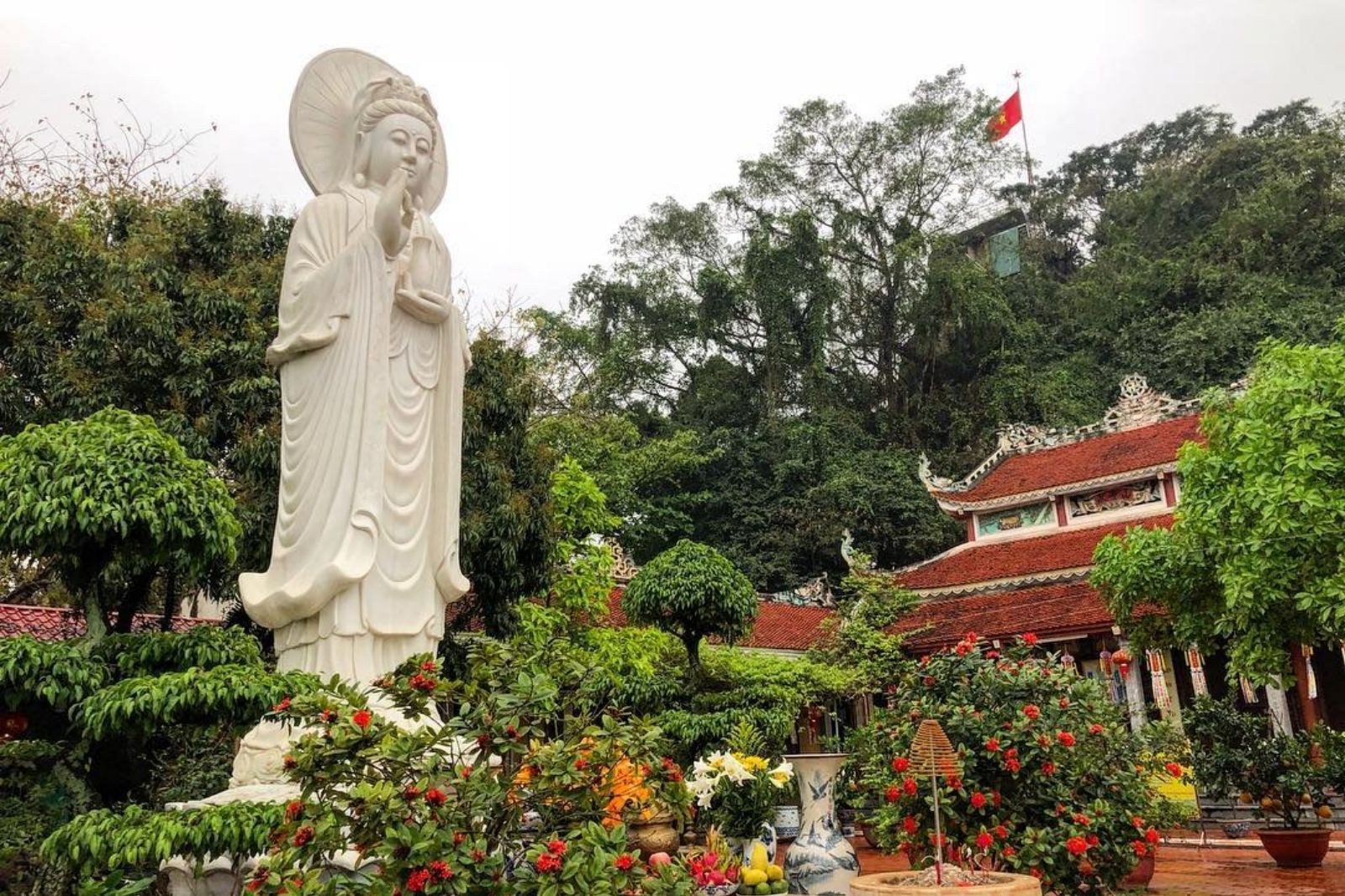
Photo: Non Nuoc Pagoda located at the foot of Non Nuoc Mountain
2. History of Non Nuoc Pagoda
Non Nuoc Pagoda is one of the famous ancient pagodas associated with the history of formation and development of the Ninh Binh region since the Ly Dynasty. Under the reign of King Ly Nhan Tong, National Master Nguyen Minh Khong (Ly Quoc Su) built a stone Buddhist pagoda at the foot of Duc Thuy Son Mountain on the east side. Initially, the pagoda featured a Buddhist stupa along with a main set of Buddha statues and auxiliary statues, creating a sacred spiritual space amidst picturesque scenery.
In the 13th century, during the Tran Dynasty, the pagoda was restored and expanded by monk Tri Nhu. Also during this period, the famous scholar Truong Han Sieu composed the renowned essay “Duc Thuy Son Linh Te Thap Ky”, recording the image of the four-story Linh Te Stupa radiating brilliant aura at night – a symbol of the flourishing of Buddhism at that time. However, the ancient stupa was later damaged and collapsed at the end of the Later Le Dynasty.
After more than 700 years of damage caused by war and time, the pagoda underwent major restoration in 2006 and was recognized as a national historical and cultural site in 1962. More than 40 poems by poets and scholars such as Nguyen Trai, Le Thanh Tong, and Truong Han Sieu are carved into the cliffs, turning this place into a famous "mountain of poetry".
3. What is special about the architecture of Non Nuoc Pagoda Ninh Binh?
The architecture of Non Nuoc Pagoda in Ninh Binh strongly impresses with the subtle blend of natural stone and mountain landscapes, creating an ancient, solemn, and deeply spiritual beauty. The entire pagoda grounds cover an area of about 2,000 m², built mainly of blue stone, bringing a feeling of sturdiness and durability over time.
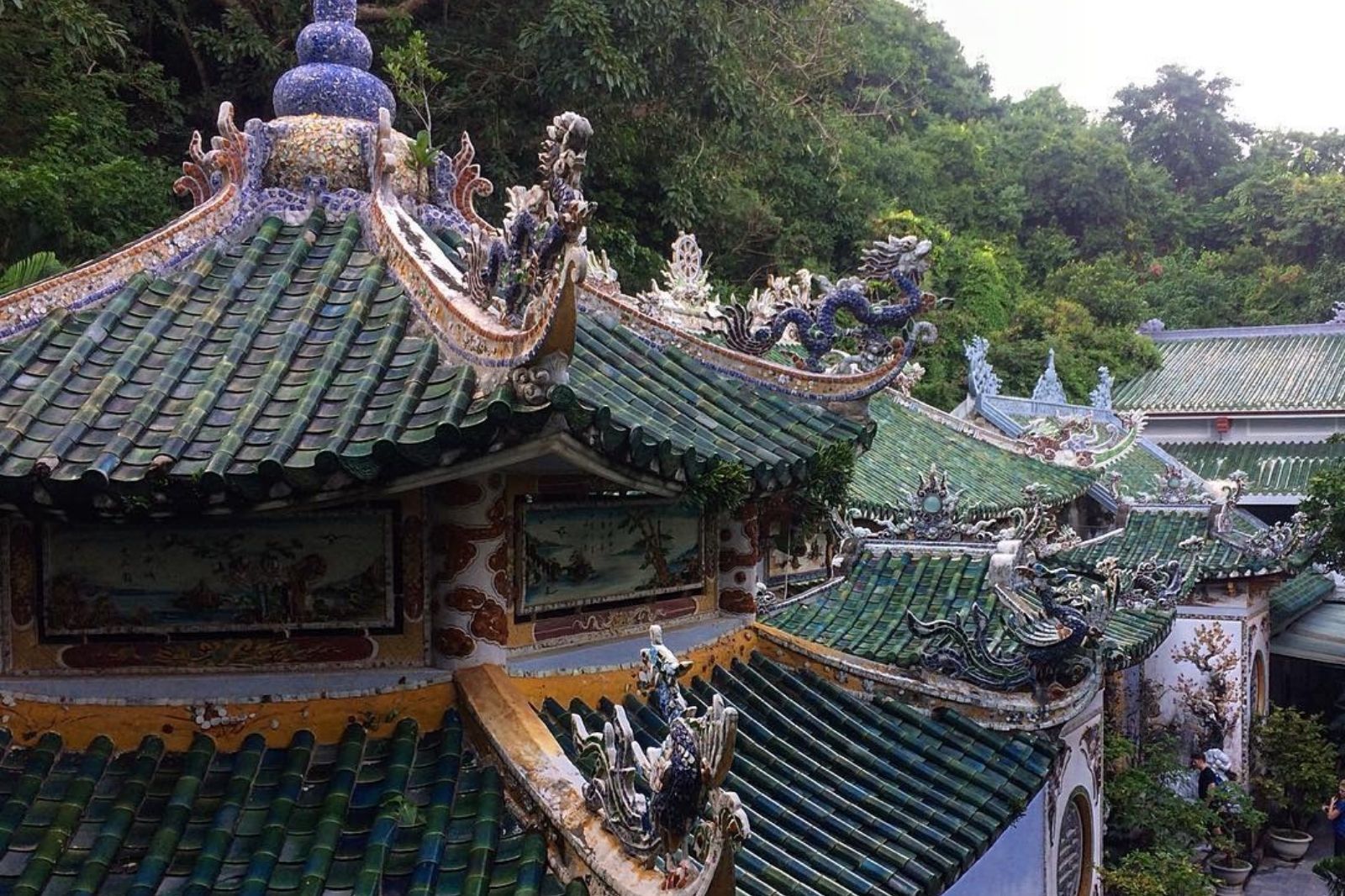
At the center of the pagoda is the main hall, designed in a traditional style with double roofs covered in blue and red tiles, softly curved roof eaves, and intricately carved dragons and phoenixes on the roof ridge. Inside the main hall stands a large gold-gilded Buddha statue in a solemn position, surrounded by smaller Buddha statues, creating a sacred and serene atmosphere filled with lingering incense smoke.
Photo: Double roof covered with blue and red tiles at Non Nuoc Pagoda
The pagoda has two main gates, including the North gate and the Southeast gate, among which the Southeast gate faces the Day River, where local people often release fish on early days of the year. The spacious courtyard features an intricately carved white stone statue of Avalokiteshvara Bodhisattva (Guan Yin), along with many folk stone statues rich in traditional cultural identity.
The pagoda grounds are covered with ancient trees, bonsais, and climbing vines, creating a cool, peaceful green space. From the pagoda, visitors can conquer 72 mossy stone steps (divided into 5 tiers) to reach the top of Non Nuoc Mountain, home to Nghinh Phong Pavilion, a scenic viewpoint offering panoramic views of Ninh Binh's rivers, mountains, and poetic countryside.
Nearby is Truong Han Sieu Temple, a structure comprising 3 outer worship chambers and 2 inner sanctuary chambers, highlighted by Chinese calligraphy characters and landscape poems engraved directly on the cliff walls, creating a rare and unique cultural and historical value.
4. Detailed directions to Non Nuoc Pagoda
From Hanoi to Non Nuoc Pagoda in Ninh Binh is about 90km, taking 1.5-2 hours depending on the means of transport. Below is a detailed guide:
By motorbike or self-drive car: Depart from Hanoi along Giai Phong Street, turn onto the Phap Van - Cau Gie Expressway, pass through Phu Ly (Ha Nam) to reach Ninh Binh. From central Ninh Binh, go along Le Dai Hanh Street for about 1km to reach the pagoda. Use Google Maps for accurate navigation; the paved road is smooth and easy to drive on.
By coach or bus: Catch a bus at Giap Bat or My Dinh bus station (Hanoi) for around 70,000-100,000 VND/one-way ticket. Bus companies like Hoang Long and Cuc Mung run frequently. Upon arrival at Ninh Binh bus station, rent a motorbike (about 100,000 VND/day) or take a taxi (about 50,000 VND) to get to the pagoda.
From other provinces: If coming from the South, fly to Noi Bai Airport and then transfer by car/bus; if from the Central region, take a train to Ninh Binh Railway Station and continue from there. Combining with a Ninh Binh tour can be more convenient, especially if traveling in a group.
The route to Non Nuoc Pagoda is quite convenient and easy to combine with other famous attractions in the city, making your pilgrimage and exploration of Ninh Binh more complete.
5. Festivals and spiritual activities at Non Nuoc Pagoda
Non Nuoc Pagoda in Ninh Binh does not host separate major festivals, but it is an important location for spiritual activities at the beginning of the year. During the Lunar New Year, visitors can participate in releasing carp at the Southeast gate to see off the Kitchen Gods to heaven – a traditional custom meant to pray for good fortune. In addition, there are calligraphy activities where you can request traditional calligraphy to hang at home. Daily spiritual activities include worshipping the Buddha and praying for peace and prosperity, with a tranquil environment that helps visitors relax and regain inner balance. The pagoda attracts thousands of pilgrims from all over, especially on the 1st and 15th days of the lunar month. Combine your visit with nearby historical sites such as Thai Vi Temple (worshipping the Tran Kings) or Bich Dong Pagoda for a complete spiritual journey.
6. Important notes when visiting Non Nuoc Pagoda Ninh Binh
When visiting Non Nuoc Pagoda in Ninh Binh, please note a few rules to respect the sacred space and ensure safety:
Attire: Dress politely and modestly; avoid short skirts, shorts, off-shoulder or overly thin tops to suit the place of worship.
Behavior: Keep quiet, speak softly, and avoid making noise that disturbs others. Do not film or take photos without permission from the management.
Preparation: Wear comfortable, easy-to-remove shoes (shoes must be removed before entering the main hall), bring drinking water, a light jacket (cool weather), and a mini fan if visiting in summer. Avoid climbing the mountain when it rains as the paths get slippery.
Protecting the monument: Do not litter, and do not carve or draw on rocks or statues. Respect local customs such as burning incense in designated areas.
Health: If you have health issues, avoid climbing too many steps as the pagoda terrain is hilly and steep. Travel in a group for mutual support and consider choosing a tour if it's your first time.
Non Nuoc Pagoda carries a quiet yet enduring beauty over time, where history, faith, and natural landscapes seamlessly harmonize. Every step across the pagoda courtyard, every moss-covered stone step, and the floating wisps of incense evoke a feeling of tranquility, helping visitors slow down to appreciate the cultural depth of Ninh Binh land. With the practical information and tips shared in this article, hopefully you can proactively arrange a suitable itinerary to enjoy a gentle and meaningful visit.