Quang Tri Ancient Citadel Museum: A Historical Display Space and Special Heritage Value

Central

Quang Tri

Quang Tri Ancient Citadel

Sovaba.travel

Updated at: 24/09/2026

1. Overview of Quang Tri Ancient Citadel Museum

Built in 2002 at the southeast corner of the Quang Tri Ancient Citadel, the Ancient Citadel Museum is an important part of the Special National Historical Site complex "Quang Tri Ancient Citadel and the commemorative sites of the 81-day and night event in 1972". The display space preserves images, documents, and artifacts associated with the battle from June 28 to September 16, 1972 – a period when the Ancient Citadel became one of the fiercest battlefields of the anti-American resistance war.

On an area of less than 3 km², hundreds of thousands of tons of bombs and shells rained down, leaving deep marks in the history of Quang Tri. Today, walking past the remaining artifacts, visitors can not only visualize the intensity of war but also appreciate the true price of peace. The museum remains open to visitors while a project to construct a new display space, with a total investment of about 45 billion VND, is underway to upgrade and enrich the exhibition system.
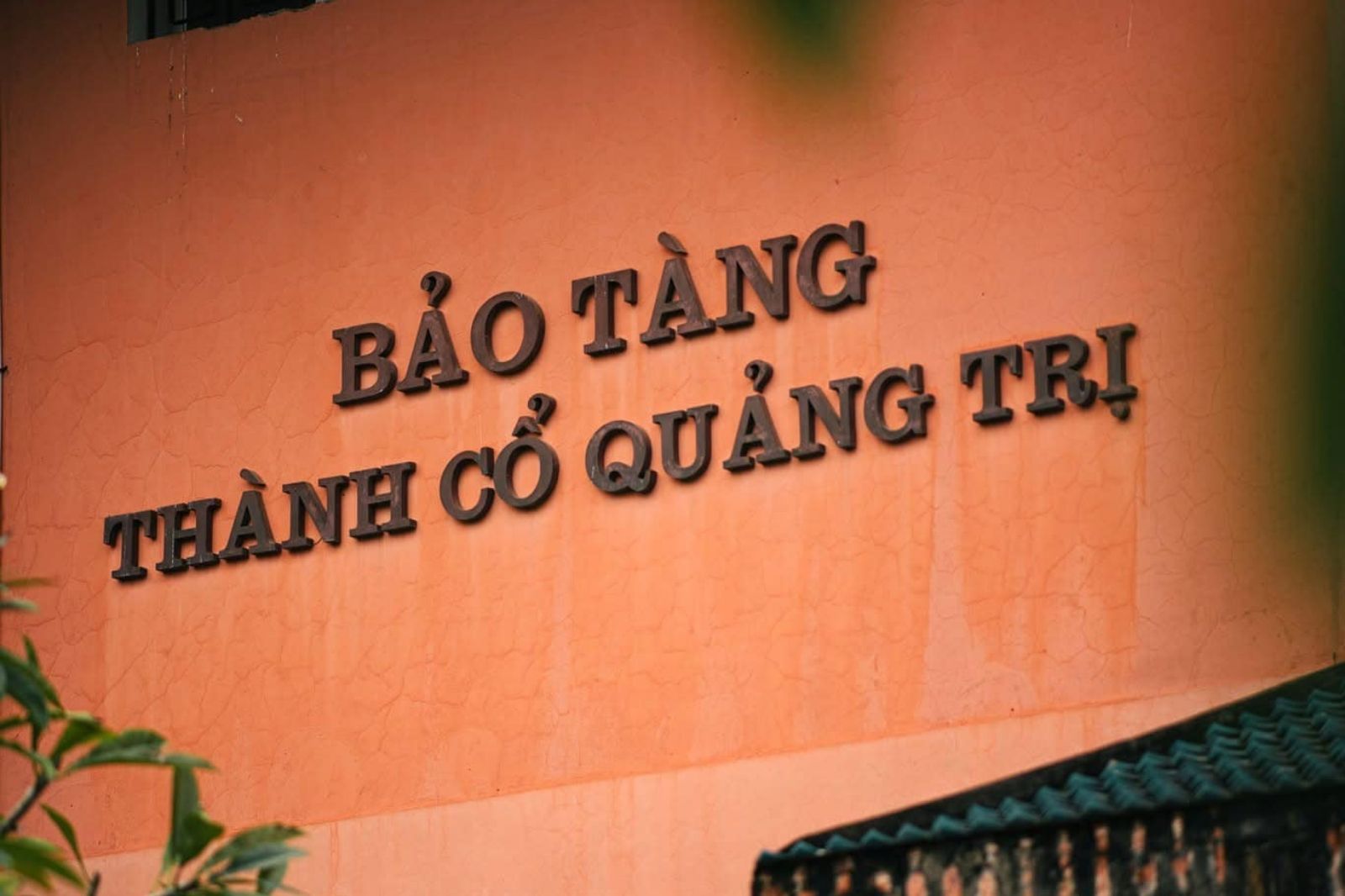
The museum located inside Quang Tri Ancient Citadel

Photo: The museum located inside Quang Tri Ancient Citadel 

2. Detailed guide to visiting Quang Tri Ancient Citadel Museum

If you are planning to visit Quang Tri Ancient Citadel, you can combine a tour of the museum right within the relic campus to better understand the historical milestones here.

Address: The museum is located inside the Quang Tri Ancient Citadel campus, on Ly Thai To/Nguyen Tri Phuong Street, Quang Tri Ward, Quang Tri Province, a few hundred meters south of the Thach Han River.

Opening hours: The museum welcomes visitors from 7:00 AM – 5:00 PM daily, including Saturdays, Sundays, and public holidays.

Entrance fee: Free. If you need a guided tour service or wish to organize an incense-offering ceremony, visitors can register with the Management Board at the main gate, with a reference cost of around 350,000 VND/group.

How to get there:

  • From Dong Ha: Follow National Route 1A south for about 12–15 km, taking about 20–25 minutes by motorbike or car.

  • From Hue: The distance is about 60–70 km, taking about 1.5–2 hours of travel.

  • From Dong Hoi Airport or Phu Bai Airport: After landing, continue by road to Quang Tri Ancient Citadel.

To add depth to your tour, you should spend time visiting the Central Monument, the lantern floating dock on the Thach Han River and nearby relic sites. Strolling slowly through the space of the Ancient Citadel, you will feel more clearly the mark of a land that went through extraordinary historical years.

3. History of Quang Tri Ancient Citadel Museum

To understand the Quang Tri Ancient Citadel Museum, one must first return to the history of the citadel itself, which witnessed many turbulent events of the nation. In 1809, King Gia Long moved the citadel from Trieu Phong to its current location beside the Thach Han River. In 1837, under the reign of King Minh Mang, the citadel was rebuilt with brick according to Vauban architecture, square in shape with a perimeter of nearly 2,200 m and walls over 4 m high.

In the summer of 1972, the Ancient Citadel became the focal point of the 81-day-and-night battle. Fierce bombings destroyed most of the structures, and thousands of soldiers lost their lives, leaving indelible marks in the history of Quang Tri. After the war, Quang Tri province gradually restored and renovated the relic site. In 2002, the Ancient Citadel Exhibition House was built, becoming a place to preserve images, artifacts, and documents about the 81 days and nights of 1972. Since then, the Ancient Citadel is not only a historical relic but also a memorial space where locals and tourists come to honor those who sacrificed their lives and further appreciate the value of peace today.

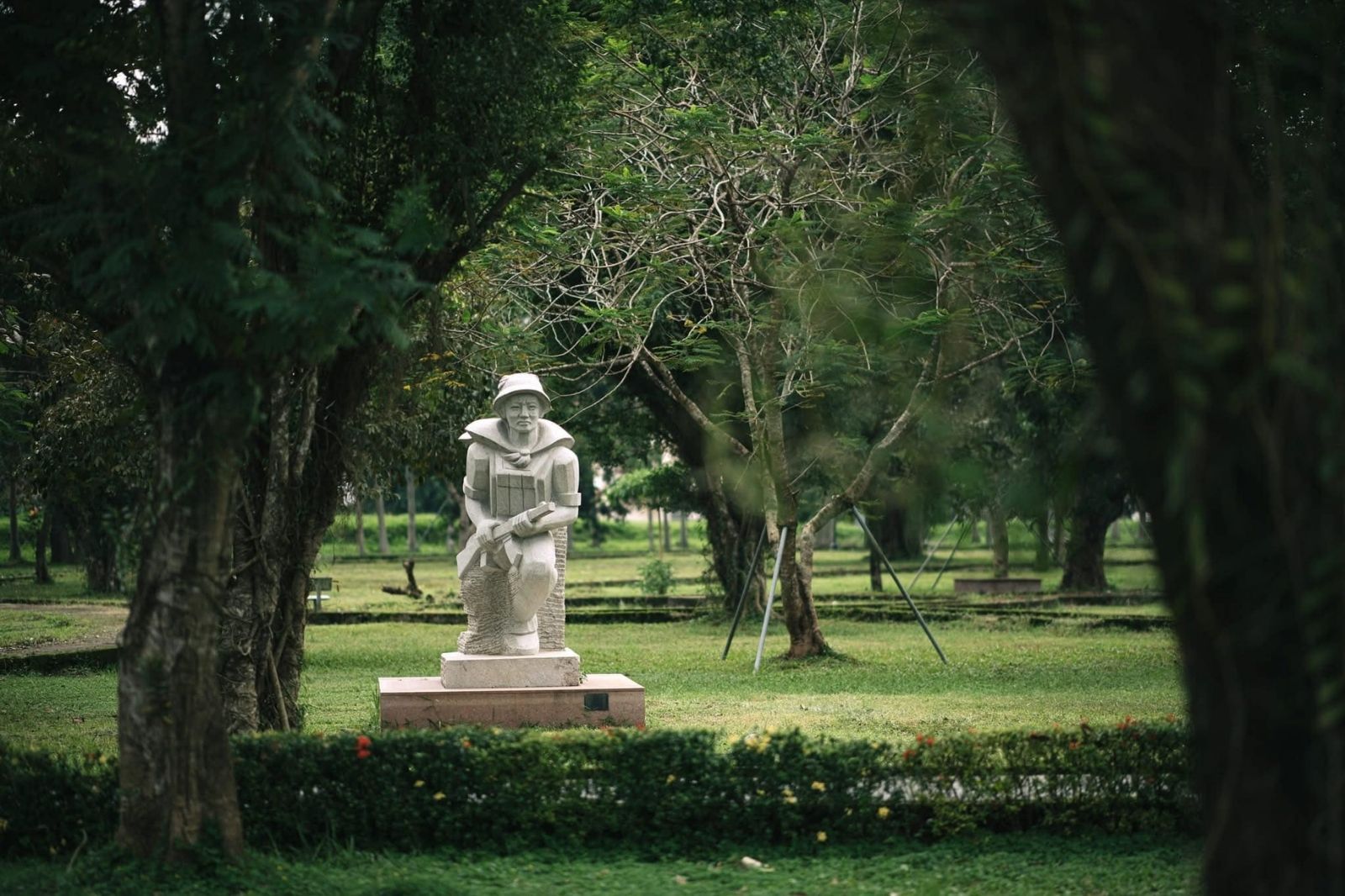
Green campus at Quang Tri Ancient Citadel Museum

Photo: Green campus at Quang Tri Ancient Citadel Museum 

4. Exhibition space and architectural layout of the museum

The Quang Tri Ancient Citadel Museum is modest in scale, humbly located in the southeast corner of the Ancient Citadel. The structure is arranged across two floors with a clear setup so that visitors can easily follow each historical milestone.

Main layout:

  • First floor: Focuses on large photographic documents and major artifacts (weapons, battle reenactments, scale models).

  • Second floor: Personal keepsakes, handwritten letters, and the most touching relics.

  • Outdoor area: Bullet-scarred citadel walls, bomb craters, the Memorial Monument (designed in the Bagua pattern, with 81 steps symbolizing the 81 days and nights), and a bronze Bell Tower weighing nearly 9 tons.

Cement-paved walkways interwoven with lush green lawns help keep the space open and quiet. Amidst this landscape, the museum was built in harmony with the monument, so that the remnants of the Ancient Citadel retain their original appearance and inherent solemnity.

5. Prominent artifacts and historical documents collection

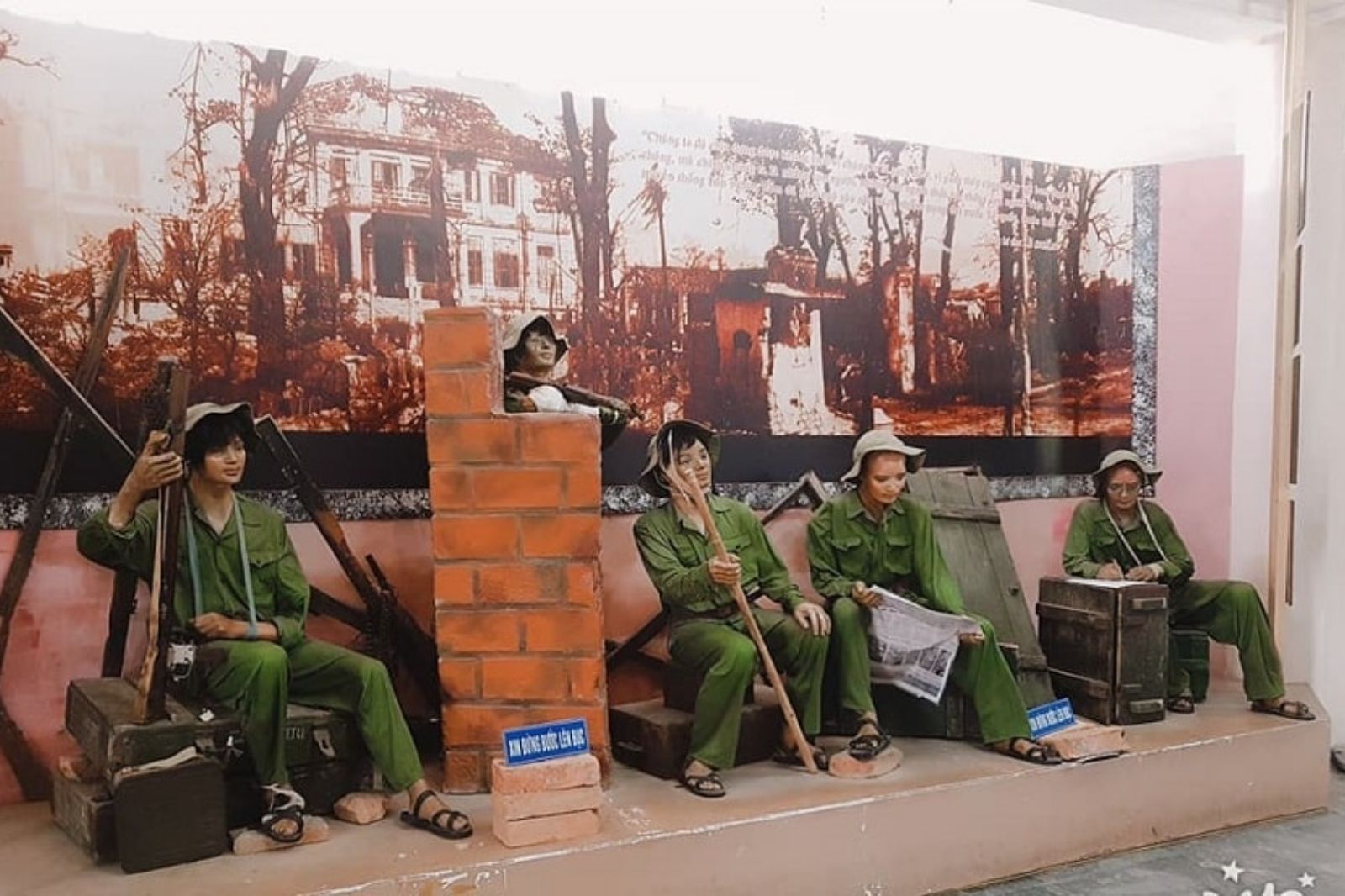
What makes the space of the Quang Tri Ancient Citadel Museum so haunting is not its size, but the artifacts that still bear the marks of wartime. Hundreds of documents, photographs, and keepsakes linked to the 81 days and nights of 1972 are preserved here, from rifles, steel helmets, backpacks, ammunition, and operational maps to very ordinary everyday items of the soldiers. There is a comb carved from airplane wreckage, and daily-life objects that accompanied soldiers through days in the trenches.

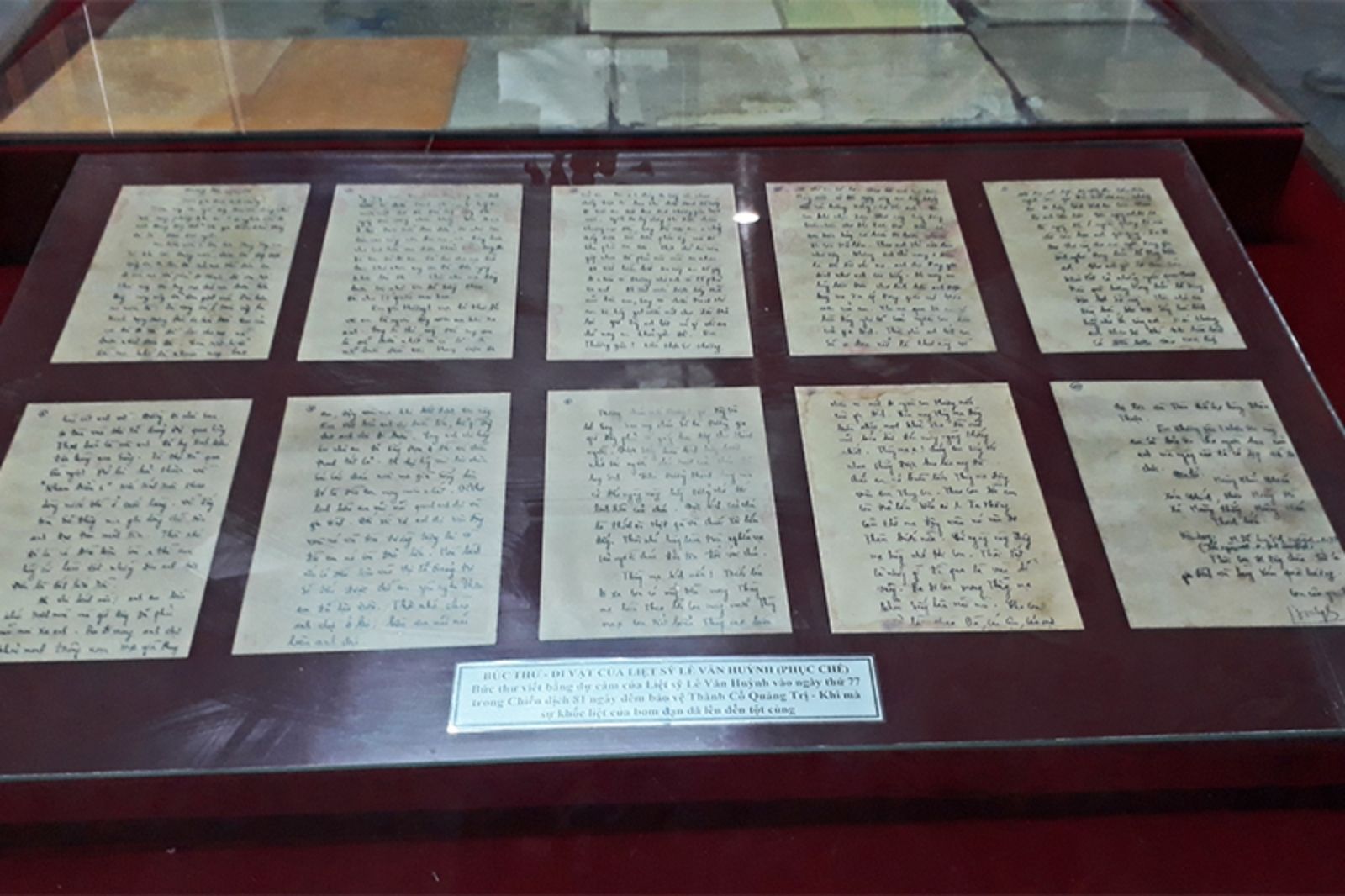
Scale models and documentary photos portraying the battlefield of the Ancient Citadel, soldiers crossing the Thach Han River, fortifications, and bomb craters help visitors visualize the intensity of the battle. In particular, the letters written right before life-and-death moments always leave visitors silent. Among them is a 10-page letter from martyr Le Van Huynh, a native of Thai Binh, written on September 11, 1972 – the 77th day of the battle. The lines written to his mother and wife, along with instructions regarding his resting place after the country's reunification, evoke a feeling hard to name: amidst a brutal battlefield, the soldier still yearned for family and the day of return.

Additionally, there are keepsakes of martyr Le Binh Chung, solemnly displayed alongside many other relics. Each item here is small, but when placed in the context where it once existed, its value becomes immense, reminding people today of sacrifice, family bonds, and the price of peaceful days.

Handwritten letters of martyrs on display

Photo: Handwritten letters of martyrs on display 

6. Experience visiting Quang Tri Ancient Citadel Museum

Visiting Quang Tri Ancient Citadel Museum offers visitors emotionally profound and educational experiences. During the tour, visitors usually:

  • Observe the system of historical artifacts, documents, and read handwritten letters of soldiers preserved at the museum
  • Offer incense at the memorial stela to express gratitude to heroic martyrs
  • Participate in floating lanterns on the Thach Han River, especially on anniversaries such as July 27

The visiting space is solemn and quiet, helping viewers clearly feel the losses of war and the value of peace. Therefore, a tour of Quang Tri Ancient Citadel Museum does not just stop at acquiring information, but is also a journey back to the roots, contributing to enhancing the understanding of national history and tradition.

Exhibition area inside Quang Tri Ancient Citadel Museum
Photo: Exhibition area inside Quang Tri Ancient Citadel Museum 

Quang Tri Ancient Citadel Museum is an important stop helping visitors better understand the history, war, and heritage values of the land of Quang Tri. Through a scientific exhibition system, authentic documents, and a solemn memorial space, the museum contributes to clarifying the role of Quang Tri Ancient Citadel in national history, while raising awareness of preserving and cherishing past values. Visiting the museum is not only informative but also helps everyone gain a more complete perspective on history and the sacrifices that took place on this land.

For a complete experience, visitors can combine a visit to the Quang Tri Ancient Citadel Museum in heritage/historical tours such as: Quang Tri Citadel tour, Quang Tri DMZ tour, or a day tour of Quang Tri. These tour itineraries are usually designed along logical routes with detailed guided commentary, suitable for students, organizations, and history enthusiasts.

Loading......

Featured destinations