Quoc Hoc Hue – A 120-Year-Old School in the Heart of the Ancient Capital

Central

Thua Thien Hue

Sovaba.travel

Updated at: 24/09/2026

1. Where is Quoc Hoc Hue?

Quoc Hoc High School Hue is located at No. 12 Le Loi Street, currently in Thuan Hoa Ward, Hue City, nestled on the southern bank of the Perfume River and opposite the Quoc Hoc Monument. Just about 1 km from Truong Tien Bridge, the school stands on one of the most beautiful and iconic streets of the Ancient Capital.

From here, visitors can easily combine their visit with many famous attractions in central Hue. You can choose a taxi, motorbike, or take a leisurely stroll along Le Loi Street, where green tree lines, the calm Perfume River, and a slow pace of life come together to create a quintessential Hue journey.

The school stands out with its vibrant reddish-pink color

Photo: The school stands out with its vibrant reddish-pink color

2. History of Quoc Hoc Hue High School

Established by an edict of King Thanh Thai on September 17 of the 8th year of Thanh Thai's reign (October 23, 1896) and a decree dated November 18, 1896 by the Governor-General of French Indochina, Quoc Hoc Hue was one of the first French-Vietnamese schools in Indochina. Initially named Phap Tu Quoc Hoc Duong, it laid the foundation for educating a new generation of intellectuals proficient in French, the Romanized Vietnamese script (Quoc Ngu), and Chinese characters.

The school was built on the site of the Naval Headquarters (Dinh Thuy Su), which used to train the Nguyen Dynasty's naval forces. From humble thatched-roof classrooms in its early days, Quoc Hoc was rebuilt in 1915 with sturdy bricks and tiles in French architectural style, marking its transformation into a high school.

Through historical changes, the school's name changed several times, but the essence of Quoc Hoc has been preserved:

  • 1896–1936: Quoc Hoc

  • 1936–1954: Khai Dinh High School

  • 1955–1956: Ngo Dinh Diem High School

  • From 1956 to present: Quoc Hoc, currently Quoc Hoc High School for the Gifted – Hue

Not only a place for imparting knowledge, Quoc Hoc has also been the cradle for generations of intellectuals and talents, contributing to the imperial capital's rich tradition of learning. On March 26, 1990, the school was recognized as a National Historical and Cultural Relic; on December 31, 2020, it was officially classified as a Special National Monument. Over a century later, the red walls still stand quietly by the Perfume River, preserving the story of a school that has accompanied the transformations of Hue and the nation.
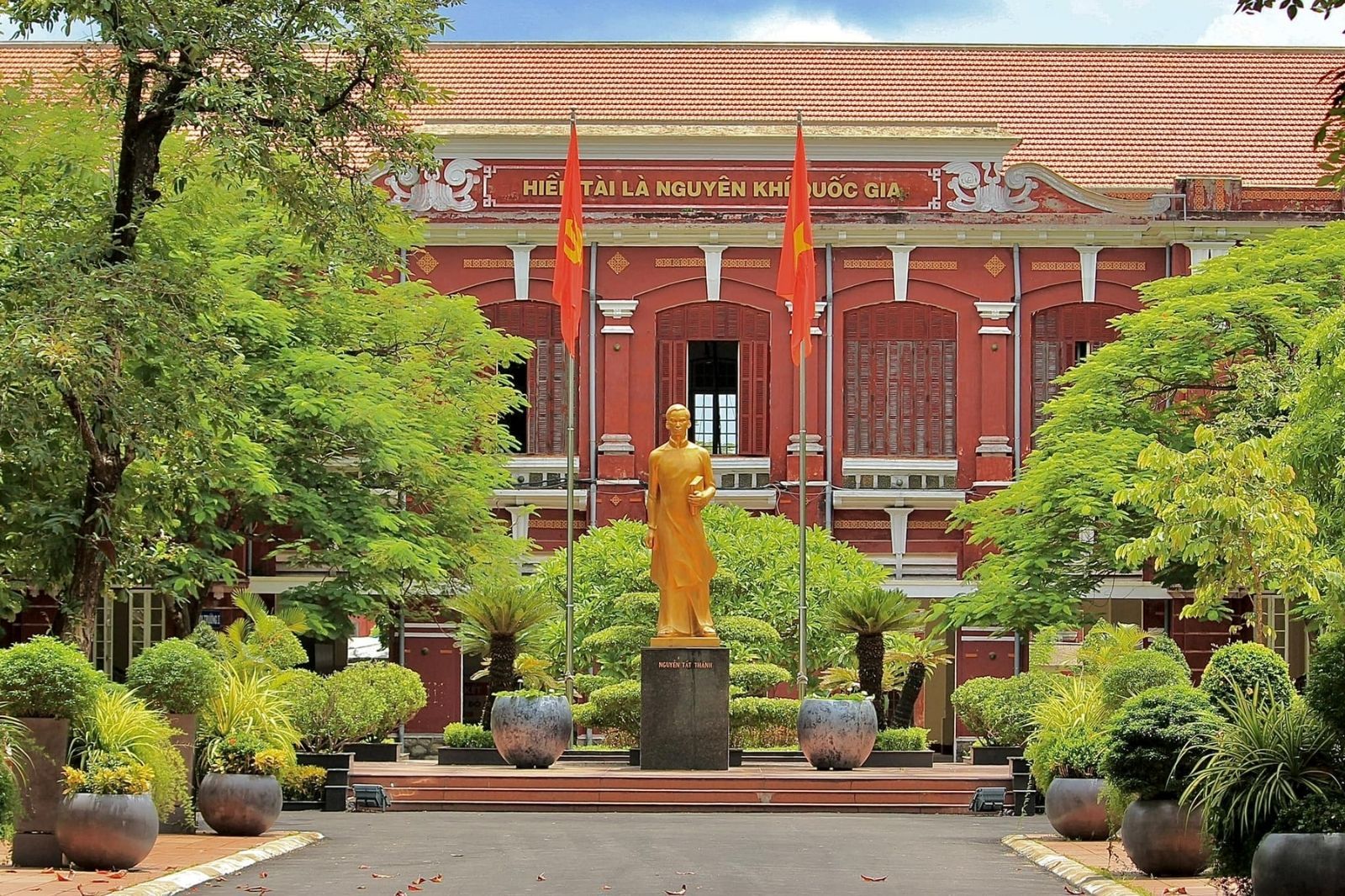
The bronze statue of Nguyen Tat Thanh placed in the middle of the schoolyard
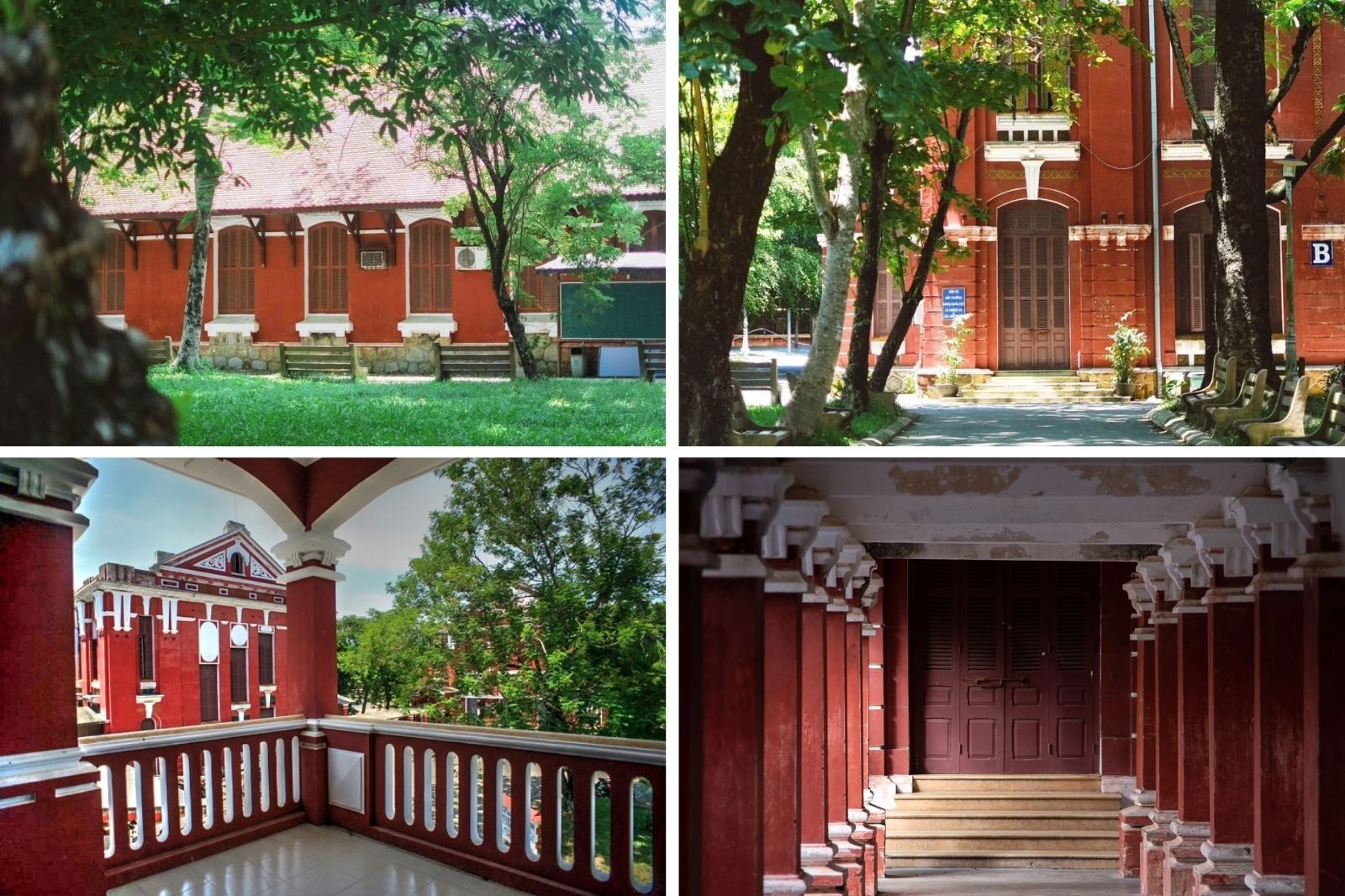

Photo: The bronze statue of Nguyen Tat Thanh placed in the middle of the schoolyard
3. What makes the architecture of Quoc Hoc Hue special?

The most recognizable feature of Quoc Hoc Hue is the series of dark red brick buildings standing out beneath lush green trees. Rebuilt in 1915 to replace the original thatched houses, the complex carries distinct features of French architecture while incorporating elements close to traditional Vietnamese aesthetics.

The buildings feature long corridors, solid pillars, arched windows, and tiled roofs, creating a dignified yet elegant appearance. The characteristic red hue of the brick walls has gradually become a familiar image, deeply tied to the memories of generations of Quoc Hoc students. The school gate impresses with its two-story triple-arched (tam quan) structure and tiled roof echoing traditional design. The campus spans over 10,000 m² with many ancient shade trees surrounding the yard. At the center stands the bronze statue of Nguyen Tat Thanh, erected in 1989–1990.

On sunny days, sunlight filters through the canopy, casting soft shadows on the red walls and vintage hallways. These quiet corners give Quoc Hoc Hue its very own charm—tranquil, green, and rich with the passage of time.

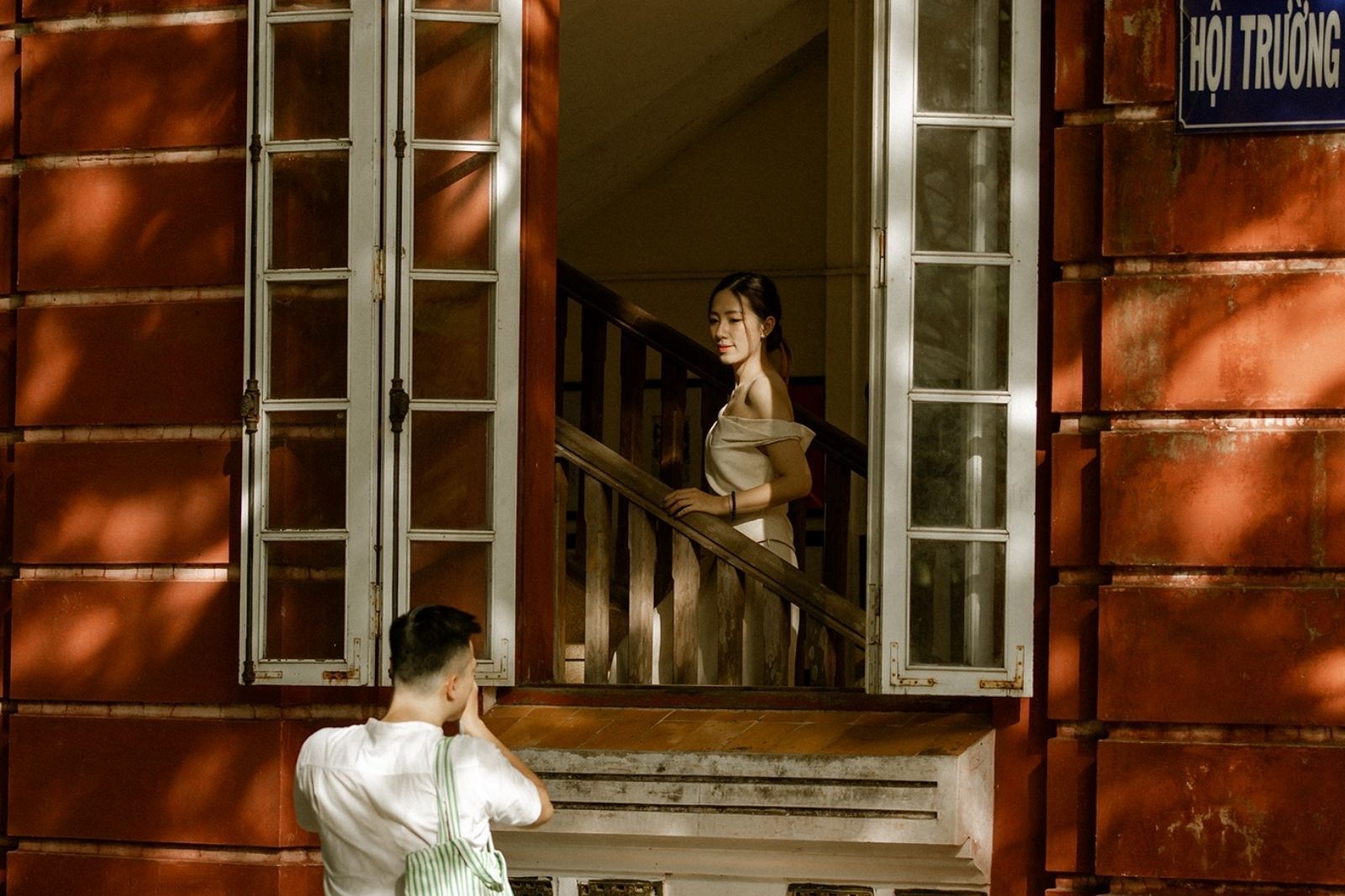
Quoc Hoc Hue is also a famous check-in spot

Photo: Quoc Hoc Hue is also a famous check-in spot 

4. Famous alumni of Quoc Hoc Hue

With over a century of history, Quoc Hoc Hue has etched its name into the history of Vietnamese education through generations of students who later became influential figures in politics, science, and culture. Among them was Nguyen Tat Thanh – President Ho Chi Minh, who studied at Quoc Hoc during the 1908–1909 academic year. In subsequent historical periods, the school was also associated with renowned figures such as General Vo Nguyen Giap, General Secretaries Tran Phu and Ha Huy Tap, Prime Minister Pham Van Dong, and Ngo Dinh Diem.

In literature, Quoc Hoc was the alma mater of prominent figures in the New Poetry movement and modern Vietnamese literature, such as Xuan Dieu, Huy Can, To Huu, and Luu Trong Lu. In music, there were Tran Hoan and Pham Tuyen; in science and academia, Dao Duy Anh, Dang Van Ngu, Ta Quang Buu, and Nguyen Thuc Hao.

What defines Quoc Hoc's standing goes beyond just a few famous names. It is a tradition passed down through generations of students, from early 20th-century intellectuals to current generations achieving high honors in national and international Olympiad competitions. For over 120 years, the roster of alumni from under those iconic red roofs remains a memorable chapter in Vietnam's educational heritage.

5. Visiting experience at Quoc Hoc Hue High School

Quoc Hoc Hue is still an active school, so your visit will be more enjoyable if you maintain quietness and respect the learning environment.

  • Entrance fee: Free.

  • Best time to visit: In the afternoon, around 1:45 PM – 5:15 PM on weekdays, or on Sundays. Morning classes are usually in session, making it less suitable for sightseeing.

When entering the campus, please dress politely, ask for permission from the security guards, limit taking photos near active classrooms, and avoid disturbing students. Visitors can park their vehicles near the Ho Chi Minh Museum or nearby parking areas. If you want to find the most iconic spots, take time near the red main gate, the ancient corridors, the statue of Nguyen Tat Thanh, and the green yards overlooking the Perfume River.

Early morning or late afternoon usually offers soft light ideal for photography. From March to August, the weather is generally more favorable for sightseeing and taking photos.

Visitors should remain quiet when taking photos at the school

Photo: Visitors should remain quiet when taking photos at the school 

Quoc Hoc High School Hue is not just an educational institution, but also a splendid symbol of Vietnamese intellect, culture, and history. Featuring a refined blend of East-West architecture, a history spanning over 120 years, and a romantic location along the Perfume River, it offers visitors an exploration experience that is both ancient and poetic. If you want to learn more about attractive destinations, local cuisine, and travel tips for Hue, check out the Hue Travel Guide on Sovaba to complete your trip planning.

Loading......

Featured destinations