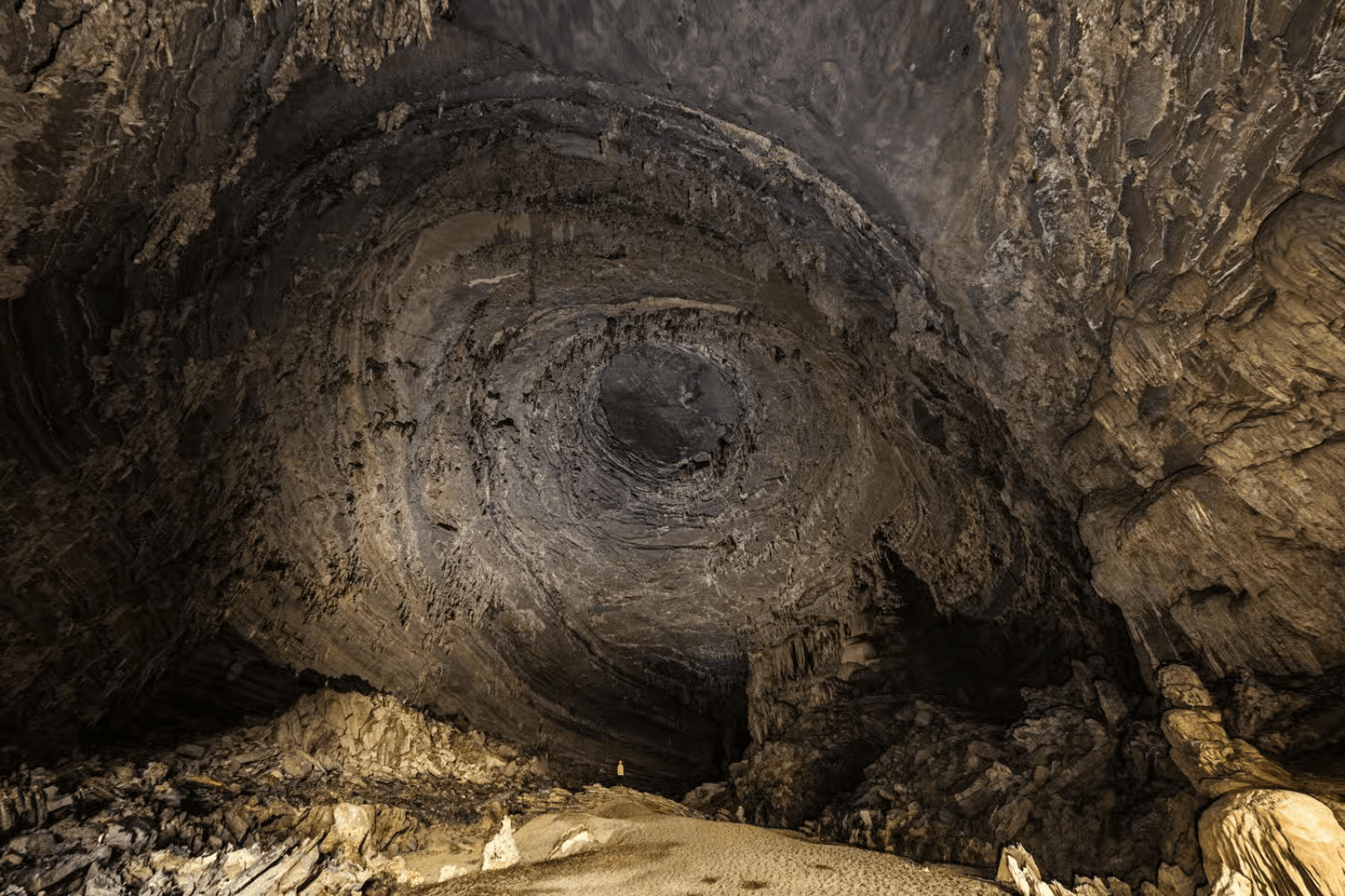
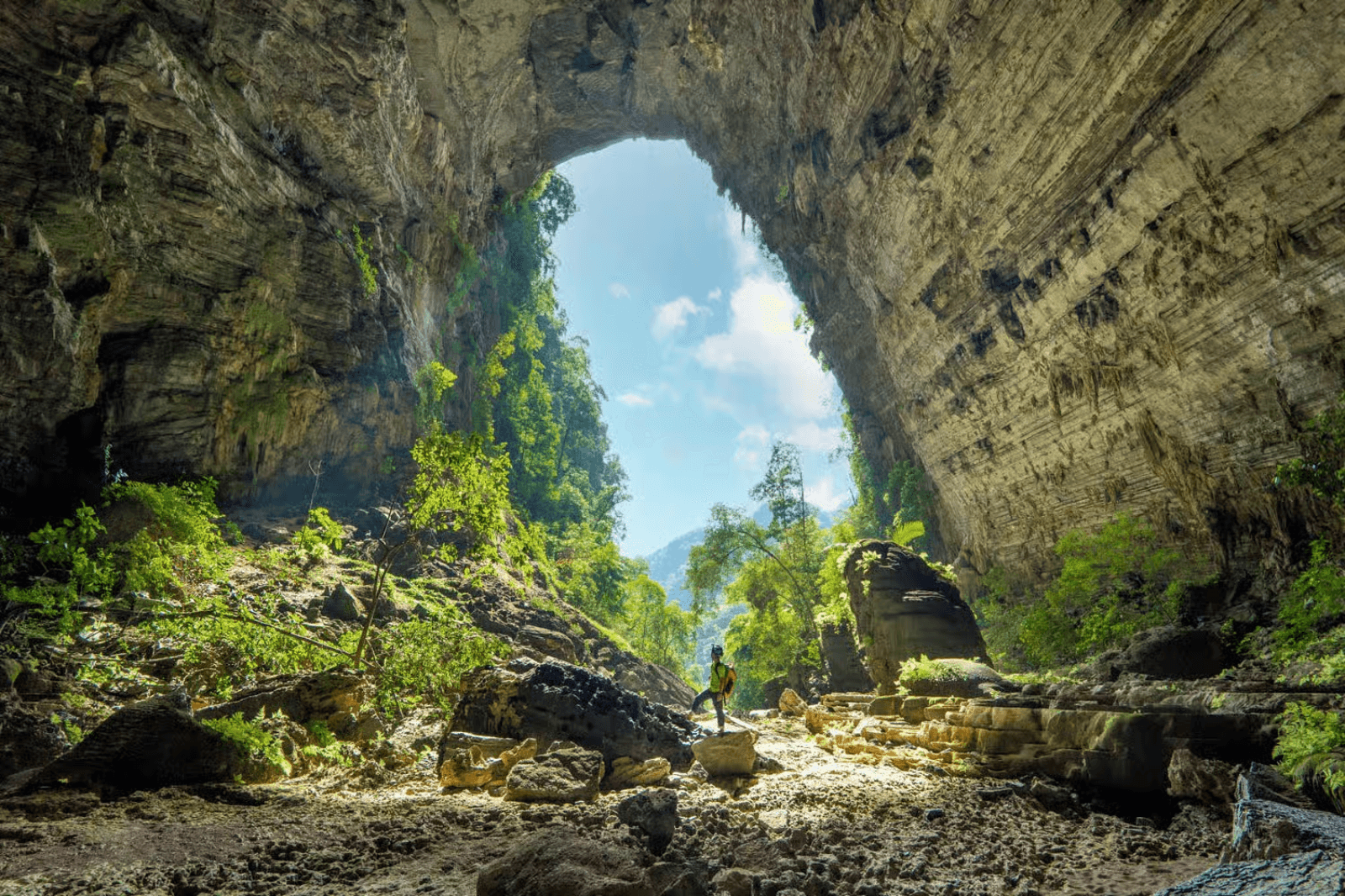
The Tu Lan Cave System is located in Kim Phu Commune (formerly Tan Hoa Commune), Minh Hoa District, Quang Binh Province (formerly, prior to administrative boundary adjustments, now part of Quang Tri Province). Situated approximately 70 km northwest of Phong Nha - Ke Bang National Park, Tu Lan lies along the Ho Chi Minh Highway, amidst majestic limestone mountains and the characteristic primary ecosystem of western Quang Binh.
The entire system spans over 650 hectares of primary forest, comprising dozens of large and small caves interconnected by lush green valleys and the Rao Nan River. From Dong Hoi City, it takes visitors about 2–3 hours to travel to the starting point in Kim Phu Commune. Thanks to its secluded location and rugged limestone terrain, Tu Lan Cave retains its pristine, wild, and virtually untouched beauty, making it one of the most attractive natural exploration destinations in Quang Binh.
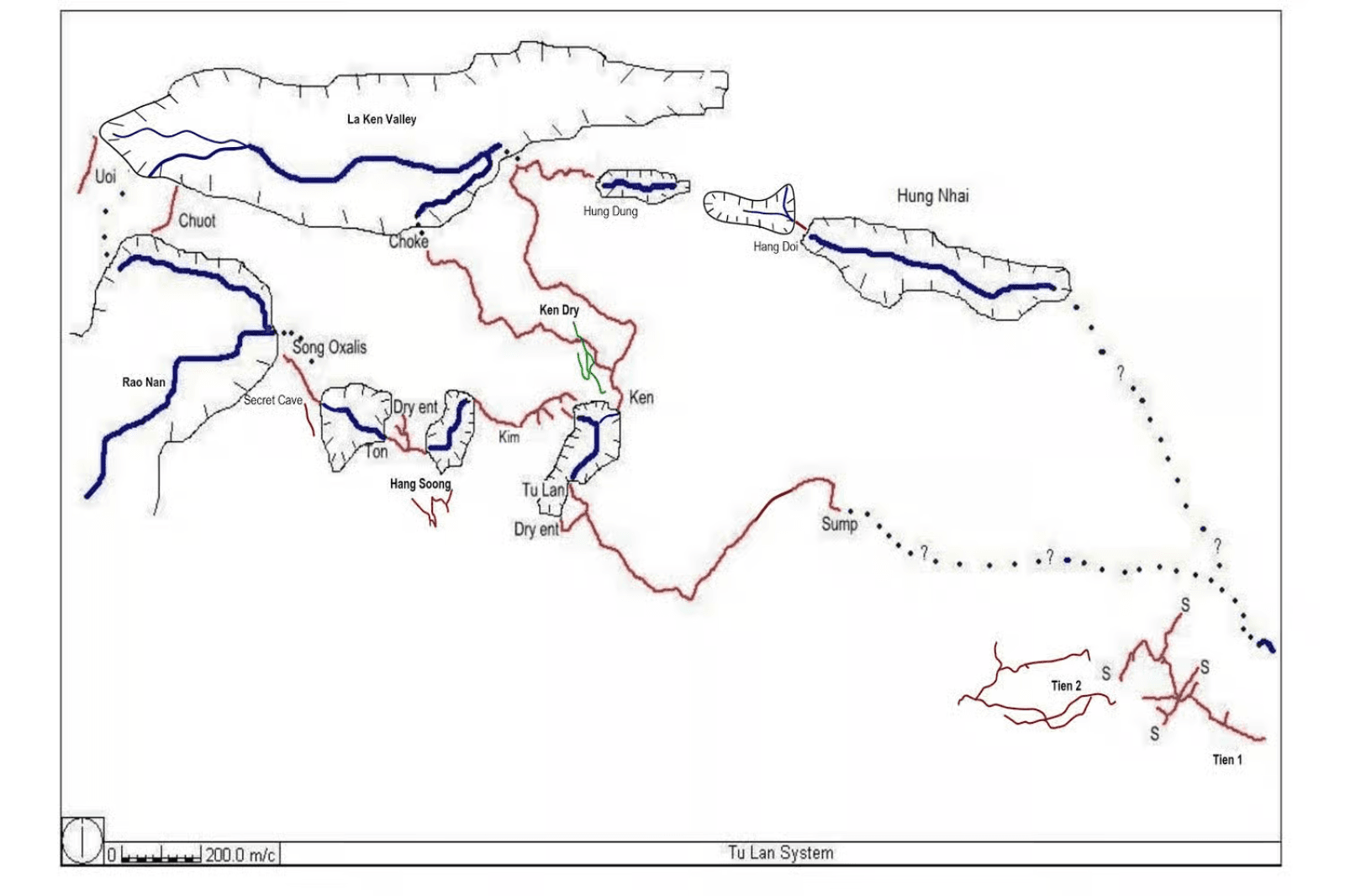
Although known to locals for many years, Tu Lan Cave was only truly included in scientific surveys starting in 1992 by the British-Vietnamese Cave Expedition team. In 2010, the cave system was further thoroughly researched under the leadership of Howard Limbert along with photographer Carsten Peter from National Geographic, helping bring the beauty of Tu Lan closer to international friends. Notably, the majestic scenery here was chosen as the backdrop for several famous cinematic projects, including the Hollywood blockbuster Kong: Skull Island, affirming the unique appeal of one of the most pristine cave systems in Vietnam.