Why is Khai Dinh Tomb considered the most expensive and elaborate construction of the Nguyen Dynasty?

Central

Thua Thien Hue

Khai Dinh Tomb

Sovaba.travel

Updated at: 24/09/2026

1. In what historical context was Khai Dinh Tomb built?

King Khai Dinh (reigned 1916–1925) ascended the throne during the final years of the Nguyen Dynasty, when the country was under French protectorate. Although his power was no longer as prominent as previous kings, he still dedicated much effort to constructing works with a personal mark, such as Kien Trung Palace, An Dinh Palace, and especially Ung Lang – his own tomb.

After a period of surveying the terrain, in 1920, the king chose the slopes of Chau Chu Mountain as his resting place. According to feng shui principles, this area possessed many auspicious elements with surrounding mountains and winding water bodies. The King renamed the mountain to Ung Son, while naming the project Ung Lang, conveying the desire for an eternal resting place amid nature.

The tomb officially commenced construction on September 4, 1920 under the command of Grand Marshal Le Van Ba. After King Khai Dinh passed away in 1925, the construction continued to be built and completed under King Bao Dai, reaching completion in 1931. With 11 years of construction, this tomb holds the longest construction period in the history of the Nguyen Dynasty. In a context of national hardship, the creation of the work was associated with considerable debate, but at the same time left behind a unique architectural masterpiece, reflecting the blend of traditional Vietnamese art and Western architecture.
King Khai Dinh personally chose and built his resting place

Photo: King Khai Dinh personally chose and built his resting place 

2. Why is Khai Dinh Tomb considered the most expensive tomb of the Nguyen Dynasty?

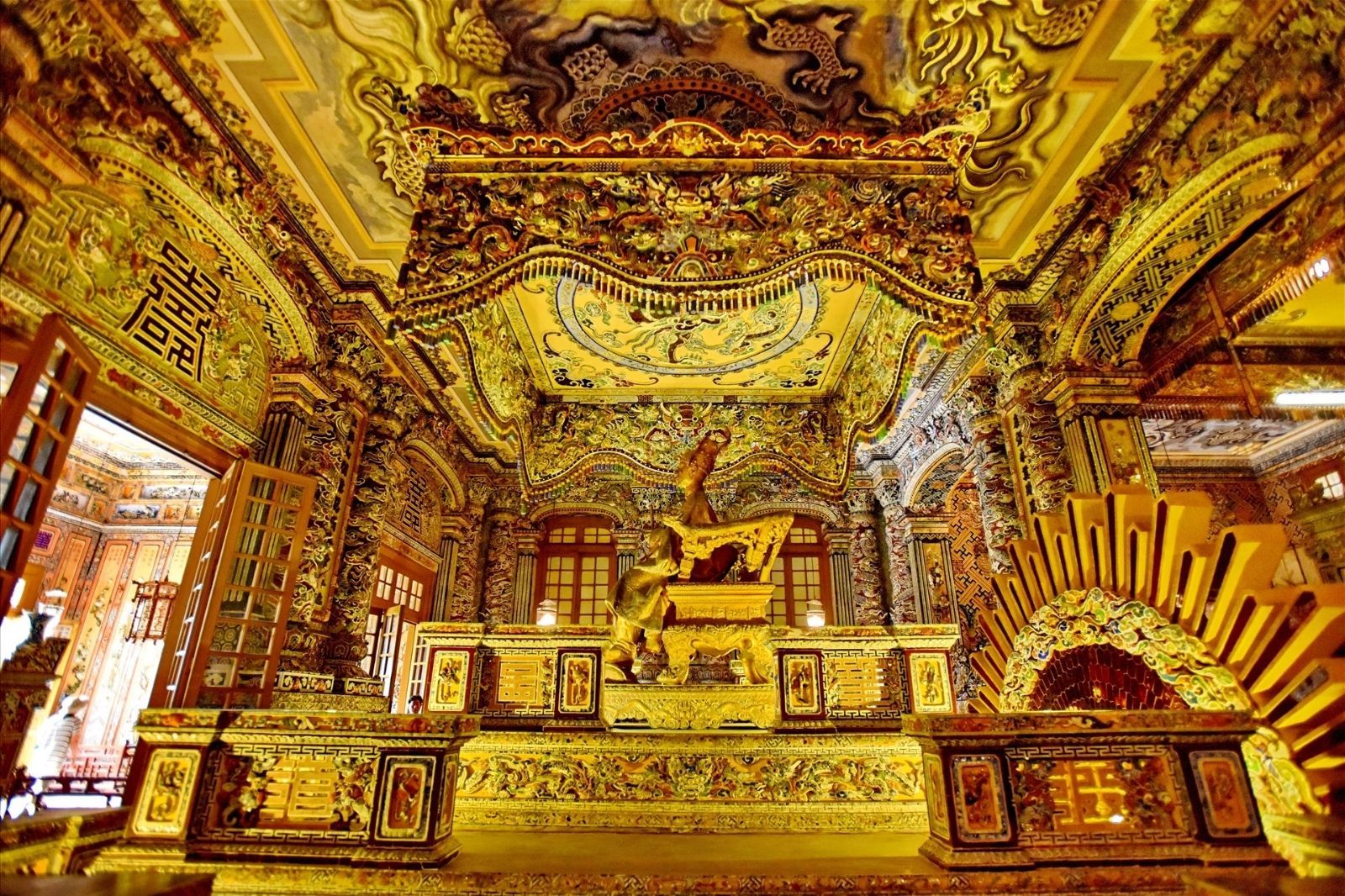
Although smaller in area compared to Minh Mang Tomb, Tu Duc Tomb, or Gia Long Tomb, Khai Dinh Tomb is considered the most costly and elaborate construction of the Nguyen Dynasty. The value of the project lies not in its scale, but in its construction time, the materials used, and the craftsmanship of the artisans. The tomb was constructed over 11 years (1920–1931) – the longest in the Nguyen Dynasty tomb system. Besides traditional materials, the project also used many modern and expensive materials of that era, such as cement, steel, slate roofing tiles imported from France, along with porcelain and colored glass brought from China and Japan for decorative purposes.

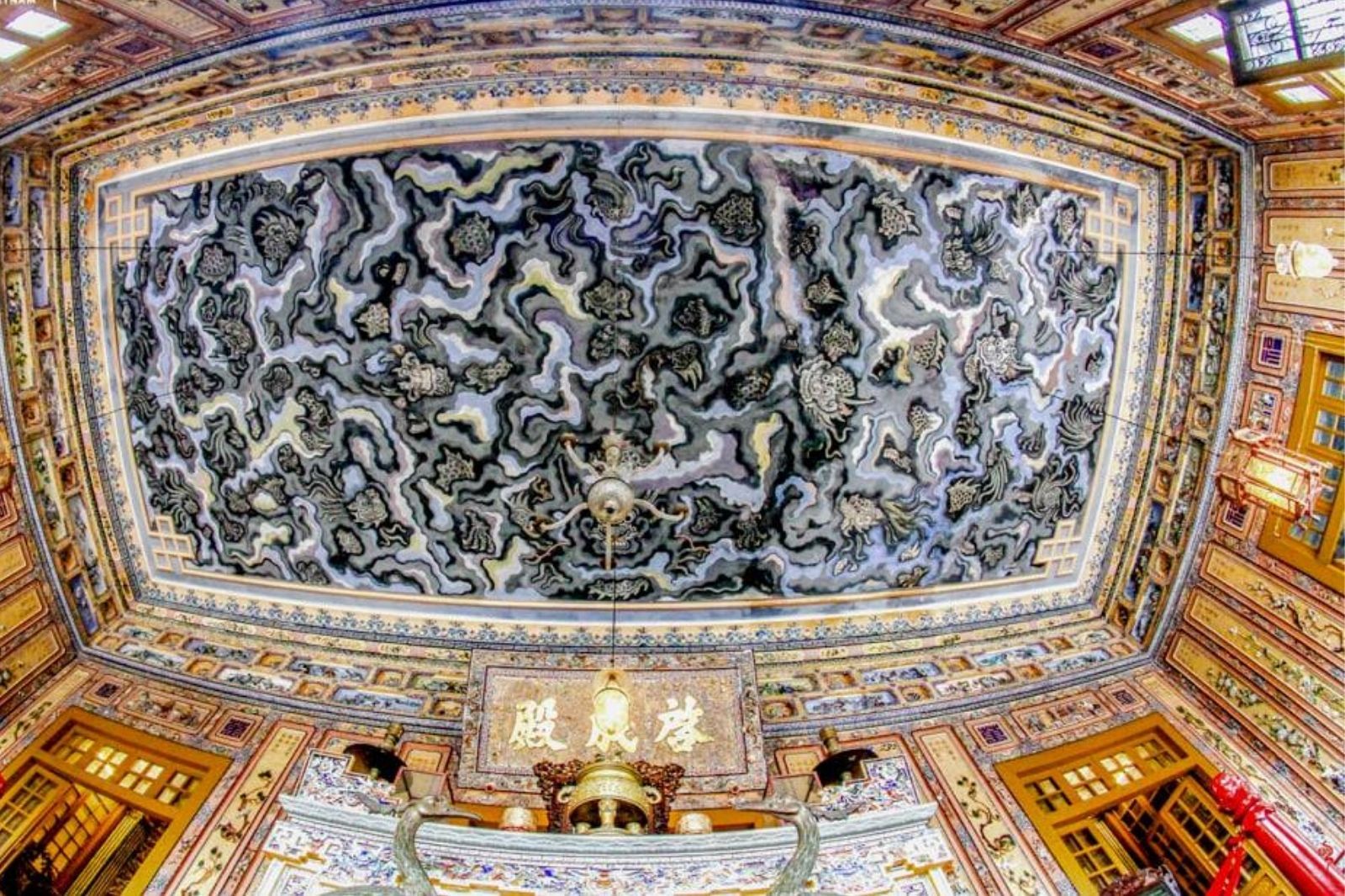
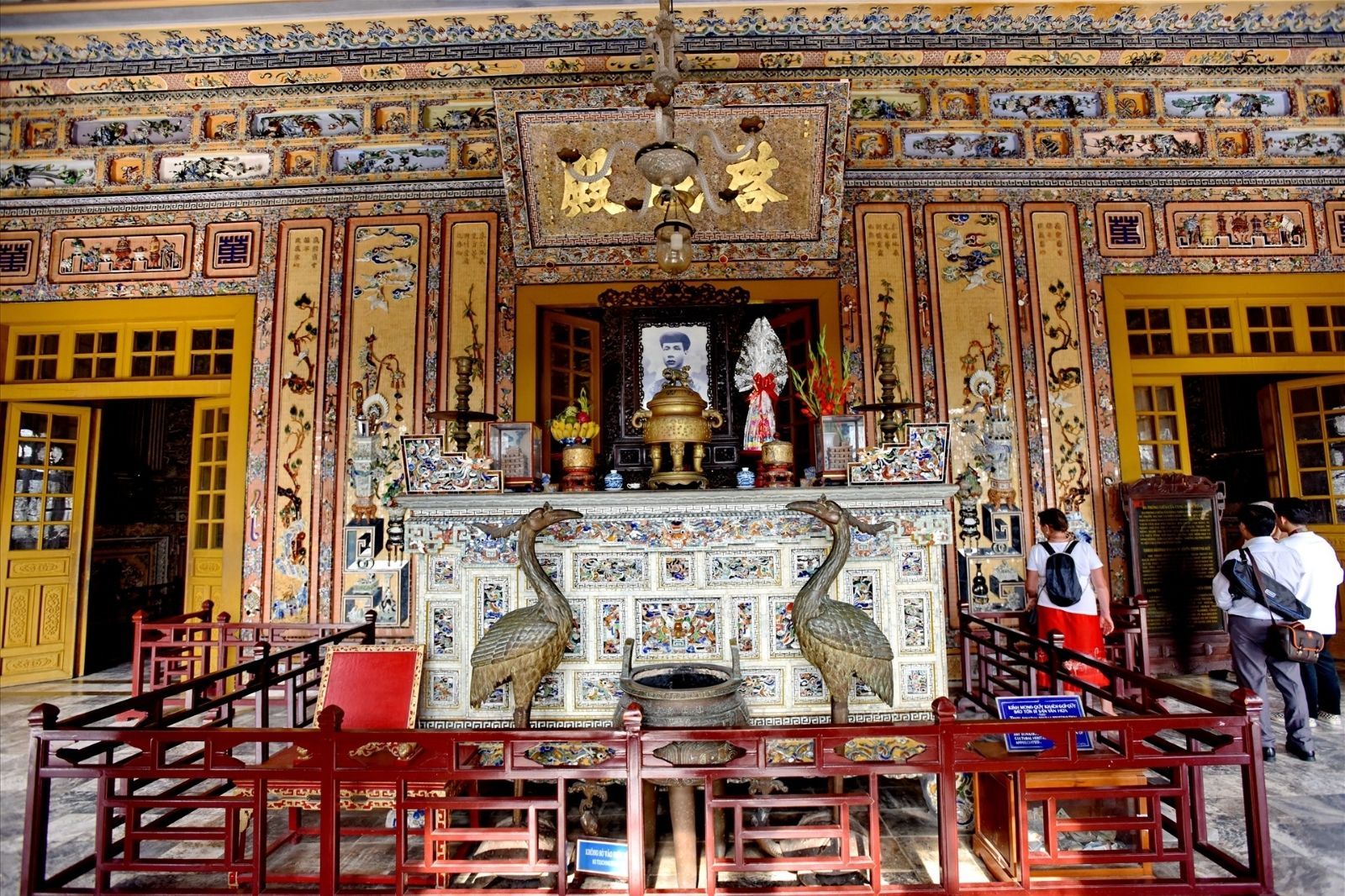
To complete the intricate details, the royal court gathered many outstanding artisans from across the country, including Phan Van Tanh, Nguyen Van Kha, Ky Duyet, and Cuu Sung. They created masterpieces such as the fresco 'Nine Dragons Hidden in Clouds' (Cuu Long An Van) and the famous porcelain mosaic system inside Thien Dinh Palace.

The tomb was built with a massive budget

Photo: The tomb was built with a massive budget 

One of the reasons the project sparked much debate was King Khai Dinh's request to the French protectorate administration for permission to increase land tax nationwide by 30% to fund the tomb's construction. This decision met with strong opposition as it increased the burden on the people in a difficult economic climate. It is this combination of prolonged construction time, high-end imported materials, intricate craftsmanship, and special funding sources that made Khai Dinh Tomb the most expensive and elaborate mausoleum project in the history of the Nguyen Dynasty.

3. Factors contributing to the elaborate craftsmanship of Khai Dinh Tomb

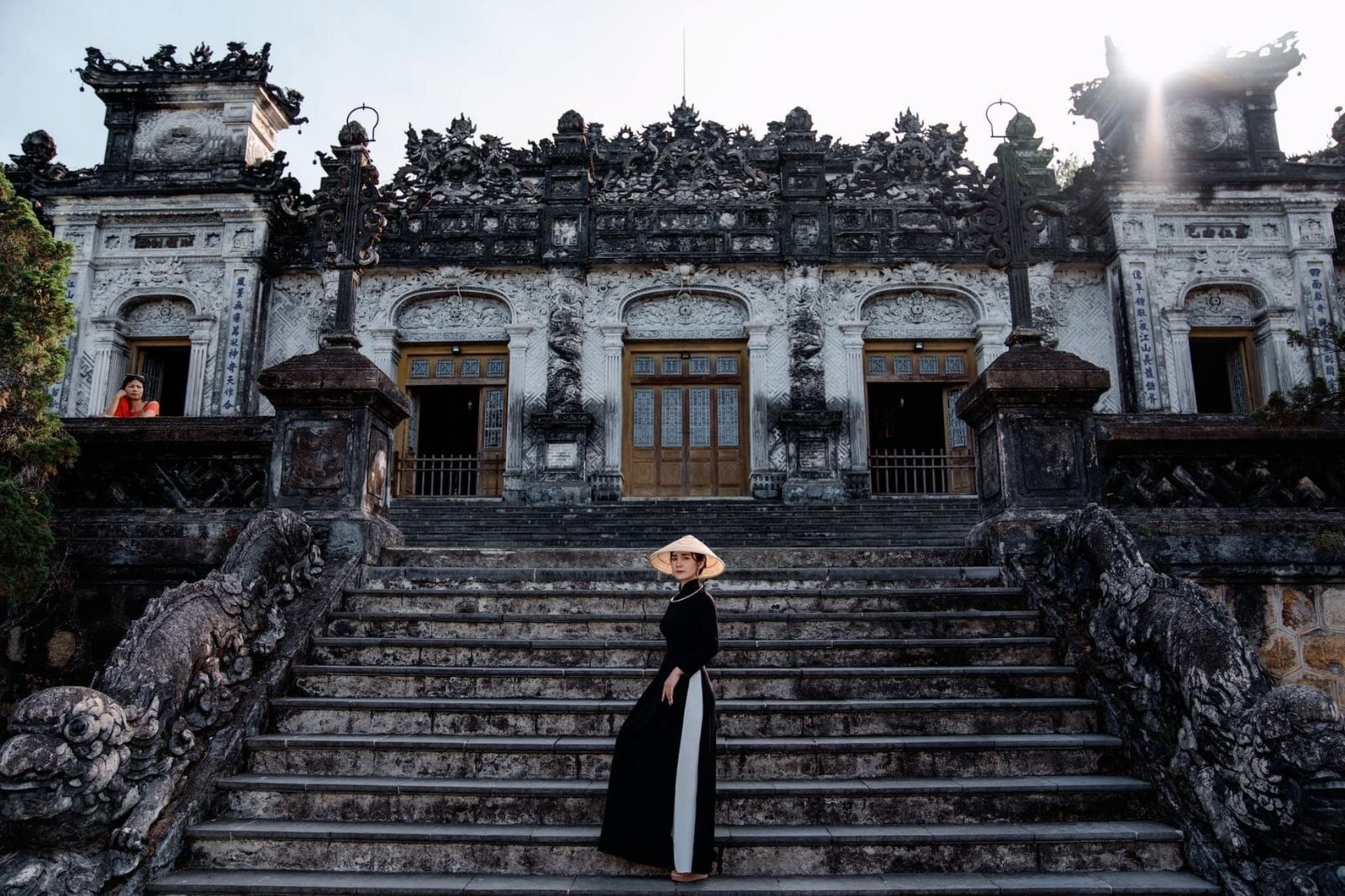
Khai Dinh Tomb is a symbol of East-West cultural intersection, combining traditional Vietnamese architectural elements with Western styles such as Roman, Gothic, and even Hinduism. The overall tomb is a rectangular block with 127 steps, divided into 5 court levels, from the majestic Tam Quan (Three-Arch) Gate to Thien Dinh Palace at the highest position. Details such as the Tam Quan Gate with Hindu architectural influences, the stele pavilion with modified Roman octagonal columns, or the cross-shaped fencing all demonstrate a breakthrough in design.

Exquisite porcelain and glass mosaic art

The artistic highlight of Khai Dinh Tomb lies in Thien Dinh Palace, where masterpieces of porcelain and glass mosaics converge. The wall bas-reliefs are assembled from broken pieces of porcelain and colored glass, meticulously polished and bonded using oyster lime and molasses, creating intricate patterns themed around the eight treasures, four seasons, and five blessings. Notably, the three ceiling murals of 'Nine Dragons Hidden in Clouds' in Thien Dinh Palace, painted by artisan Phan Van Tanh, are considered among Vietnam's greatest pictorial masterpieces. Legend has it that the artisan lay on his back, using both hands and feet to paint these vivid murals, preserving their sharpness over centuries.

The Nine Dragons Hidden in Clouds mural at Khai Dinh Tomb
Photo: The Nine Dragons Hidden in Clouds mural at Khai Dinh Tomb 

Bronze statue and intricate interior details

Inside Thien Dinh Palace, Khai Thanh Hall is where the altar and body of King Khai Dinh are placed, featuring a 1-ton canopy made of reinforced concrete that looks as delicate as velvet silk. The bronze statue of King Khai Dinh, cast in France in 1920 by artisans P. Ducing and F. Barbedienne, is positioned right above the grave, with a nearly 30-meter tunnel leading into the tomb. Interior details such as the marble floor and porcelain mosaic bas-reliefs are crafted with rare sophistication, showing an unsparing investment of effort and wealth.

4. Controversies surrounding Khai Dinh Tomb

Right from the start of construction, Khai Dinh Tomb became a topic of great debate and continues to attract the attention of researchers to this day. Controversial opinions mainly revolved around the construction budget and the architectural style of the project. Regarding history and politics, King Khai Dinh's request to the French protectorate administration to increase land tax by 30% to secure funds for building the tomb met with much backlash. In the context of the people's difficult lives, this decision was seen as increasing the burden on farmers, becoming one of the most controversial issues during Khai Dinh's reign.

From an architectural perspective, Khai Dinh Tomb also sparked diverse opinions. Many argued that the work possessed a style too distinct from traditional Nguyen Dynasty tombs due to its use of reinforced concrete, Western materials, and a blend of European architectural elements. However, it was precisely this East-West fusion that created a unique appearance, reflecting the historical context and artistic trends of Vietnam in the early 20th century.

Despite causing much controversy in the past, today Khai Dinh Tomb is viewed as an architectural and artistic masterpiece. The structure not only showcases creativity in combining multiple artistic schools but also marks the talent of Vietnamese artisans. The recognition of the Complex of Hue Monuments, including Khai Dinh Tomb, as a UNESCO World Cultural Heritage site in 1993 affirmed the enduring historical, architectural, and cultural value of this work.

Khai Dinh Tomb has become a famous tourist attraction in Hue

Photo: Khai Dinh Tomb has become a famous tourist attraction in Hue 

Khai Dinh Tomb truly deserves to be called the most expensive and elaborate construction of the Nguyen Dynasty, not only because of its use of expensive imported materials from France, China, and Japan, but also thanks to the skillful hands of artisans across the country and a bold East-West architectural mindset. If you have the opportunity to visit the Ancient Capital, do not miss the journey to visit Ung Lang – Khai Dinh Tomb to admire its magnificent beauty with your own eyes and listen to fascinating historical stories. To make your trip even more complete, you can choose a Khai Dinh Tomb tour with Sovaba Travel, offering not only a sightseeing experience but also deep and authentic insights into a special historical period of the Nguyen Dynasty.

Loading......

Featured destinations