Hoi An Silk Village: Preserving the 300-Year-Old Craft of Handcrafted Silk Weaving

Central

Da Nang

Hoi An

Sovaba.travel

Updated at: 24/09/2026

1. Where is Hoi An Silk Village?

Hoi An Silk Village is located at No. 28 Nguyen Tat Thanh Street, Cam Chau Ward (or Cam Pho/Tan An depending on sources), Hoi An City, Quang Nam Province. The tourist area is about 1 – 1.5 km from the center of Hoi An Ancient Town (only 5–10 minutes by motorbike or 15–20 minutes on foot).

  • Distance: about 1 km Northwest of Hoi An Ancient Town center, convenient to visit alongside famous attractions like the Covered Bridge or Hoai River

  • How to get there: you can walk if you want to stroll around, or rent a bicycle/motorbike for about 50,000 – 100,000 VND/day; from Da Nang it is about 30km away, taking around 45 minutes by car or bus

Beyond its convenient location, Hoi An Silk Village impresses visitors with its peaceful, lush green space, surrounded by sprawling mulberry gardens, making you feel as if you have stepped into an ancient rural village in the heart of the UNESCO-recognized heritage town.

Hoi An Silk Village has a lush green space

Photo: Hoi An Silk Village features a lush green environment  

2. History of Hoi An Silk Village

Hoi An silk weaving is a precious heritage with a history of over 300 years, closely associated with the golden era of the Hoi An trading port in the 16th–17th centuries on the Maritime Silk Road. Inheriting silk weaving techniques passed down by the Cham people, artisans of Quang Nam created soft, sophisticated silk sheets that were favored by royalty and nobility, and exported to many countries such as China, Japan, and Europe. Although it experienced periods of decline as the trading port gradually faded, silk weaving has been preserved as part of Hoi An's soul. Today, Hoi An Silk Village not only fully recreates the traditional process of growing mulberries, raising silkworms, reeling silk, and weaving silk, but has also become a unique cultural destination, contributing to preserving and spreading the value of Hoi An World Heritage. Notably, the village also worships the Lady of Silkworms (Doan Quy Phi) – the patron goddess according to local legend, expressing gratitude to those who preserved and developed the silk weaving craft over generations.

3. What makes traditional silk weaving in Hoi An Silk Village special?

What makes Hoi An Silk Village unique is the complete preservation of the traditional handcrafted silk production process – from mulberry cultivation, silkworm rearing, and silk reeling to weaving finished products. Here, there is virtually no industrial machine intervention; instead, the skilled hands of artisans and ancient looms continue to operate regularly, authentically recreating the traditional silk weaving craft of Hoi An land.

Highlights at Hoi An Silk Village:

  • Distinctive silk weaving cultural space: The craft village recreates two signature weaving techniques, including the Cham weaving workshop with intricate brocade patterns and the Cuu Dien weaving workshop following the traditional style of the Dai Viet people.
  • Ancient Cham Pa Mulberry Garden: A garden growing many rare mulberry varieties, including trees over 100 years old, contributing to the preservation of traditional mulberry gene sources.
  • Silk costume collection: Displaying over 100 Vietnamese silk Ao Dai sets across different historical periods alongside traditional costumes of Vietnam's 54 ethnic groups, reflecting rich cultural diversity.
  • “Living museum” space: Ancient wooden house structures, green gardens, and the rhythmic sound of looms create a nostalgic atmosphere, taking visitors back to the traditional craft village environment of the past.
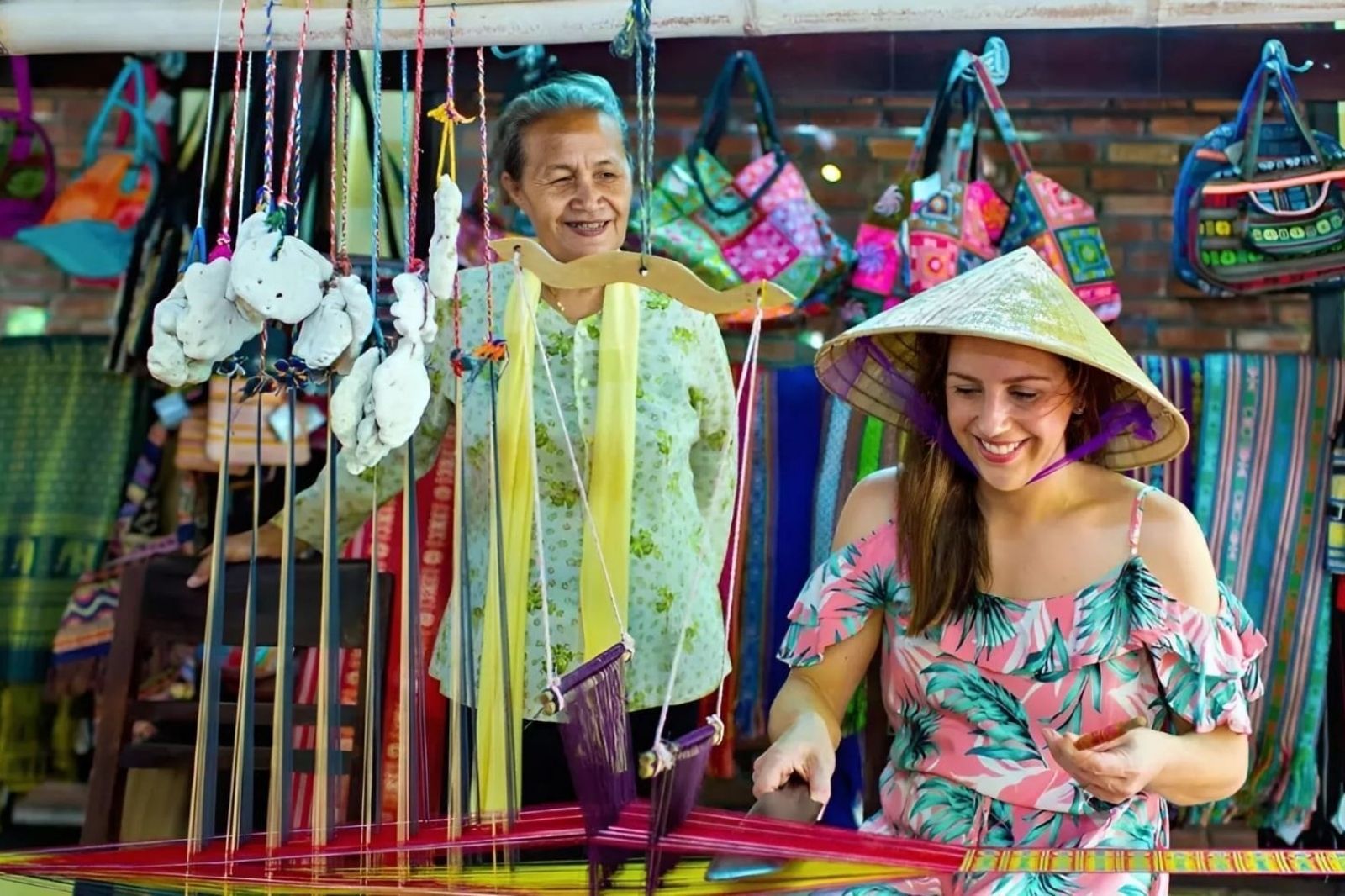
  • Interactive experiences: Visitors can join many interesting activities such as picking mulberry leaves to feed silkworms, trying hand-weaving on looms, or learning how to distinguish real silk from synthetic silk.

Thanks to the combination of traditional craft preservation and interactive experiences, Hoi An Silk Village is not just a simple sightseeing spot, but also a place that helps visitors gain a deeper understanding of the cultural values and essence of Vietnamese handicrafts.

4. Traditional process of mulberry cultivation, silkworm rearing, and silk weaving

The silk weaving process at Hoi An Silk Village is a closed, fully manual chain authentically recreated for visitors to easily observe. Below are the main steps:

  • Mulberry cultivation: Starts with caring for a large mulberry garden featuring local varieties that produce nutrient-rich leaves. Mulberry trees are grown on fertile alluvial soil along the Thu Bon River and harvested year-round.
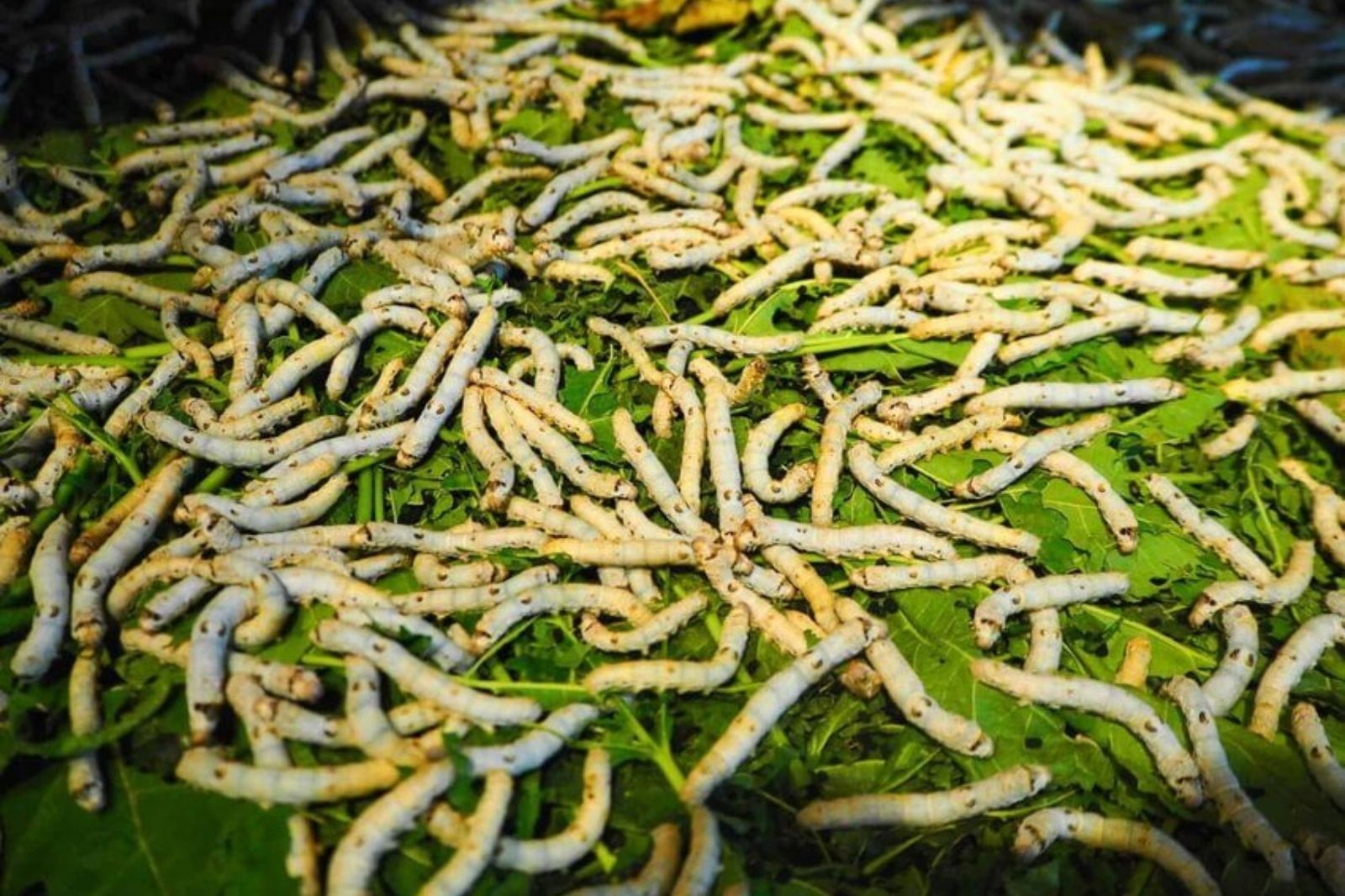
  • Silkworm rearing: Silkworms are fed fresh mulberry leaves and undergo 4-5 molting cycles over approximately 25-30 days to form cocoons. This process requires a clean environment and temperature control to keep silkworms healthy.
  • Reeling and spinning silk: Cocoons are boiled to extract silk fibers, which are then hand-spun or reeled using manual spinning wheels into fine threads. Each cocoon yields about 300-900 meters of silk, and natural yellow silk is a specialty of Hoi An.
  • Silk weaving: Silk threads are dyed with natural colors (from plant leaves, fruits) and woven on ancient wooden looms. The Jacquard weaving technique creates complex patterns, requiring great skill to avoid flaws in the silk.

The entire process takes months, highlighting the value of manual labor and eco-friendliness.

One of the highlights of Hoi An Silk Village is the hands-on silk weaving experience program, suitable for both families and international tourists. You will be guided step-by-step by artisans: from feeding silkworms with mulberry leaves and reeling silk from cocoons to sitting at the loom for a weaving trial. Although you cannot complete a full fabric sheet (as it takes many days), you can craft a small piece of silk as a souvenir. This activity usually lasts 30-60 minutes, combined with a historical guided tour to help you gain a deeper appreciation of the craft.

Silkworm rearing process using mulberry leaves
Photo: Silkworm rearing process using mulberry leaves  

5. Hoi An Silk Village ticket prices and essential information

To help you easily schedule your visit, here is the essential information you need to know when visiting Hoi An Silk Village, summarized concisely and easy to follow:

  • Opening hours: 8:00 AM – 9:00 PM daily, suitable for both morning and evening visits

  • Basic admission fee: around 50,000 VND/person, including access to production areas, exhibition spaces, and the craft village area

  • Short Tour (45 minutes): 100,000 VND – includes a tour guide and basic sightseeing.

  • Long Tour (4 hours): 595.000 VND – includes a hands-on workshop on silk weaving, mulberry leaf picking, silk reeling + buffet.

  • Lunch/Dinner buffet ticket: around 300,000 VND/person, serving local specialties such as Cao Lau and Quang Noodles

  • Children policy: children under 1m are usually free of charge, but it is recommended to double-check before visiting

A few important tips for a better experience:

  • Bring hats or caps as the outdoor sightseeing area is quite spacious

  • Avoid the rainy season (October – December) to ensure sightseeing and activities are not interrupted

  • Free parking is available, convenient for both motorbikes and cars

  • The Silk Village provides English-speaking tour guides, suitable for international travelers

With flexible timing and comprehensive services, Hoi An Silk Village is an easy addition to your itinerary, suitable for both independent travelers and package tours exploring Hoi An heritage.

Visitors can buy Hoi An silk as gifts

Photo: Visitors can buy Hoi An silk as gifts 

6. Tips for visiting Hoi An Silk Village

To make your visit to Hoi An Silk Village more fulfilling and memorable, keep in mind these useful tips:

  • Ideal time: go early in the morning (8:00 – 10:00 AM) to avoid the heat and explore easily, or late afternoon to enjoy the sunset scene over lush green mulberry gardens
  • Must-do activities: visit the mulberry garden – silkworm rearing area, watch manual silk reeling demonstrations, experience silk weaving, and enjoy local cuisine at the buffet
  • Suggested itinerary combination: visit Hoi An Silk Village after exploring the ancient town, or combine it with the nearby Tra Que Vegetable Village to complete a cultural and traditional craft village tour
  • Safety notes: bring sunscreen and drinking water, follow guidance, and do not touch machinery or looms without permission

With simple preparation of the points above, your journey exploring Hoi An Silk Village will be smooth, rich in experiences, and deeply marked by traditional cultural heritage. 

Experiencing the handcrafted silk weaving process
Photo: Experiencing the handcrafted silk weaving process  

Hoi An Silk Village is one of the exemplary destinations for cultural and traditional craft village tourism, where over 300 years of traditional silk weaving craft are fully preserved. With an elegant space, easy navigation, clear information, and practical hands-on experiences, the silk village is suitable for both domestic and international travelers, especially those interested in handcrafted values and local identity. Visiting the silk village, you not only learn and experience but also contribute to preserving and spreading the essence of Vietnamese silk craft to future generations. If you are looking for a deeply cultural destination in your journey to explore Hoi An, Hoi An Silk Village is definitely a choice not to be missed.

Loading......

Featured destinations