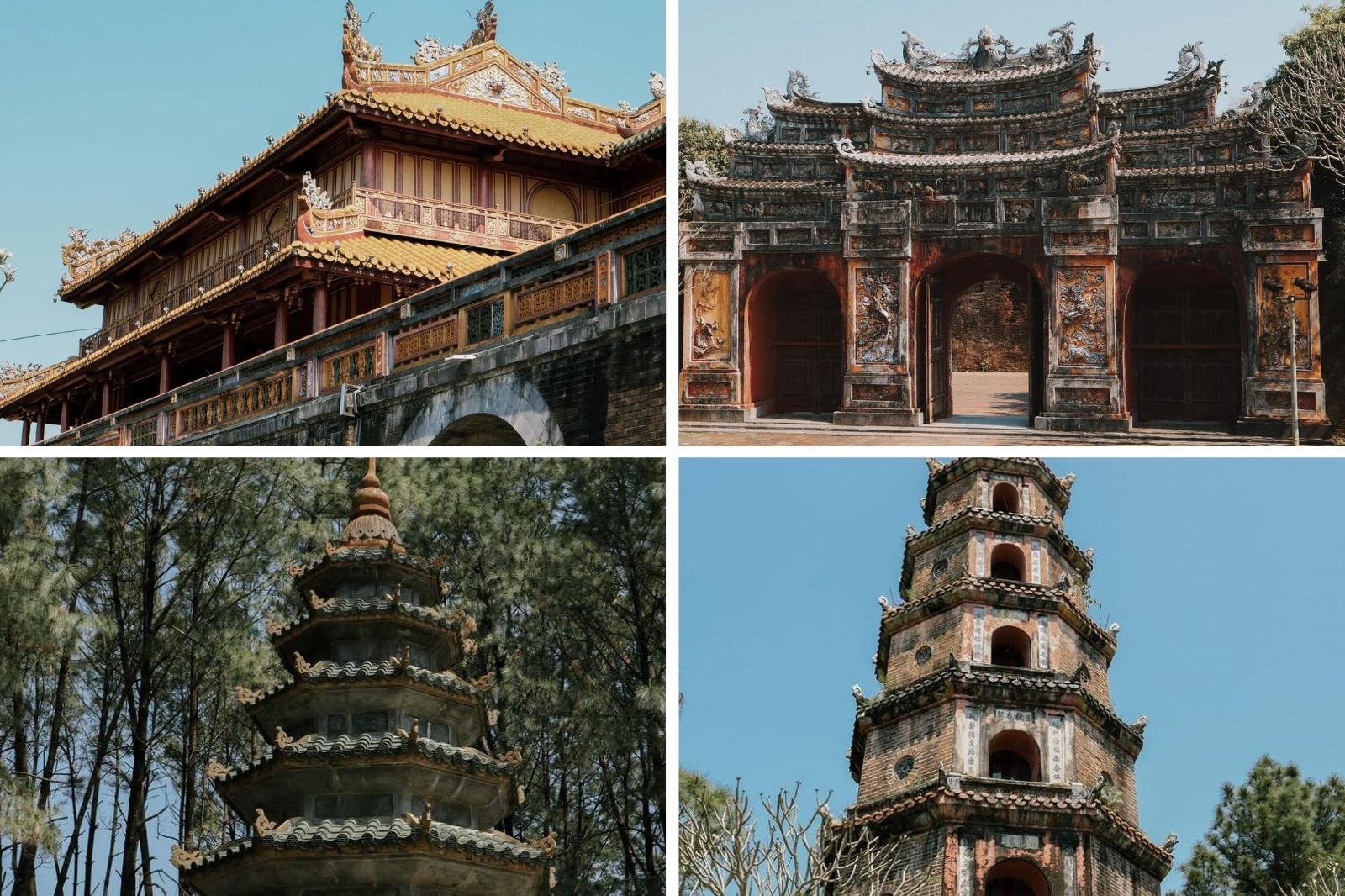
Hue and the Ancient Beauty of the Old Citadel and World Heritage in the Heart of Vietnam
Central
Thua Thien Hue
Hue Imperial Citadel
Thien Mu Pagoda
Trang Tien Bridge
Perfume River
Sovaba.travel
Updated at: 02/10/2026
1. Hue - Capital of the Nguyen Dynasty
Hue was once the capital of the Nguyen Dynasty, Vietnam's last feudal dynasty (1802-1945). This city not only preserves ancient architectural works but also carries the essence of Vietnamese culture through music, cuisine, and an elegant lifestyle. In 1993, the Complex of Hue Monuments was recognized by UNESCO as a World Cultural Heritage site, affirming the timeless historical and cultural value of this land.
Hue attracts visitors with:
Ancient Architecture: Hue Citadel, royal tombs, and pagodas deeply imbued with the mark of the Nguyen Dynasty.
Unique Culture: Royal court music, Hue folk singing on the Perfume River, and refined cuisine.
Poetic Nature: The Perfume River, Truong Tien Bridge, and Vong Canh Hill create a picturesque natural landscape.
Rich History: Hue preserves stories of the 13 Nguyen kings, with prominent historical marks.
Photo: Hue always attracts tourists with its ancient beauty
2. Top attractions in Hue
Below are the prominent landmarks you must visit when coming to Hue.
Hue Imperial Citadel
Hue Citadel, or the Imperial City (Dai Noi), was the political, cultural, and religious center of the Nguyen Dynasty. Built in 1805 under King Gia Long, the Imperial City is a massive architectural structure featuring a system of palaces, temples, and fortress walls. Highlights inside the Imperial City include:
Ngo Mon (Noon Gate): The main gate of the Imperial City, where important ceremonies took place.
Thai Hoa Palace: The court hall of the Nguyen kings, featuring exquisite architecture and a majestic space.
The Purple Forbidden City: The royal family's residential area, carrying an aura of mystery and solemnity.
It is recommended to hire a tour guide or use an audio guide headset to better understand the history and significance of each area. Admission tickets to the Imperial City cost around 200,000 VND per person (2025).
Tombs of the Nguyen Dynasty Kings
Hue is famous for its system of royal tombs of the Nguyen Dynasty kings, each carrying a unique architectural style reflecting the personality of each monarch. Some prominent tombs:
Tu Duc Tomb: Dubbed an "ink wash painting" with a poetic ambiance, lotus ponds, and lush green pine forests. This was where King Tu Duc relaxed and composed poetry.
Khai Dinh Tomb: Blends Eastern and Western architecture, featuring exquisite carvings and unique mosaic artwork.
Minh Mang Tomb: Stands out with its balance and harmony between architecture and nature.
Purchase a combo ticket to visit 3 tombs (Tu Duc, Khai Dinh, Minh Mang) to save costs. It is advisable to go in the morning to avoid the heat.
Thien Mu Pagoda
Thien Mu Pagoda, located beside the Perfume River, is the oldest and most famous pagoda in Hue. Built in 1601, Thien Mu Pagoda is not only a sacred place but also a cultural symbol of the city. The 7-story Phuoc Duyen Tower is a striking highlight that captivates every visitor's gaze.
Perfume River and Truong Tien Bridge
The Perfume River is the soul of Hue, bringing poetic beauty and a peaceful atmosphere. Visitors can experience listening to Hue folk songs on dragon boats in the evening, enjoying court music while admiring the city sparkling under the lights. Truong Tien Bridge, spanning the Perfume River, is an architectural icon of Hue. Designed by Gustave Eiffel, this bridge is not only a means of transportation but also a work of art.
Photo: Tourists check in Hue
3. Hue cultural and culinary experiences
Not only preserving famous historical structures, Hue is also a land steeped in the Vietnamese soul through every lifestyle detail, every dish, and every folk melody on the Perfume River. Coming to Hue is coming to a royal court culture blended with folk traditions, enjoying dishes that are not only delicious but also refined and delicate like the people here.
Court Music (Nha Nhac) and Hue Folk Singing
Hue Royal Court Music (Nha Nhac), recognized by UNESCO as an Intangible Cultural Heritage of Humanity, is a unique form of music once performed in royal ceremonies. Visitors can enjoy court music at the Duyet Thi Duong Theater inside the Imperial City or on dragon boats along the Perfume River.
Ca Hue (Hue folk singing), with its sweet folk songs, is an unmissable experience. Ticket prices for a folk singing performance on the river usually range from 100,000 to 150,000 VND per person.
Hue Cuisine
Hue Cuisine is a combination of royal refinement and rustic flavors. Famous dishes you must try:
Bun Bo Hue: A signature noodle dish with rich, spicy broth, typically served with beef, pork rolls, and fresh herbs.
Hue Rice Cakes: Including banh beo, banh nam, banh loc, small yet delicate and delicious bites.
Hue Sweet Soup (Che): Con Hen corn sweet soup, hyacinth bean sweet soup, or lotus seed sweet soup are sweet, quintessential Hue desserts.
Suggested Addresses:
Ba Do Restaurant (Bun Bo Hue): 71 Nguyen Binh Khiem, Hue City.
Hang Me (Hue Rice Cakes): 45 Vo Thi Sau, Hue City.
Che Hem (Alley Sweet Soup): 17 Hung Vuong, Hue City.
Photo: Hue cuisine is famous for its delicious dishes
Amidst modern life, Hue is like an echoing low melody, inviting travelers to return to ancient values that never fade away. The ancient beauty of the old Citadel, moss-covered royal palaces, the poetic Perfume River, and the chiming bells of Thien Mu Pagoda... all create a Hue that is both dreamy and profound. If you are looking for a trip not only to relax but also to listen to historical tales echoing through each monument, then a Hue travel tour will surely be an unforgettable experience.