Phu Van Lau: A Small Structure Carrying a Grand Historical Mission in the Ancient Capital of Hue

Central

Thua Thien Hue

Hue Imperial Citadel

Sovaba.travel

Updated at: 24/09/2026

1. What is Phu Van Lau?

Phu Van Lau, which means "document display pavilion", is a two-story architectural work located right at the front of the Hue Citadel, along the poetic banks of the Perfume River. The pavilion occupies a special location: with Ky Dai (the Flag Tower) in front and Nghinh Luong Dinh Pavilion behind—creating a harmonious landscape complex rich in historical value.

Unlike grand, imposing structures such as the Thai Hoa Palace or Ngo Mon Gate, Phu Van Lau has a modest scale with a height of about 11.67m. However, the building's value lies not in its size but in its special role during the Nguyen Dynasty—where it was once considered the court's "information center". Specifically, Phu Van Lau was the venue for posting royal edicts and decrees, announcing the results of important examinations such as the Hoi and Dinh exams, as well as holding various cultural and military activities. Beyond its deep historical significance, the image of Phu Van Lau is also featured on the 50,000 VND banknote alongside Nghinh Luong Dinh, affirming its status as an iconic cultural symbol of the Ancient Capital of Hue in the hearts of Vietnamese people.

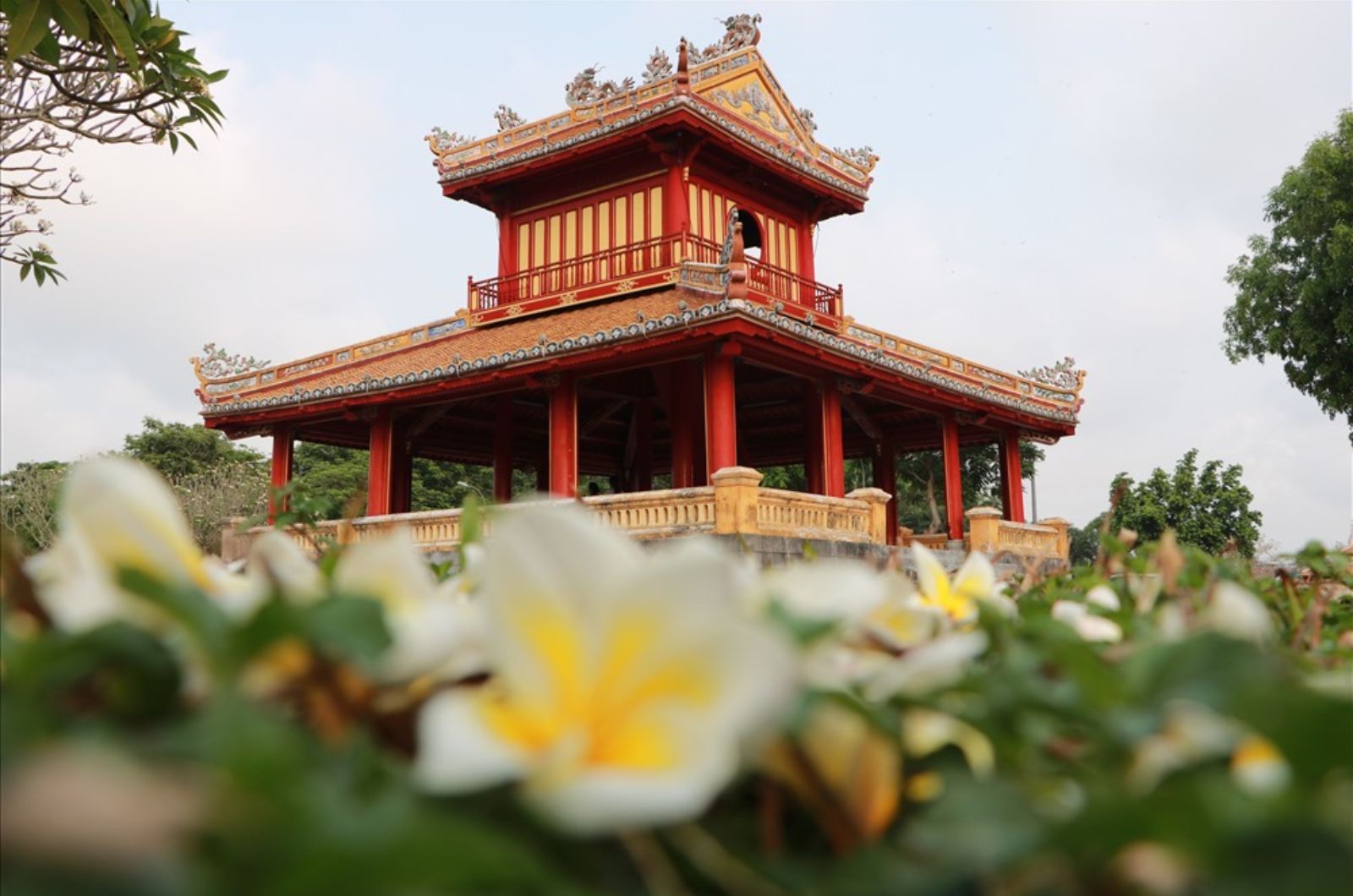
Phu Van Lau was built during the reign of King Gia Long
Photo: Phu Van Lau was built during the reign of King Gia Long  

2. History and the important role of Phu Van Lau

Before 1819, this area was merely a small structure named Bang Dinh, used for posting royal decrees and edicts to convey information from the court to the public. In the 6th month of the 18th year of King Gia Long's reign (July 1819), the Nguyen Dynasty dismantled Bang Dinh and constructed Phu Van Lau—a grander two-story pavilion, marking an important step forward in the court's administrative and information system.

Throughout its existence, Phu Van Lau served many key functions:

  • Posting court announcements: Serving as the venue to post royal edicts, imperial exam results, and major national events.
  • Promoting education and culture: Clearly demonstrating the Nguyen Dynasty's policy of employing talented scholars, contributing to fostering a spirit of learning and examination in society.
  • Cultural and military venue: This was also the location for the King and court officials to hold military parades (infantry, cavalry), host longevity banquets, or enjoy events such as boat races on the Perfume River.

Spanning nearly 200 years of history with numerous restorations (about 10 times), Phu Van Lau still retains the signature architectural style of the Nguyen era. Far from being just an administrative building, it stands as a symbol of harmony between humanity and nature, nestled in the poetic space between the Perfume River and Ngu Binh Mountain.

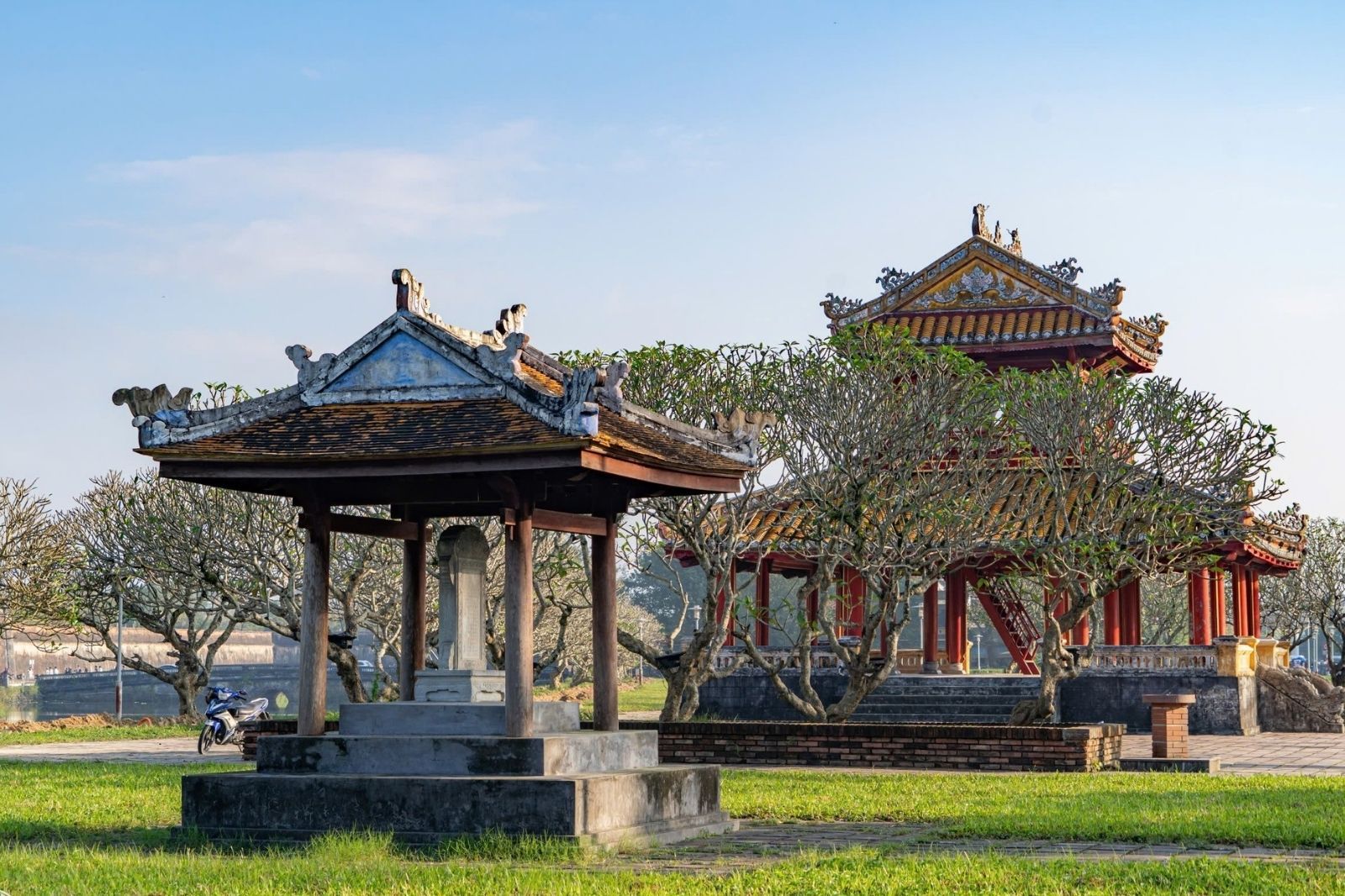
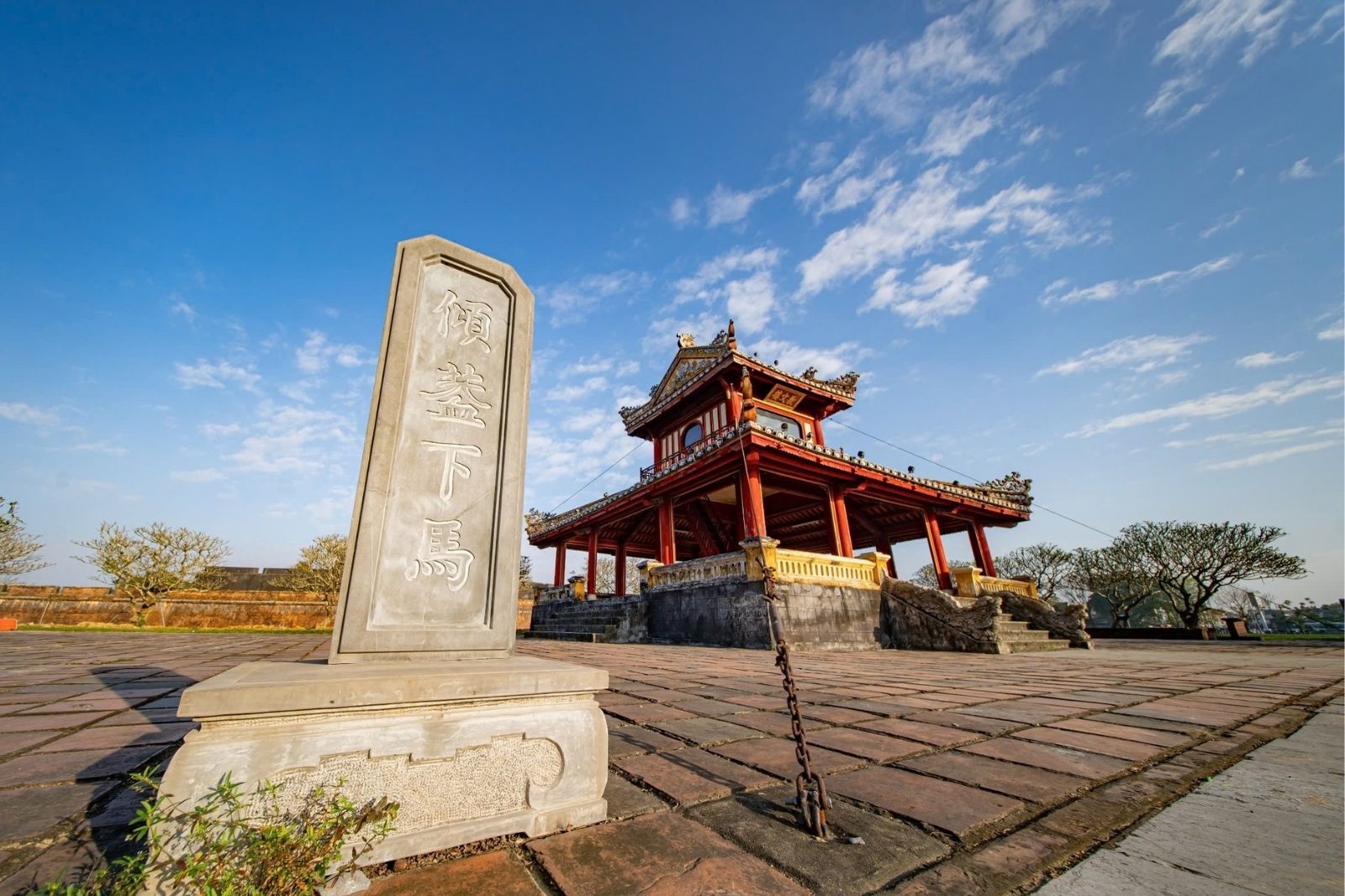
Stone stele in front of Phu Van Lau
Photo: Stone stele in front of Phu Van Lau 

3. The unique architecture of Phu Van Lau under the Nguyen Dynasty

Phu Van Lau is considered a prime example of Nguyen Dynasty architecture, embodying elegance, refinement, and Eastern philosophical depth. Though not large in scale, the building clearly showcases distinct artistic value and architectural thinking:

  • Structure: The building consists of two floors with a pillar frame made of precious ironwood, comprising 16 pillars (4 main pillars spanning across both floors and 12 auxiliary pillars). The ground floor is completely open without partitions, creating a well-ventilated space that harmonizes with nature.
  • Roof: Designed with a double-hipped roof system (chong diem), covered with yellow-glazed Hoang Luu Ly tiles—a symbol of royal authority. The upper roof is smaller than the lower one, creating balance and a graceful rhythm for the entire structure.
  • Windows and symbolism: The upper floor features doors on all four sides with shapes of philosophical significance: the front and back doors are circular representing Heaven, while the two side doors are square representing Earth—clearly reflecting Yin-Yang principles and universal harmony.
  • Decoration: Surrounding railings, ground floor paved with stone or checkered tiles, combined with intricate gilded crimson-painted details. The entire structure stands approximately 11.67m high, blending seamlessly with the picturesque Perfume River landscape.

Despite its small appearance, Phu Van Lau exudes an ancient, enduring beauty over time, making it an attractive destination for domestic and international visitors exploring Hue's heritage.

Phu Van Lau was once the place to post royal decrees
Photo: Phu Van Lau was once the place to post royal decrees

4. Which historical events are associated with Phu Van Lau?

More than just a posting venue for royal documents, Phu Van Lau is linked to several significant historical events, vividly reflecting the political, cultural, and national spirit through different periods:

  • Reign of Minh Mang (1829): The area in front of Phu Van Lau hosted the first elephant-tiger fight before the Ho Quyen arena was constructed. The event attracted a large crowd of spectators, becoming a unique performance activity of that era.
  • Reign of Minh Mang (1830): The royal court hosted a grand three-day banquet to celebrate the King's birthday, reflecting the prosperity and solemn ritualism of the Nguyen Dynasty.
  • In 1916 (Reign of King Duy Tan): This was a special milestone when King Duy Tan disguised himself as a fisherman at the Phu Van Lau pier to secretly meet patriotic scholars like Tran Cao Van and Thai Phien, planning an uprising against French colonial rule. Although the uprising failed, the event left a profound mark on history, associated with the famous folk verse:
    “Looking down at the Perfume River from Phu Van Lau
    Seeing boats rowing upstream and downstream…”
    – symbolizing patriotic spirit and the aspiration for independence.

These historical milestones have turned Phu Van Lau into a "living witness" of the Ancient Capital of Hue, reflecting the nation's journey of development from the feudal era to the struggle for independence.

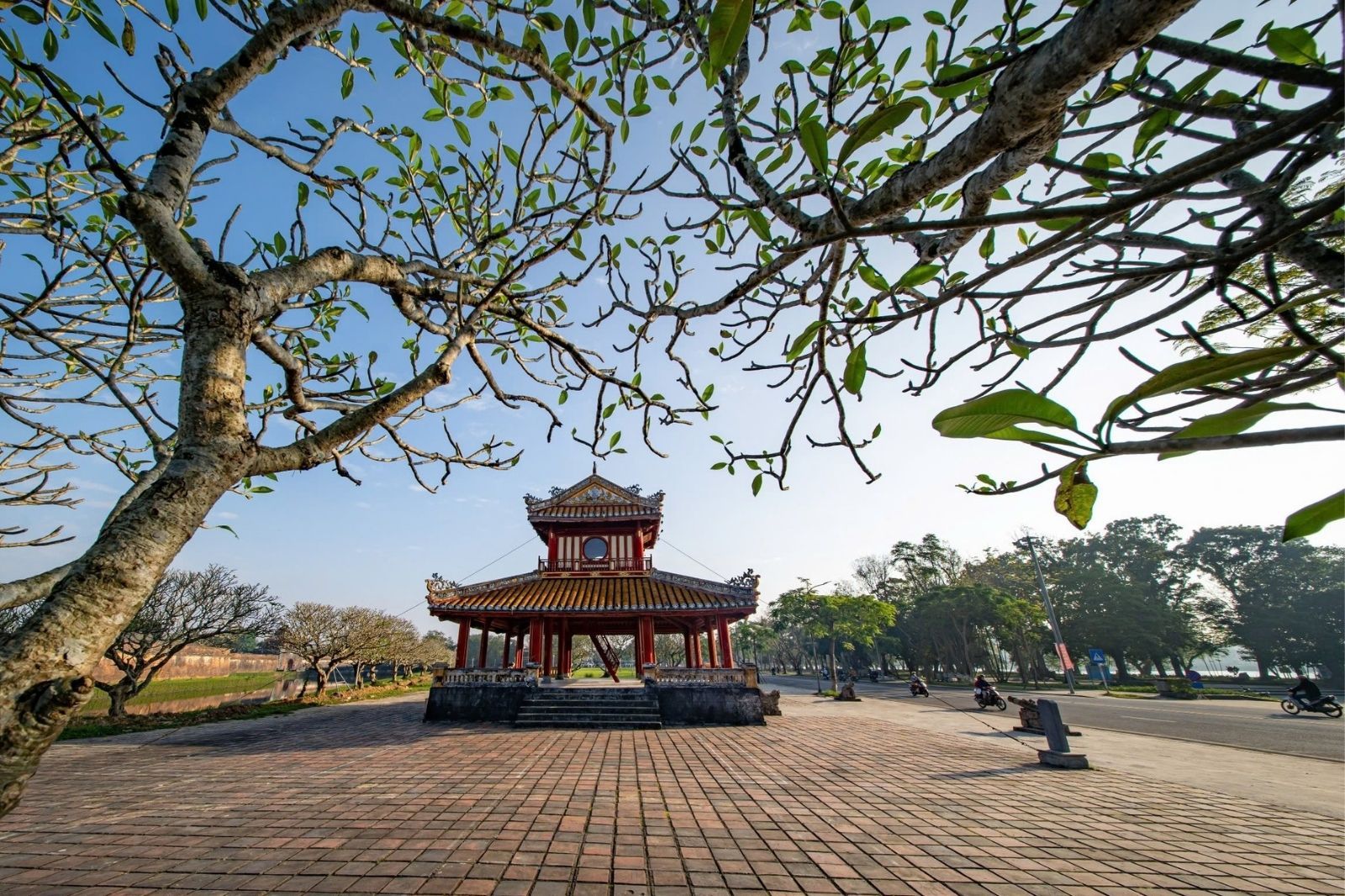
Visit Phu Van Lau in the late afternoon or early morning to avoid the heat
Photo: Visit Phu Van Lau in the late afternoon or early morning to avoid the heat  

5. Detailed guide to visiting Phu Van Lau

To ensure a smooth and fulfilling visit to Phu Van Lau, you should keep the following important information in mind:

  • Location: Phu Van Lau is located within the Complex of Hue Monuments (Phu Hoa Ward, Hue City), along the central axis comprising Ngo Mon Gate – Ky Dai (Flag Tower) – Phu Van Lau – Perfume River. It is only about 2–3 km from the city center.
  • Entrance fee: Free of charge
  • How to get there:
    • Motorbike / taxi / Grab: Quick and convenient from central Hue
    • Bicycle or dragon boat on the Perfume River: Offers a relaxing and romantic experience
    • 1-Day Imperial City Tour: A suitable choice if you wish to fully explore all monument sites
  • Best time to visit: It is recommended to visit in the early morning (7:00 AM – 9:00 AM) or late afternoon (3:00 PM – 5:00 PM) to enjoy cool air, admire sunrise or sunset over the Perfume River, and avoid the strong sun.
Visiting Phu Van Lau is completely free of charge
Photo: Visiting Phu Van Lau is completely free of charge 

Over two centuries have passed, yet Phu Van Lau still stands firm beside the Perfume River as a silent witness to history, reflecting the harmonious beauty of power, morality, and Vietnamese culture. If you wish to gain deeper insights into the story of Phu Van Lau and admire the full beauty of the Hue Imperial City complex, join the all-inclusive Hue Imperial City tour with Sovaba Travel. This journey will offer an in-depth experience, history-savvy guides, a well-planned itinerary, dedicated service, and attractive prices—helping you truly touch the soul of the ancient capital heritage.

Loading......

Featured destinations