Thien Lam Pagoda Hue: Discover Unique Buddhist Architecture in the Heart of the Ancient Capital

Central

Thua Thien Hue

Thien Lam Pagoda

Sovaba.travel

Updated at: 24/10/2026

1. Where Is Thien Lam Pagoda in Hue?

Located on Quang Te Hill in Thuy Xuan Ward, Hue City, Thien Lam Pagoda is nestled amidst lush greenery beneath the serene skies southwest of the ancient capital. Its commonly referenced address is 22/54 Le Ngo Cat, Thuong 2 Village. Situated approximately 4–5 km from the city center, the pagoda is close enough for visitors to reach with ease, yet secluded enough to step away from the urban bustle and savor moments of profound tranquility.

Directions: From downtown Hue, follow the route Hung Vuong – Nguyen Hue – Dien Bien Phu – Thanh Hai. Upon reaching the base of the hill and spotting the prominent Standing Buddha statue, turn into the temple gate and continue along the path leading up the hill.

The pagoda is generally open free of charge daily, with reference visiting hours from 5:30 to 19:00; visitors are advised to check ahead of their trip to plan their time accordingly. Strolling through the grounds beneath shady trees and within the peaceful sanctuary, you can leisurely admire the architecture, offer incense with reverence, or simply sit in silence for a few moments. Sometimes, sightseeing in Hue does not require a packed itinerary; simply finding a peaceful place to slow down is more than enough to create lasting, cherished memories of your journey.

Statue

Photo: The 8-meter-tall statue of the "Blessed One on Alms Round" on Quang Te Hill

2. Indian, Thai, and Burmese Architecture at Thien Lam Pagoda

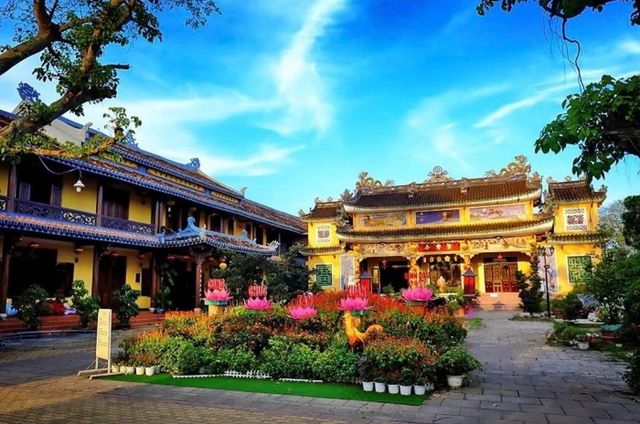
Amidst the ancient, traditional temples typical of Hue, Thien Lam Pagoda makes its own mark with Theravada Buddhist architecture, reminiscent of the golden temples in Thailand and Myanmar. Originating as a small thatched hermitage on Quang Te Hill in 1960, the pagoda is closely associated with Most Venerable Ho Nhan, who spent many years studying and practicing Buddhism in Myanmar. The hallmarks of that spiritual journey gradually materialized into the temple's architecture, creating a distinctive highlight in the spiritual landscape of Hue.

In contrast to the Mahayana Buddhist architecture typical of Hue—characterized by curved tiled roofs, timber pillars, and intricate dragon and phoenix carvings—Thien Lam Pagoda impresses with an airy, dignified, and elegant aesthetic. The entire complex is accented in radiant yellow—the symbolic color of Theravada Buddhism—alongside a network of stupas, outdoor Buddha statues, a main hall, and sophisticated yet harmonious relief carvings. The open layout, seamlessly harmonizing with the verdant pine forest, creates a tranquil sanctuary ideal for meditation, reflection, and spiritual pilgrimage.

The pagoda was founded around 1960, beginning merely as a modest thatched hut on Quang Te Hill. In 1966, through the collective support of Buddhist followers and local residents, the pagoda was expanded and developed into the scale seen today. Through decades of growth, Thien Lam Pagoda has become a prominent Theravada Buddhist study and practice center in Central Vietnam, as well as an architectural and spiritual destination that attracts countless visitors traveling to Hue.

Many other notable architectural structures within the grounds of Thien Lam Pagoda

Photo: Many other notable architectural structures within the grounds of Thien Lam Pagoda

3. Notable Architectural Features at Thien Lam Pagoda

Strolling through the grounds of Thien Lam Pagoda, visitors will naturally be drawn to structures that contrast sharply with Hue's traditional temple architecture. The golden stupa rising against the sky, the imposing Standing Buddha at the entrance, and the serene Reclining Buddha inside the grounds each hold special significance in Buddhist practice. Each structure contributes to the distinctive presence of the pagoda while opening up fascinating perspectives on Theravada Buddhist iconography.

  • Standing Buddha and Reclining Buddha Statues: These are the two most prominent structures at the pagoda. The Standing Buddha stands majestically in an alms-gathering posture, while the Reclining Buddha, carved from white marble, depicts the Buddha entering Nirvana. This is also a favorite photography and reflection spot for many travelers.

  • Myanmar-Style Stupa: Standing over 15 meters tall, the stupa is built in Burmese architectural style, highlighted by a gilded spired dome and dignified form. Inside lies the main sanctuary, a statue of Gautama Buddha, a lifelike wax figure of Most Venerable Ho Nhan, and a grand ceremonial bronze bell.

  • Royal Garden (Vuon Ngu Uyen): A verdant, tranquil garden adorned with sculptures depicting major events in the life of the Buddha, evoking a sense of serenity and closeness to nature.

  • Main Hall and Grounds: The main sanctuary features a minimalist Theravada design, distinguished by striking yellow staircases. The spacious, quiet grounds offer an ideal setting for worship, meditation, and quiet reflection.

In addition to these landmark structures, Thien Lam Pagoda also houses a seated meditating Buddha statue, a wax figure of Most Venerable Ho Nhan, and sacred mythological figures such as Naga serpents and lions. Each figure holds profound meaning in Buddhist art and belief, adding rich detail to the pagoda's spiritual landscape.

Peaceful atmosphere at Thien Lam Pagoda

Photo: Peaceful atmosphere at Thien Lam Pagoda

4. Nearby Attractions to Combine with Thien Lam Pagoda Hue

Situated in Thuy Xuan Ward, Thien Lam Pagoda is conveniently positioned to combine with famous sightseeing spots across the southern and western reaches of Hue. With a well-planned itinerary, you can easily spend half a day visiting the pagoda, exploring historical royal mausoleums, or unwinding on a pine-covered hill while taking in the unhurried rhythm of the ancient capital.

  • Tu Hieu Pagoda: A renowned ancient pagoda set amidst verdant pine forests, offering a deeply meditative atmosphere and serving as an exceptional spiritual destination in Hue.

  • Thien Mu Pagoda: The iconic symbol of the ancient capital featuring the seven-tiered Phuoc Duyen tower, located just a few kilometers from Thien Lam Pagoda.

  • Tu Duc Tomb and Nguyen Dynasty Royal Tombs: Exemplary architectural and historical monuments situated near Thuy Xuan, ideal for discovering Nguyen royal heritage.

  • The Imperial City of Hue: Located about 5–6 km away, this is an essential destination for learning about imperial history and royal court architecture.

  • Thuy Xuan Pine Hill and Hillside Cafes: Excellent spots to relax, take in scenic panoramic vistas, and capture beautiful photos.

Suggested Itinerary: Thien Lam Pagoda – Tu Hieu Pagoda – Tu Duc Tomb – Hue Imperial City or Thien Mu Pagoda, delivering a complete experience of culture, history, and spirituality in Hue.

Myanmar Stupa in the heart of the ancient capital

Photo: Myanmar Stupa in the heart of the ancient capital

Thien Lam Pagoda is not only a tranquil sanctuary but also an extraordinary highlight of Hue tourism, representing a harmonious blend of Vietnamese Buddhist culture and unique Theravada architecture. Whether you are on a spiritual pilgrimage, an architecture enthusiast, or simply a traveler looking for a peaceful refuge from everyday life, a Thien Lam Pagoda tour will certainly reward you with memorable experiences and an unforgettable sense of peace and serenity.

Featured destinations