History and Formation of Minh Mang Tomb – A Majestic Mausoleum Masterpiece in the Heart of the Ancient Capital

Central

Thua Thien Hue

Minh Mang Tomb

Sovaba.travel

Updated at: 24/09/2026

1. Where is Minh Mang Tomb located?

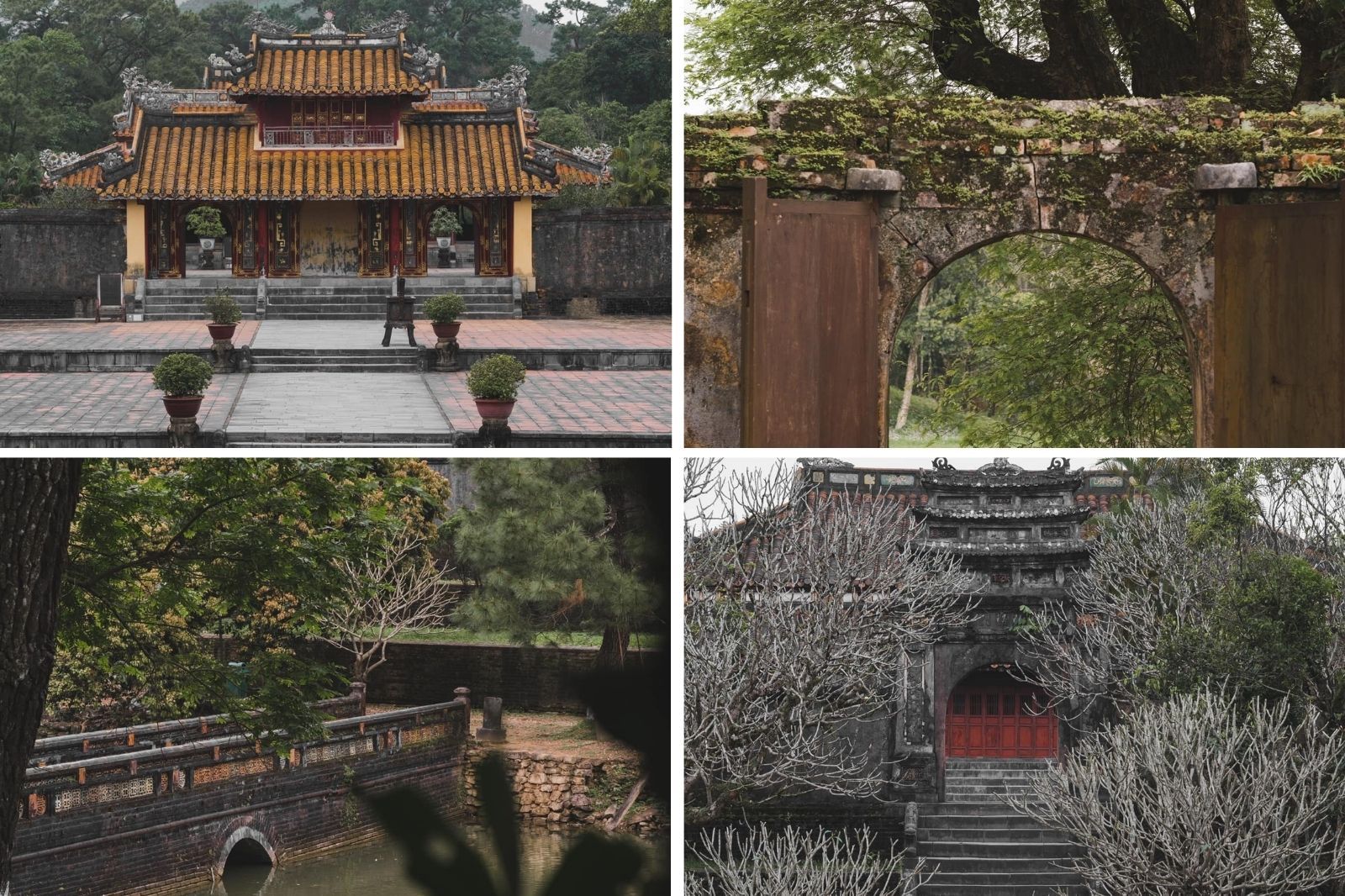
Minh Mang Tomb is located on Cam Ke Mountain – a mountain renamed Hieu Son by King Minh Mang himself, located in Huong Tho Commune, Huong Tra Town (according to the new administrative boundary, belonging to Long Ho Ward, Phu Xuan District), Hue City. The structure is situated in a prime location near the Bang Lang Intersection, where the two tributaries Ta Trach and Huu Trach converge to form the gentle, poetic Perfume River. Located about 12–14 km west of Hue city center, Minh Mang Tomb features an expansive space with a harmonious combination of hills, lakes, pine forests, and pristine green areas. The tranquil scenery, separated from the urban bustle, gives this place a contemplative, majestic, yet no less poetic beauty.

It is the special feng shui location along with the harmonious natural landscape that creates the unique feature of Minh Mang Tomb. Unlike many other tombs of the Nguyen Dynasty, this place feels like a secluded retreat amidst mountains and forests, allowing visitors to not only admire a remarkable architectural work but also enjoy the peace and pristine beauty of the ancient capital Hue.

Minh Mang Tomb is the resting place of Emperor Minh Mang

Photo: Minh Mang Tomb is the resting place of Emperor Minh Mang    

2. History and construction of Minh Mang Tomb

King Minh Mang (Nguyen Phuc Dam, reigning from 1820–1841) was the second emperor of the Nguyen Dynasty, famous for his administrative, cultural, and Confucian ideology reforms. As early as around 1826–1827, he appointed geomancers to travel across the Hue region to find suitable land for constructing his royal tomb. After numerous surveys, the plot of land on Cam Ke Mountain (later renamed Hieu Son), near the Bang Lang confluence – where the Ta Trach and Huu Trach branches merge to form the Perfume River – was selected due to its special feng shui topography.

Despite finding an ideal location, King Minh Mang was in no rush to start construction. For 14 years, he repeatedly surveyed, deliberated, and refined the design concept to create a work worthy of an emperor's stature. By 1840, the king officially decided to build the tomb, renamed Cam Ke Mountain to Hieu Son, and named the complex Hieu Lang. The blueprint, prepared by high-ranking court officials Bui Cong Huyen, Truong Dang Que, and the Giam Thanh Ve, was personally reviewed and approved by the king.

In April 1840, construction officially began. Officials Le Dang Danh, Nguyen Trung Mau, and Ly Van Phuc were commissioned to command soldiers and builders to dig lakes, erect surrounding walls, and build the initial structures. With a cautious and perfectionist nature, King Minh Mang frequently personally inspected the progress. During an inspection in August of the same year, finding that the excavation of Trung Minh Lake did not meet requirements, he ordered adjustments and penalized responsible officials to ensure the project strictly adhered to the design intent.

Regrettably, while the project was still unfinished, King Minh Mang fell ill and passed away on January 20, 1841 (the 28th day of the 12th lunar month in the year of Canh Ty). After ascending the throne, King Thieu Tri continued to fulfill his father's wish. Just one month later, he tasked senior officials Ta Quang Cu, Ha Duy Phien, and Nguyen Tri Phuong with mobilizing nearly 10,000 soldiers and artisans to resume construction according to the previously approved master plan.Minh Mang Tomb was built on Cam Khe Mountain

Photo: Minh Mang Tomb was built on Cam Khe Mountain 

3. Feng shui significance and design philosophy of Minh Mang Tomb

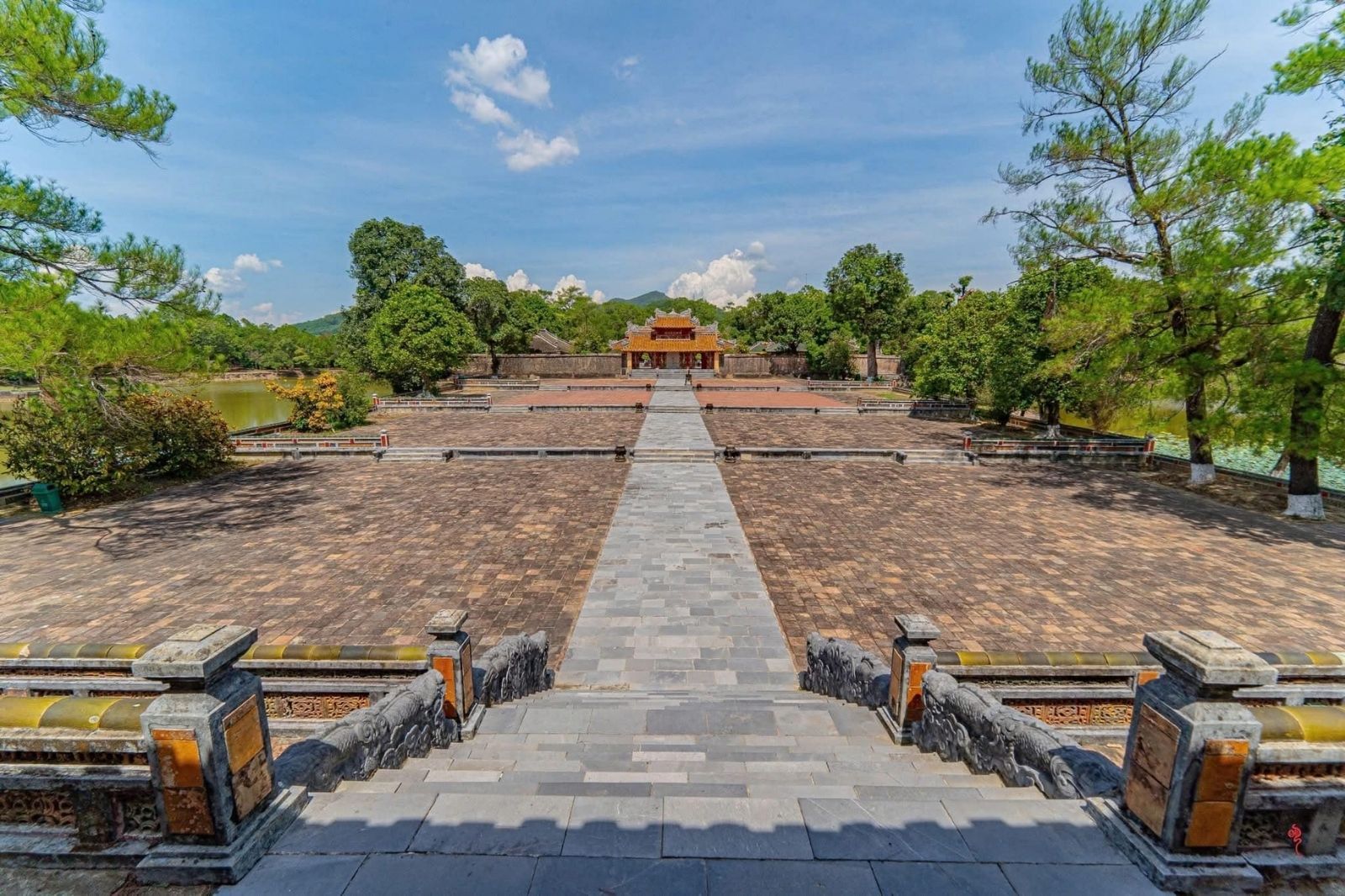
Minh Mang Tomb was built based on the feng shui principle of "mountain behind, water in front", with mountains serving as a solid backdrop behind and waters wrapping around in front, creating a stable terrain harmonious with nature. The entire tomb complex was skillfully planned to resemble the posture of a person resting peacefully: Kim Phung Mountain serves as the pillow, the Bang Lang confluence is where the feet stretch out, while Trung Minh Lake spreading on both sides is like arms gently resting in a tranquil space.

The layout of the tomb also clearly reflects the Yin - Yang philosophy in Eastern culture. Buu Thanh is circular, symbolizing Yang (the sun), surrounded by the crescent-shaped Tan Nguyet Lake, representing Yin (the moon). This combination reflects the concept of cosmic balance, cycle, and eternal existence of all things.

In addition, the Shendao axis is arranged straight, with structures symmetrically balanced along the main axis, demonstrating Confucian ideology regarding order, discipline, and harmony between heaven – earth – humanity. For King Minh Mang, the final resting place was not merely an emperor's tomb but also a symbol of prosperity, durability, and moral values he pursued throughout his life. It is the subtle blend of feng shui, architecture, and philosophical thought that confers a special value upon Minh Mang Tomb, making it one of the most representative and flawless mausoleum masterpieces of the Nguyen Dynasty.

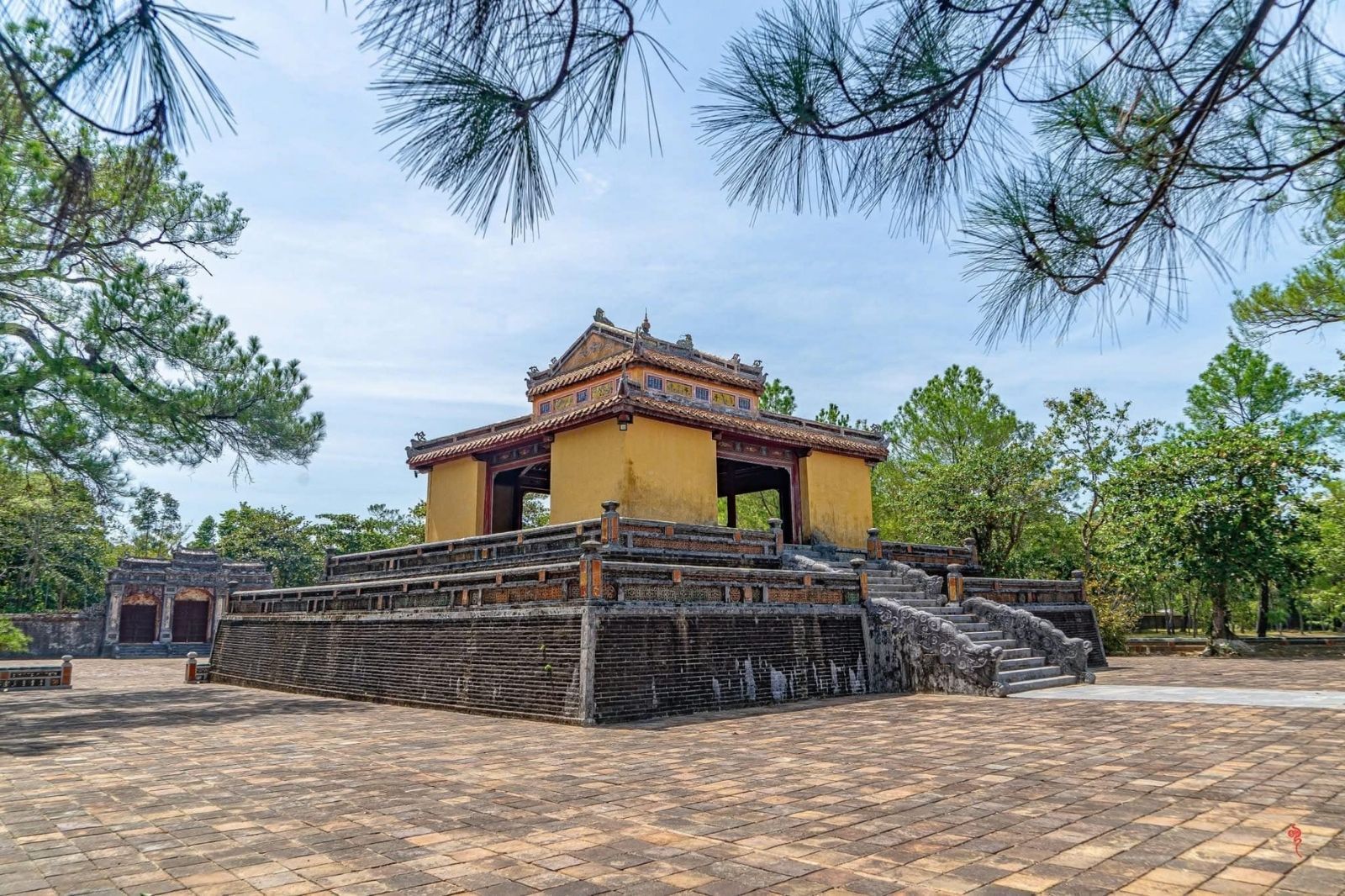
Minh Mang Tomb with 40 major and minor structures

Photo: Minh Mang Tomb with 40 major and minor structures

4. Frequently asked questions about Minh Mang Tomb (FAQ)

If you are planning a visit to Minh Mang Tomb but still have concerns about distance, visiting duration, or combined itineraries, the answers below will help you prepare more conveniently for your trip to explore the Ancient Capital of Hue.

How far is Minh Mang Tomb from Hue city center?

Minh Mang Tomb is located about 12–14 km west of Hue city center, taking approximately 25–40 minutes of travel depending on the vehicle and traffic conditions. Visitors can easily get here by motorbike, car, taxi, bus, or opt for a day join-in tour to save time and have a accompanying tour guide.

How long does it take to visit Minh Mang Tomb?

To fully explore the beauty of the tomb complex, you should spend about 1.5–2 hours visiting. This amount of time is sufficient to stroll through the architectural structures, admire the lake and pine forest views, and learn about the historical significance of the monument. If you want to take photos, listen to audio guides, or explore in more detail, you can spend 2.5–3 hours.

Should you visit Minh Mang Tomb during the rainy season?

Visitors can still visit Minh Mang Tomb during the rainy season (around October to February of the following year). At this time, the landscape becomes lush and green, the space is quiet, and there are fewer crowds. However, as paths may be slippery, you should prepare anti-slip shoes, raincoats, and monitor weather forecasts before setting off. For convenient sightseeing and photography, the dry season from March to September is a more ideal time, especially visiting in the morning or late afternoon to avoid harsh sunlight.

Which attractions should be combined with a visit to Minh Mang Tomb?

Minh Mang Tomb is often included in itineraries exploring Hue's famous heritage sites. You can visit the Hue Imperial Citadel, Tu Duc Tomb, Khai Dinh Tomb, or Gia Long Tomb to gain a deeper understanding of Nguyen Dynasty history. Additionally, Thien Mu Pagoda and a boat cruise on the Perfume River are also popular choices favored by many visitors.

If you want to optimize your time and budget, you can choose a Hue day tour combining stops such as Imperial Citadel – Minh Mang Tomb – Tu Duc Tomb or Khai Dinh Tomb, offering a complete journey to discover the unique cultural and historical values of the Ancient Capital.
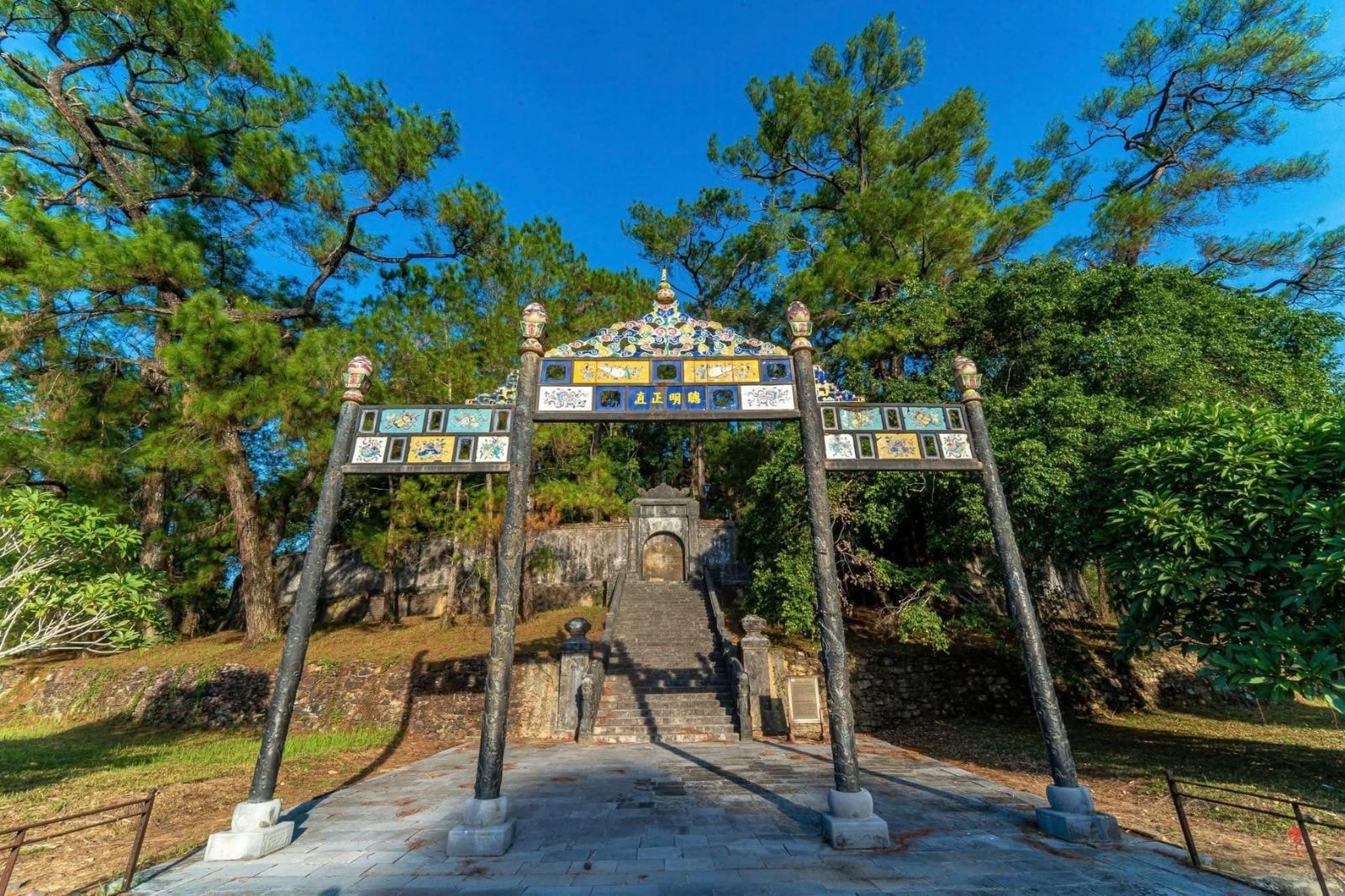
The tomb harmonizes with natural beauty

Photo: The tomb harmonizes with natural beauty

Concluding the journey of exploring history and architecture, it is clear that Minh Mang Tomb is not only the resting place of a wise ruler, but also a masterpiece of art and feng shui crystallized from the wisdom, faith, and aspiration for permanence of the Nguyen Dynasty. If you have the opportunity to visit Hue, do not miss the chance to explore Minh Mang Tomb. A complete Minh Mang Tomb tour will take you strolling through the majestic Dai Hong Mon, gazing at the solemn Minh Lau on Tam Tai Mountain, pausing before the emerald surface of Trung Minh Lake, and reflecting on the sophistication in every architectural detail. This is not just a sightseeing trip, but also a journey back to the historical roots and cultural identity of Vietnam.
Loading......

Featured destinations