Suggested 2-Hour Itinerary to Visit the Museum of Royal Antiquities in Hue
Central
Thua Thien Hue
Hue Royal Antiquities Museum
Sovaba.travel
Updated at: 24/09/2026
1. Essential information before your visit
The Hue Museum of Royal Antiquities, located at No. 3 Le Truc Street, Phu Hau Ward, Hue City, is part of the Complex of Hue Monuments – a UNESCO World Cultural Heritage recognized in 1993. Built in 1923 under the original name Musée Khải Định, the museum is located within the precinct of Long An Palace – a magnificent royal structure built in 1845 under King Thieu Tri. Covering an area of 6,330 m², the museum currently houses more than 9,000 artifacts, with around 300 on regular display, including porcelain, Phap lam enamelware, royal attire, musical instruments, and Champa antiquities.
Opening hours:
Summer (April - September): 6:30 AM - 5:30 PM
Winter (October - March): 7:00 AM - 5:00 PM
Ticket sales: 7:00 AM - 5:30 PM daily
Ticket prices:
Adults: 50,000 VND/person
Children (7-12 years old or under 1.4m): Free
Combined route Museum – An Dinh Palace: 80,000 VND/person
Note:
Dress politely and avoid making noise.
Do not touch artifacts and comply with photography regulations (no flash in certain areas).
It is recommended to check the official website of the Hue Monuments Conservation Center for updated opening hours and ticket prices.
Photo: Comply with regulations not to touch the artifacts
2. 2-hour itinerary for visiting Hue Museum of Royal Antiquities
With a 2-hour timeframe, you need a clear plan to discover key highlights of the museum without missing out on historical and cultural value. Below is a detailed itinerary optimized for the most complete experience.
First 15 minutes: General overview and exploring the architecture of Long An Palace
Time: 0:00 - 0:15
Activities:
Buy tickets at the counter and receive a map or guidance from museum staff.
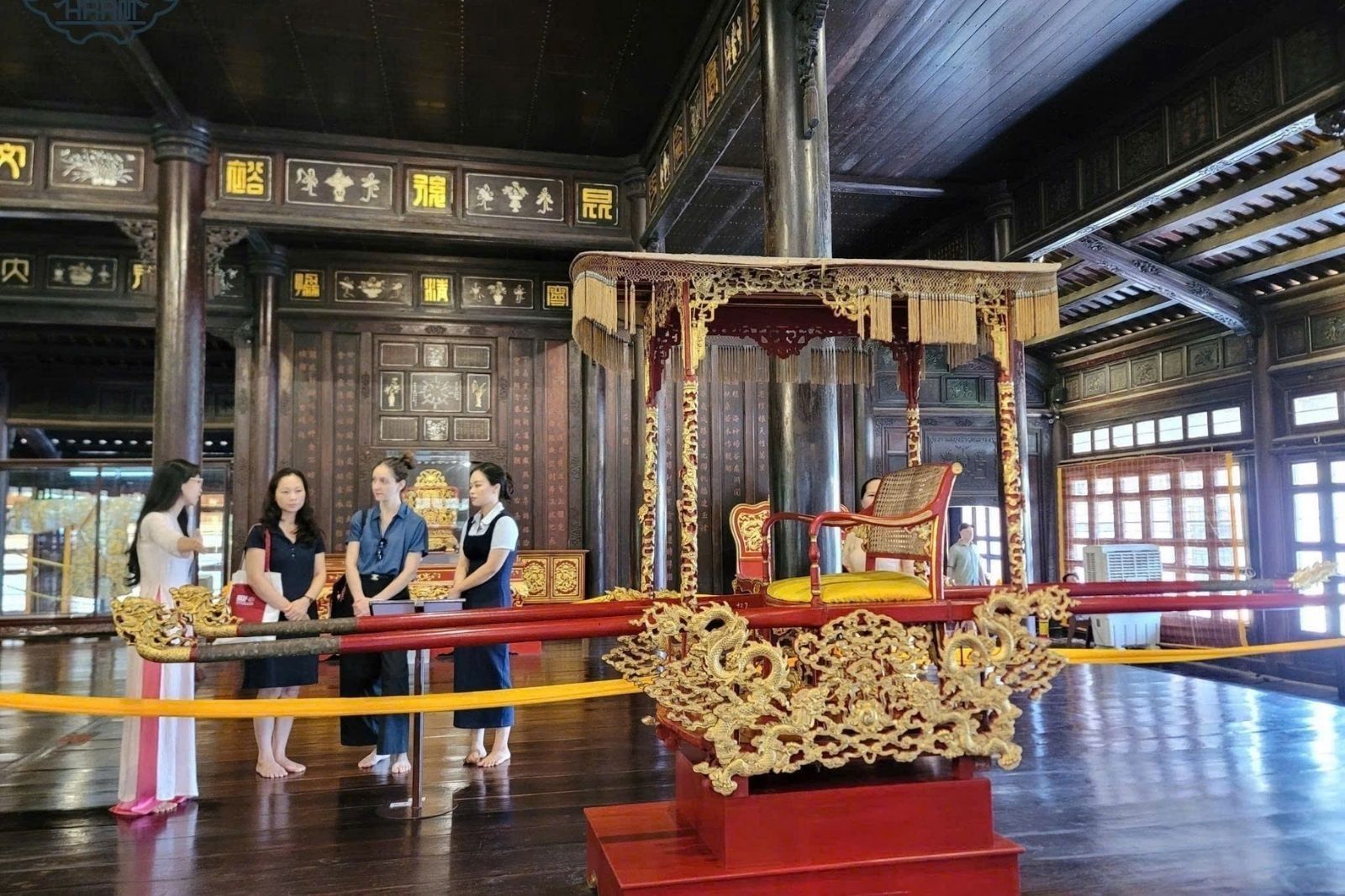
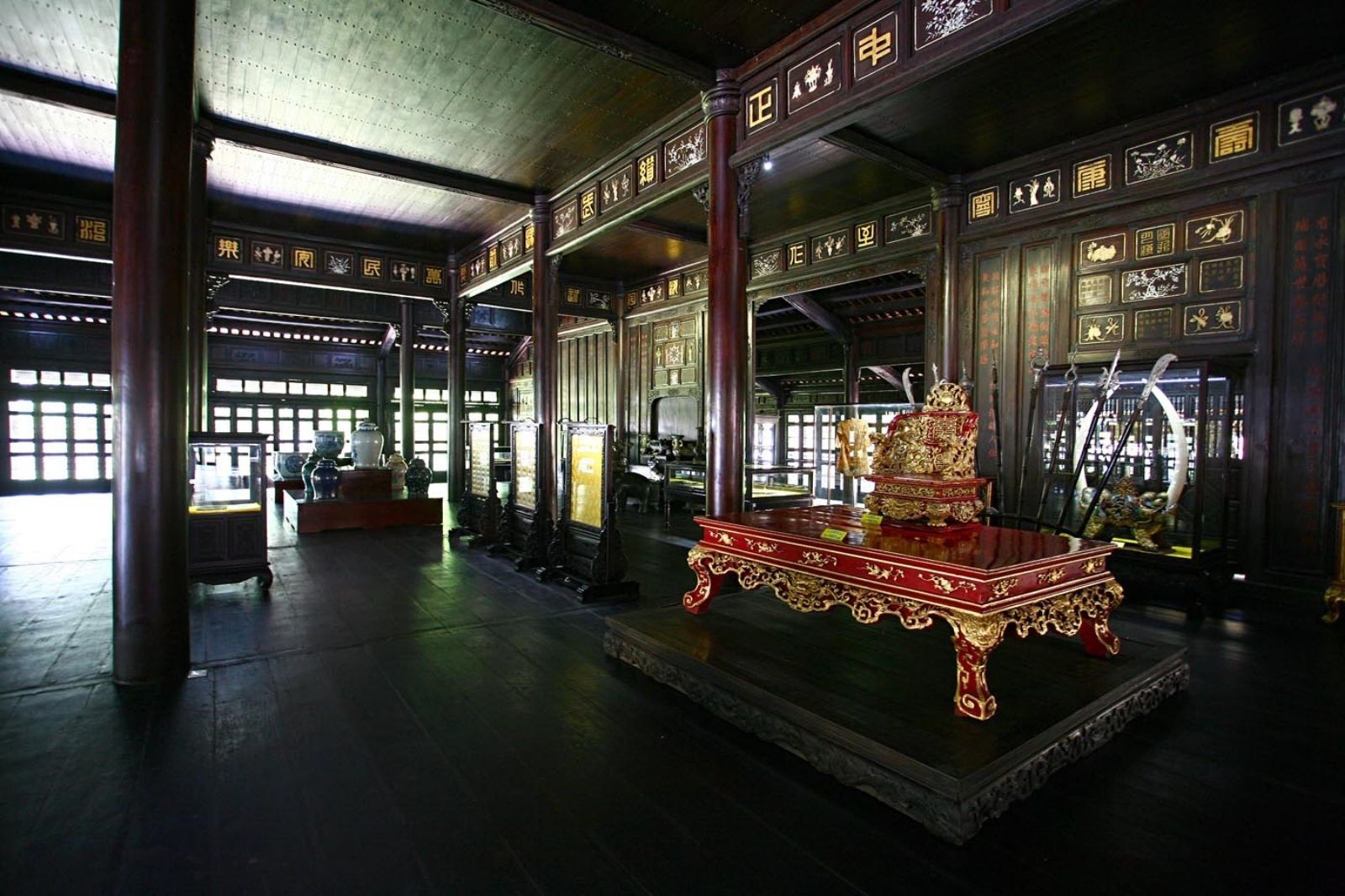
Spend a few minutes admiring Long An Palace from the outside. This is the main structure of the museum, built in the “trung thiem diep oc” (overlapping roof) architectural style with 128 ironwood pillars carved with the four sacred creatures (dragon, unicorn, turtle, phoenix) and over 1,000 Han script poems. The unpainted wooden carvings retain their rustic beauty, serving as a unique artistic highlight.
Take souvenir photos in the front courtyard, where lush greenery and carefully arranged miniature landscapes welcome visitors.
Tip: Spend 5 minutes reading the introductory information at the entrance area to understand the history and significance of Long An Palace, helping you gain deeper insight into the artifacts you are about to see.
Photo: Learn about the architecture of Long An Palace
Next 30 minutes: Tour the main exhibition area – Long An Palace
Time: 0:15 - 0:45
Activities:
Focus on representative artifacts in Long An Palace, which displays over 300 precious relics:
Golden Throne and Royal Bed: The thrones of Nguyen Dynasty emperors and King Khai Dinh's gold-gilded royal bed are symbols of power, exquisitely crafted.
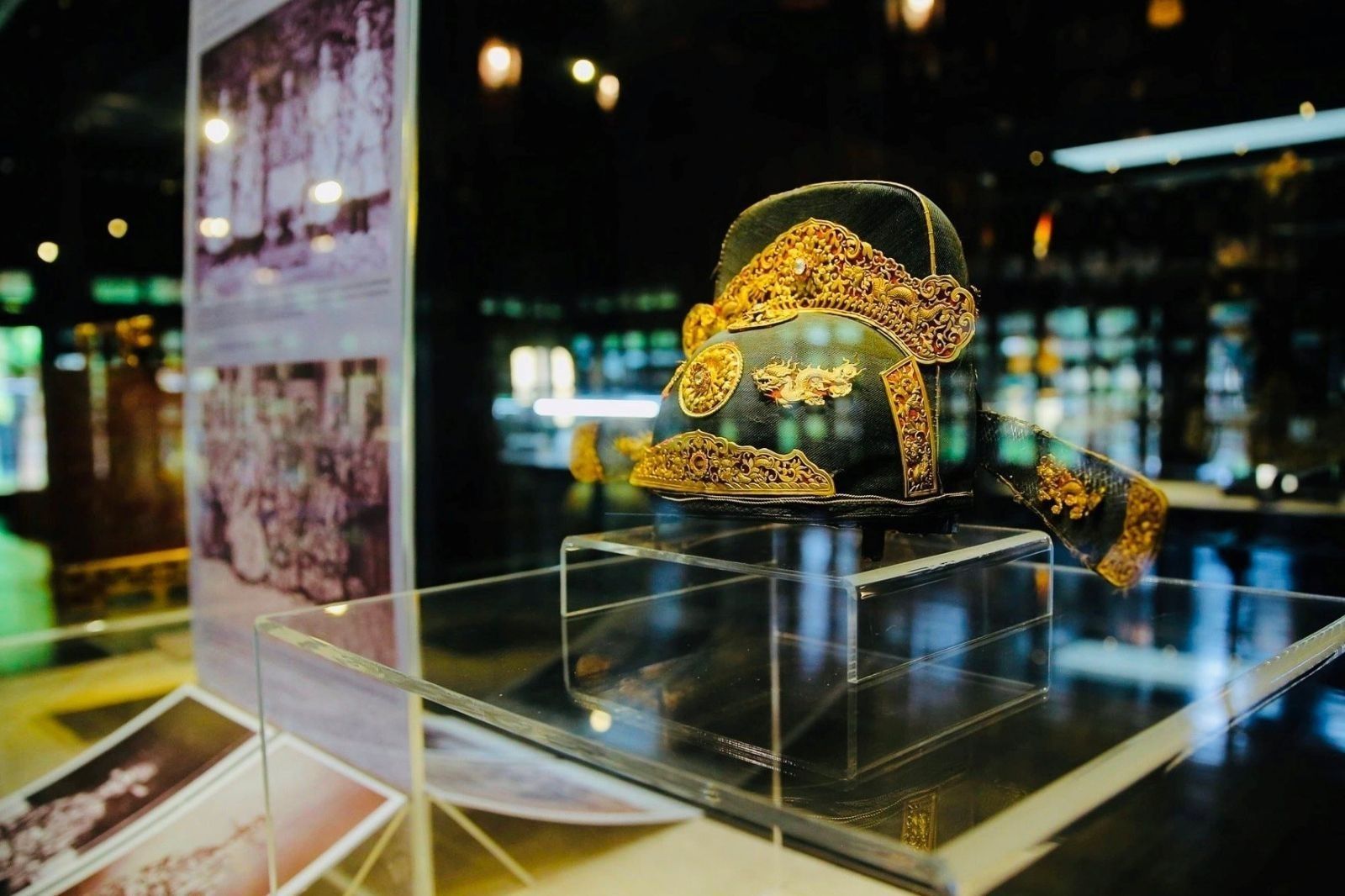
Royal Robes and Imperial Garments: A collection of 100 garments of kings, queens, and mandarins, with hand-embroidered details and precious jade buttons.
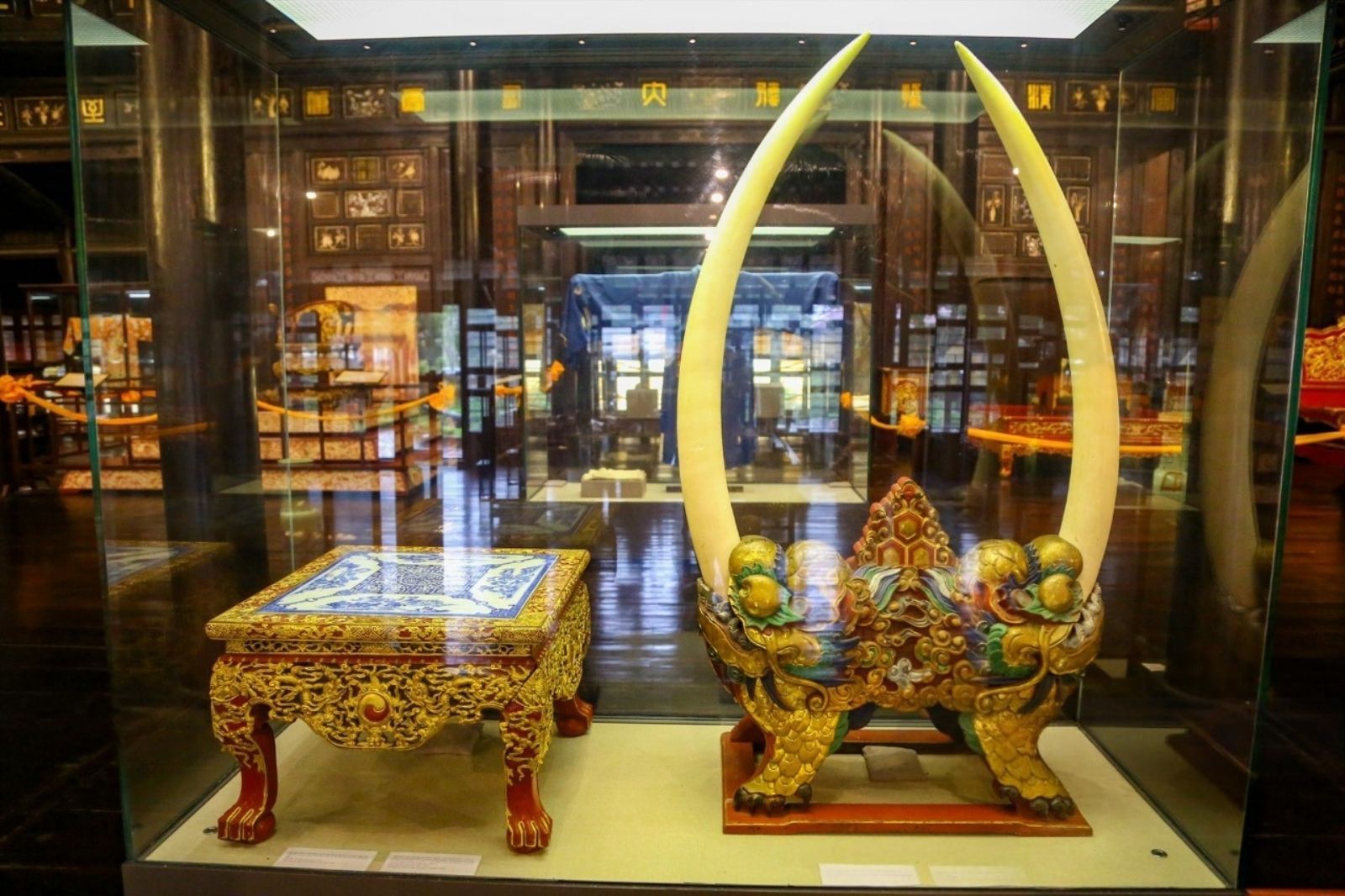
Custom-ordered porcelain and Hue enamel (Phap lam): Including pots, large jars, and pedestals used in palaces, highlighted by unique five-clawed dragon motifs.
Imperial Court Music Instruments: Instruments such as the monochord, moon lute, drums, bells, and stone chimes, recreating the art of Nha Nhac (Royal Court Music) – a UNESCO Intangible Cultural Heritage.
Carefully read the information plaques beside the artifacts to understand their origin and historical significance.
Tip: Prioritize viewing unique artifacts such as the gold-gilded nine-dragon sphere and the pitch-pot game set (dau ho) made of ordered porcelain or mother-of-pearl inlay. Move efficiently while remaining quiet and refraining from touching artifacts.
Next 25 minutes: Discover the Harem area and Royal Arts
Time: 0:45 - 1:10
Activities:
Move to the Harem area, recreating the life of queens and royal concubines. Here, you will see gorgeous attire, gold, silver, and jade jewelry, and meticulously crafted personal items.
Continue to the Royal Arts section, displaying custom porcelain, vibrant Hue enamel, imperial poetry paintings, and wood, stone, and metal sculptures. These artifacts demonstrate the peak artistic mastery of Nguyen Dynasty artisans.
Tip: If time is limited, focus on Hue enamelware and imperial glass paintings, as these are unique artifacts rarely seen in other museums.
Photo: Learn about court artifacts and arts
Next 20 minutes: Imperial Seals, Golden Books, and Champa antiquities area
Time: 1:10 - 1:30
Activities:
Visit the Seals and Golden Books section, displaying gold, silver, and jade seals—symbols of power of the king and high officials—along with gold books recording major royal events.
Conclude the tour at the Champa antiquities section, preserving about 80 artifacts from the Chau Ly, Chau O, and Tra Kieu areas (excavated in 1927). Hindu sculptures, sacred creatures, and reliefs in ancient Champa style serve as a unique highlight, offering insight into cultural exchange in Hue.
Tip: Quickly photograph impressive artifacts such as jade seals or Hindu deity statues, but strictly observe the no-flash rule.
Last 30 minutes: Relax and summarize
Time: 1:30 - 2:00
Activities:
Spend 10 minutes walking around the garden and auxiliary buildings, enjoying open space with ancient trees, ponds, and fresh flowers.
If time permits, stop by the display area of 17th-century cannons manufactured in the Netherlands and used by the Nguyen Lords.
End your visit by buying a few souvenirs at the museum shop, such as porcelain replicas or books on Nguyen Dynasty culture.
Relax in the courtyard area, sip a cup of royal herbal tea (if available), and reflect on what you have learned.
Tip: If you want a deeper experience, you can sign up for an Audio Guide to hear detailed explanations about the exhibits.
3. Tips for visiting Hue Museum of Royal Antiquities
To make your exploration of the Hue Museum of Royal Antiquities more complete and efficient, visitors should keep in mind a few important tips regarding timing, visiting methods, and highlights not to be missed.
Ideal time: Visit early in the morning (7:00 AM - 9:00 AM) to enjoy cool air and avoid crowds. The dry season (March - September) is the best time as Hue's weather is pleasant and suitable for getting around.
Getting to the museum:
From central Hue, take Le Loi Street, cross Truong Tien Bridge, turn right onto Hung Vuong Street, cross An Hoa Bridge, then turn right onto Ha Noi Street, and drive another 1.5 km to No. 3 Le Truc.
Combine with other destinations: If time allows, combine your visit with An Dinh Palace (combined ticket 80,000 VND) or nearby attractions such as the Hue Imperial City, Khai Dinh Tomb, and Perfume River.
Photo: It is recommended to combine visits to areas inside the Imperial City if you have more time
The Hue Museum of Royal Antiquities is a destination that helps visitors better understand the history and royal court life of the Nguyen Dynasty. With a 2-hour itinerary, you can cover key artifacts and impressive exhibition spaces. If you have more time, you can choose a tour to explore the Hue Museum of Royal Antiquities with Sovaba Travel. The itinerary is thoughtfully arranged with detailed guided explanations, helping you gain a deeper understanding of the museum's cultural and historical values. Book your tour with Sovaba Travel to make your visit even more fulfilling and meaningful.