La Vang Holy Land, known as the largest Catholic pilgrimage center in Vietnam, is not only a sacred place for believers but also a meaningful destination for anyone seeking peace of mind. Situated in the historically rich land of Quang Tri, La Vang Holy Land carries the story of faith, the apparition of the Blessed Virgin Mary, and an ancient beauty blending harmoniously with nature.
And to make your pilgrimage to La Vang Holy Land even more meaningful, Sovaba Travel proudly introduces this detailed guide, helping you gain a deep understanding of its history, the construction process of the Basilica, and the touching stories associated with this sacred land.
Where is La Vang Holy Land Located?
Amidst the sunny and windy Central region, La Vang Holy Land is a landmark of special religious, historical, and cultural value, closely tied to the spiritual life of generations of believers.
Key information about La Vang Holy Land:
Full name: Basilica of Our Lady of La Vang
Location: Hai Phu commune, Hai Lang district, Quang Tri province
Geographical distance:
About 6 km south of Quang Tri Ancient Citadel
About 60 km north of Hue city
Former name: Dinh Cát – a vast sandy region dating back to the reign of Lord Nguyen Hoang (16th century)
Present status: National Marian Center of the Catholic Church in Vietnam
Pilgrimage scale: Attracting millions of faithful believers and tourists every year
Today, La Vang Holy Land is not only an important pilgrimage destination for Catholics, but also a symbol of faith, hope, and spiritual unity, contributing to the unique cultural and spiritual identity of Quang Tri land.
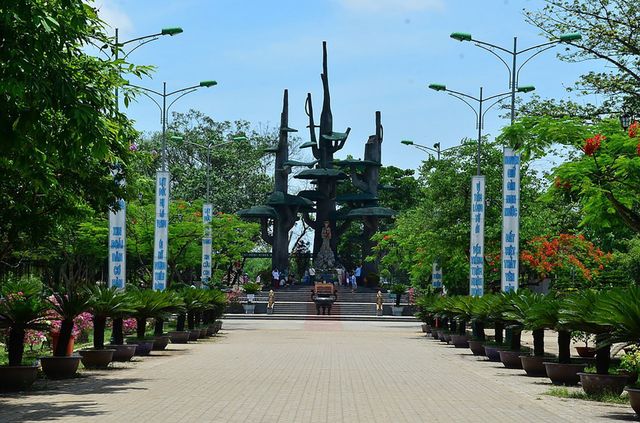
Photo: La Vang Holy Land
History and Significance of La Vang Holy Land
La Vang Holy Land is tied to the apparition story of the Virgin Mary in 1798, during the period of Catholic persecution under King Cảnh Thịnh (Tay Son dynasty). To escape persecution, many parishioners from Quang Tri fled into the wild forest here. Under difficult conditions, disease, and lurking dangers, they often gathered under an ancient banyan tree to pray.
One night, the Virgin Mary reportedly appeared, comforting them and instructing them to gather "lá vằng" leaves to cure illnesses. From then on, the name La Vang was born, possibly originating from "la lớn" (shouting loudly) to communicate in the deep forest, or from "lá vằng", the medicinal leaf. This event inspired the faithful, and across generations, the story of Our Lady of La Vang has become a symbol of faith and compassion.
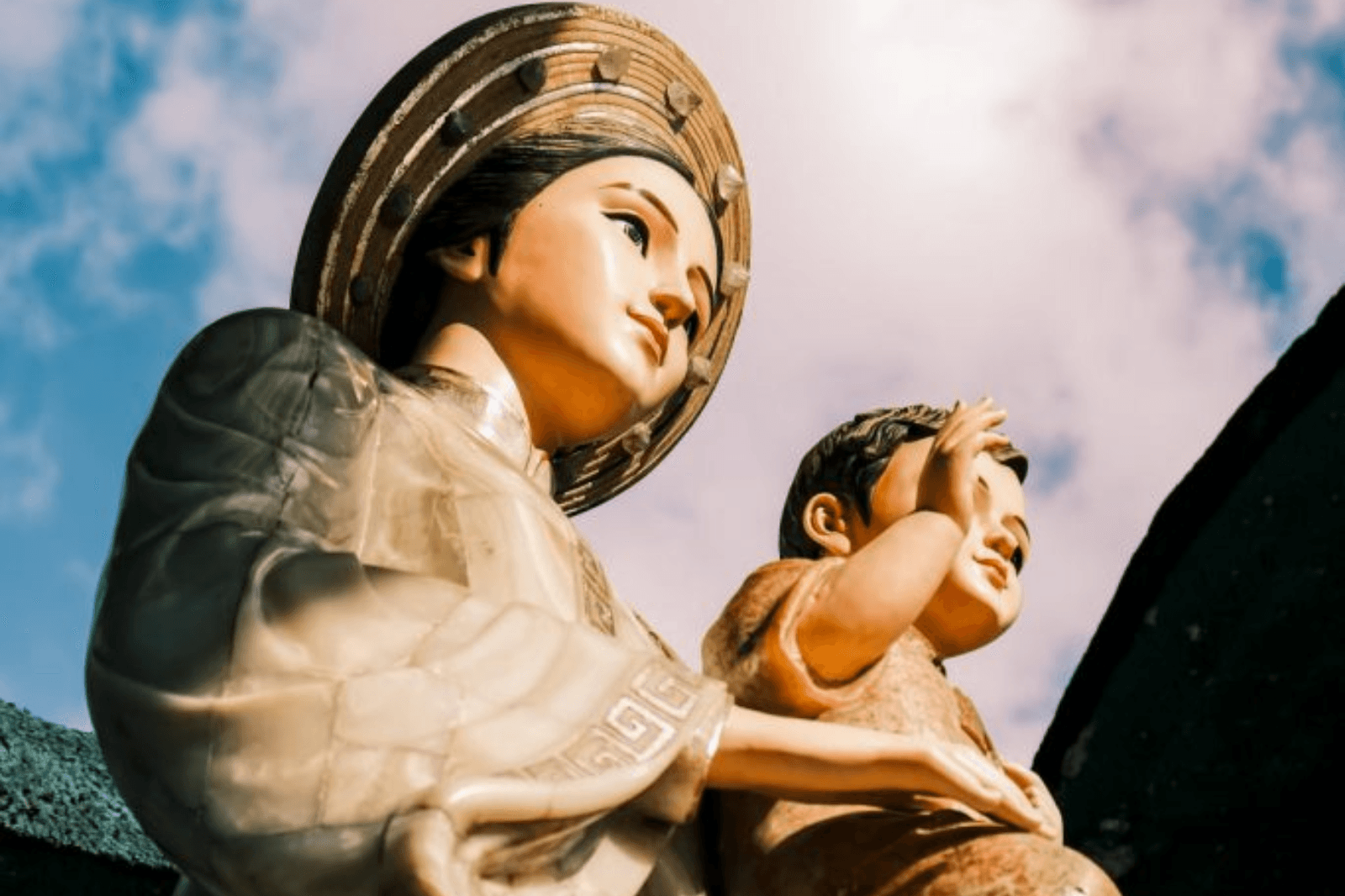
Photo: Statue of Our Lady of La Vang
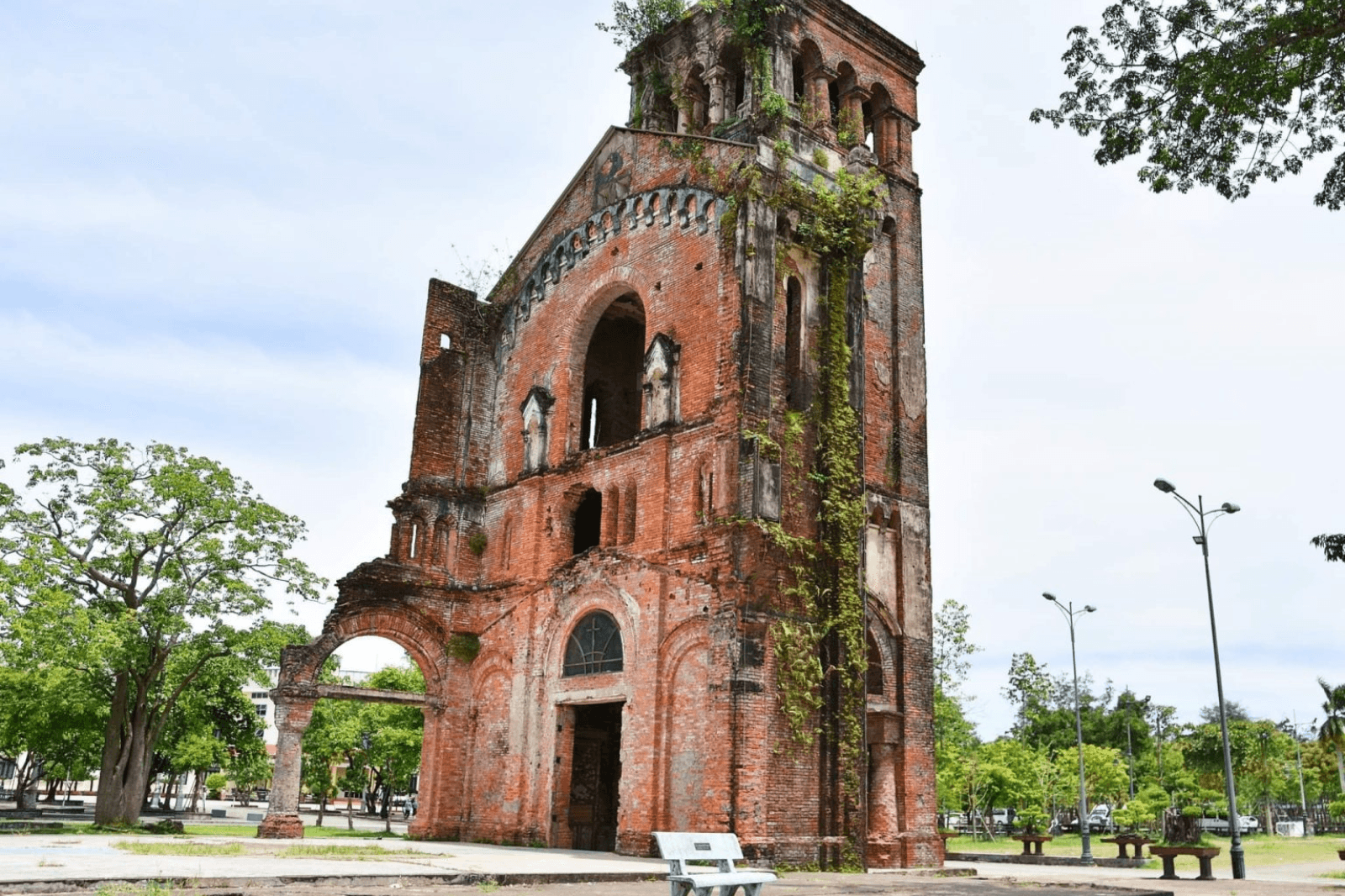
The original La Vang church was built on the foundation of a small shrine, possibly dedicated to the Goddess of Mercy Guanyin or Lady Liễu Hạnh. Over time, many structures were erected, but war, especially the summer events of 1972, destroyed almost the entire Basilica, leaving only the ancient bell tower marked with time's traces. Since 1990, religious activities have been restored, and in 2012, the groundbreaking ceremony for the new Basilica took place, featuring traditional Vietnamese Asian architecture.
How to Get to La Vang Holy Land
To get to La Vang Holy Land, you have several options for transport and routes:
From Hue or Da Nang
Motorbike or self-drive car: From Hue, follow National Highway 1A northward for about 54 km, and you will see signboards reading “La Vang 4km” or “La Vang Holy Land 2km” in Hai Phu commune. From Da Nang, the distance is about 160 km, taking around 3 hours and 15 minutes.
Guided tours: Many travel agencies like Sovaba Travel offer combination tours visiting La Vang, the Ancient Capital of Hue, and other destinations like Vinh Moc Tunnels or Phong Nha Cave.
Prominent Attractions at La Vang Holy Land
La Vang Holy Land is not only a sacred pilgrimage site but also a cultural and historical complex with many meaningful structures. Below are the prominent attractions at La Vang Holy Land:
Basilica of Our Lady of La Vang: The largest Catholic building in Vietnam, seating around 5,000 people, featuring Asian architecture with curved roofs, traditional motifs, and graceful color tones.
Ancient Bell Tower: The remaining trace of the former basilica, carrying deep historical marks and wartime turmoil.
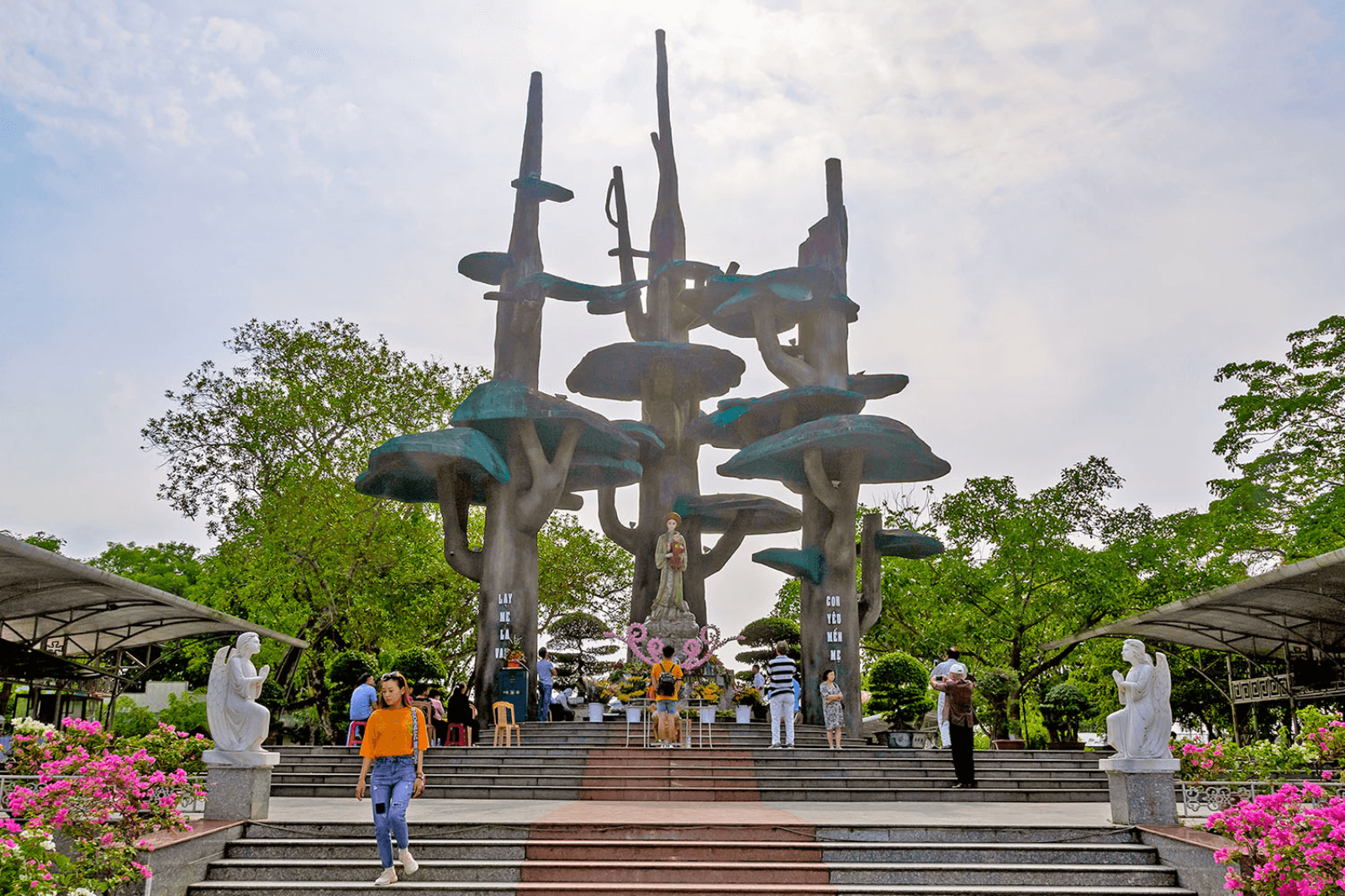
Shrine of Our Lady of La Vang: Located near the ancient banyan tree root, the statue depicts Our Lady wearing a Vietnamese Ao Dai, holding the Infant Jesus, embodying familiar Vietnamese characteristics.
Our Lady's Well: A place where many believers collect water to pray for peace and healing.
Stations of the Cross: Consisting of 14 sculptures depicting the Passion of Jesus, placed along the main square.
Besides daily visits, the La Vang Congress (August 13–15, held every 3 years) is the most important event, attracting large numbers of parishioners, culminating in a solemn and emotional feast celebrating the Assumption of Mary.
Photo: Ancient bell tower
Accommodation and Tips When Visiting La Vang Holy Land
To prepare best for your pilgrimage to La Vang Holy Land, alongside profound spiritual experiences, learning about accommodation and other important notes is essential.
Accommodation
Around La Vang Holy Land, there are various guesthouses and hotels, from budget to upscale. Some popular options:
Hotels in Dong Ha (20 km from La Vang): Suitable if you prefer more comfortable amenities.
Guesthouses inside the Holy Land grounds: Designated for pilgrims, affordable but requires advance booking, especially during peak seasons.
Tips When Visiting
Attire: Wear polite, modest clothes to show respect.
Time: Visit early in the morning or late in the afternoon to avoid heat and crowds.
Respect local culture: Even if you are not Catholic, maintain a respectful demeanor when visiting worship areas.
Preparation: Bring drinking water, hats, and sunscreen as the outdoor area is quite spacious.
Photo: Wear polite attire when visiting La Vang Holy Land
La Vang Holy Land, a sacred land, is not only a gathering place for devout hearts but also a sanctuary to find serenity and leave behind life's hustle and bustle. Whether you come with deep faith or simply wish to explore the cultural and historical values embedded in every roof tile and story, La Vang promises to offer reflective moments that touch your deepest emotions.
Sovaba's La Vang Holy Land travel guide hopes to be a reliable companion, offering useful information to prepare for your upcoming journey. If you have ever visited this place, please share your thoughts and memories in the comments below to spread wonderful values. And if you are planning a meaningful trip to this sacred land, do not hesitate to explore various La Vang Holy Land tours tailored to meet diverse traveler needs, making your trip complete and memorable. Let La Vang touch your heart!